Deer Season Is Here: When Collisions Peak and What Your Insurance Covers
State Farm counts 1.6 million animal-collision claims in a year, and the worst stretch starts now. Here's where the risk is highest — and why swerving can cost you twice.
If you drive near woods or farm fields, the next three months are the riskiest of the year for hitting an animal. State Farm's latest annual study ranks November, October and December, in that order, as the peak months for animal-collision claims, and it estimates U.S. insurers handled more than 1.6 million such claims between July 2025 and June 2026.
That's down from about 1.7 million a year earlier, and the national odds of a claim improved to 1 in 145 from 1 in 139. State Farm alone paid $1.9 billion on these claims over the 12 months. Deer remain by far the most common animal involved, and while some new cars can now warn each other about large animals on the road, avoiding one is still mostly the driver's job.
When the risk peaks
The fall spike lines up with deer mating season. A 10-year analysis of comprehensive claims through 2023 by the Highway Loss Data Institute shows how steep the curve is: 10 animal-strike claims per 1,000 insured vehicle years in October, 13.8 in November and 8.1 in December, against 4.3 in August and a full-year average of 6.8. November claims were also the most expensive of the year, averaging just under $5,000.
Triple-I, the insurance industry's research group, flags sunset to midnight and the hours around sunrise as the highest-risk windows. This year the clock adds a twist: daylight saving time ends at 2 a.m. on Sunday, Nov. 1, in most of the country, pushing many evening commutes into darkness right at the November peak.
December's risk overlaps with the first snow; our breakdown of AWD, 4WD and winter tires in snow covers the traction side of the season.
Where it's worst
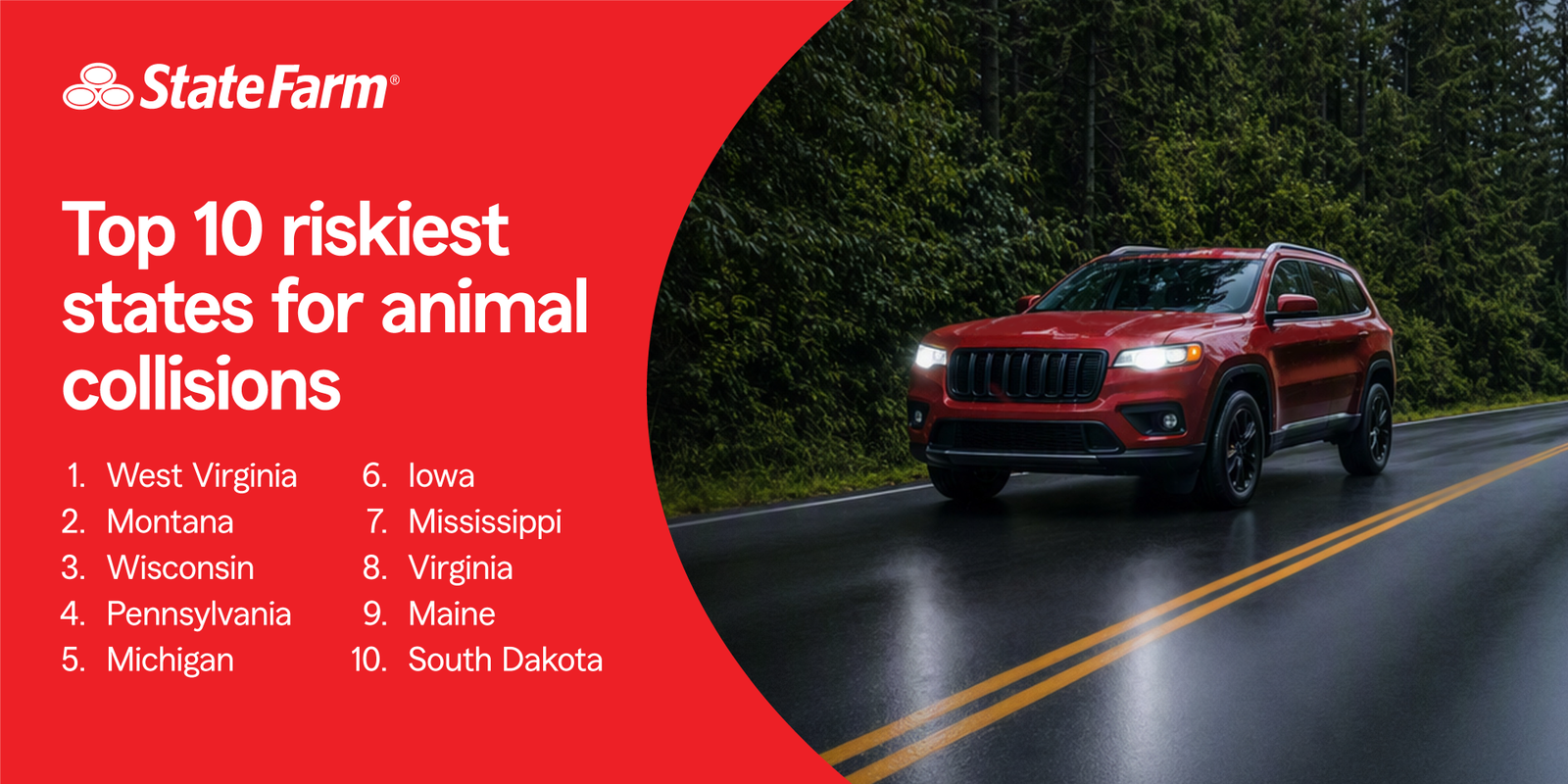
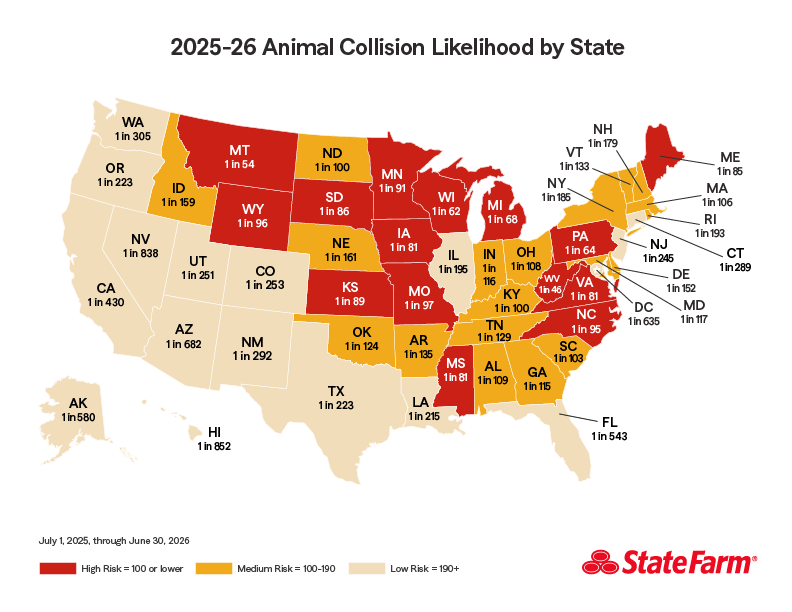
West Virginia has topped State Farm's state ranking for more than a decade. This year's top 10, by a driver's odds of an animal-collision claim:
- West Virginia: 1 in 46
- Montana: 1 in 54
- Wisconsin: 1 in 62
- Pennsylvania: 1 in 64
- Michigan: 1 in 68
- Iowa: 1 in 81
- Mississippi: 1 in 81
- Virginia: 1 in 81
- Maine: 1 in 85
- South Dakota: 1 in 86
Pennsylvania ranks fourth on odds but first on volume, with an estimated 141,000 claims. HLDI's county data points the same way: nine of the 10 U.S. counties with the highest November claim rates are in Pennsylvania, led by Crawford County at roughly 6.5 times the national November average.
Fall is peak claim season, not peak death season
According to IIHS fatality data, 210 people died in 2024 in crashes that began with a collision with an animal, up from 89 in 1975, though the long-term rise has leveled off over the past decade.
Fatal crashes follow a different calendar. In 2024, the highest number of animal-involved deaths came in July through September, not during the fall claims peak. And the animal itself often isn't what kills: in more than a third of those deaths, the most harmful event was something else, such as a rollover, a tree or another vehicle.
How to lower your odds
- Slow down where deer live: posted crossing zones, wooded stretches and roads that divide fields from forest.
- Use high beams on dark roads when there's no oncoming traffic. They pick up the shine of a deer's eyes sooner.
- Deer seldom travel alone. If one crosses, expect more.
- If a deer is in or near your path, brake firmly and stay in your lane. One long blast of the horn can help move it along.
- Don't swerve. Triple-I and State Farm both warn it can put you into another vehicle or off the road.
- Wear your seat belt, and don't rely on add-on devices: Triple-I says deer whistles and reflectors haven't been proven to reduce collisions.
If you hit one
Move the car somewhere safe if you can and turn on your hazards. Don't approach the animal; an injured deer can kick. Call police if it's blocking traffic. When it's safe, photograph the damage and check for leaks, tire damage and broken lights before driving on, then call your insurer.
A car stopped on the shoulder after dark is a hazard in itself, which is why some brands now flag stranded vehicles to drivers approaching from behind, as with Mazda's roadside alerts.
What your insurance covers
Hitting a deer falls under comprehensive coverage, not collision. GEICO says insurers typically treat it as a not-at-fault claim.
The repair bills aren't small. HLDI's average animal-strike claim reached $5,980 in 2023, nearly double the $3,176 average in 2014, a rise HLDI ties mainly to higher vehicle prices.
Holding your lane also protects your wallet:
- You hit the deer: comprehensive pays, minus your comprehensive deductible.
- You swerve and hit a tree, a guardrail or another car: that's a collision claim, with the collision deductible, and it may count as an at-fault crash.
- You carry liability-only coverage: nothing pays to fix your own car in either case.
- Someone is hurt: medical bills go through medical payments coverage or personal injury protection, if you carry it.
Can your car help?
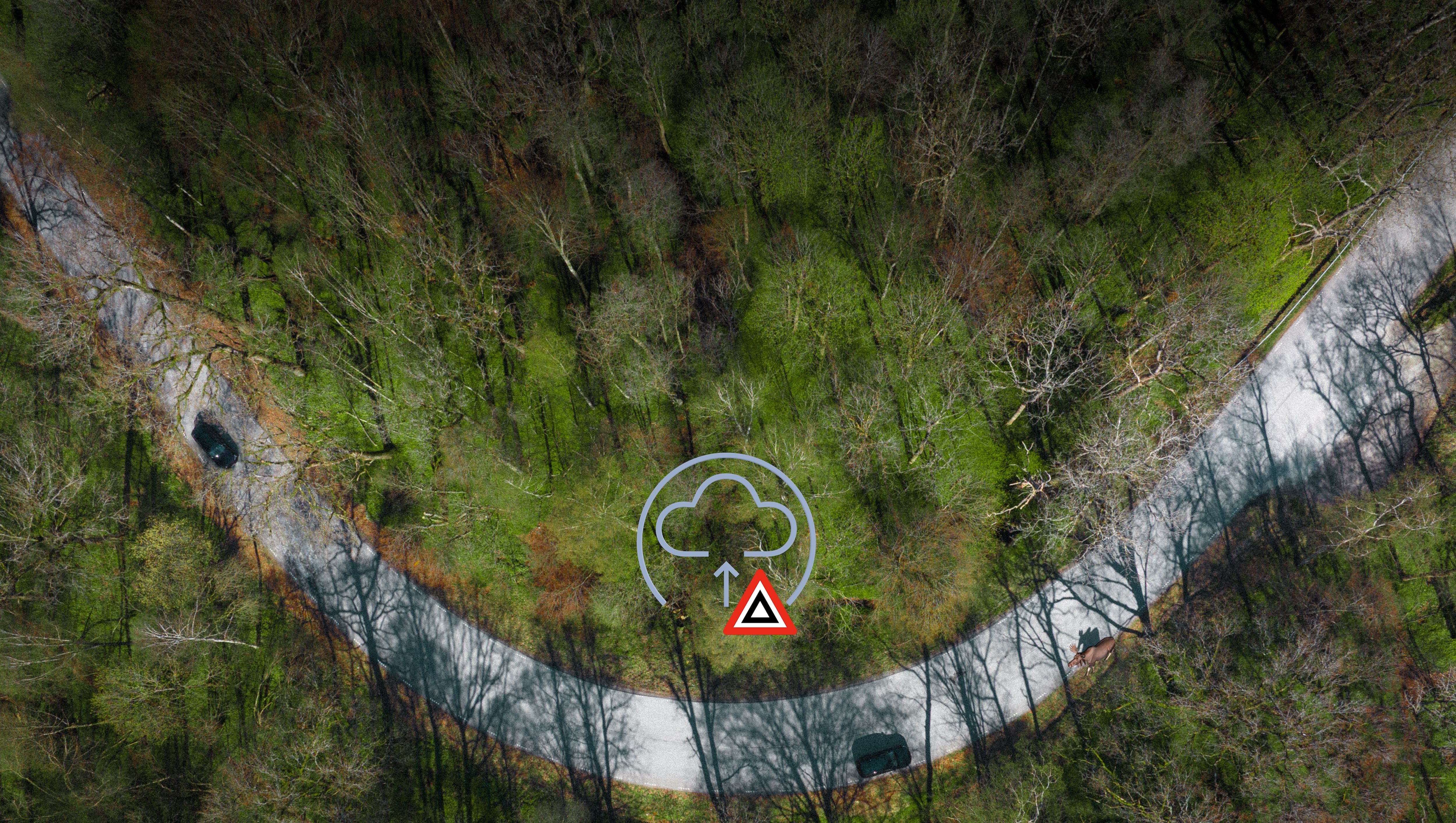
Some cars already warn the driver about a large animal their own sensors pick up; Volvo has shown the feature on its S90 sedan. The automaker now goes further with a Large Animal Alert: when a connected EX60, EX90 or ES90 detects an animal near the road, it can warn other Volvos approaching the same spot. Volvo says the alerts are coming to the U.S., with timing that varies by model.
No independent study has measured how well these systems prevent real-world animal strikes. Treat them as a backup, not a reason to drive faster after dark.
What we don't know
- State Farm's average claim cost for 2025–26. It hasn't published one, and dividing $1.9 billion by 1.6 million doesn't work: the first is State Farm's own spending, the second an industry-wide estimate.
- Exact totals. The national figure and state odds are State Farm projections from its own claims data, not a count of every crash.
- The future of wildlife crossings. State Farm points to Colorado Highway 9, where crossings and fencing cut wildlife-vehicle collisions by about 90% in early monitoring. The federal grant program that funds projects like it was authorized only through September 2026, and bills to extend it through 2031 have been working their way through Congress.