Volvo Hands Its Self-Driving Future to NVIDIA — With a Promise of ‘Mind-Off’ Driving
Volvo will build its next automated driving system on NVIDIA’s Hyperion platform, aiming for eyes-off and eventually mind-off driving — but it hasn’t named the first car or a date.
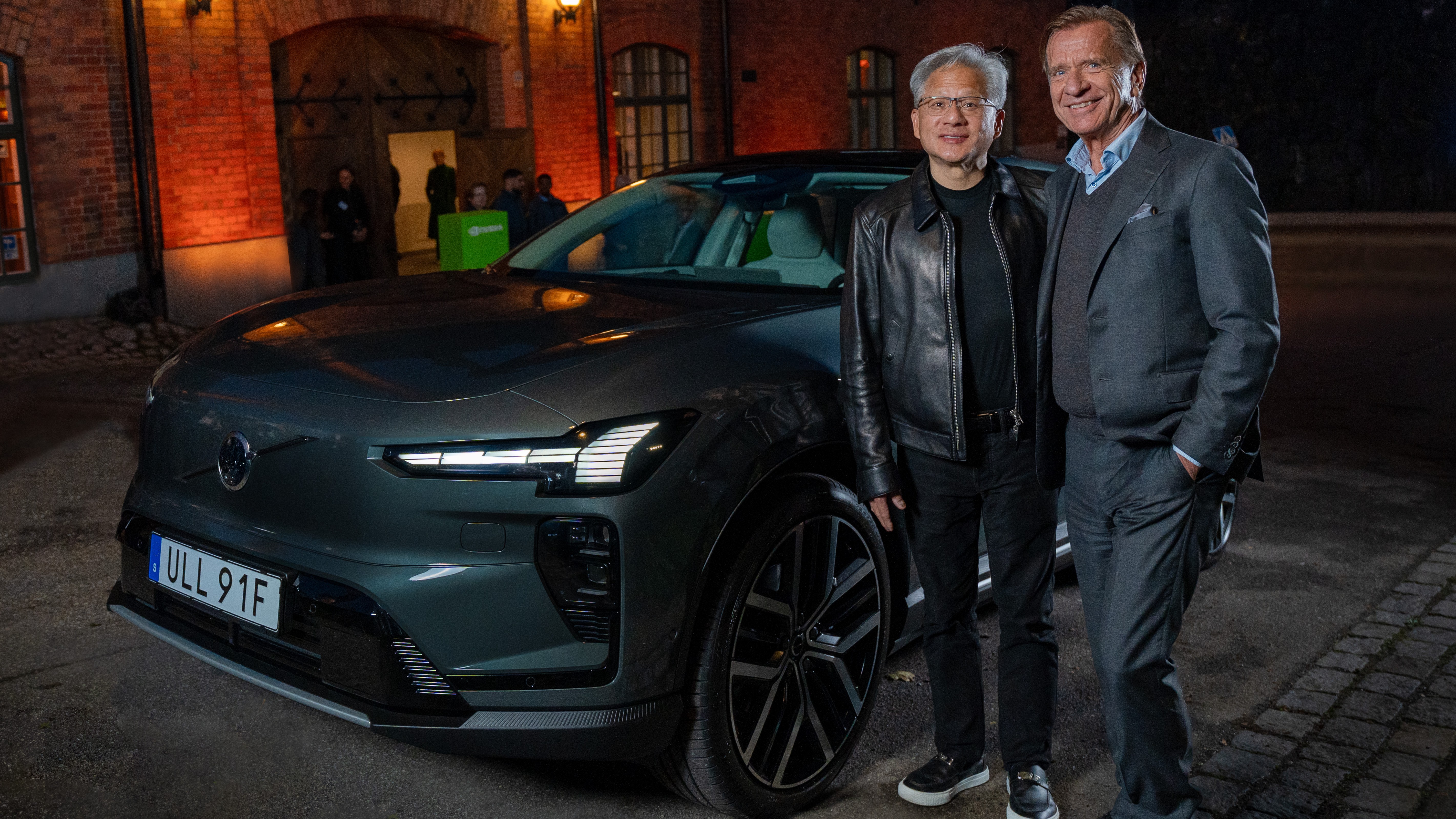
Volvo wants its future cars to drive themselves from door to door, and it is handing much of the brain for that job to NVIDIA. The Swedish automaker said on October 15 that it will build its next automated driving system on NVIDIA's Hyperion sensor and compute architecture, the Halos safety platform, and the Alpamayo driving software, with the goal of a gradual move to "eyes-off and mind-off" driving.
The system will debut on a next-generation Volvo that belongs to the 13-car rollout the company announced in September — the plan we broke down in our guide to Volvo's 13 new cars and what's coming to the US. Volvo hasn't named that car, given a date, or put a price on the deal.
.jpg)
What Volvo is actually buying
The companies have worked together since 2017, and every electric Volvo on sale already uses NVIDIA's Orin chip to process camera and radar data, TechCrunch reported. The new deal goes much further than a chip supply. Volvo says the technology should handle highways, dense city streets, and parking.
Hyperion is NVIDIA's reference design for higher-level automation. In its current form it pairs two DRIVE AGX Thor processors for more than 2,000 FP4 teraflops of compute, according to NVIDIA. Alpamayo, launched at CES in January, is NVIDIA's family of AI driving models. Ali Kani, who runs NVIDIA's automotive business, told TechCrunch the stack runs those models in parallel with conventional camera-and-radar software as a redundant check.
Volvo software chief Alwin Bakkenes went further. He said Volvo plans to standardize more of its hardware on Hyperion, including the sensor set, and that the stack will go into electric, plug-in hybrid, and gas models alike, not just EVs. He also said the first car will arrive "within the decade" — a looser timeline than the press release implies.
.jpg)
Why it matters
"Mind-off" is a big promise. It describes a car that needs no supervision at all within its operating area, which goes beyond the Level 3 systems that let drivers look away but still take over on request. Right now no automaker sells even an eyes-off system in the US: Mercedes-Benz paused Drive Pilot in January, and GM is targeting 2028 for its eyes-off system on the Cadillac Escalade IQ.
Nor will Volvo be the only Hyperion customer in its own corporate family. Geely, whose parent group also controls Volvo, along with BYD and Nissan, said in March that it is building a Level 4 program on the same platform. That makes the deal less about exclusive technology and more about what Volvo can add on top: decades of crash research and a safety reputation it can't afford to dent. Hyundai, by comparison, is building its own data pipeline to catch Tesla and GM.
.jpg)
What we don't know yet
Volvo hasn't said which model goes first, which markets get it, what operating limits the system will have, or whether owners will pay extra for it. It also hasn't said whether lidar is part of the Hyperion sensor set it plans to use.
The program will likely land on the desk of incoming CEO Klaus Zellmer, who takes over from Håkan Samuelsson no later than October 2027. The next chance for more detail is Volvo's third-quarter report later this month.