What Brad Pitt Really Drove in 'F1': The Cars Behind the Movie
The APXGP racer was a stretched Formula 2 car, the Daytona Porsche was a real IMSA entry, and Mercedes-AMG built 52 road cars to match.
The best-known F1 car of the past year never started a Grand Prix. The black-and-gold APXGP machine Brad Pitt drives in F1 The Movie is a Formula 2 car in an F1 costume, while the other two cars that matter in the story are more real than most viewers realize: a genuine IMSA race car and a Mercedes-AMG you could actually order.
The timing makes the film worth a second look. This is Apple's first season as the exclusive U.S. home of Formula 1, a grid that now includes Cadillac's new F1 team, and the series reaches Austin on October 23–25. Producer Jerry Bruckheimer said in February that a sequel is already in the works. Here is what the cars in the first film really were.
The APXGP car: an F2 racer dressed as an F1 car
Filming with a current F1 car was never practical. The solution started with Lewis Hamilton, a producer on the film, who introduced director Joseph Kosinski to Mercedes team principal Toto Wolff, according to Formula 1.
The base is a Dallara-built Formula 2 chassis. Engineering firm GK Evolution stretched and widened it with spacers to get closer to F1 proportions, and Mercedes' Applied Science division designed F1-style bodywork to go over it. Even then, the car stayed smaller than the real thing: Motor Sport magazine put it at about 400 mm (15.7 inches) shorter and 100 mm (3.9 inches) narrower than a contemporary F1 car.
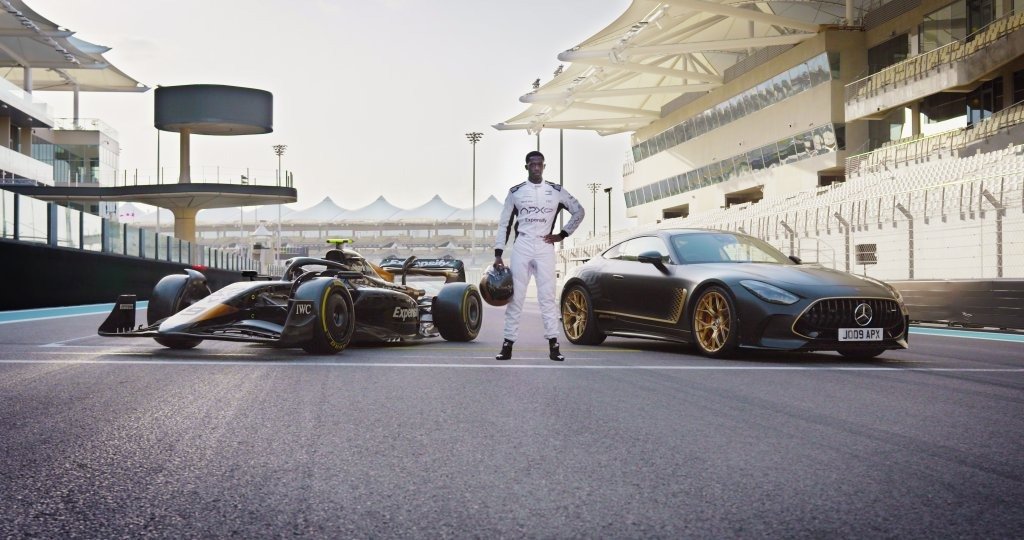
It ran where F1 runs. The APXGP team got its own garage and appeared during real Grand Prix weekends, starting with the 2023 British Grand Prix at Silverstone, with further filming at tracks including the Hungaroring, Spa-Francorchamps, Monza, and Yas Marina. Each car carried 15 camera mounts, which is why so much of the film's racing footage is shot from the cockpit and bodywork rather than from a helicopter.
Five cars, three kinds of power
The production built five APXGP cars, and they did not share a powertrain. Two used genuine Mecachrome Formula 2 engines, a 3.4-liter turbocharged V-6 rated at roughly 620 hp in F2 trim. Two used older GP3-era V-6 engines. The fifth was electric, running a 400-volt system for scenes in the pit lane, where a gas-powered race car could not be run safely around crews and equipment.
The conversion added weight. Graham Kelly of GK Evolution said the APXGP cars were roughly 100 kg (220 pounds) heavier than an F2 car, yet Pitt still lapped within a couple of seconds of Formula 2 pace. That is not F1 speed, but it is far beyond what most actors are ever allowed to do on camera. Professional drivers, including former Formula Two champion Luciano Bacheta, handled much of the precision work.
Putting someone else's engine under F1 bodywork has a long history in the real sport, too. Some of F1's most successful cars were built around an engine their teams didn't make, most famously the Ford-funded Cosworth DFV that became F1's most successful engine.
The Daytona car: a real Porsche in a fictional team's colors
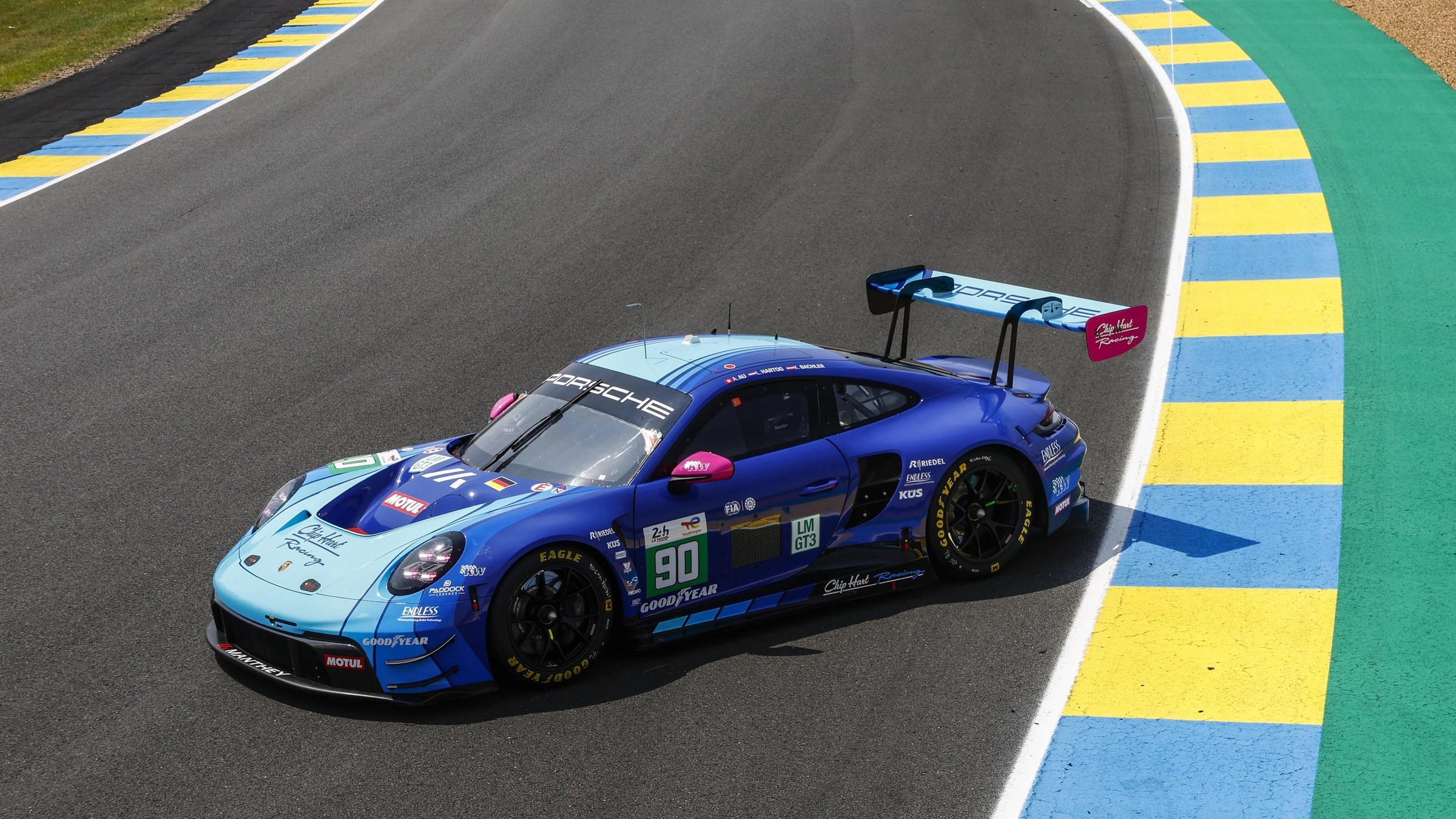
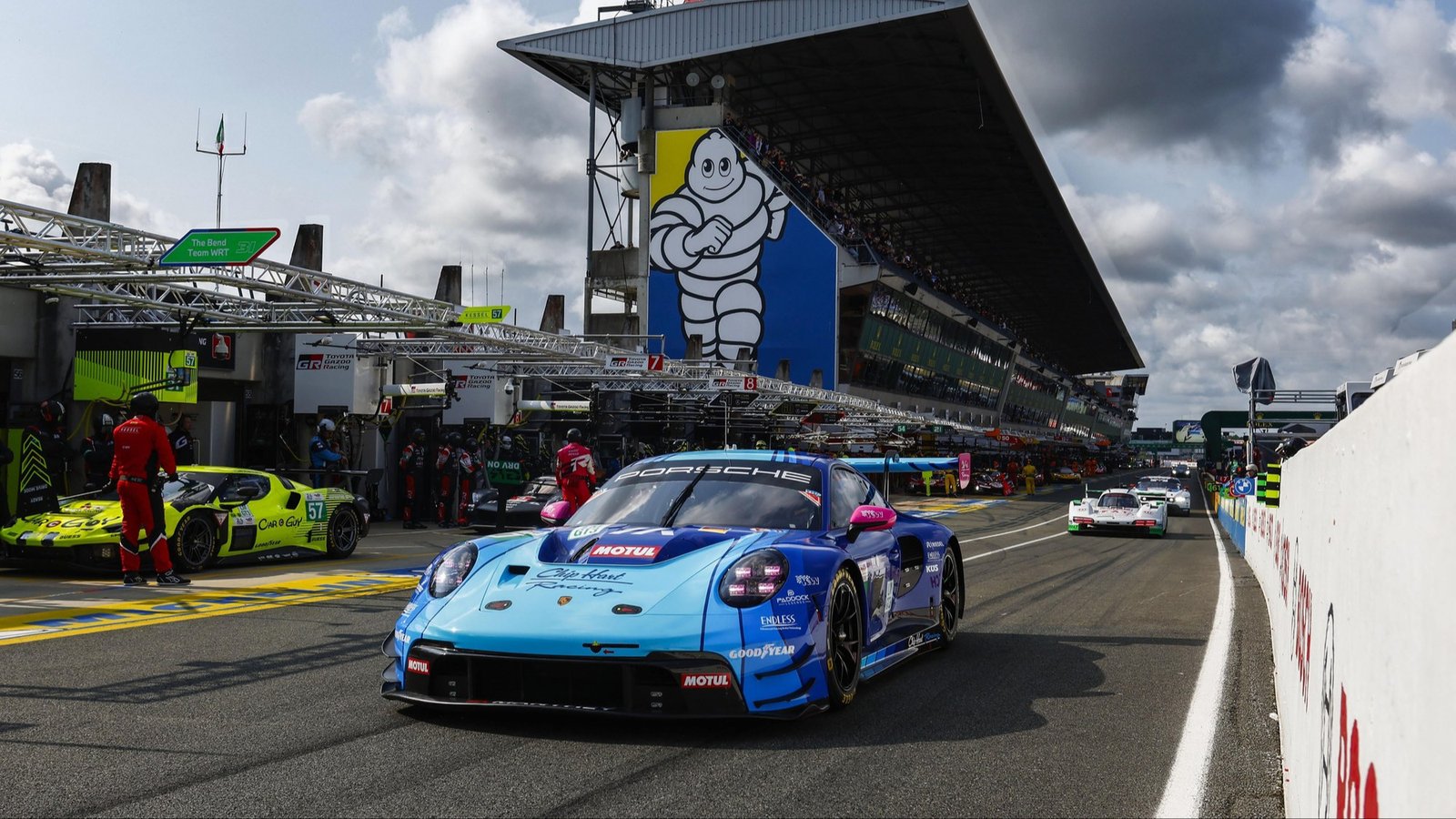
The film opens not in F1 but at the Rolex 24 At Daytona, where Pitt's Sonny Hayes races for a team called Chip Hart Racing. The team is fiction. The car is not. It is a Porsche 911 GT3 R, based on the 992-generation 911 and powered by a 4.2-liter flat-six making 565 hp (573 PS), entered for real in the GTD class of the 2024 race.
The car, No. 120, belonged to Wright Motorsports, a U.S. Porsche customer team, and was raced by Elliott Skeer, Adam Adelson, Jan Heylen, and Fred Makowiecki, according to IMSA. Turner Motorsport's No. 96 BMW M4 GT3 also appears in the race sequences. GTD remains one of IMSA's most competitive classes; this season, Mercedes-AMG's bid for a third straight GTD title went down to the final round, and Porsche's 911 GT3 R stayed in the title fight with Laurin Heinrich.
The livery outlived the shoot. Wright brought the blue Chip Hart colors back for the 2025 Six Hours of The Glen, and a Manthey Racing 911 GT3 R carried them at the 2025 24 Hours of Le Mans, a rare case of a movie team showing up on a real entry list.
The one you can buy: Mercedes-AMG GT 63 APXGP Edition
For anyone who wants the film in a driveway, Mercedes-AMG revealed the GT 63 APXGP Edition during the 2025 Miami Grand Prix weekend. It is limited to 52 cars worldwide, each with a numbered plaque on the center console.
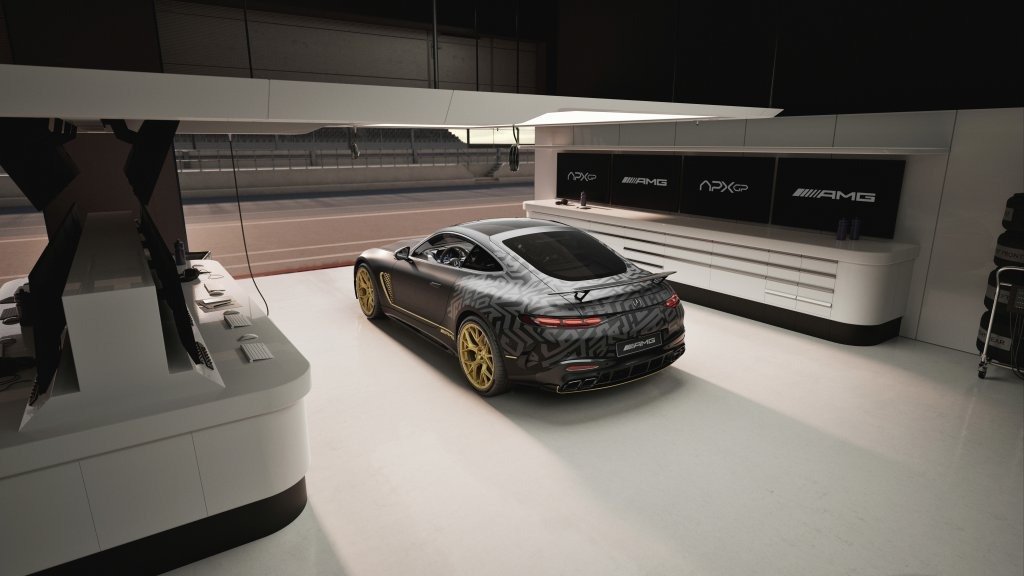
Underneath, it is a standard GT 63 rather than the track-focused GT 63 Pro: a 4.0-liter twin-turbo V-8 with 577 hp and 590 lb-ft, 4MATIC+ all-wheel drive, and rear-wheel steering. The edition adds matte paint with hand-applied Race Gold details, including a checkered-flag motif on the fenders, 21-inch forged wheels in matte gold, carbon-ceramic brakes, and a black Nappa leather and microfiber cabin with gold stitching. Mercedes-Benz USA lists the car on its U.S. website but did not publish a price. When the car was revealed, Road & Track noted it would sit above the standard GT 63, then priced from $180,200.
What we don't know yet
- The sequel's cars. Bruckheimer has confirmed development, but there is no release date, no confirmed cast, and no word on whether APXGP returns or how its car would be built.
- The 2026 rules question. F1 introduced new technical regulations this season. Whether a sequel's hero car would mimic the new look is unknown.
- Whether filming goes back to the real paddock. The first film shot during live Grand Prix weekends with F1's cooperation. No plan for the sequel has been announced.
Where to see them now
F1 The Movie streams on Apple TV, the same $12.99-per-month service that now carries every F1 session in the U.S., with F1 TV Premium included. The film won the Oscar for Best Sound in March from four nominations, including Best Picture, and Apple calls it the highest-grossing sports film of all time. Its worldwide gross is about $630 million. The real F1 cars are back on American soil in Austin later this month and in Las Vegas on November 19–21.