Hyundai Ran Parking Robots in an Apartment Garage, and Korea Changed Its Rules for Them
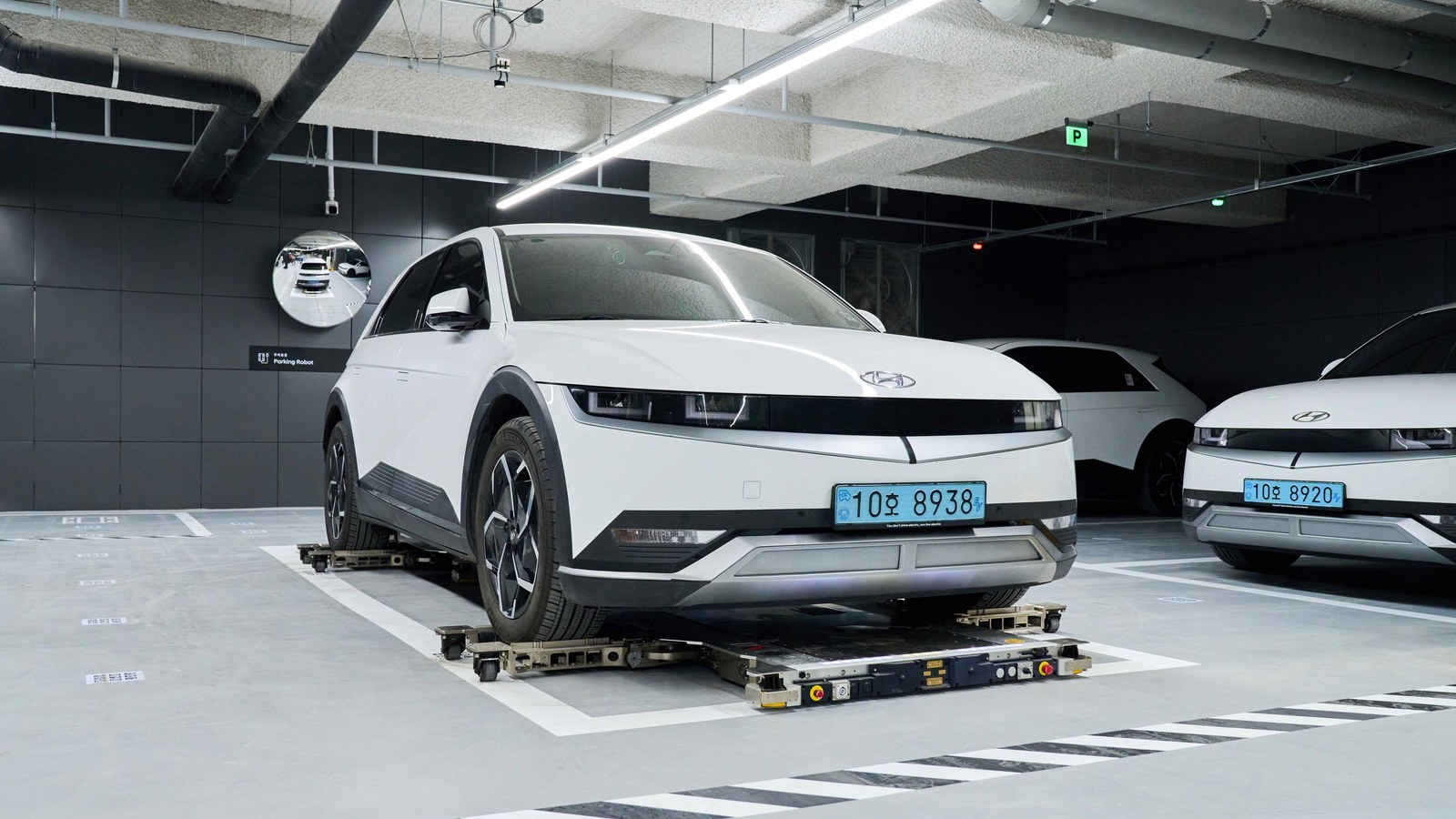
Two flat robots lift a car by its wheels and tuck it away. A two-month pilot near Seoul tested them in the hardest place: a residential garage at rush hour.
Hyundai Motor Group has finished the first test of its parking robots in an apartment building, and the more consequential news is what happened around it: South Korea changed its building rules this summer so the robots can be installed in residential garages for real.
The pilot ran at Hillstate The Wave City, a Hyundai E&C development in Siheung, just southwest of Seoul. Hyundai WIA, the group's parts and machinery arm that also builds the robots used in Hyundai and Kia's smart factories, fenced off 53 spaces on the first basement level and put two robot pairs to work. Hyundai Motor ran the project, Hyundai Engineering & Construction managed the site, and the Ministry of Land, Infrastructure and Transport funded it through a smart-city regulatory sandbox.
How it works
Each car is handled by two slab-shaped robots, each 110 mm (4.3 inches) thick. They slide under the vehicle from the side, find the center of each wheel with lidar, lift the front and rear axles, and drive the car to a space at up to 1.2 meters per second, about 2.7 mph. QR codes on the floor fine-tune their position. The third-generation units used in Siheung can carry 3.4 metric tons (about 7,500 pounds), up from 2.2 tons on the first generation, which puts most three-row SUVs within reach.
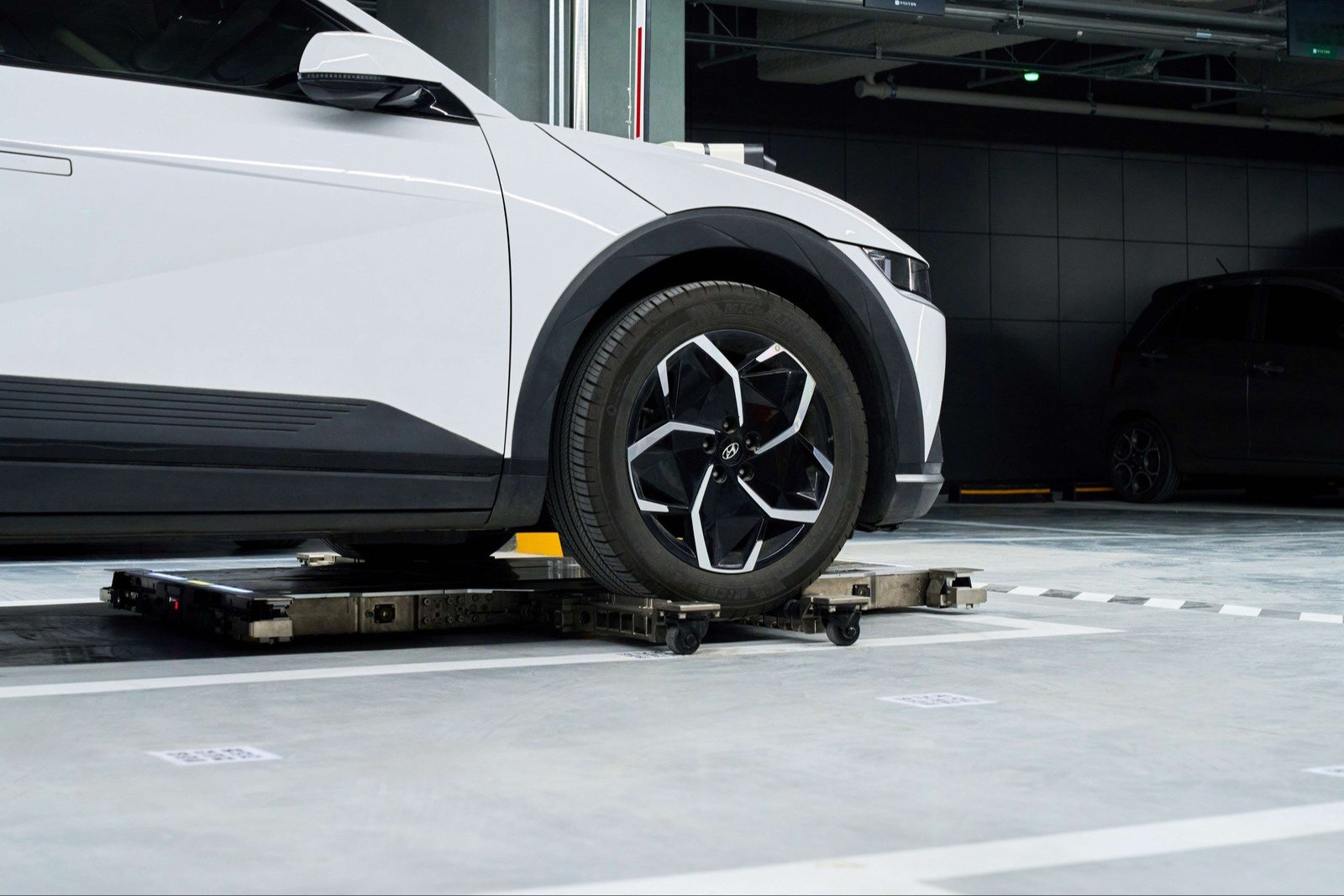
A sign at the site lists what the robots will not take: anything over 4.5 tons, dual-rear-wheel trucks, and cars with less than 110 mm of ground clearance, unless they can raise themselves. Wheelbase has to be at least 2,500 mm and track between 1,400 and 1,715 mm.
For residents, the process is a kiosk at the drop-off bay. Hyundai WIA says getting out and requesting parking takes about 15 seconds. Retrieval can be ordered from the kiosk, where the wait is up to three and a half minutes, or from the wall pad inside the apartment, so the car is waiting by the time the elevator arrives.
Why a garage full of robots holds more cars
Nobody needs to open a door in a robot-only zone, so cars can sit inches apart and block each other without consequence. Hyundai WIA puts the gain at 20% on the existing layout of a conventional garage and up to 50% when a building is designed around the robots from the start, with column spacing and ramps rethought. In a simulation of one Seoul apartment garage, capacity rose from 650 cars to 980.
That number is why builders showed up. About 800 people from construction and engineering firms attended a Hyundai WIA customer event in August, and the most common question was throughput: how many cars the system can move per hour when everyone leaves for work at once. The answer, according to the company, is a site-specific mix of entry bays and robot count worked out in simulation.
The rules caught up mid-pilot
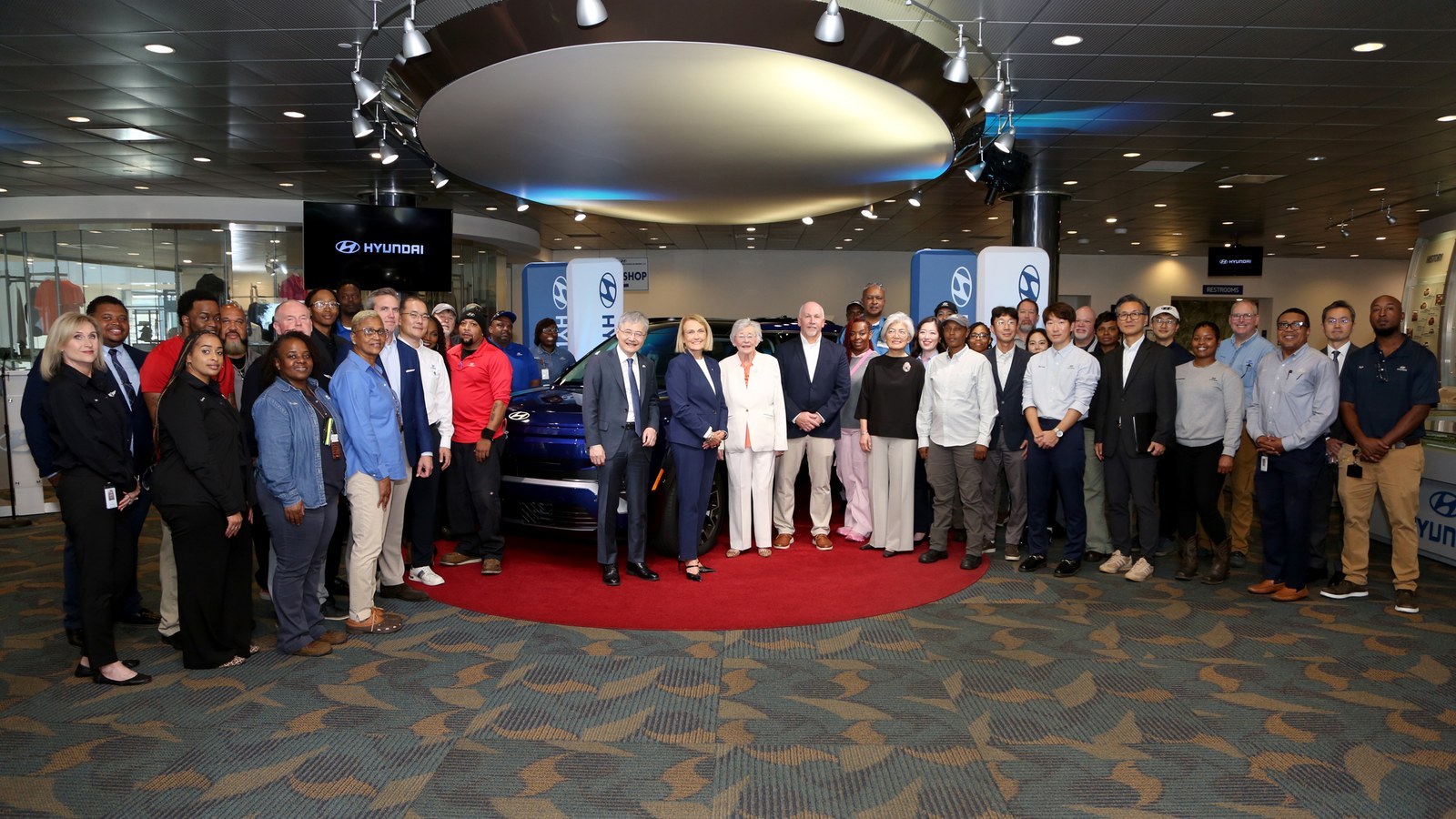
When the project was approved on June 25, Korean housing regulations still barred mechanical parking systems in apartment complexes, which is why it needed a sandbox exemption. In July the ministry amended two sets of rules, classifying parking robots as a type of mechanical parking equipment and allowing them in multi-unit housing. The robots ran from September 7 to October 30, six in the morning to six in the evening, with two operators on site and roughly 100 participants from the three companies and pre-booked visitors.
The test covered 16 everyday scenarios, including quick trips out for deliveries and rush-hour queues, and 12 emergency ones: a robot failing mid-job and another taking over, power and communications loss, and moving a suspect vehicle to an isolation zone in a fire. Hyundai WIA is now going through the data on dwell times, success rates and robot utilization to build an optimization engine for its control software. The group also plans to use the results to propose occupancy standards for residential, commercial and transit-hub garages.
Where this sits in the market
Hyundai WIA first shipped parking robots to the group's innovation center in Singapore in November 2023, then to the Alabama and Georgia plants and the new Ulsan EV factory that builds the Genesis GV90. The first paid deployment came in 2024 at an office building in Seoul's Seongsu district, with a control system Hyundai said could run up to 50 robots at once.
The approach differs from the driverless parking Bosch and Mercedes-Benz offer at Stuttgart Airport, where the car drives itself using sensors in the garage. Hyundai's system moves any car, including ones with no automation at all, which is the point in an apartment lot full of mixed hardware. Hyundai WIA says the next targets are used-car lots, rental fleets and delivery centers. The company hasn't said when a residential installation will go on sale, or what one costs.