Hyundai and Kia Show the Factory Tech That’s Headed for Their Georgia Plants
E-FOREST TECH DAY 2026 opens in Uiwang with about 200 new manufacturing technologies, including an in-house 3D inspection tunnel Hyundai says will go to overseas plants — where humanoid robots are due in 2028.
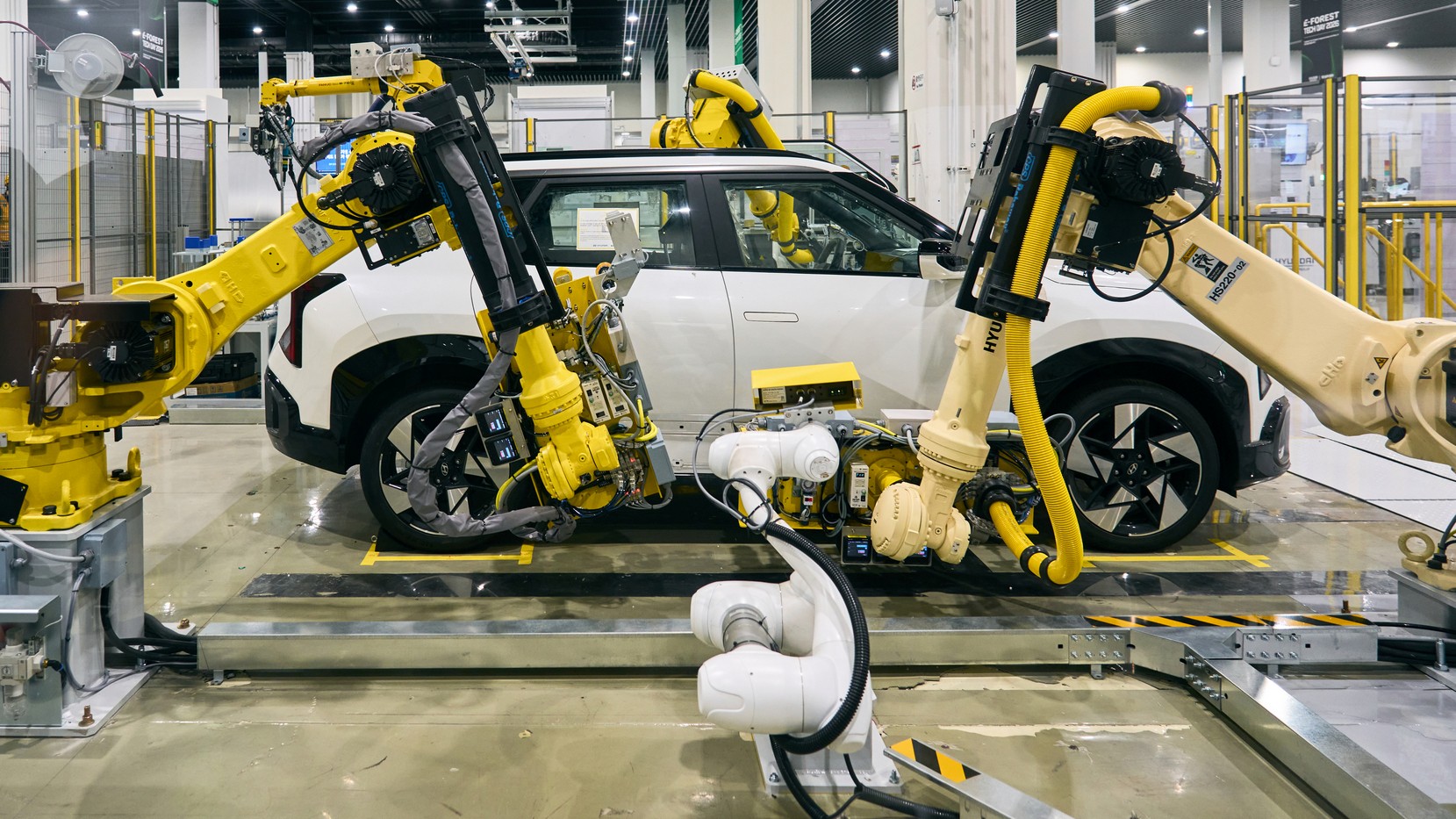
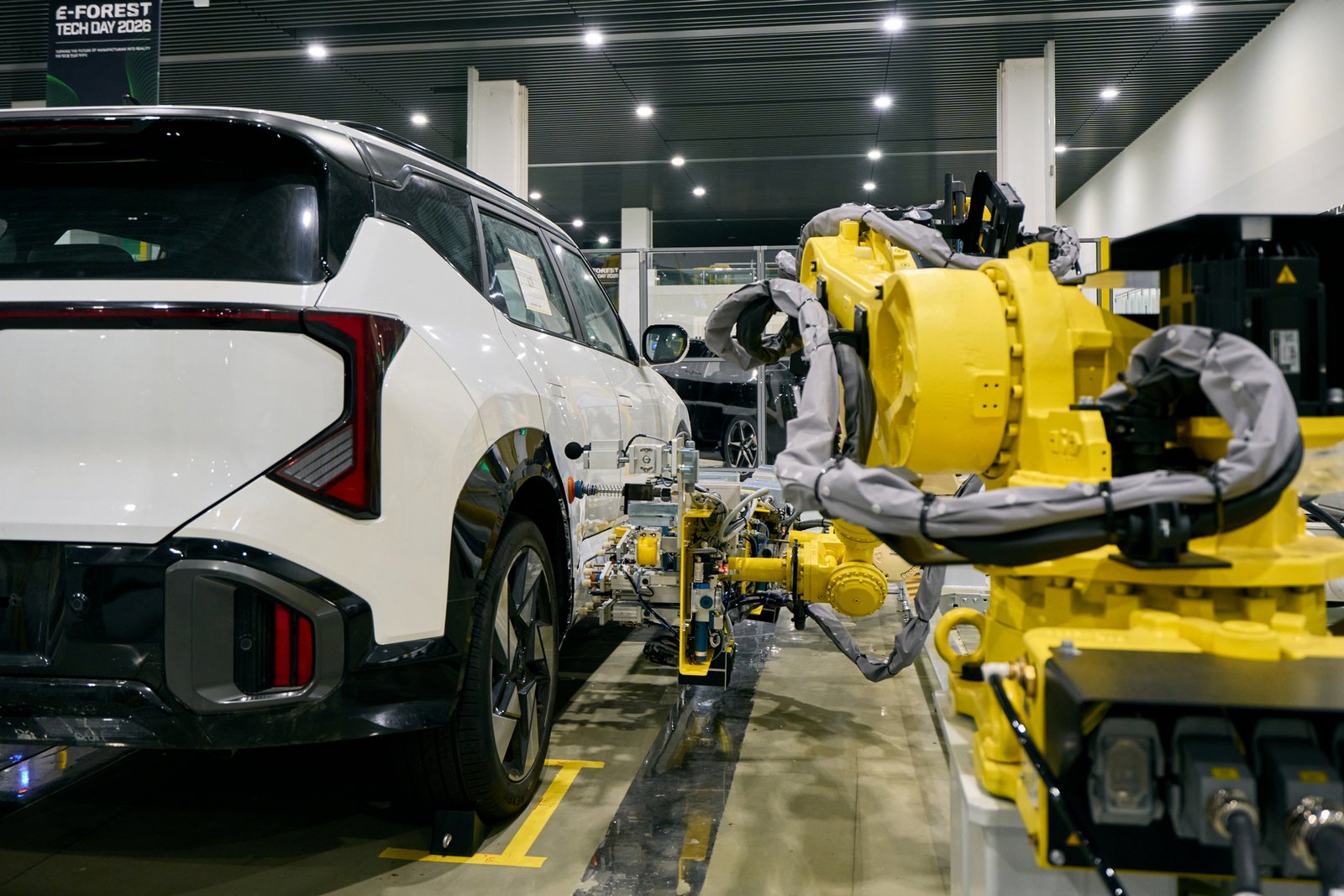
Hyundai and Kia opened E-FOREST TECH DAY 2026 on Monday at their Uiwang Research Institute outside Seoul, with roughly 200 new manufacturing technologies on display and a plan to turn their plants into what the group calls software-defined factories. Several of the systems, Hyundai says, are slated for its overseas plants — which, for American buyers, means Georgia and Alabama.
The three-day exhibition runs through October 21 and is now in its seventh year. The pitch is the same one Hyundai has been making for its vehicles: collect the data in one place, build on a common software layer, and let AI do more of the work. It is the factory-floor version of Hyundai's "data flywheel" approach to autonomy.
What's actually on the floor
The exhibits are split into four areas: foundational SDF technology, automation, energy solutions, and future mobility. In the first, Hyundai and Kia are showing a unified data-collection framework and a shared development environment, which they describe as the base for rolling standardized tools out to plants in Korea and abroad. A digital twin runs simulations on models of real equipment to catch problems before they reach the line, and a set of factory-specific AI agents handles data lookups, searches for manufacturing know-how, and writes equipment manuals.
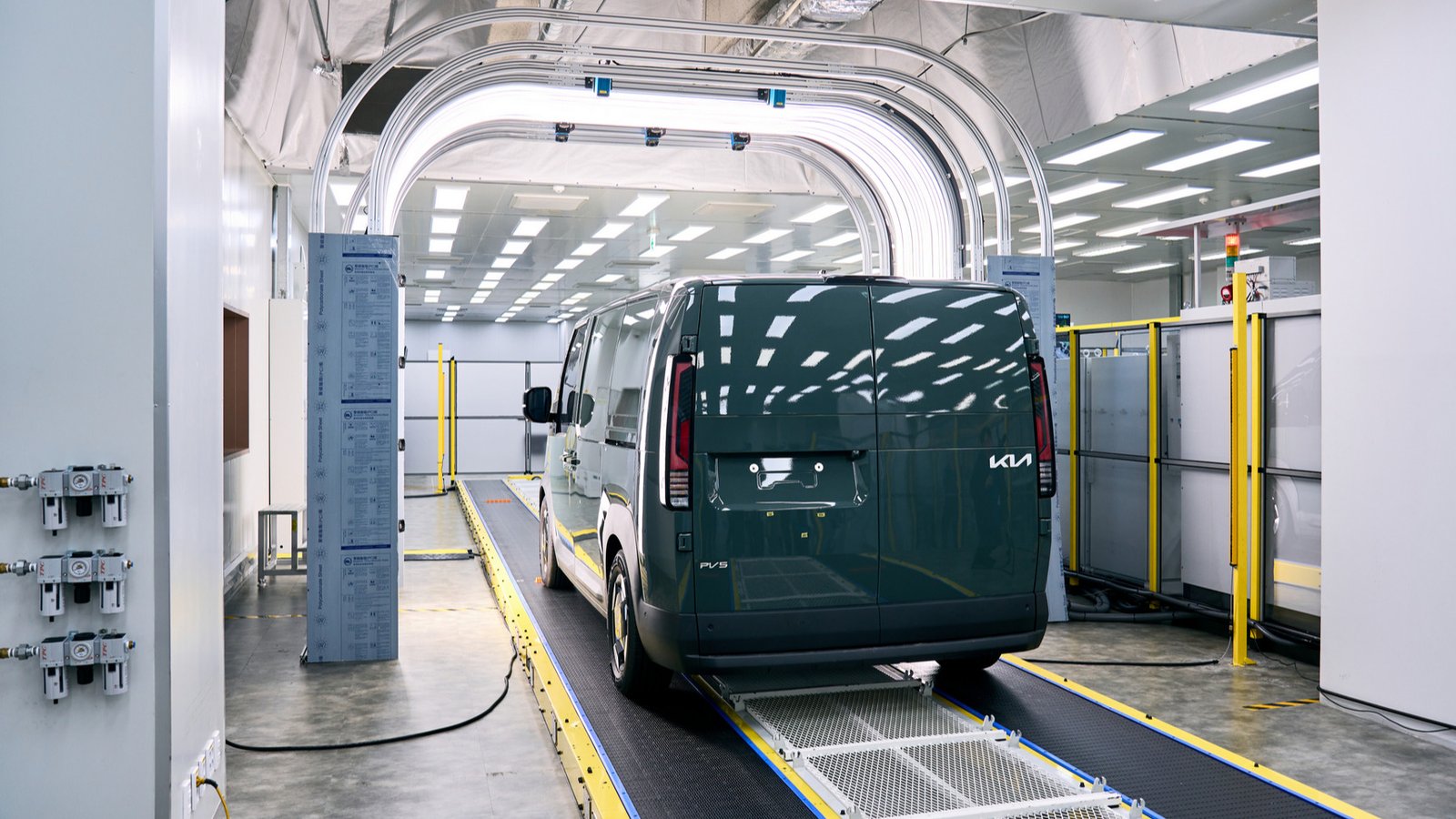
The most concrete piece is in the automation hall: a tunnel-type vision system that inspects a finished vehicle's exterior using 3D simulation. Hyundai says it developed the tunnel in-house to replace third-party inspection systems and plans to install it at plants in Korea and overseas. The display vehicle at Uiwang is a Kia PV5 van, the smaller PV7 sibling that is also not coming to the US.
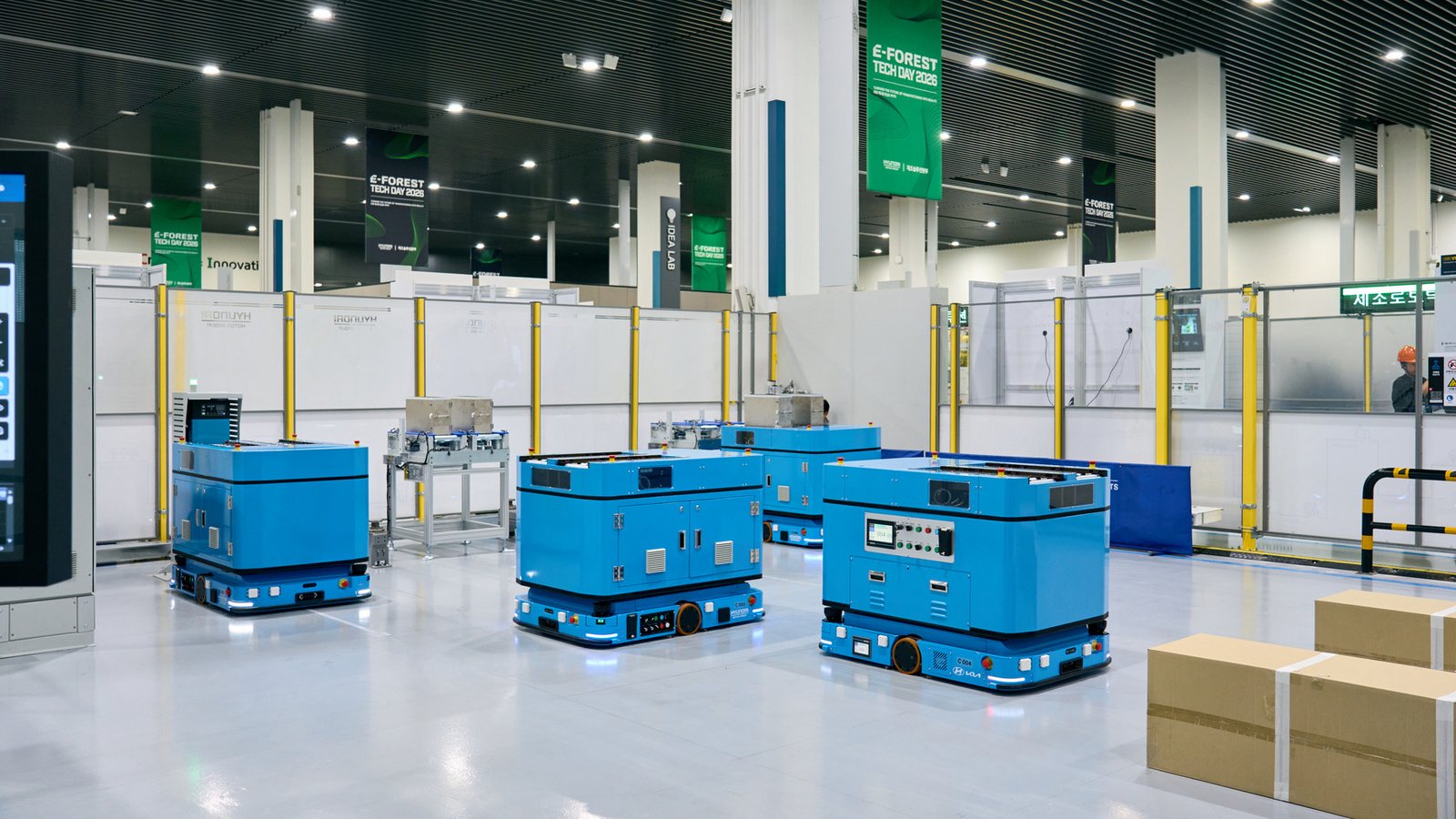
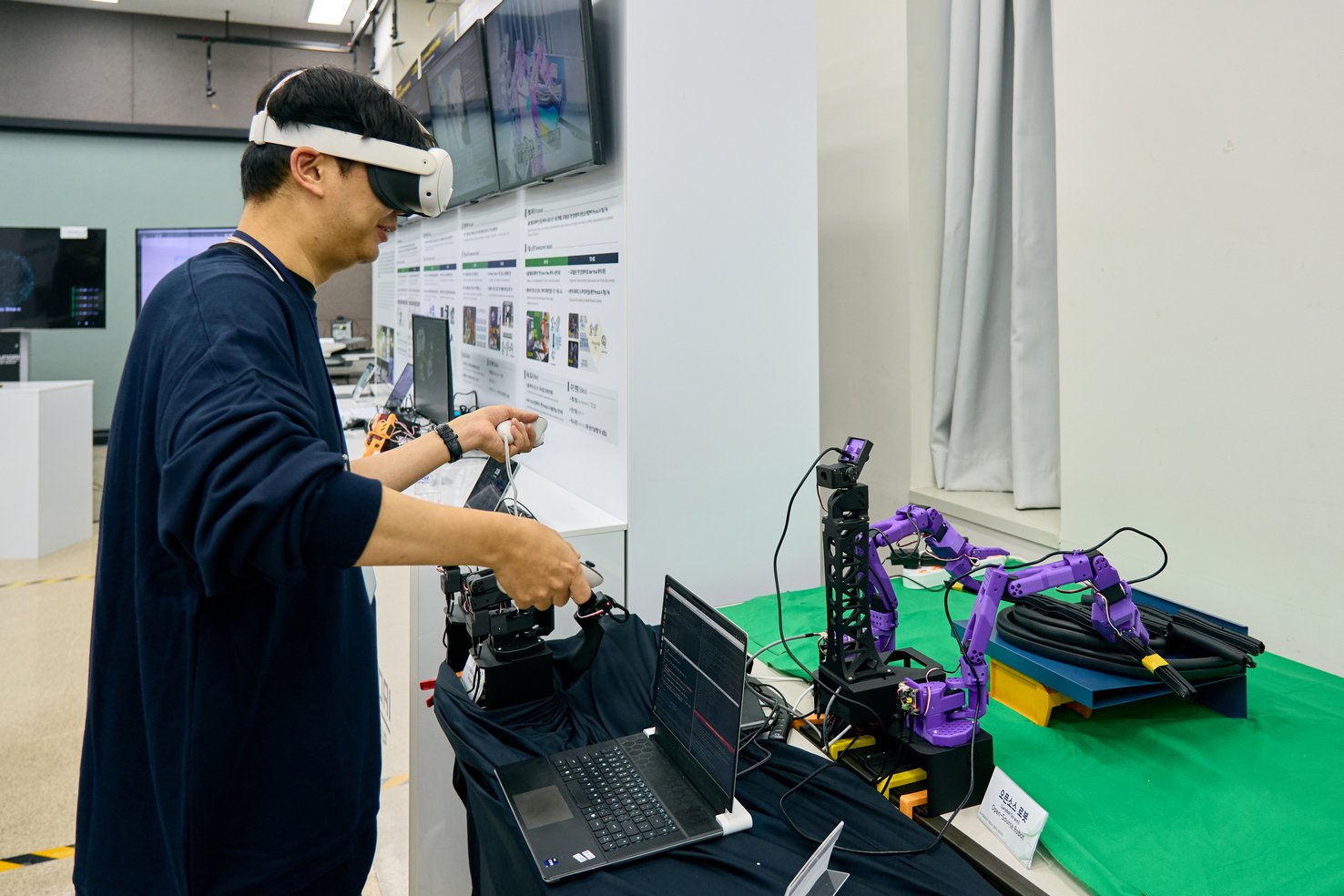
Elsewhere, robot cells demonstrate assembly tasks such as fitting door seals and spot-welding body shells, autonomous mobile robots move parts between stations, and a simulation station shows engineers teaching a robot arm by moving a handheld "leader" arm in front of a screen. The future-mobility area covers new forming methods and additive manufacturing that builds shapes directly from design data, with no molds required.
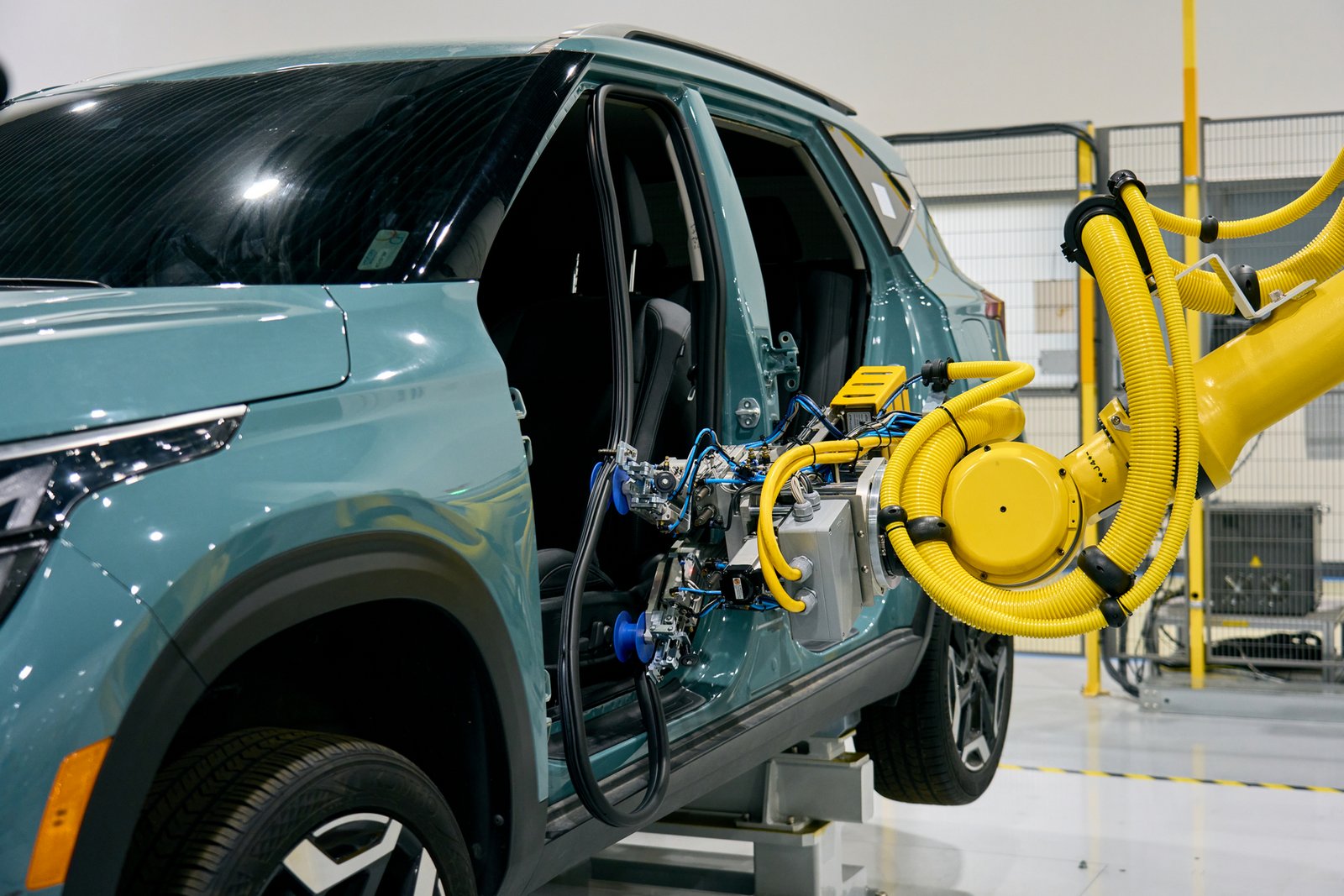
"We will keep working to expand the use of these new technologies in our production plants and put them into practice on the factory floor," said Hyun Chul Cho, vice president and head of the E-FOREST Strategy Group at Hyundai Motor Group.
Why a Korean trade show matters in Georgia
Hyundai Motor Group has committed $26 billion to US investment through 2028, including raising Metaplant America's capacity from 300,000 to 500,000 vehicles a year and building a robotics hub sized for 30,000 robots annually. In January, the group said Boston Dynamics' Atlas humanoid would start work at Metaplant in 2028 on parts sequencing, moving on to assembly tasks from 2030. By May, that had grown into a plan for more than 25,000 Atlas units across group plants, with Kia's Georgia facility following in 2029 and a Hyundai Mobis actuator plant in the US to supply them.
None of that works without the software layer Uiwang is showing this week. A humanoid robot needs a factory that can tell it where the parts are and what to do with them, and a plant that builds hybrids, EVs, and gas models on the same line — the multi-powertrain strategy Hyundai's R&D chief laid out this month — needs the flexibility a digital twin provides.
Hyundai hasn't said which of the 200 technologies will reach Georgia first, or when. Last year's edition also showed more than 200 technologies, so the number itself is not the story. What to watch for is the rollout plan the group says it will present at this week's conference and partner seminars, where the agenda covers physical AI and data-driven manufacturing — the groundwork for the humanoid deployment two years out.