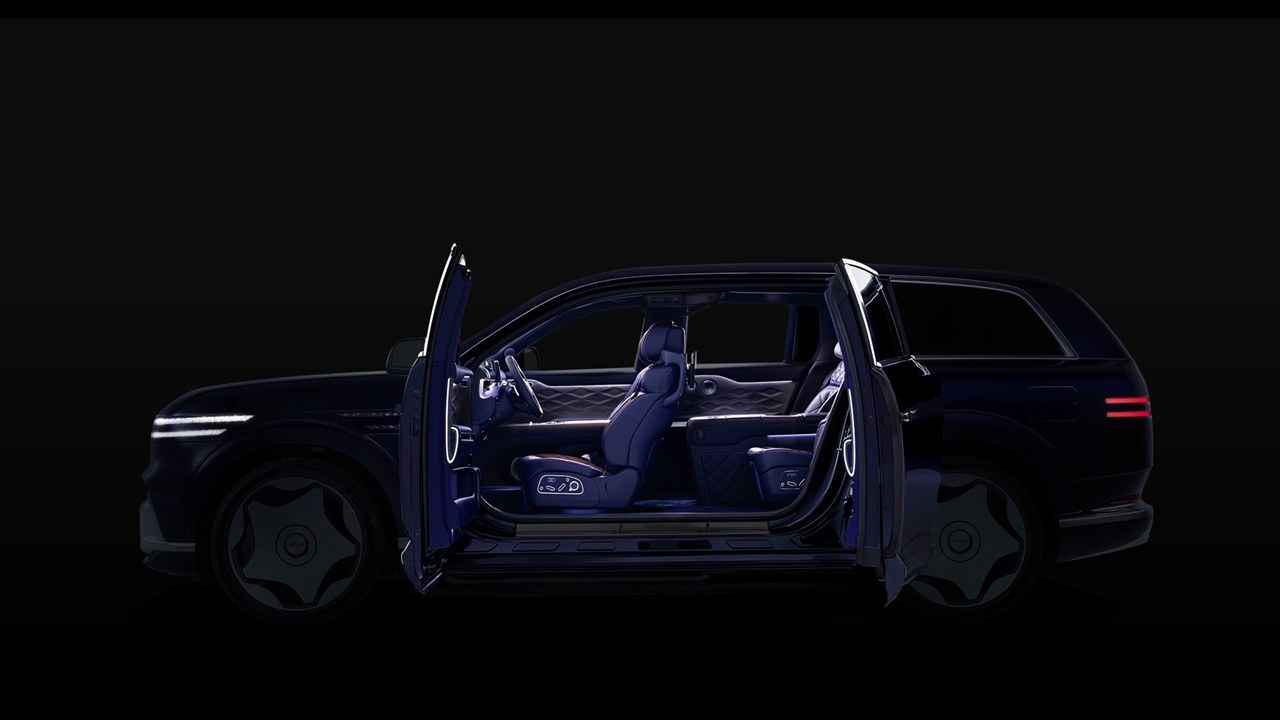
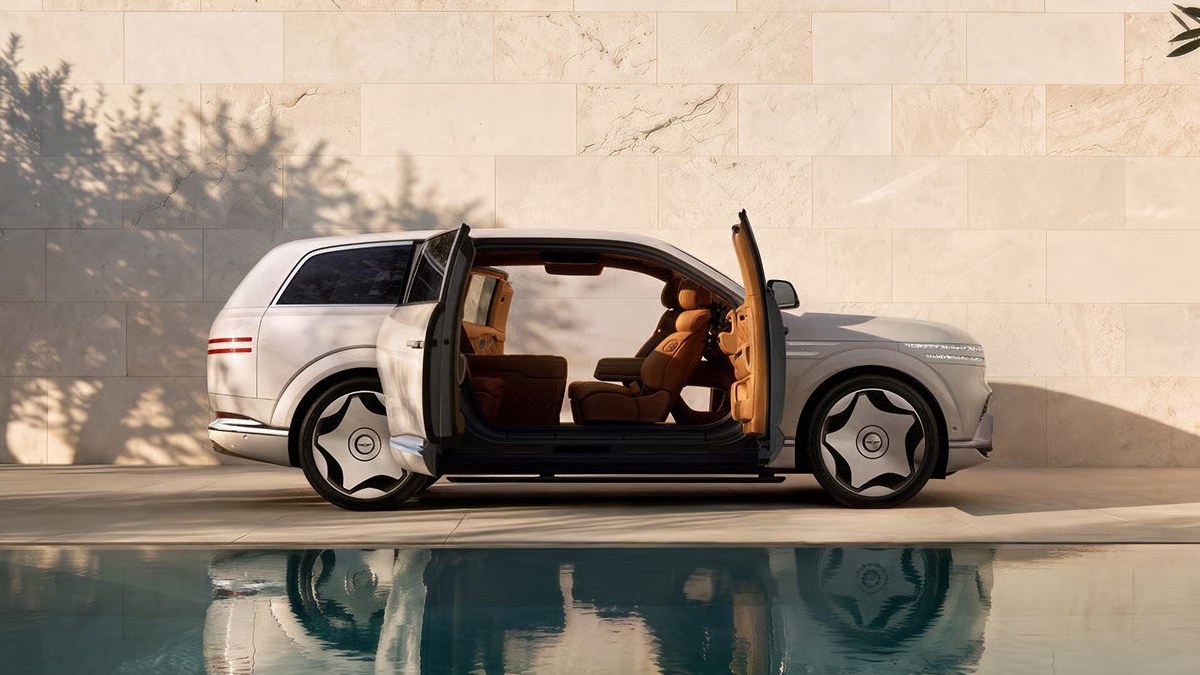
Genesis Scans Every GV90 for 15-Micron Flaws and Wind-Tests Each One Before Delivery
The fourth installment of Genesis's GV90 engineering series moves to the factory floor. It shows a 72-percent-aluminum body, robotic inspection, and a roller-rig wind test for every SUV.
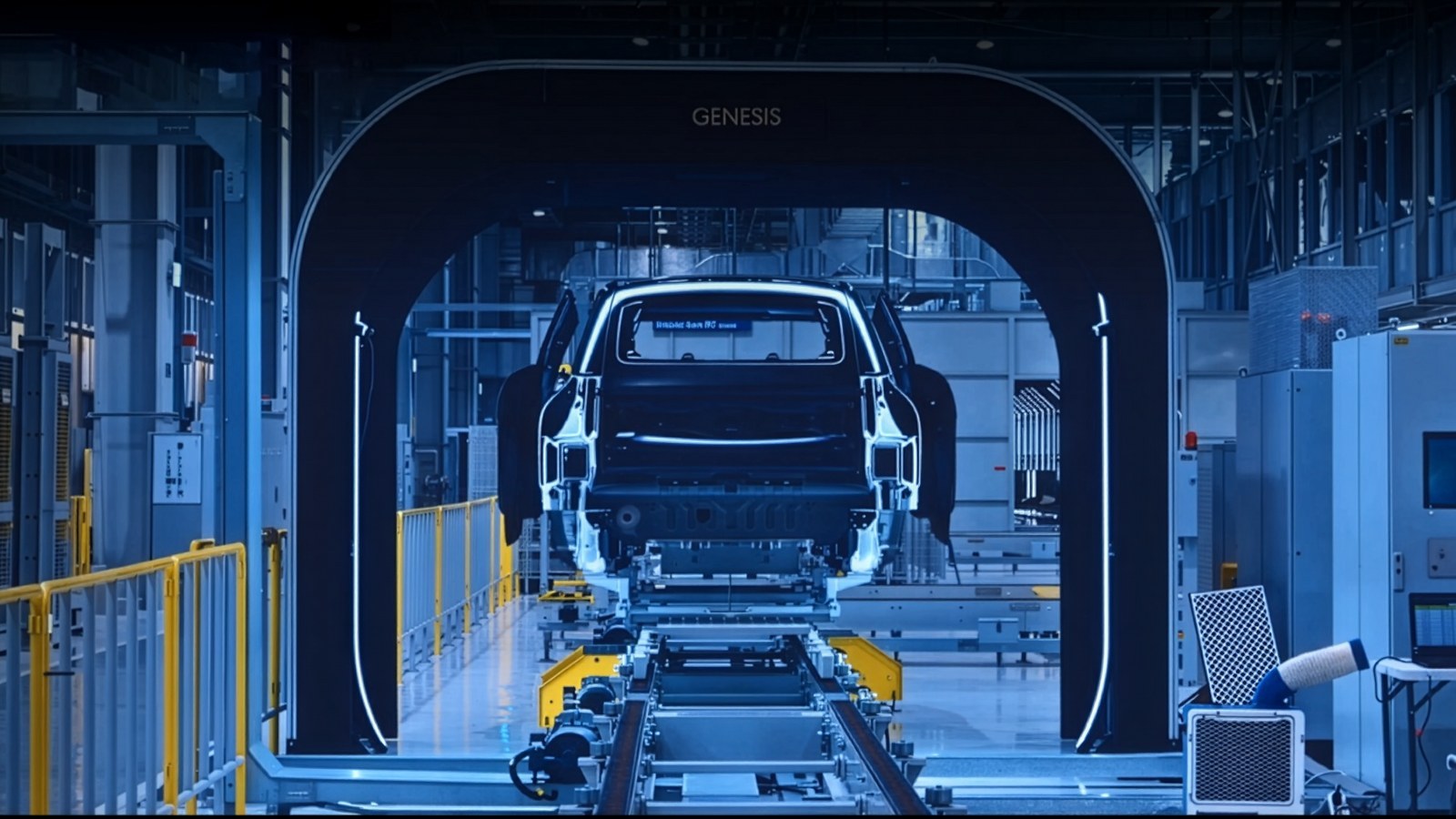
Genesis wants the GV90 to feel hand-built, even though it comes off an assembly line. In the fourth part of its GV90 engineering series, published October 27, the brand explains how: cameras that look for surface flaws smaller than 15 microns, more than 720 joints between aluminum and steel, and a wind-and-road test on a roller rig for every SUV before it leaves the factory.
The GV90 is built at Hyundai's new EV-only plant in Ulsan, South Korea. Genesis shows the SUV in this installment, but there is still no price and no EPA range figure. Our 2028 Genesis GV90 guide still puts the U.S. arrival in early 2027.
An aluminum body that's hard to press and hard to join
Most of the trouble starts with the body. Aluminum makes up 72 percent of it, about double the share in earlier Genesis models, a figure the brand first disclosed in its breakdown of the pillarless Neolun's structure. Aluminum springs back after it is formed, and that makes it hard to press the GV90's smooth, moon jar-inspired panels without waves or creases. Genesis forms them on a 6,800-ton servo press that adjusts force and speed through a five-stage process. Cameras then check every panel, and a laser marks each one with a QR code so it can be traced back through production.
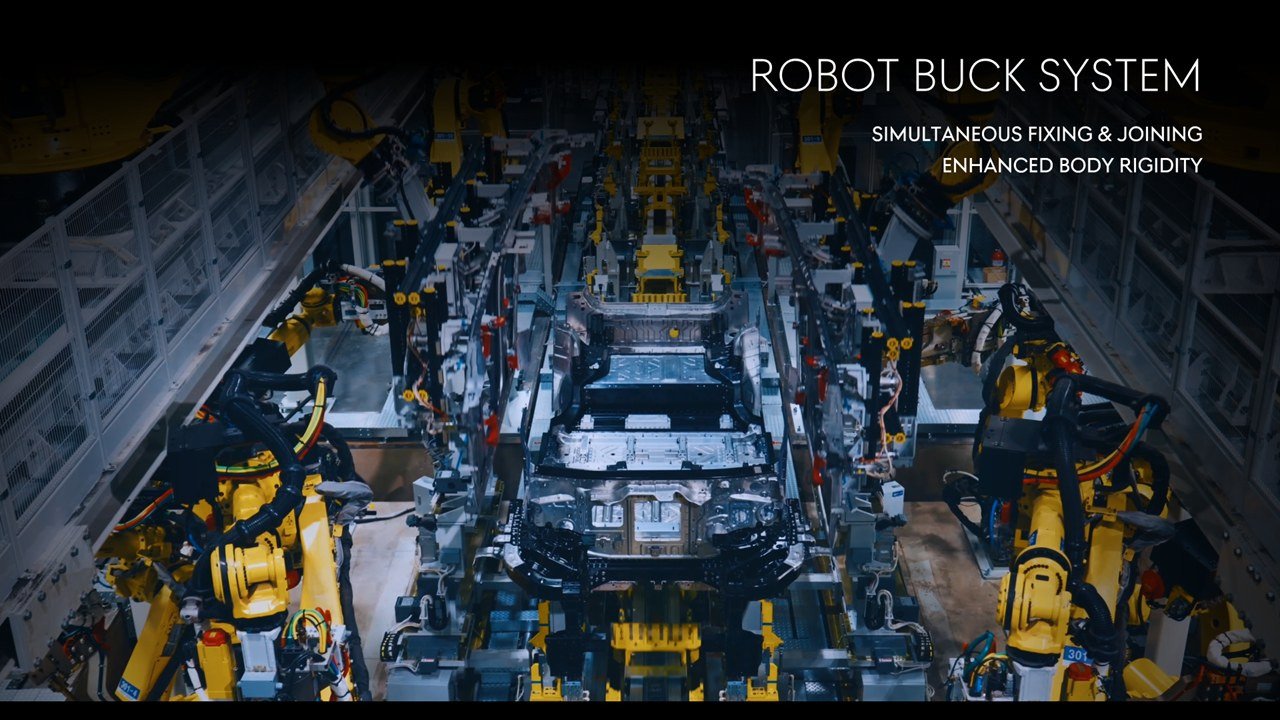
Aluminum and steel can't simply be spot-welded together, so the GV90 uses more than 720 dissimilar-metal joints. These combine flow-drill screws, self-piercing rivets, and laser welding. A robotic buck system holds the side panels in place while robots join them, which Genesis says keeps tolerances tight and adds body rigidity.
Checks a person couldn't make
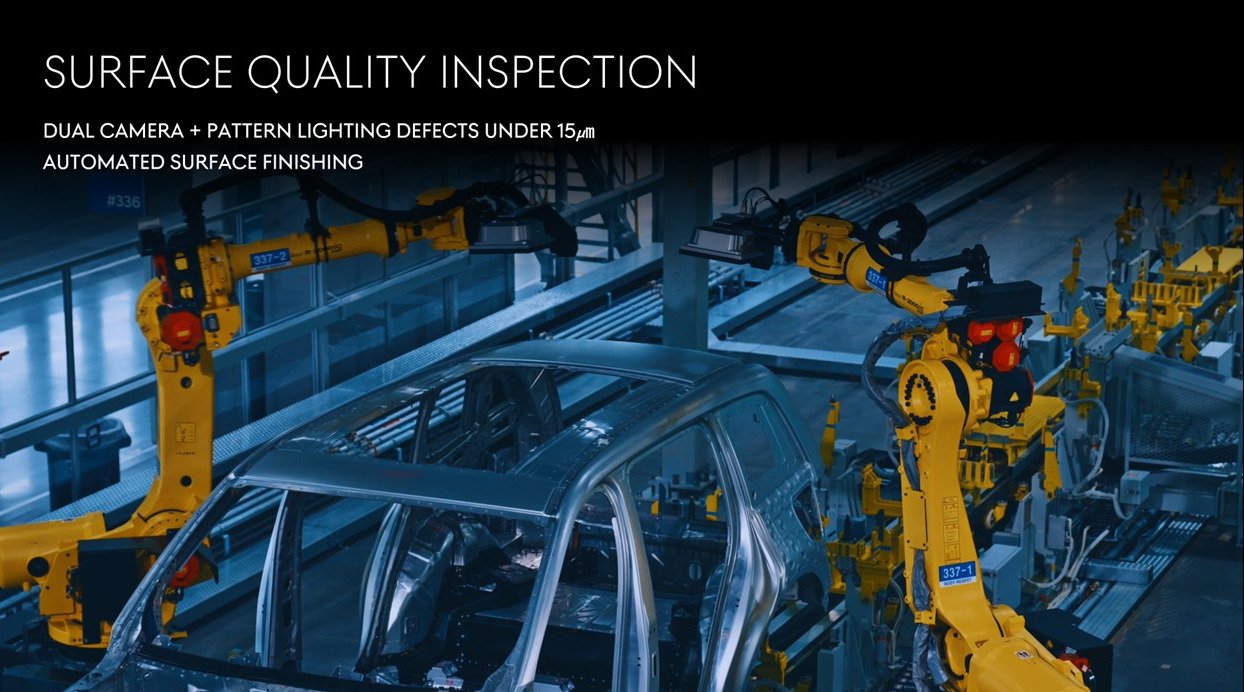
Before paint, robotic stations use two cameras and patterned lighting to look for surface defects smaller than 15 micrometers, or about 0.0006 inch. Genesis says that is six times finer than the human eye can resolve, and robots then smooth the spots they flag. After painting, each body goes through a lit inspection tunnel. Cameras check it first, then human inspectors take a second look.
A separate Special Color Booth feeds custom paint for bespoke color requests. Genesis also says its low-temperature curing system cuts the paint shop's carbon emissions by up to 40 percent. Inside, the release lists semi-aniline leather colored with natural dyes, wool-cashmere trim, and, in the Neolun, a hardwood floor with radiant heating modeled on Korea's ondol underfloor heating.
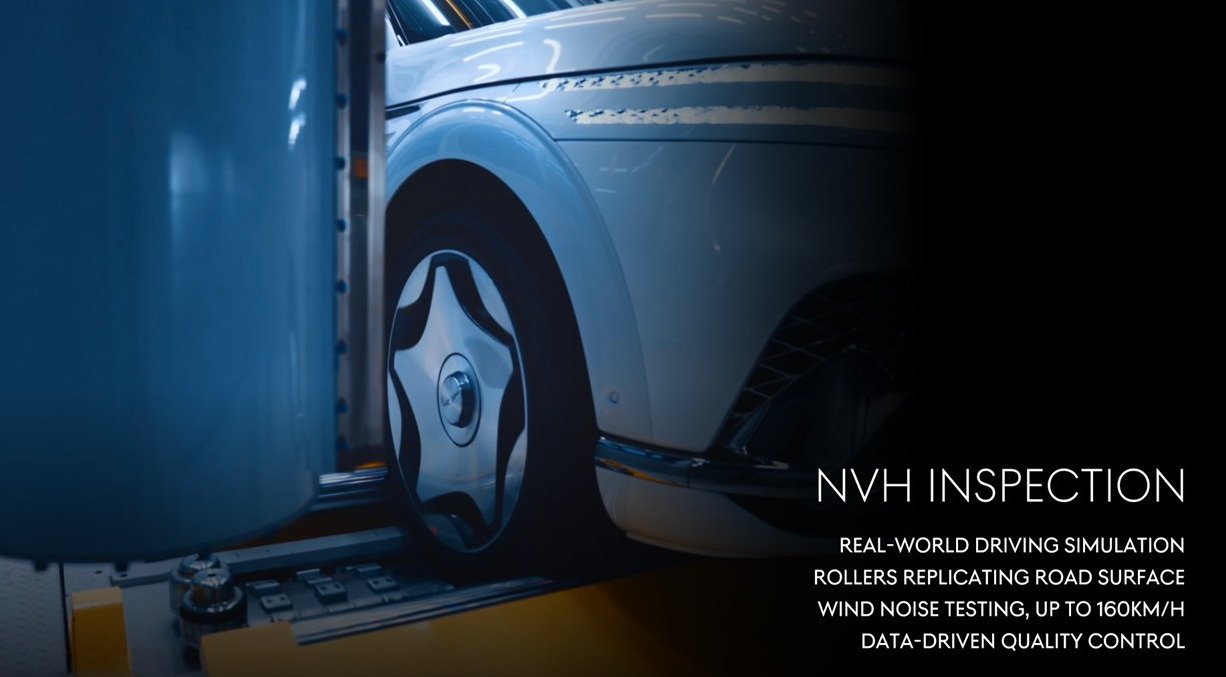
The final step builds on the noise work Genesis covered in its earlier briefing on the GV90's air suspension and acoustic glass. Every finished vehicle runs on an enclosed roller rig that recreates rough road surfaces and blows wind at up to 160 km/h (99 mph). The results are analyzed in real time and sent back to the stations upstream, so a recurring noise can be fixed at its source rather than one car at a time.
Why the factory matters
The plant itself is a milestone for Hyundai. When it broke ground in November 2023 on a 548,000-square-meter site, the automaker said it would invest about 2 trillion won (roughly $1.5 billion) to build up to 200,000 EVs a year, starting in 2026, The Korea Times reported. It is Hyundai's first new car plant in Korea since 1996, and a large Genesis electric SUV was named as its first product.
Genesis is aiming the GV90 at the Cadillac Escalade IQ (see how the GV90 compares with the Escalade IQ) and the Mercedes-Benz EQS SUV, a class where buyers expect panel gaps and paint to be flawless. Genesis's numbers are its own and can't be checked from outside the factory. The first U.S. deliveries will show whether they hold up.
Genesis hasn't said how many GV90s Ulsan will build each year or how much of the plant's capacity the SUV will use. U.S. pricing also remains unannounced.