Mercedes Is Turning Car Windows Into Screens That Warn the Drivers Behind You
LED panels laminated into the glass could flash warning triangles to following traffic, while a cell-level converter rethinks how 800-volt EV batteries are built.
Mercedes-Benz wants the glass on its cars to do more than keep the weather out. The automaker has shown three research projects — LED displays laminated into the side and rear windows, a holographic windshield display, and a cell-level “Power Converter” for 800-volt EVs — and it's careful to say none of them is a production feature yet.
The reveal is part of the brand's 140th-anniversary push, the same campaign that sent three S-Class sedans on a 140-stop world tour. Unlike most anniversary material, though, this batch is pure engineering.
Windows that talk to the car behind you
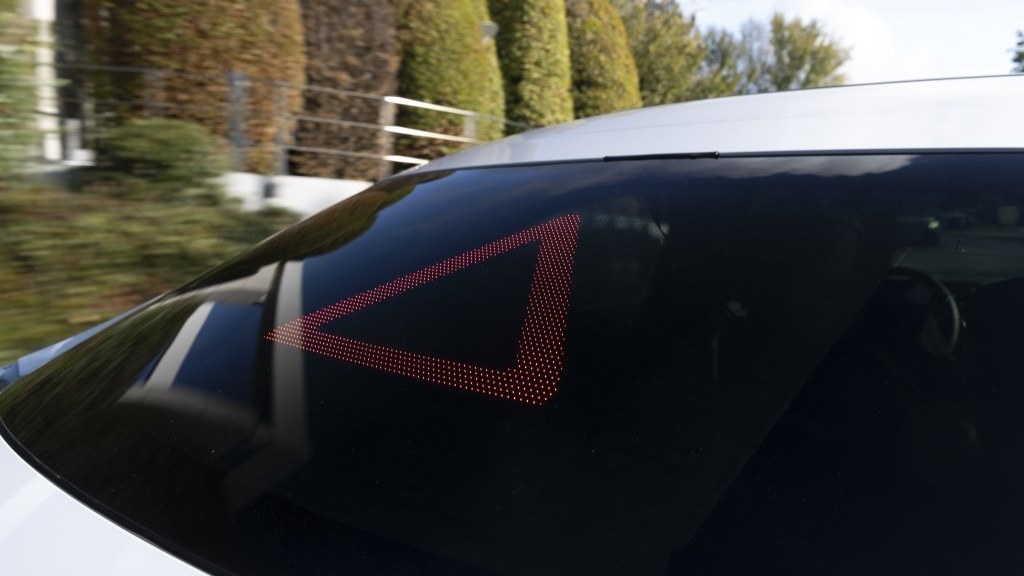
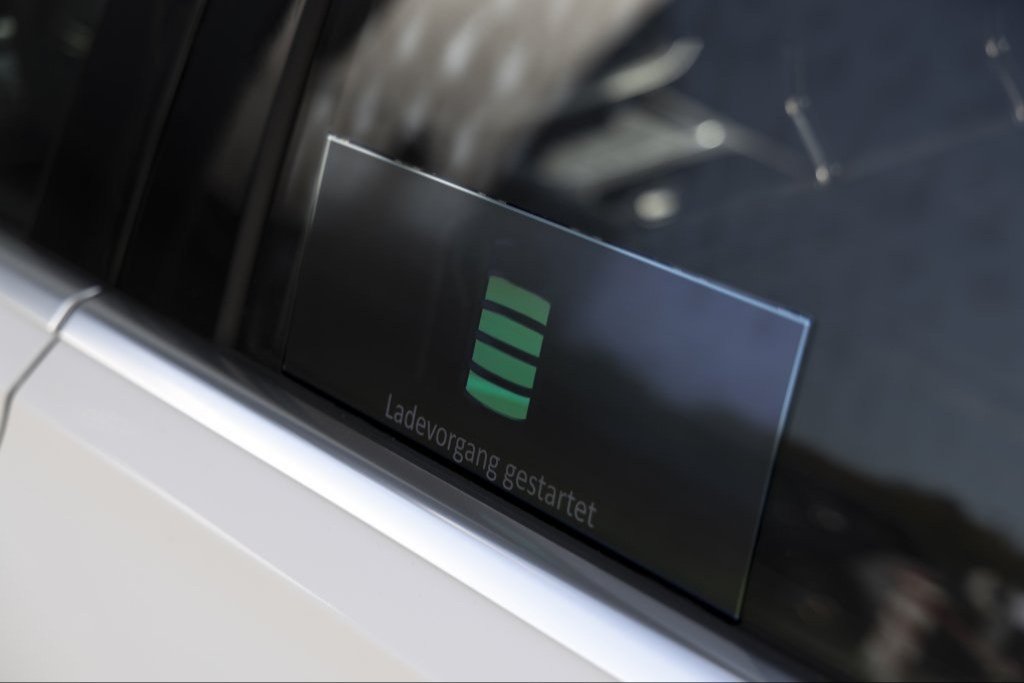
The “Display in Glass” concept uses two LED types. Larger, lower-resolution mini LEDs sit in the rear window, where Mercedes says they could show brake signals, a warning triangle, or traffic alerts for following drivers. Sharper micro LEDs suit smaller patches of glass and can run animations. When nothing is on screen, the company says the elements laminated into the glass are almost invisible.
Mercedes' own infographic lists use cases such as a heavy-braking warning, an accident-ahead alert, a pedestrian-crossing warning, and a parking-maneuver signal. The side-window panel is more personal: charging status, greetings when the owner walks up, a birthday message, or a digital version of the paper parking disc used in Europe.
What the company hasn't said is how rear-window warnings would fit lighting regulations in the US or Europe, or which future models could get them.
A windshield only you can read
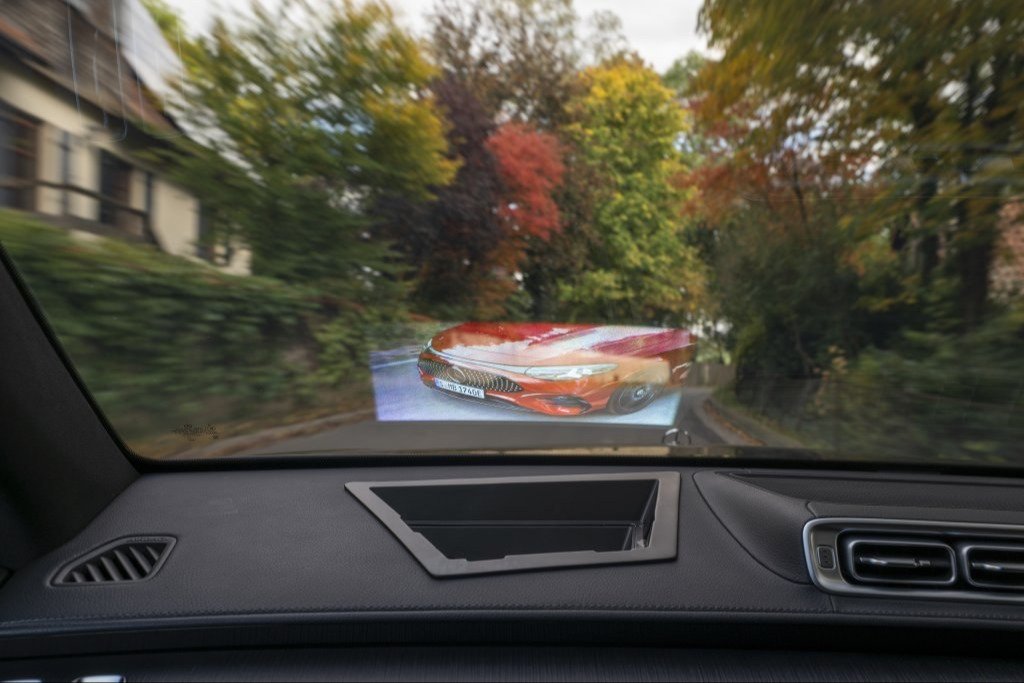
The Holo Display puts a projector in the dashboard and a transparent film inside the windshield. That film uses holographic optical elements (HOE) that reflect only the projector's wavelengths, which Mercedes says keeps the image legible in sunlight. Content is visible only from a set viewing angle, so the driver can see navigation while the passenger watches a video, with neither seeing the other's screen.
Mercedes isn't alone here. BMW's Panoramic Vision, which arrived with the Neue Klasse models such as the BMW iX3 M60 xDrive, already projects information across a dark-coated band at the bottom of the windshield. Hyundai Mobis, Zeiss, tesa, and Saint-Gobain Sekurit formed an alliance in February to bring holographic windshield displays to mass production by 2029, claiming more than 10,000 nits of brightness.
An 800-volt pack that isn't wired like one
The least visible project may matter most. Mercedes' Power Converter uses programmable micro-converters attached to individual cells or cell groups. Running in parallel, they deliver a steady high-voltage output of up to 800 volts regardless of each cell's charge or age, and the company's graphic says configurations above 800 volts are possible. The current units handle up to 3 kW each and support AC and DC charging, including bidirectional use.
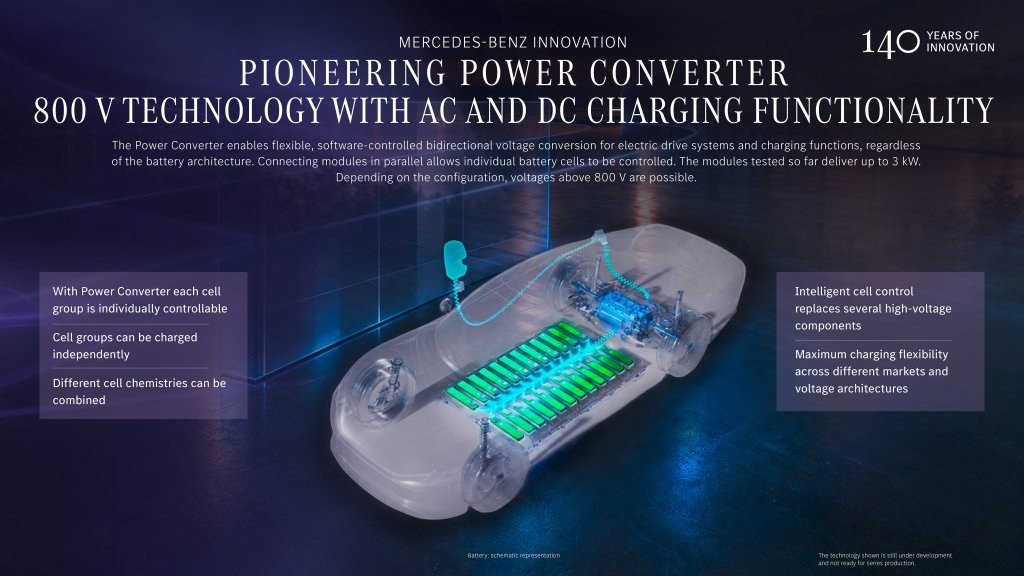
The payoff is decoupling pack voltage from how many cells are wired in series. Mercedes says that could let one box replace several high-voltage components and even mix cell chemistries in one pack. Stellantis pursued a similar idea with Saft: its IBIS prototype, shown in 2023, moves the inverter and charger into the battery, with a stated goal of reaching Stellantis vehicles before 2030. Mercedes has been placing other long-range battery bets as well, including its solid-state cell testing with ProLogium.
For now, all three remain lab work. Mercedes gives no timeline, no target model, and no cost, and describes the technologies only as possible future directions.