Nissan Keeps Its ¥200 Billion Profit Goal on Fewer Sales. America Has to Deliver It
Strip out a ¥60 billion tariff refund and the first half earned about ¥20 billion. U.S.-built Rogues, Frontiers, and Pathfinders now have to deliver the rest.
Nissan is back in the black for the first half of its fiscal year, and it still says it will earn ¥200 billion (about $1.27 billion) in operating profit by March. It now expects to get there while selling fewer cars than it planned in the spring. The global sales outlook drops from 3.15 million to between 2.97 million and 3 million, and the U.S. is the market being asked to make up the difference.
The April-to-September numbers came out on November 11 and show a business that is improving underneath but still very thin. The second quarter alone produced ¥2.1 billion of operating profit, roughly $13 million. That puts Nissan well behind the U.S.-based automakers in our Q3 2026 auto earnings scorecard, even before its second-half plan is tested.
The numbers
| Yen in billions | H1 FY2025 | H1 FY2026 | Q2 FY2025 | Q2 FY2026 |
|---|---|---|---|---|
| Net revenue | 5,578.7 | 6,072.0 | 2,871.8 | 3,107.8 |
| Operating profit | -27.7 | 80.0 | 51.5 | 2.1 |
| Operating margin | -0.5% | 1.3% | 1.8% | 0.1% |
| Net income | -221.9 | -39.7 | -106.2 | -43.5 |
| Global retail sales | 1.48 million | 1.41 million | 773,000 | 709,000 |
Nissan's fiscal year starts in April, so these figures cover April through September. They are reported with the company's Chinese joint venture accounted for by the equity method, at an average rate of ¥159 to the dollar. Source: Nissan's first-half release and its investor presentation.
Why the second quarter nearly hit zero
A year ago, Nissan's July-to-September quarter got a lift that couldn't come back. After the federal greenhouse-gas and CAFE rules were loosened in 2025, Nissan reversed provisions it had built up for U.S. emissions compliance, and that release added ¥36 billion to the quarter. CFO George Leondis called it the only true one-time factor in the year-on-year comparison. Without it this year, the second quarter starts ¥36 billion behind.
Leondis said about ¥30 billion more went to items specific to this quarter: production days lost in Kyushu after the Kumamoto earthquake, the timing of cost-cutting benefits, and settlements on some prior-year taxes. He split them roughly into thirds and said the quarter would have earned about ¥30 billion without them. Nissan expects that ¥30 billion to come back in the third quarter.
The one-time tariff gain, explained
Tariffs show up in Nissan's first half twice, and the two entries mean different things.
The first is the ongoing bill. Nissan paid ¥42.3 billion less in tariff costs than in the same months of 2025, when Japanese-built vehicles faced a 27.5% U.S. duty before the trade deal cut it to 15%. That saving continues.
The second is a refund. In February, the Supreme Court ruled that the International Emergency Economic Powers Act doesn't authorize tariffs, which opened the way for importers to recover duties collected under it. In the first quarter, Nissan booked credits for IEEPA tariffs it had paid in the previous fiscal year, and its presentation lists a ¥61.1 billion U.S. tariff gain among the half's one-time items. Leondis rounded it to ¥60 billion and said it won't repeat in the second half.
That matters for reading the headline. Take the ¥60 billion out and Nissan's ¥80 billion first half is closer to ¥20 billion. The ¥120 billion Nissan now expects from October through March has to come almost entirely from the business itself.
America is carrying the plan
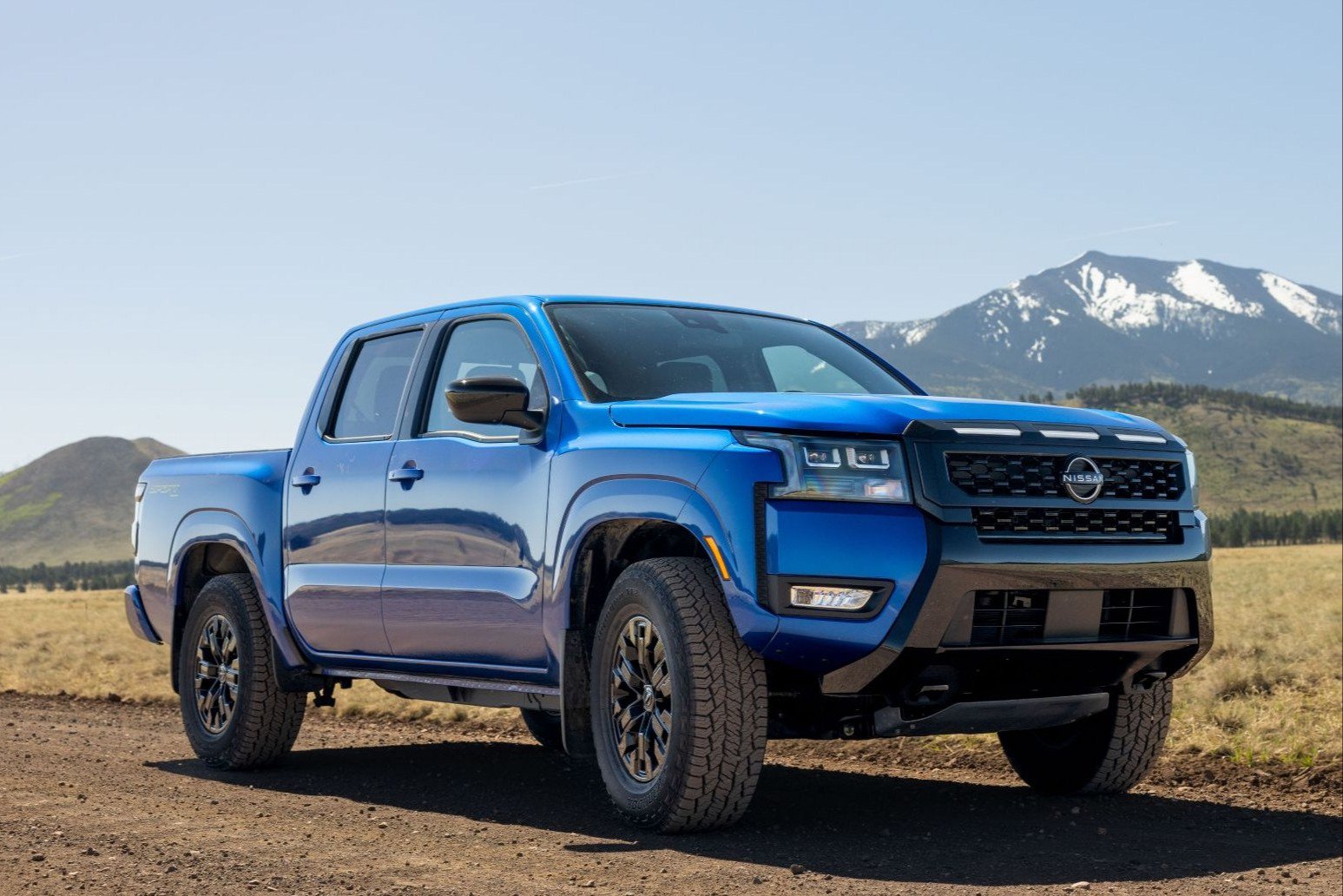
Nissan sold 469,000 vehicles in the U.S. between April and September, up 5.5% in a market it estimates grew 0.4%. The gains came from vehicles it builds in the U.S.: Rogue sales rose 31%, Frontier 36%, and Pathfinder 12%. The Rogue and Pathfinder are assembled in Smyrna, Tennessee, and the Frontier in Canton, Mississippi, so none of the three carries the import tariff.
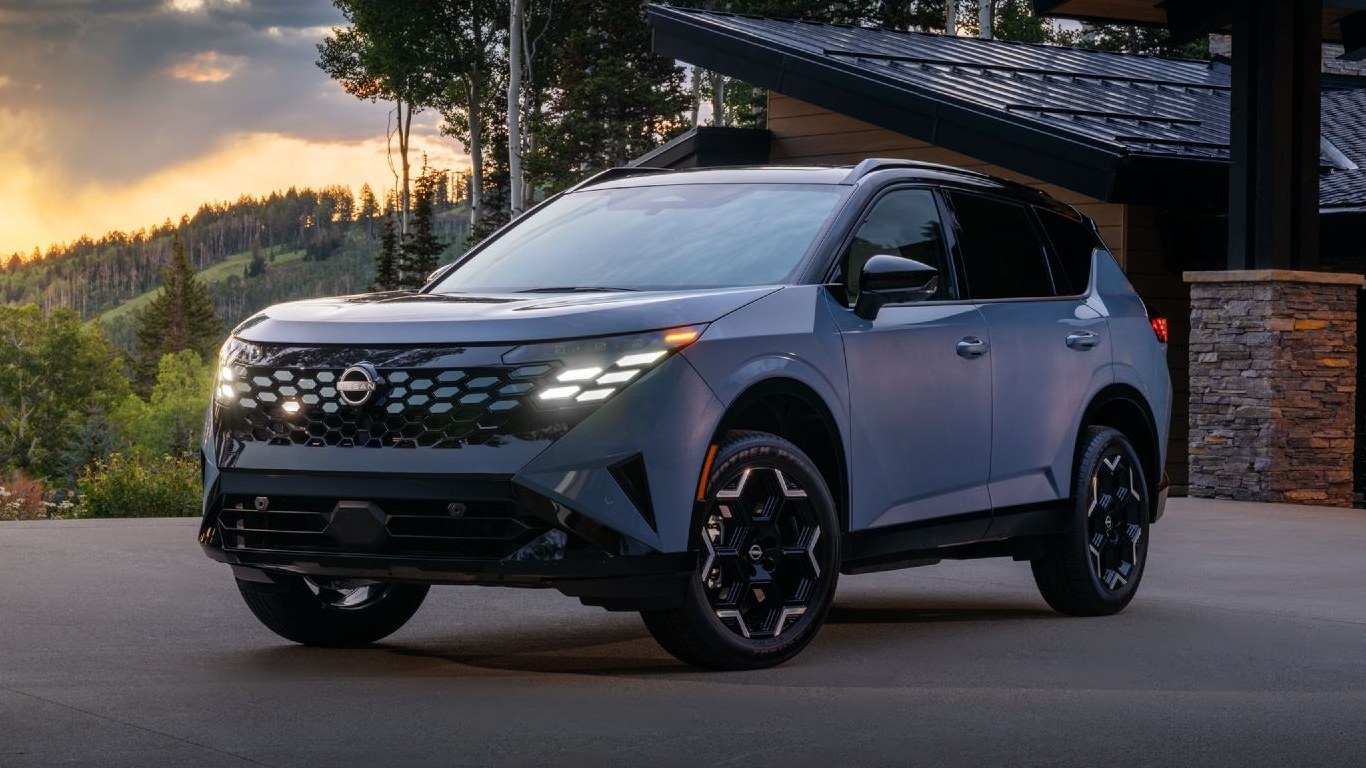
Nissan says pricing and a richer mix of trims have improved what it calls revenue quality. Leondis put first-half pricing at about ¥34 billion. Nissan's profit bridge combines pricing with selling expenses such as incentives in a single line worth ¥8.7 billion, and adds ¥27.7 billion from volume and mix. You can see the mix shift in the showroom: the off-road Armada now carries a Patrol badge at the same $78,990 as before, $4,690 more than the 2026 PRO-4X.
Nissan has also been selling far fewer cars to rental fleets, which makes its retail numbers look stronger than its totals. On October 1 it said the Nissan brand had been the fastest-growing mainstream brand in the U.S. for 13 consecutive months, with 19 straight months of year-on-year retail growth, according to its third-quarter sales release. That's Nissan's own ranking, and it was achieved partly by cutting rental sales 45% in the quarter. The North American retail forecast for the year has been raised from 1.32 million to 1.345 million.
Ivan Espinosa, Nissan's chief executive, said in the release: "Our first-half results show encouraging momentum across key markets, particularly the U.S. and Japan. China remains our most significant challenge, and we need to remain agile."
The second-half bet is an import
The main new product Nissan is counting on in the U.S. for the second half is the Rogue Hybrid. It's also the exception to the built-in-America story. The car is assembled at Nissan Motor Kyushu in Japan, so it pays the 15% tariff on Japanese-built vehicles. Nissan Americas chairman Christian Meunier has told CNBC that the hybrid will be imported at first, with U.S. production to follow.
The rollout starts at the top of the range. The first cars reaching dealers are AWD SR models with the Technology Package, while the $35,490 SV and the rest of the lineup arrive in January, as our 2027 Rogue Hybrid price and trim guide lays out. Nissan is already paying for conquest sales: a dealer bulletin reported by CarsDirect offers RAV4 owners $1,500 to switch to a Rogue Hybrid through January 4. That's money taken back from the pricing Nissan just credited for improving its revenue quality.
China is where the plan changed
The forecast cut is almost entirely Chinese. Nissan now expects 370,000 to 400,000 retail sales in China this fiscal year, down from the 580,000 it forecast in the spring. In the first half, China's total market fell 22% and Nissan's retail sales there fell 15%. Nissan points to weaker demand, a faster shift to electrified vehicles, and heavier competition. Outside China, it still expects volume to grow about 4% for the year.
Because the Chinese joint venture sits below operating profit in these accounts, losing Chinese volume costs Nissan less at the headline level than the unit numbers suggest. That's one reason the ¥200 billion target can survive a cut of up to 180,000 units.
What it takes to reach ¥120 billion
Nissan's own bridge from the first half to the second starts at ¥80 billion. It then subtracts ¥60 billion for the tariff refund that won't recur, ¥20 billion for exchange rates, and ¥25 billion for raw materials. It adds back ¥30 billion for the second-quarter items and ¥10 billion from further cost work. The remaining ¥105 billion is labeled sales performance and seasonality. Part of that is simply the calendar.
In my view, the ¥105 billion is the whole forecast. Re:Nissan has cut ¥110 billion of costs this half and ¥365 billion since it began, so cost savings no longer need a leap of faith. What's left is a sales bet, made in the one major market where Nissan is growing, and partly placed on a car that pays a tariff to get here. Toyota's North American business earned 1.1% margins in the same period, as we detailed in Toyota's first-half results. I'd treat that as a realistic ceiling for Nissan's U.S. business this year, too.
What we don't know
- How much Nissan earns in the U.S. Neither the release nor the presentation breaks out North American operating profit.
- Whether more tariff refunds are coming. Nissan hasn't said whether the ¥61.1 billion covers all of its IEEPA claims.
- How many Rogue Hybrids Nissan plans to sell this fiscal year, and when U.S. production starts.
- What the new business plan, due in February 2027, will say about plants, models, and partners. Nissan has said only that it will set out where the company will focus and how it will compete.
Liquidity looks steadier than profit. Nissan ended September with about ¥0.8 trillion in automotive net cash and ¥2.2 trillion in cash and equivalents, and it still aims to have more than ¥1 trillion of automotive net cash by the end of March.