Polestar Formula 2030 Concept Brings Back Buttons and Previews the Next Polestar 2
The full reveal adds dimensions, a cockpit with eight configurable physical controls, and the taillight design Polestar says is headed for production cars it can't sell in the US.
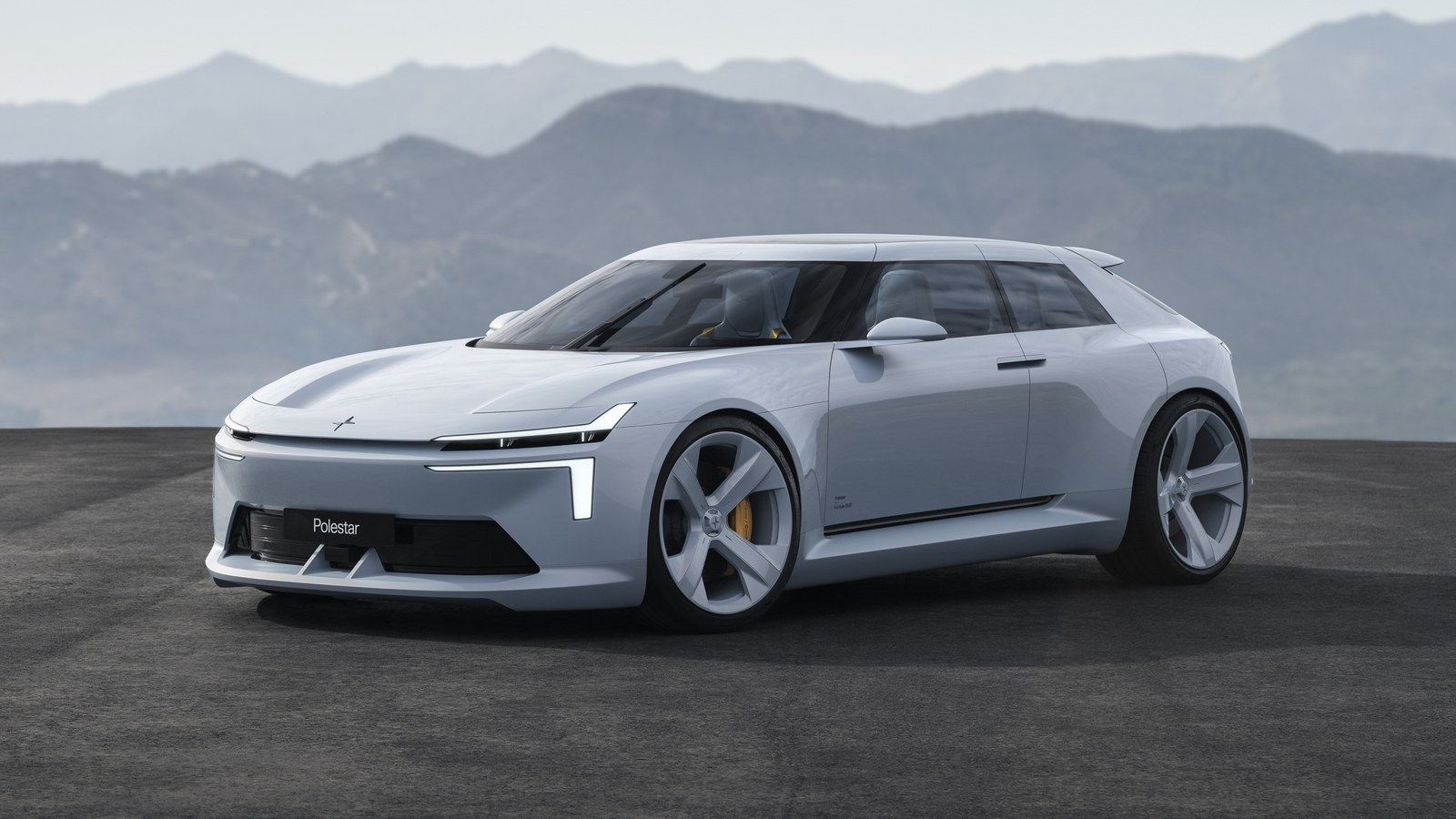
Polestar has now shown the whole of its Formula 2030 concept, two months after teasing it with a single darkened photo. The most consequential detail sits below the center screen: a panel of eight physical controls. Polestar says the concept's lighting and design cues will carry over to the next-generation Polestar 2, due in 2027, and to the Polestar 7 that follows.
When we covered the Formula 2030 teaser in September, Polestar had released no dimensions and no interior images. The full reveal, dated November 10, adds both. It is also the first show car developed under head of design Philipp Römers.
Lower than the Polestar 5
Polestar describes the concept as a compact, practical four-door sports car. It measures 184.3 inches (4,680 mm) long and 79.6 inches (2,021 mm) wide, on a 109.4-inch (2,780 mm) wheelbase. The roof is just 53.1 inches (1,350 mm) off the ground. That makes it roughly 3 inches lower than the Polestar 5 grand tourer, which Polestar lists at 1,419 to 1,425 mm tall.
By Polestar's account, that size puts the concept between the coming Polestar 2 and the Polestar 7. The Dual Blade headlights are built into a front aero wing and preview the face of the next Polestar 2. At the back, the full-width light bar is gone, replaced by what Polestar calls Single Blade taillights. The company says that design will reach production cars.
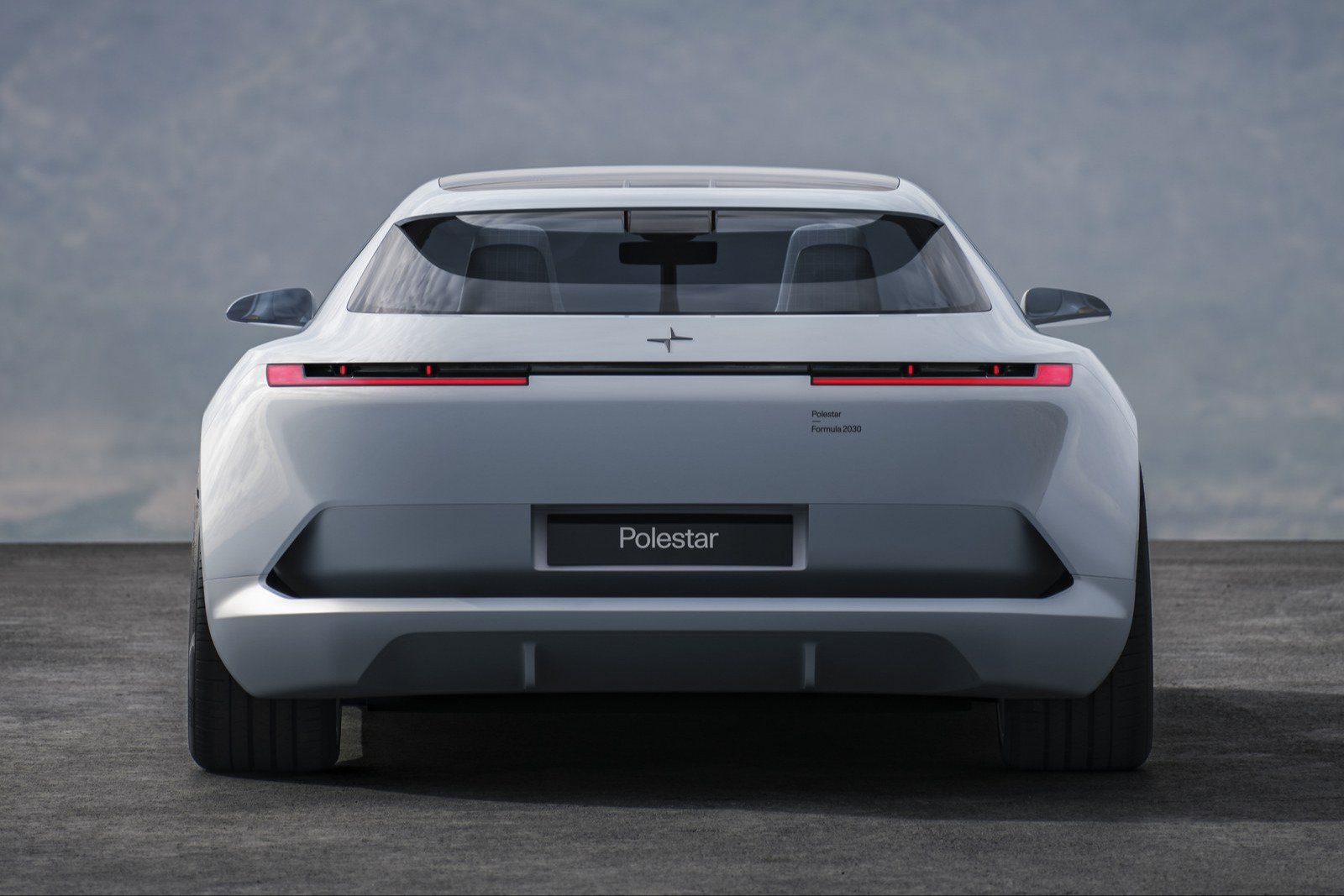
The rest is clearly show-car territory: 22-inch center-lock wheels, a single vertical wiper, Öhlins dampers, Brembo calipers in Polestar's Swedish Gold, pillarless doors that open in opposite directions, and a lidar unit that rises from under a shroud in the autonomous mode. Polestar hasn't released any powertrain, battery, or range figures.
A cockpit that moves with the drive mode
The driver faces a 20-inch curved display, which Polestar calls HyperDIM, mounted on the steering column. A 12.2-inch center screen sits in the console. A slider chooses between Performance, Normal, and Autonomous modes, and the cabin physically changes with the mode. In Autonomous, the seat and steering wheel move apart and the center screen stands upright. In Performance, the screen drops flush with the console and the wheel and display move closer to the driver.
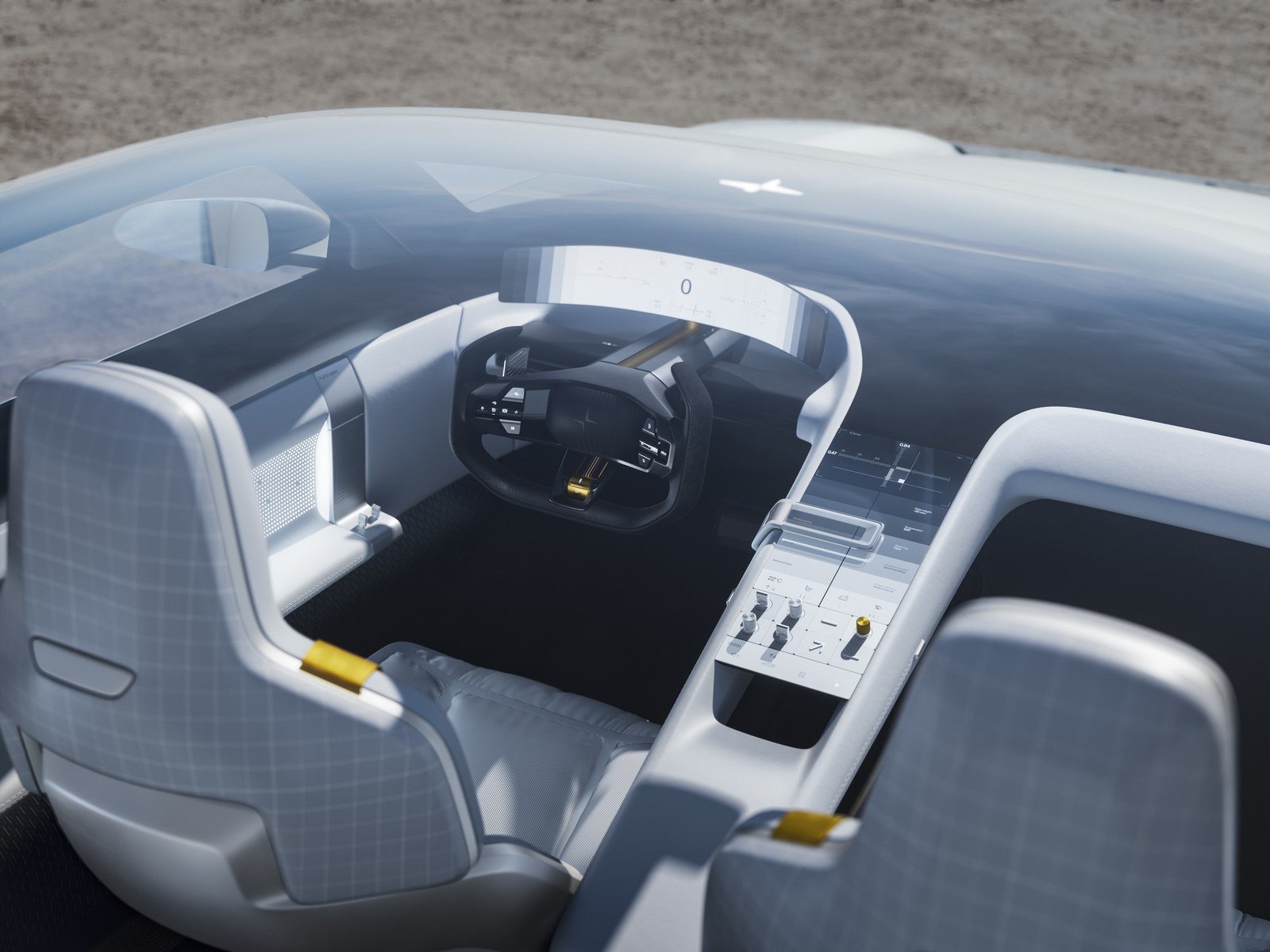
Owners could set each of the eight controls up as a rocker switch or a rotary knob and assign it to whatever they use most. Polestar presents the panel as a rebalancing of physical and digital controls. That is a notable shift for a brand whose current cars run almost everything through a central touchscreen.
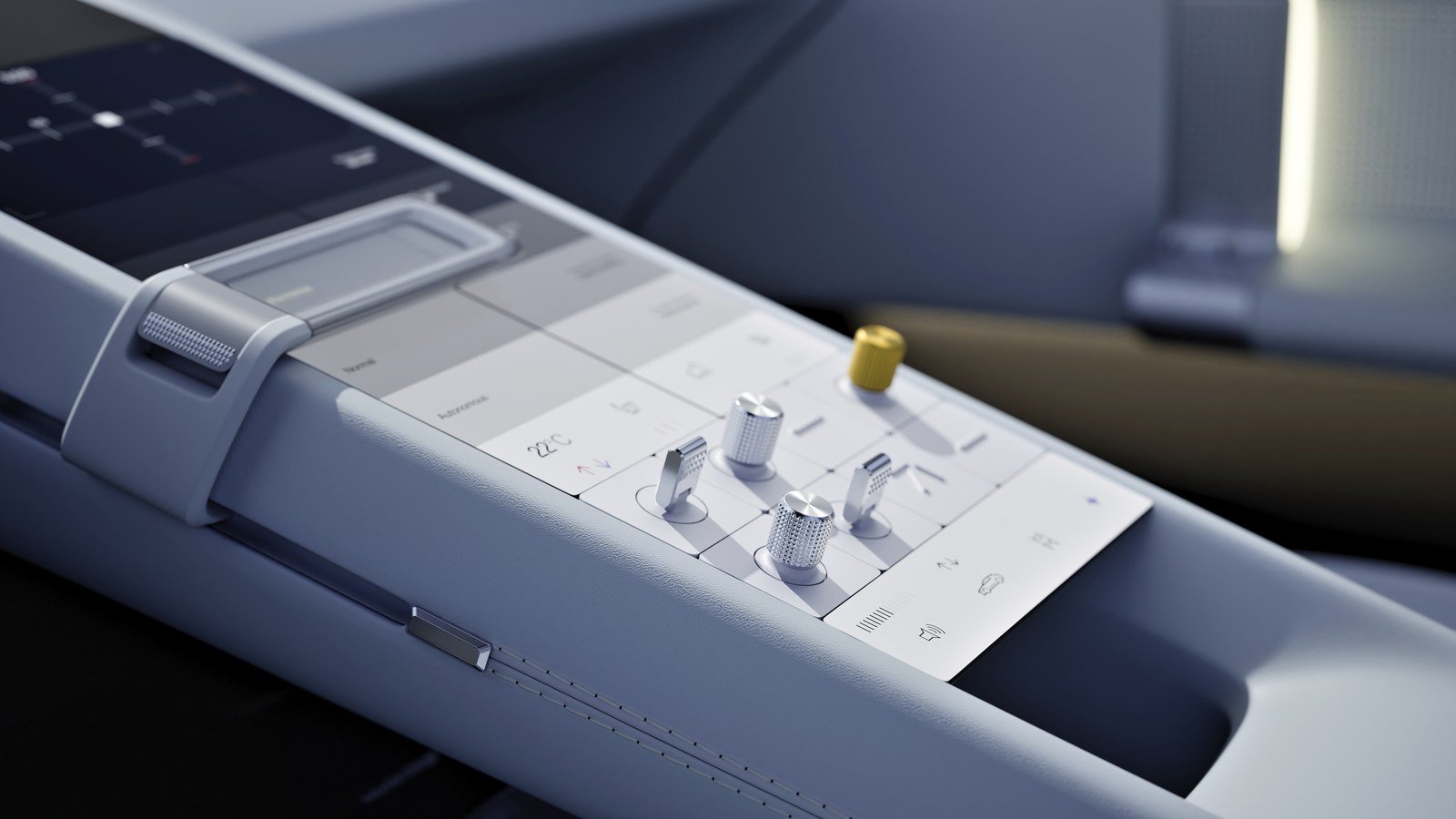
The rest of the industry is moving the same way. Euro NCAP's 2026 rating protocols reward physical inputs for turn signals, wipers, hazard lights, the horn, and the emergency-call button. In results published October 12, the testing body pointed to a clear gap between button-equipped cars and those that rely on touchscreens. Polestar's panel is aimed at frequently used functions rather than that specific list, but it points in the same direction.
What it means for the US
American buyers are unlikely to see the production cars this concept previews. In June, the Commerce Department's Bureau of Industry and Security declined to authorize Polestar under the Connected Vehicle Rule. That blocks the company from selling model-year 2027 and newer vehicles in the US. Dealers can still sell existing Polestar 3 and Polestar 4 inventory, and Polestar says it will keep servicing current owners.
That leaves the next Polestar 2 and the Polestar 7 aimed at Europe and Polestar's other markets. Polestar plans to build the Polestar 7 in Europe. Neither production car has specifications or pricing yet. Polestar's current schedule has the Polestar 2 successor launching in 2027 and the Polestar 7 arriving in 2028. US shoppers looking at the brand today are limited to the current lineup, and our used Polestar 2 and 3 buying guide covers what to check before buying one.