Paris Proved Retro Is the New EV Strategy — and America Is Already Buying It
Citroën’s electric 2CV has a 2028 date and a €15,000 target. The Bronco, Scout, and Ramcharger show the same playbook already works in the U.S., with gas engines.
The clearest message from this year's Paris Motor Show had nothing to do with battery chemistry or charging speeds. It was in the names on the cars: 2 CV, 8 Gordini, Espace, Multipla, RCZ, A2. In my view, that's a strategy and not a coincidence. Automakers have decided that the quickest way to make people want an electric car is to build one they already remember.
I'd also argue that America reached this conclusion first, only not with EVs. Almost nothing in our rundown of the Paris debuts and which ones are coming to America is headed here, but the thinking behind those cars is already on sale in U.S. showrooms.
What Paris actually showed
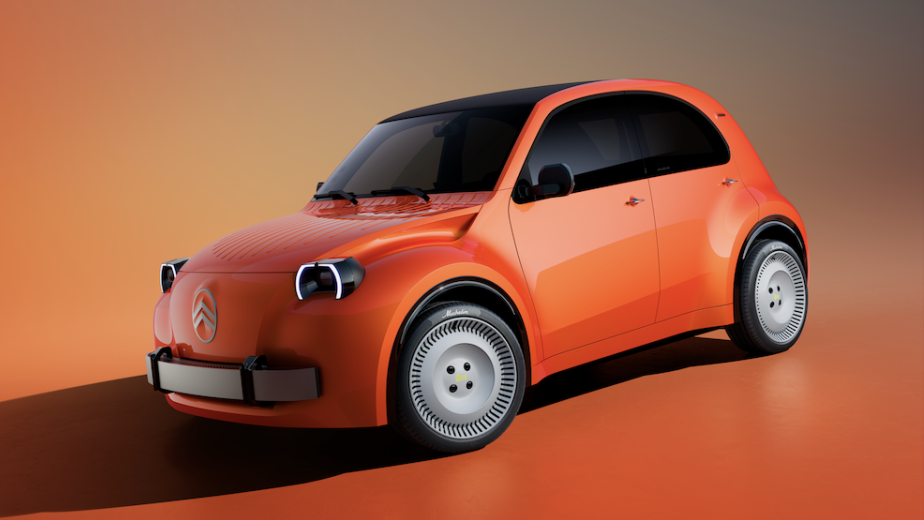
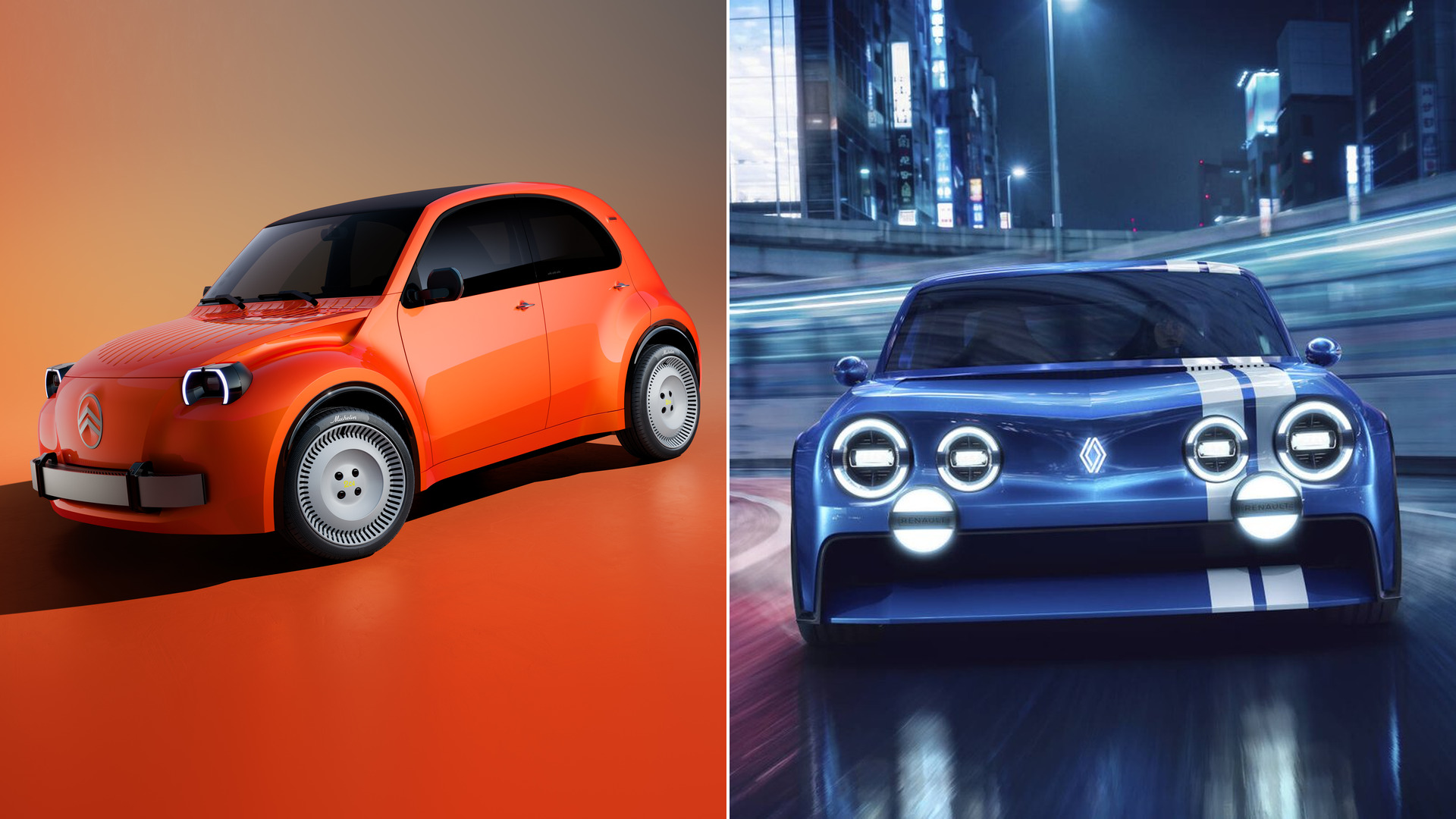
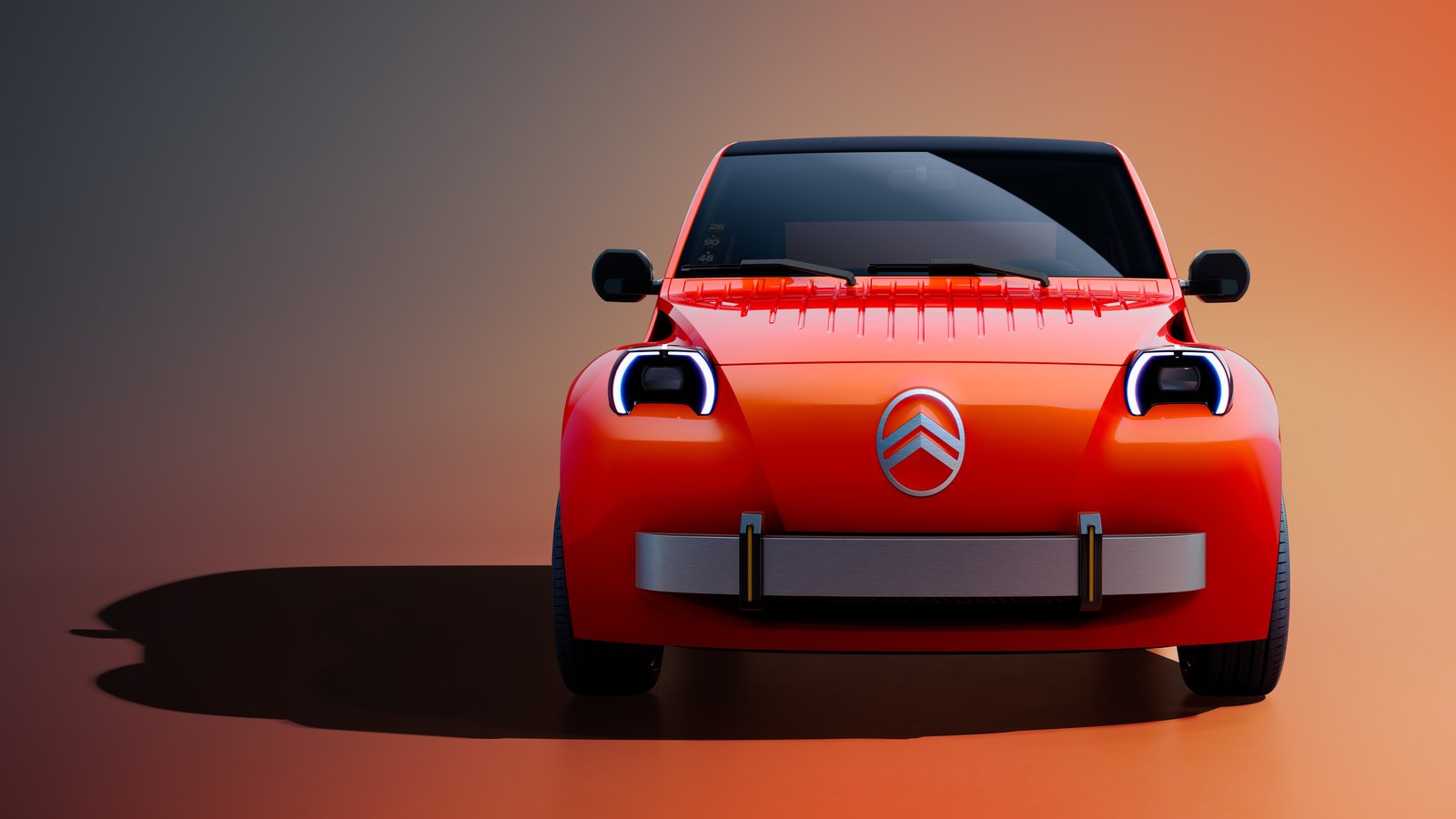
Citroën brought the headline act. The 2 CV Concept is an electric city car that is 148 inches (3.76 meters) long, which Citroën says is shorter than the 1948 original, with a weight target of about one metric ton. The numbers on its windshield, 48 / 90 / 26, mark the original's debut, the end of its production, and this year's revival. Citroën's announcement says the concept "heralds a future model set to join the Citroën range by 2028," built in Europe at a target starting price of around €15,000.
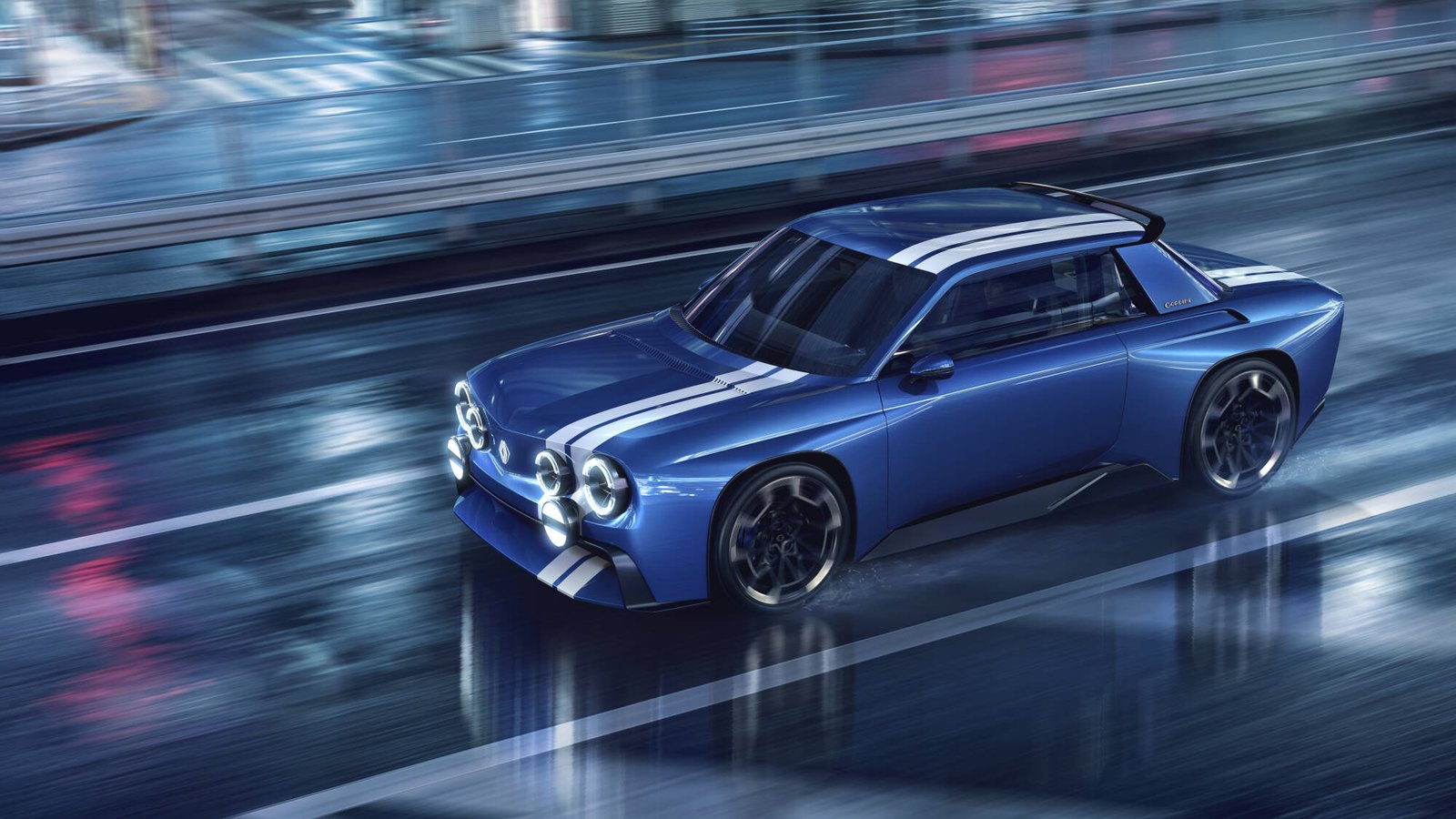
Renault's stand made the same pitch three times over. The Renault 8 Gordini Concept, a 266-hp electric two-seater, revives a 1964 sports sedan. The E-Space Concept is a tribute to the 1984 Espace. The electric Twingo and the 5 Turbo 3E shared the stand. Elsewhere in the building, Fiat's Multiplay borrowed from the Multipla and Peugeot's RCZ Vision from the RCZ coupe.
Audi's contribution is a different kind of nostalgia. The A2 e-tron, which starts at €38,200 in Germany, made its first public appearance in Paris. It looks nothing like the aluminum A2 that Audi built from 2000 to 2005. The name alone is doing the work.
There's a business case behind all of this. Renault says the 5 is the best-selling electric car in Europe's B-segment, and that the brand's EV sales rose 63.2% in the first half of 2026 in a market that grew 34.2%, according to Renault Group's first-half sales report. I wouldn't credit the styling alone. But my bet is that the 5 wouldn't be there with an anonymous shape and an invented name.
America got there first
Ford brought the Bronco back for 2021 after 25 years away. In the third quarter of 2026 it sold 38,020 of them, a record for the quarter, and 114,956 through September, a record for the year to date, according to Ford's sales report. The lineup keeps growing, as our 2027 Ford Bronco guide lays out, and every version burns gasoline.

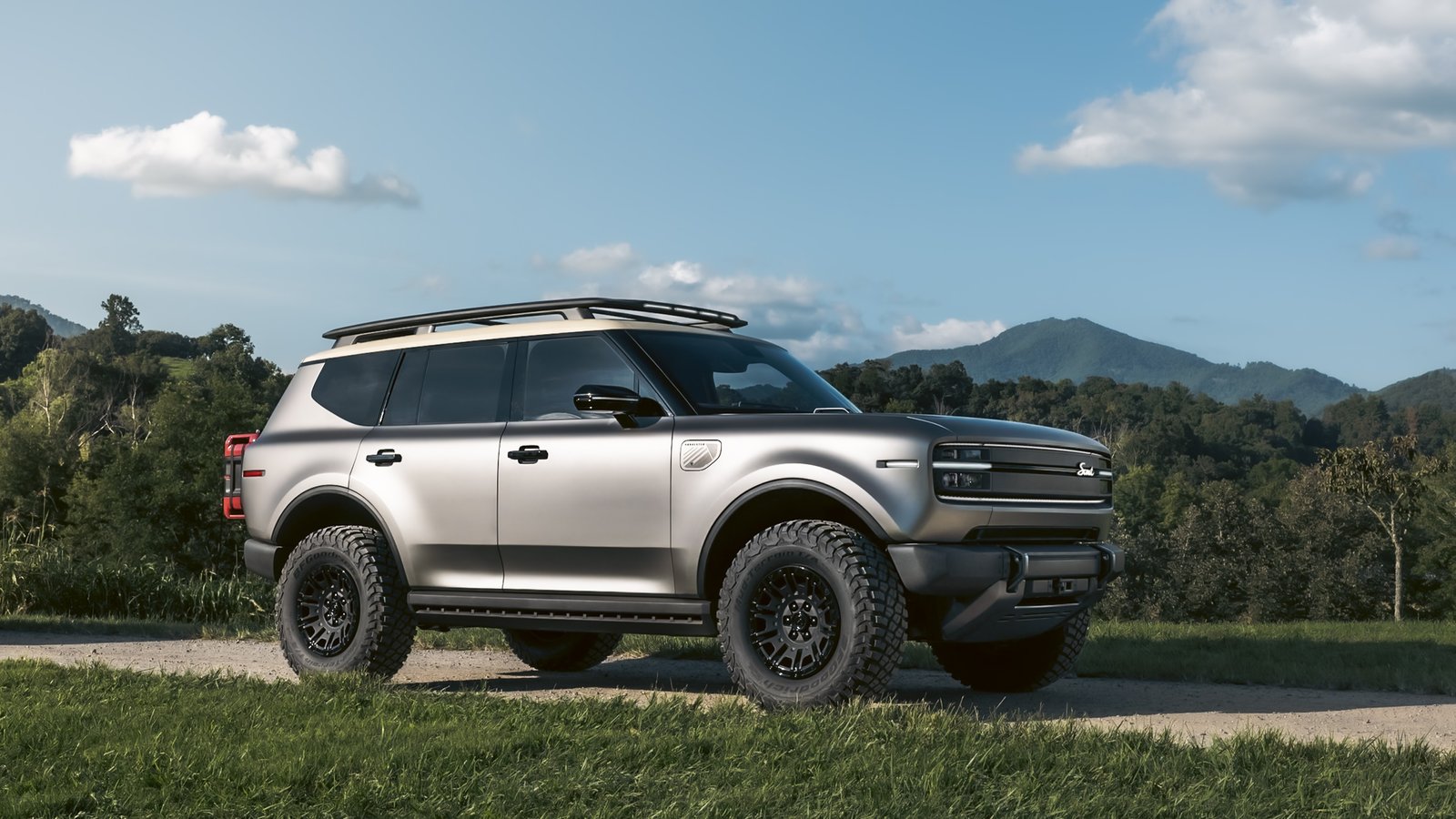
Scout is the purest test of the idea. International Harvester built the original from 1961 to 1980, and Volkswagen Group is reviving the name on an SUV and a pickup that don't exist in showrooms yet. CEO Scott Keogh told Bloomberg last October that the company had 130,000 reservations, and that more than 80% of those customers had picked the version with a gasoline range extender over the pure EV. The latest Scout Traveler concepts lean on plaid upholstery and other cues from the Harvester era.
Then there's Ramcharger. Ram put the name on a range-extended pickup, moved it off again in September 2025 when that truck became the Ram 1500 REV, and now has it on the product roadmap for a full-size SUV due in 2028. Stellantis CEO Antonio Filosa has said that SUV will come with a combustion engine and as a range-extended EV, as reported by Automotive News. Ram hasn't officially unveiled it.
What strikes me is how differently the two continents use the same tool. In Europe, the old name is attached to the battery. In America, the name sells the truck and the buyer chooses what powers it.
The best argument against me
A retro EV has already been tried here, and it struggled. The Volkswagen ID. Buzz reached U.S. showrooms in November 2024 with what I'd call a strong claim on American nostalgia. VW sold 6,140 of them in the U.S. last year, according to InsideEVs, then skipped the 2026 model year and has pushed the van's return to the 2028 model year. The last one started at nearly $60,000 with an EPA rating of 234 miles.
That's a fair hit, and Paris adds a second one. Renault says the 8 Gordini is a one-off that won't be sold. It has no production plan for the E-Space. Fiat calls the Multiplay a laboratory. A lot of the retro in Paris is brand theater.
But look at which car got a date. It's the one with a €15,000 target. I'd argue that's the real lesson: nostalgia gets a car noticed, and it turns into sales when the price or the capability also fits. The Bronco and the Renault 5 pass that test. The Buzz, so far, hasn't.
What we don't know
- How close the production 2CV will be to the concept. Citroën has given no battery size, power, or range, and €15,000 is a target. Nothing in its announcement points to a U.S. launch, and Citroën isn't sold here.
- Whether any other Paris concept reaches production. Renault's answer on the 8 Gordini is a flat no, and none of the retro concepts has announced U.S. plans.
- When you can buy a Scout. The company targets initial production in 2027 and expects customer deliveries to begin in 2028. Pricing isn't final; Scout expects the Traveler to start under $60,000.
- What the Ramcharger SUV looks like, costs, or makes in horsepower.
My bet is that the next wave of electrified trucks and SUVs in America will lead with names from the past and treat the plug as an option. Paris showed that Europe's carmakers now sell EVs the way Detroit sells trucks. If the production 2CV arrives on time and on price, I expect that playbook to be copied well beyond France.