Subaru Just Showed a 509-HP EV It Built Without Toyota. That Changes More Than the Solterra
A reported 509-hp Outback-bodied prototype is Subaru's first EV engineered without Toyota. The real story is Panasonic cells, a 2029 date, and what Honda and Mazda already got wrong.
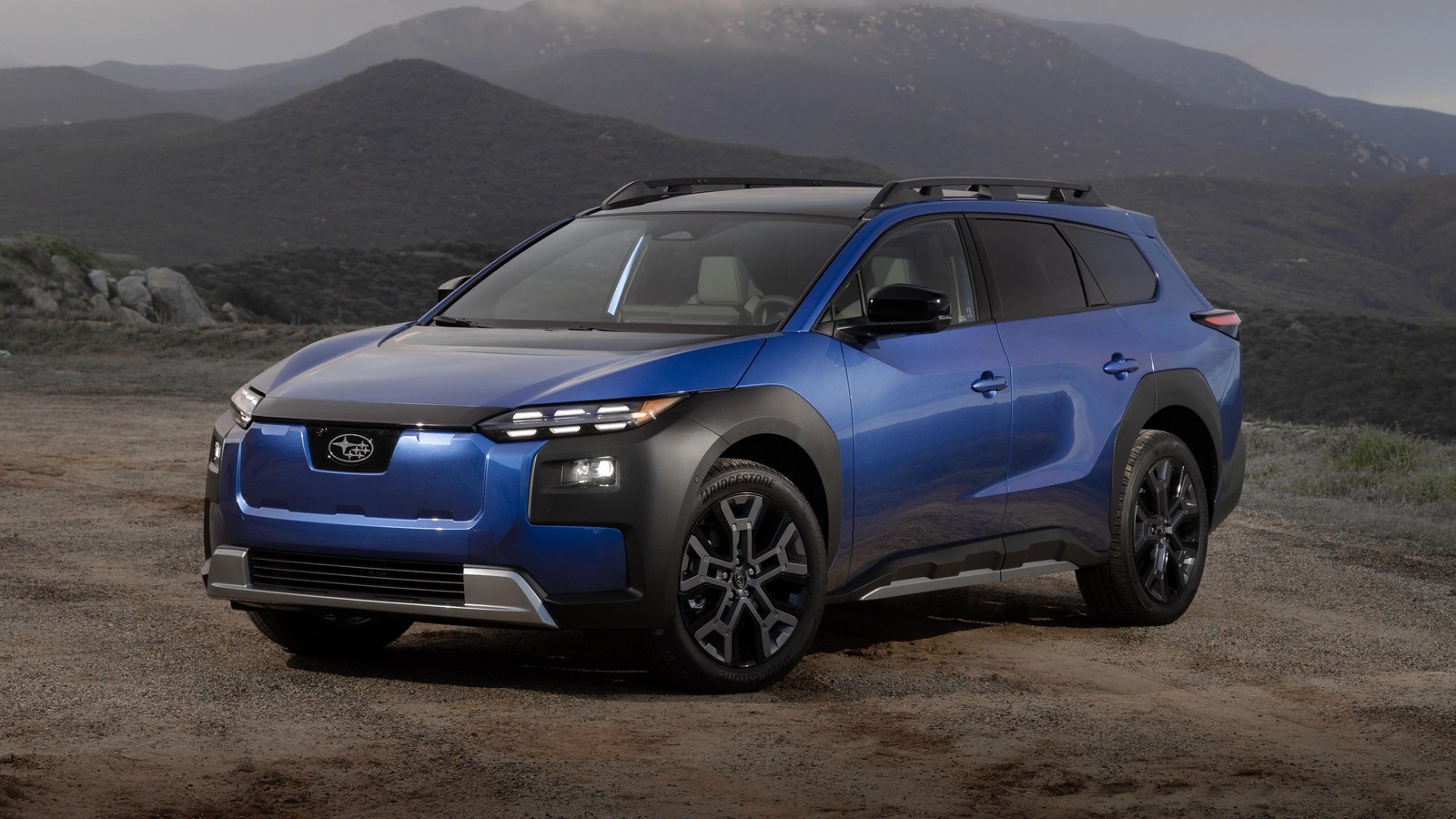
On October 18, at its proving ground north of Tokyo, Subaru reportedly let a small group of journalists ride in something it has never had before: an electric car it engineered without Toyota. The prototype wore a cut-up Outback body, made 509 hp (380 kW) from a dual-motor all-wheel-drive system, and ran 0–62 mph (0–100 km/h) in under four seconds, according to Automotive News, which was first to report the briefing, and Japan's Motor-Fan.jp. Subaru has not published a press release on either subaru.co.jp or media.subaru.com, so every number here carries that caveat.
The horsepower is the headline, and it is already feeding hopes for an electric STI. In my view, that is the least interesting part of what happened. The important question is why a company that sells every one of its current EVs on Toyota hardware would spend the next three years building its own, and what that says about the Toyota partnership, about Panasonic, and about Subaru's chances of being on time when Honda and Mazda were not. (If you came here for the STI angle, our guide to the WRX STI's return tracks what Subaru has and hasn't confirmed.)
What the prototype reportedly showed
The reported spec sheet reads like a list of everything the Solterra lacks. The battery uses roughly 4,000 cylindrical cells from Panasonic Energy and is said to be about 24 percent lighter than Subaru's current pack; Automotive News and InsideEVs differ by a point on that figure. Subaru is targeting energy density 20 percent above the industry average and a total weight cut of about 220 pounds (100 kg) against its current EVs. The front and rear drive units were developed with Aisin, a Toyota Group supplier, and are claimed to be smaller, lighter, and about 30 percent more efficient than what Subaru uses today.
The electronics matter more than the motors. The prototype runs on a single integrated controller that Subaru plans to build in-house and spread across its lineup, with over-the-air updates, and a custom AI chip developed with AMD is meant to carry future versions of EyeSight. Engineering chief Takatomo Watamori told Automotive News that owning the core technology lets Subaru protect its driving character and move faster. Some of it is expected to reach production around 2029. No model, price, or launch market has been named.
Why Subaru needs its own platform when Toyota already gave it one
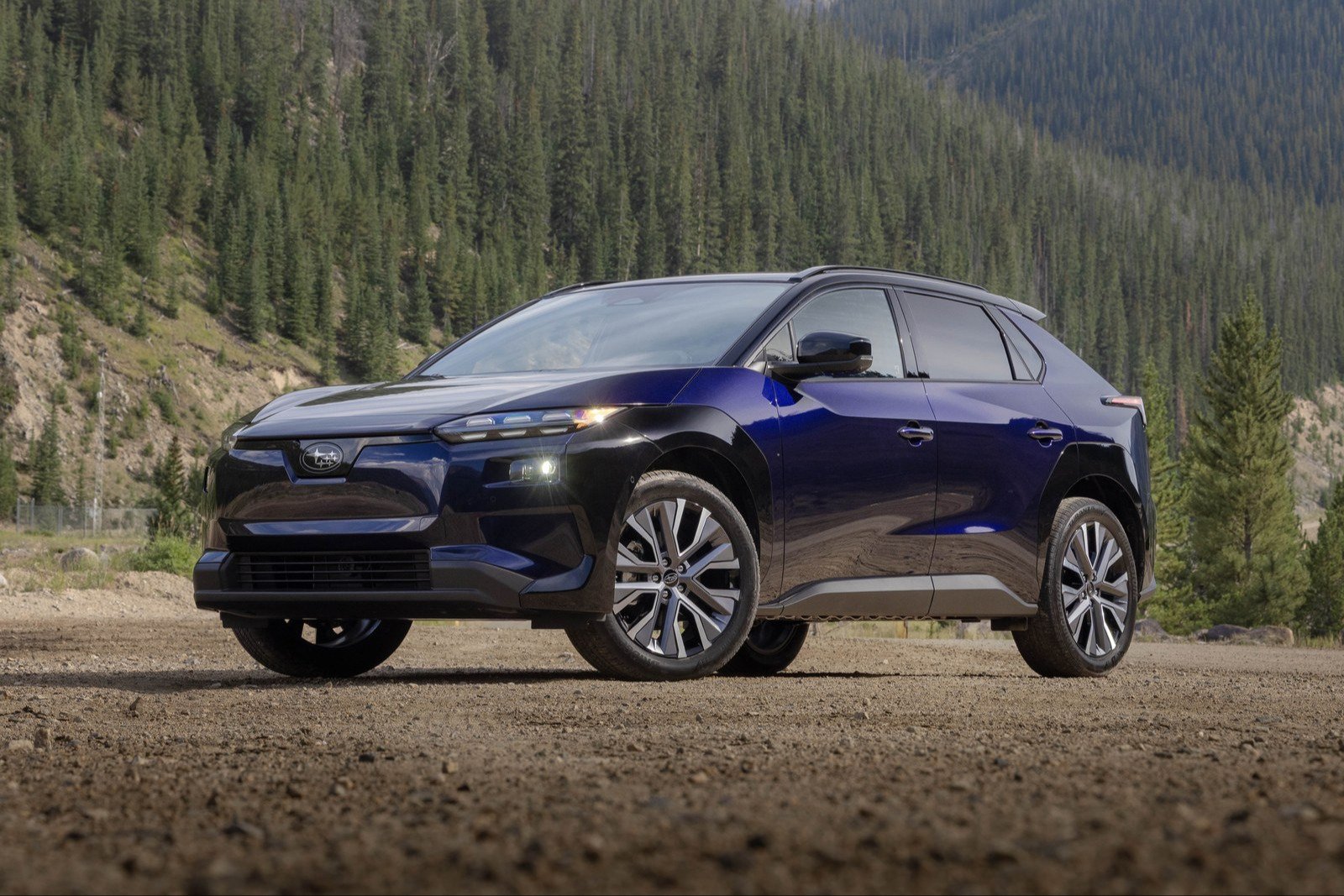
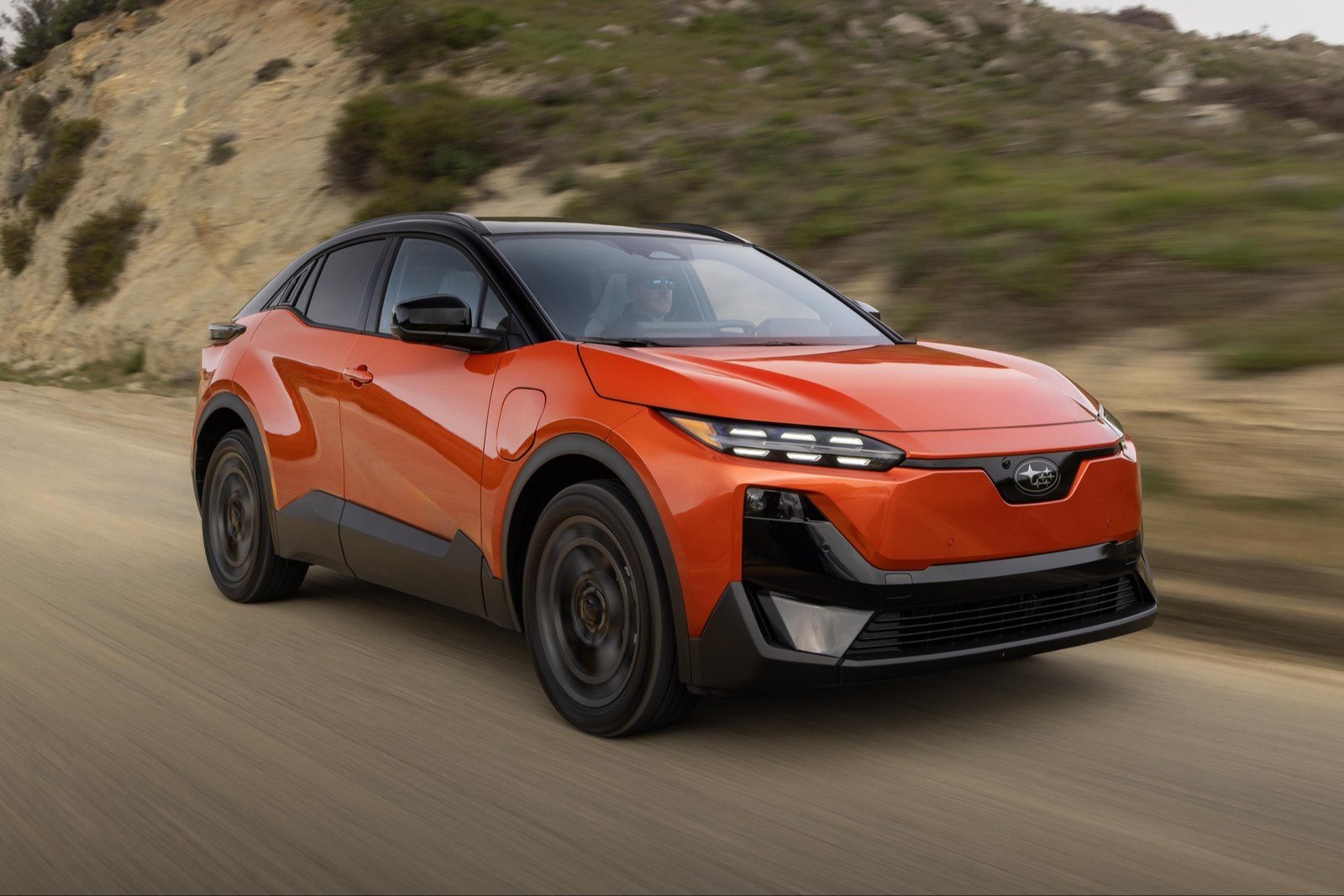
Subaru's entire EV lineup is a Toyota derivative. The Solterra is the bZ, the Trailseeker is the bZ Woodland, the Uncharted is the C-HR, and the three-row Getaway, now a 2028 model, will be built beside the Toyota Highlander EV in Kentucky. That arrangement was the point: Subaru sold about 924,000 vehicles worldwide last year, against more than 11 million for Toyota, which also owns 20 percent of Subaru. Sharing development and factory space was the only way a company that size could field four EVs by the end of 2026.
The cost of that deal shows up in the sales column. Subaru of America sold 163 Solterras in September, down 63 percent, plus 849 Trailseekers and 215 Uncharteds. Through nine months, all three EVs together account for 14,630 of Subaru's 475,878 U.S. sales, about 3 percent. The Trailseeker is a real product that just made Wards' 10 Best list, but the lineup as a whole is a Toyota lineup wearing Subaru badges, and buyers can tell. We flagged the problem in September, when five Legacys and 197 Solterras told the real story behind a sales gain.
An in-house platform fixes three things a shared one cannot. First, cost: Subaru is paying for engineering it does not own, and a standardized controller across its own cars is a line it can control. Second, identity: a Subaru EV that drives like a Subaru needs Subaru-tuned all-wheel drive and software, not a Toyota calibration with a different logo. Third, batteries. Subaru and Panasonic Energy agreed in September 2024 to supply next-generation cylindrical cells, first from Panasonic's Suminoe plant in Osaka from fiscal 2027 and then from a jointly built factory in Oizumi, Gunma, from fiscal 2028, with a goal of 20 GWh a year by 2030. Those cells do not fit Toyota's prismatic-pack architecture. Subaru has already committed to a battery supply chain that only makes sense under a car of its own.
The 2029 problem
Here is where I'd argue the skepticism belongs. The prototype is a development tool, and 2029 is the date Subaru's reported plans point to, not a promise. Subaru's 2023 plan called for four in-house EVs in 2028 on top of the four Toyota-based models; in May 2026, President Atsushi Osaki said it was appropriate to delay full-scale EV investment, the 2028 date was dropped without a replacement, and the new Oizumi plant that was supposed to build EVs from 2027 will open building gasoline cars instead. Subaru's 2023 target of 50 percent battery-electric sales by 2030 has not been withdrawn, but the company no longer repeats it.
That history puts Subaru in familiar company. Honda cancelled the 0 Series Saloon, the 0 Series SUV, and the Acura RSX in March, citing collapsing EV demand, and its U.S. EV presence now rests on the GM-built Prologue. Mazda has pushed the first car on its own Skyactiv EV Scalable Architecture to 2029, according to Automotive News, after earlier targets of 2025, 2027, and 2028. Both companies had working prototypes. Neither had a market that justified the tooling. Subaru is now asking its shareholders to believe its 2029 will be different, in a U.S. market where EV sales fell 38.6 percent year over year in the third quarter.
My bet is that Subaru's version of 2029 is more durable than Honda's or Mazda's was, for one reason: Subaru's platform is a software and battery project first and a car project second. The integrated controller and the AMD chip are headed for every Subaru, gasoline or electric, because they are what the next EyeSight runs on. Even if the EV program slips again, that work gets paid for by Foresters and Crosstreks. That is a very different bet from building a bespoke EV factory and hoping demand arrives.
Who's on whose platform: Japan's EV map through 2030
| Automaker | Current EVs (U.S. unless noted) | Platform owner | In-house platform |
|---|---|---|---|
| Toyota / Lexus | bZ, bZ Woodland, C-HR, Highlander EV (2027), RZ | Toyota (e-TNGA) | Yes; next generation in development |
| Subaru | Solterra, Trailseeker, Uncharted; Getaway (2028) | Toyota | Reportedly around 2029 |
| Honda / Acura | Prologue (GM Ultium); 0 Series Saloon, 0 Series SUV, Acura RSX cancelled March 2026 | GM | 0 Series Alpha for India and parts of Asia only |
| Mazda | None in the U.S.; 6e and CX-6e built in China on a Changan platform | Changan | Skyactiv EV Scalable Architecture, delayed to 2029 (Automotive News) |
| Nissan | Ariya, new Leaf | Nissan (CMF-EV) | Yes, in production |
| Mitsubishi | Eclipse Sportback, Nissan-supplied, due in the second half of 2026 | Nissan | No |
Read across the rows and the pattern is hard to miss. Of Japan's six passenger-car makers selling in America, only Toyota and Nissan build EVs on hardware they own, and Nissan's is the oldest of the group. Everyone else is borrowing. Subaru's decision is less a break with Toyota than an attempt to join the first column before the decade ends.
What this does and doesn't mean for Toyota
Nothing in the reporting suggests Subaru is leaving. Toyota keeps its stake, Aisin keeps the drive-unit business, and the four shared SUVs keep selling through at least the Getaway's 2028 model year. What changes is the direction of dependence: Toyota built the e-TNGA models partly to spread engineering across two brands, and a Subaru that supplies its own next-generation EVs removes one of those customers. Whether the two companies run parallel programs after 2029 is a question neither has answered.
For Indiana, the picture is quieter than the tariff headlines suggest. Subaru of Indiana Automotive in Lafayette now builds the Forester, including the first U.S.-assembled Subaru hybrid, alongside the Crosstrek and Ascent; the Outback moved to Japan with the 2026 generation, and the Legacy is gone. Subaru once planned U.S. EV production from 2027 and has not reaffirmed it. A platform designed around Gunma-built cells does not look like a Lafayette project, so Subaru's first in-house EV will almost certainly reach America as an import.
What we don't know
- Which car gets it first. The Outback body was a mule. Subaru has not named a production model, a segment, or a body style.
- Price and range. Battery capacity, charging speed, and range were not disclosed, which makes any price guess meaningless.
- Which market leads. Japan or the United States first is unknown, and the cell supply is domestic to Japan.
- What happens to the Toyota-based models after 2029. Subaru has not said whether the Solterra, Trailseeker, Uncharted, and Getaway get replaced, refreshed, or dropped.
- Whether an STI is coming. Reports tie the prototype's hardware to the Performance-E STI concept from the 2025 Japan Mobility Show. Subaru has confirmed no production STI, electric or otherwise.
- Whether any of this is official. Until Subaru publishes a release, the 509-hp figure, the 2029 timing, and the supplier names rest on Automotive News and Motor-Fan.jp.
What's next
Two events would turn this from a report into a program: a press release from Subaru Corporation with the prototype's numbers in it, and the Tokyo Auto Salon in January, where Subaru has used STI concepts to set expectations before. Until then, what Subaru showed on October 18 is a credible argument that it can build an EV on its own. Whether it will, on schedule, is a question Honda and Mazda have already answered once, and not in Subaru's favor.