Tesla Will Now Let You Drive Away From a Supercharger Still Plugged In — in an Emergency
A software update lets Teslas pull away from a U.S. Supercharger with the cable still attached. Tesla says station-side repairs alone can run up to $25,000.
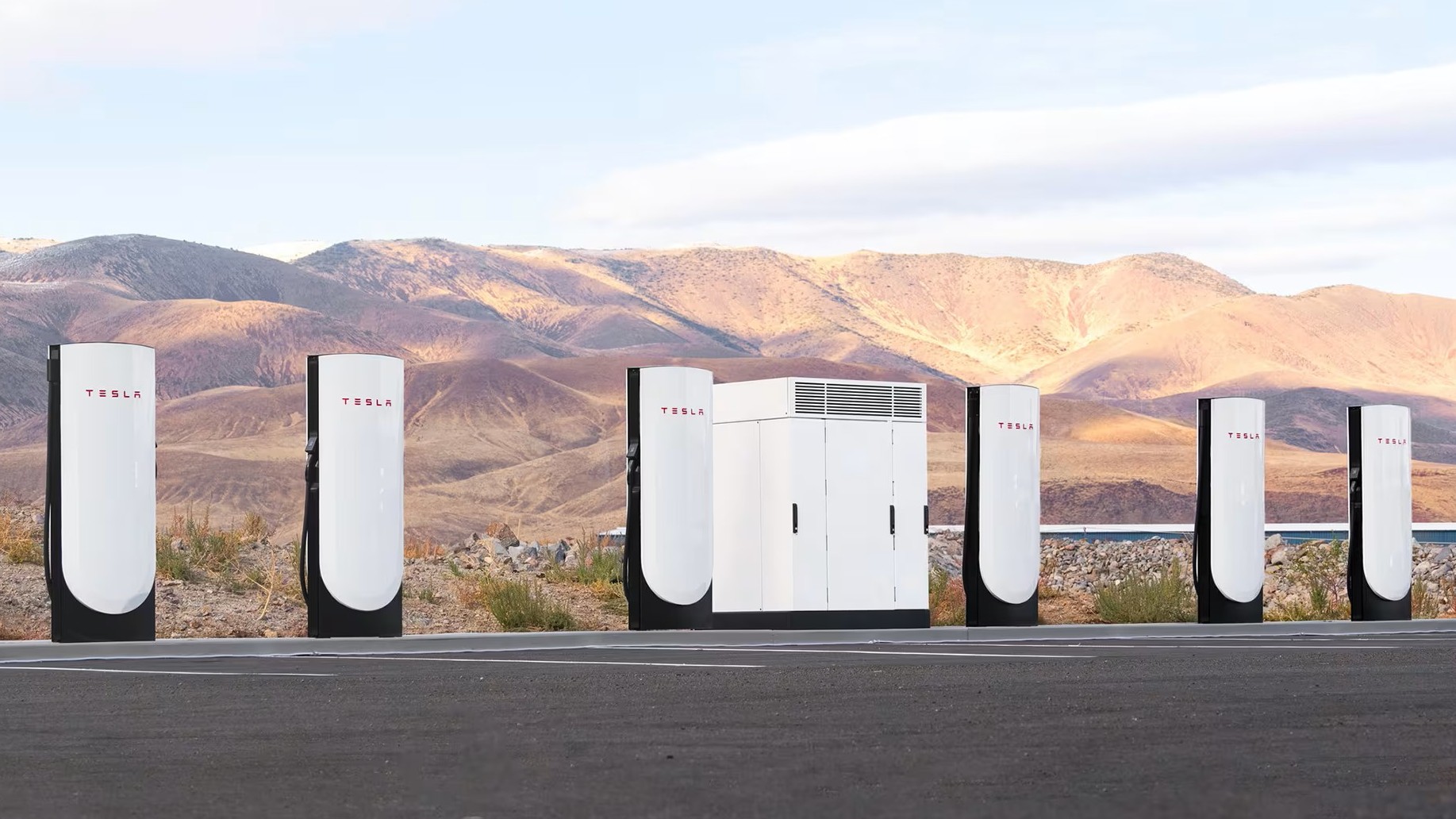
Tesla has started rolling out a software override that lets drivers shift into Drive and leave a Supercharger without unplugging first. Called Emergency Drive Away, it works by letting the charging connector break away as the car pulls out — and Tesla is blunt that it's a last resort, not a shortcut.
The Tesla Charging account announced the feature on X on October 1, with a short video of a car leaving a stall while still plugged in. It works only at U.S. Superchargers, a network Tesla now also opens to EVs from 21 other automakers.
How it works
Until now, a Tesla wouldn't leave Park while a Supercharger cable was latched into its charge port. The driver had to release the latch first, from the touchscreen, the app, or the button on the handle.
With the update, shifting into Drive while connected brings up a warning on the center screen. Once the driver confirms it, the car can move off. In Tesla's video, the separated connector ends up on the ground.
The override requires software version 2026.38.3. Model S and Model X vehicles built before 2021 aren't supported, and Tesla hasn't said when, or whether, the feature will reach Canada or other markets.
What it costs
Tesla isn't pretending this is harmless. In replies under its announcement, the company said the feature is for emergencies only and that using it will damage both the car and the Supercharger.
The bill can be steep. In a follow-up reply, Tesla Charging said the electrical and civil repairs on the station side can reach $25,000, depending on the site, and that a service visit for the car's charge port is mandatory afterward.
What Tesla hasn't said matters just as much. It hasn't explained who pays for a damaged stall after a genuine emergency, or what a charge-port repair will cost the owner. It also warned that deliberate misuse will bring "additional penalties" without saying whether that means a bill, a fee, or losing Supercharger access.
Who it doesn't cover
Older Model S and Model X owners are out, and so, for now, is everyone charging a non-Tesla EV at a Supercharger. Tesla's announcement covers its own vehicles only. It hasn't said whether partner automakers, whose cars run their own software, will get an equivalent.
Why now
Tesla's post doesn't give a reason. The Drive and other outlets have tied the timing to an August 1 mass shooting at an In-N-Out in Twin Falls, Idaho, next to a Supercharger. Three people were killed. In the weeks that followed, owners publicly pressed Tesla for a way to leave a stall without stepping out of the car.
Until now, the closest thing was aftermarket breakaway adapters such as EVject. Tesla sued its maker in 2024 over overheating concerns; according to Electrek, EVject later added thermal protection and the suit was dropped.
Emergency Drive Away is the second safety-focused feature Tesla has pushed over the air in about a month, after Automatic Collision Evasion for FSD (Supervised). Tesla hasn't said whether a cleaner fix, such as a stall that cuts power and releases the latch on command, is in development.