Tesla's Pothole Promise Is Seven Years Old. Musk Just Said 'Coming Soon' Again
Musk's weekend post promises the feature again — one he first agreed to build on April 7, 2019, and one that entered Tesla's release notes exactly seven years later, still marked upcoming.

Elon Musk says Tesla's Full Self-Driving software will soon steer around potholes. In a reply posted on X on Sunday, August 30, the CEO told a driver requesting the feature that it is "coming soon." He named no software version and no date.
The answer sounds familiar because it is. Musk first agreed to build pothole avoidance on April 7, 2019. The feature entered Tesla's official release notes as an upcoming improvement on April 7, 2026 — seven years later, to the day. In the current FSD v14.3 builds, it still sits in the upcoming column. Here is the paper trail, date by date.
April 7, 2019: "Definitely"
A Tesla owner praised Autopilot on Twitter and asked for one addition: small steering corrections within the lane to keep tires out of potholes. Musk replied with a single word: "Definitely." Electrek covered the exchange the same day, noting that dodging potholes was among the few reasons its reviewer still had to take over from Autopilot at all.
February 3, 2020: crowd-sourced micro-maps
A Swiss owner asked whether Teslas could build a shared "micro map" of every road — stop signs, potholes and all — that other Teslas could reuse. Musk answered yes. Teslarati reported at the time that the maps would be generated from fleet data and shared between cars, while Musk separately said the Autopilot software rewrite was nearly complete.
August 14, 2020: labeling begins
Asked once more about the feature, Musk said Tesla was labeling bumps and potholes so a car could slow down or steer around them when safe to do so. The statement came in the run-up to the first limited FSD Beta release that October. The beta shipped. Pothole avoidance did not.
July 2022: the suspension workaround
Software update 2022.20 gave Model S and Model X the ability to adjust their adaptive air suspension automatically ahead of rough road sections, using road-condition map data collected by the wider fleet. It was mitigation rather than avoidance — the car braced for the pothole instead of missing it. That path has since narrowed: Model S and Model X production ended earlier this year — Tesla's own site now lists the Model S as out of production — leaving the Cybertruck as the only Tesla with adjustable air suspension.
April 7, 2026: into the release notes
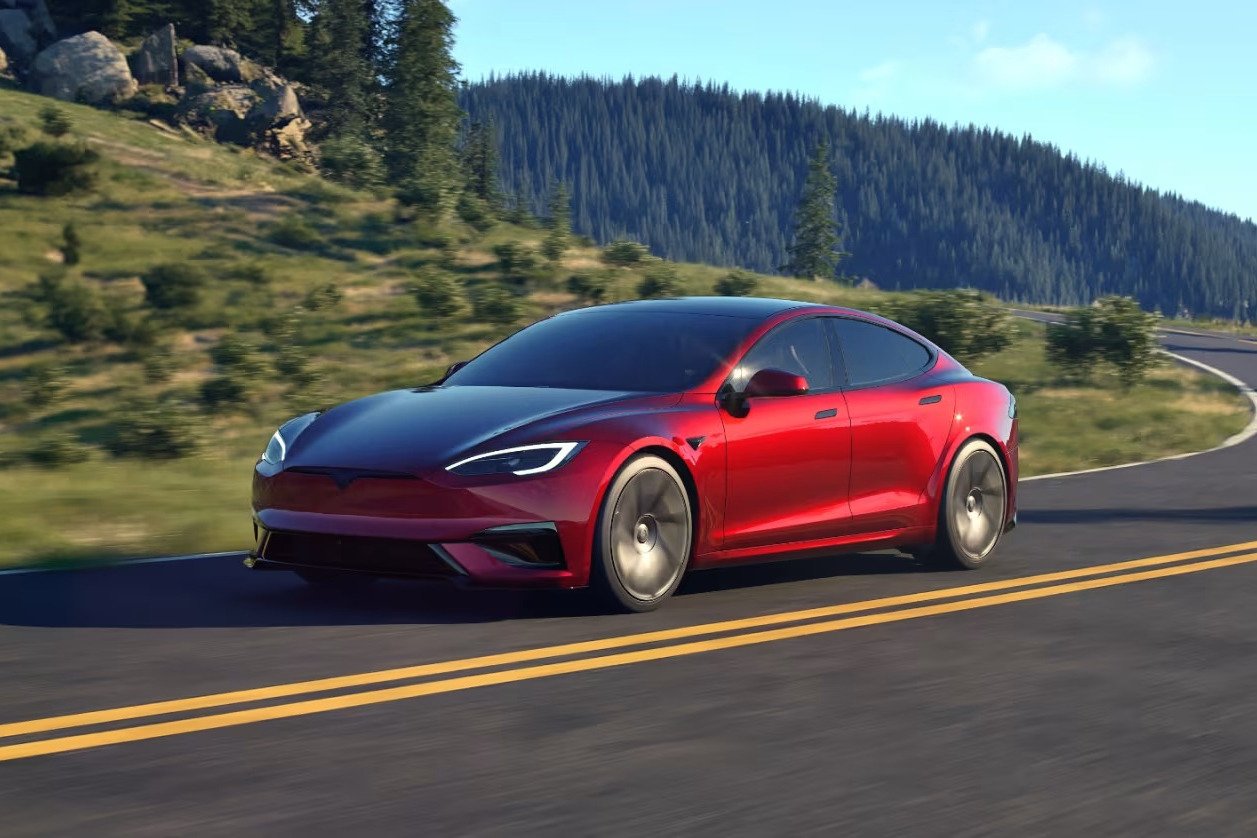
Seven years to the day after the original promise, "Add pothole avoidance" appeared under Upcoming Improvements in the release notes for FSD v14.3, delivered with software build 2026.2.9.6 for Hardware 4 vehicles. It sat alongside two other planned items: expanded reasoning and improved driver monitoring. Through the v14.3.x builds Tesla has shipped since, including this summer's releases, the line has stayed in the upcoming column.
August 30, 2026: the same answer, again
Which brings us to the weekend. The new reply adds no version number, no timeline, and no technical detail — it confirms intent, not a release. Not a Tesla App writes that it expects the feature to arrive "potentially before FSD v15," but that is the outlet's reading, not a Tesla commitment.
What FSD actually does about potholes today
Current builds are not blind to broken pavement. A recorded drive on FSD v14.2.2.5 documented by Not a Tesla App showed the system positioning the car so that a damaged section of road passed between the tires. Whether the software classified it as a pothole or as a generic object in the road is unclear, and the behavior is occasional rather than dependable — it shows up mostly with large, obvious craters. Consistent avoidance, including smaller potholes, is precisely what the promised feature is supposed to add.
Why this time might be different
There are real reasons the feature is more plausible in 2026 than in 2019. Hardware 4 cars carry significantly higher-resolution cameras than Hardware 3, along with more compute and memory, which matters when the task is spotting a shallow depression in varying light. The v14.3 release notes also describe an upgraded vision encoder with stronger 3D geometry understanding. And the rough-road map data Tesla built for the 2022 suspension feature shows the company can already crowdsource pavement conditions from its fleet. None of that is a guarantee; it is context for why the latest promise may finally have the hardware underneath it.
What we still don't know
- When, and in which build. Two words on X are not a date. Tesla has not attached the feature to any announced version, and it has been listed as upcoming for almost five months.
- Whether Hardware 3 cars get it. The v14.3 builds that carry the promise are Hardware 4-only; HW3 vehicles run a separate v14 Lite branch. Tesla has not said whether pothole avoidance will reach them.
- What "avoidance" will mean in practice. In-lane adjustments, lane changes, slowdowns, a fleet-sourced pothole map, or some combination — Tesla has not described the implementation.
What happens next
The timing of the renewed promise is not incidental. Tesla launches its Cybercab robotaxi in Austin on September 3 — a vehicle with no steering wheel, in which no rider can take over to dodge a crater. For a fleet meant to drive itself commercially, reading the road surface stops being a comfort feature and becomes part of the job description.
The test of this promise is simple and mechanical: the day the pothole-avoidance line moves from Upcoming Improvements into the implemented features of an actual FSD release. Until that happens, the scoreboard reads four public commitments, one suspension workaround, and seven years.