Is Thanksgiving the Most Dangerous Week to Drive? What the Data Says
Federal data shows the holiday is about as deadly per day as any other, but half of Thanksgiving Day 2024 deaths involved a drunk driver. Here is when to drive.
Thanksgiving has a reputation as the deadliest stretch of the driving year. The federal numbers tell a narrower story: the holiday is not much deadlier per day than an ordinary one, but far more of its deaths involve alcohol, and insurer data shows the quiet hours are when drivers speed.
AAA expects 72.9 million Americans to travel by car between Tuesday, November 24, and Monday, November 30. That is 200,000 fewer than last year, a dip the club ties partly to fuel costs we broke down in our Thanksgiving gas price and road trip cost guide. Total travel of 81.5 million is down 0.1%, ending a three-year run of records, according to AAA's forecast.
How dangerous is Thanksgiving, really?
NHTSA counts the holiday from 6 p.m. Wednesday to 5:59 a.m. Monday. Across the five Thanksgivings from 2020 to 2024, 910 people died in drunk-driving crashes in that window, which the agency puts at 36% of all traffic deaths in the period. In 2024 alone the figure was 164.
Work backward from those two numbers and the total comes to roughly 2,500 deaths over five holidays, or about 500 per Thanksgiving. Spread over four and a half days, that is roughly 110 a day. The whole of 2024 averaged 107 a day, based on NHTSA's count of 39,254 traffic deaths. That division is ours, not NHTSA's, and it uses the annual average because the agency's holiday tables do not break out an ordinary November week.
So the per-day toll is close to normal. What changes is the mix:
- Alcohol. Nationally, 30% of 2024 traffic deaths involved a driver at or above .08 BAC. In a NHTSA tabulation prepared for MADD, the share was 35% on Thanksgiving Eve 2024 (51 of 145 deaths) and 50% on Thanksgiving Day (65 of 131). MADD set those windows, and each runs through 5:59 the next morning.
- Seat belts. Of the 286 passenger vehicle occupants killed over Thanksgiving weekend 2024, 45% were unbelted, and 50% of those killed at night. Those shares are no worse than the full-year figures of 48% and 56%.
- Darkness. More than half of all 2024 traffic deaths, 20,971, happened between 6 p.m. and 5:59 a.m.
Put plainly, the federal data points less at Wednesday afternoon gridlock than at Wednesday night and Thursday.
What the "speeding tripled" report measured
The figure behind this week's headlines comes from Allstate's Thanksgiving Driver Report, published November 10. The insurer analyzed more than 44 million trips logged by its Drivewise app over Thanksgiving 2025 and compared each day with the same weekday two weeks earlier.
Its main findings:
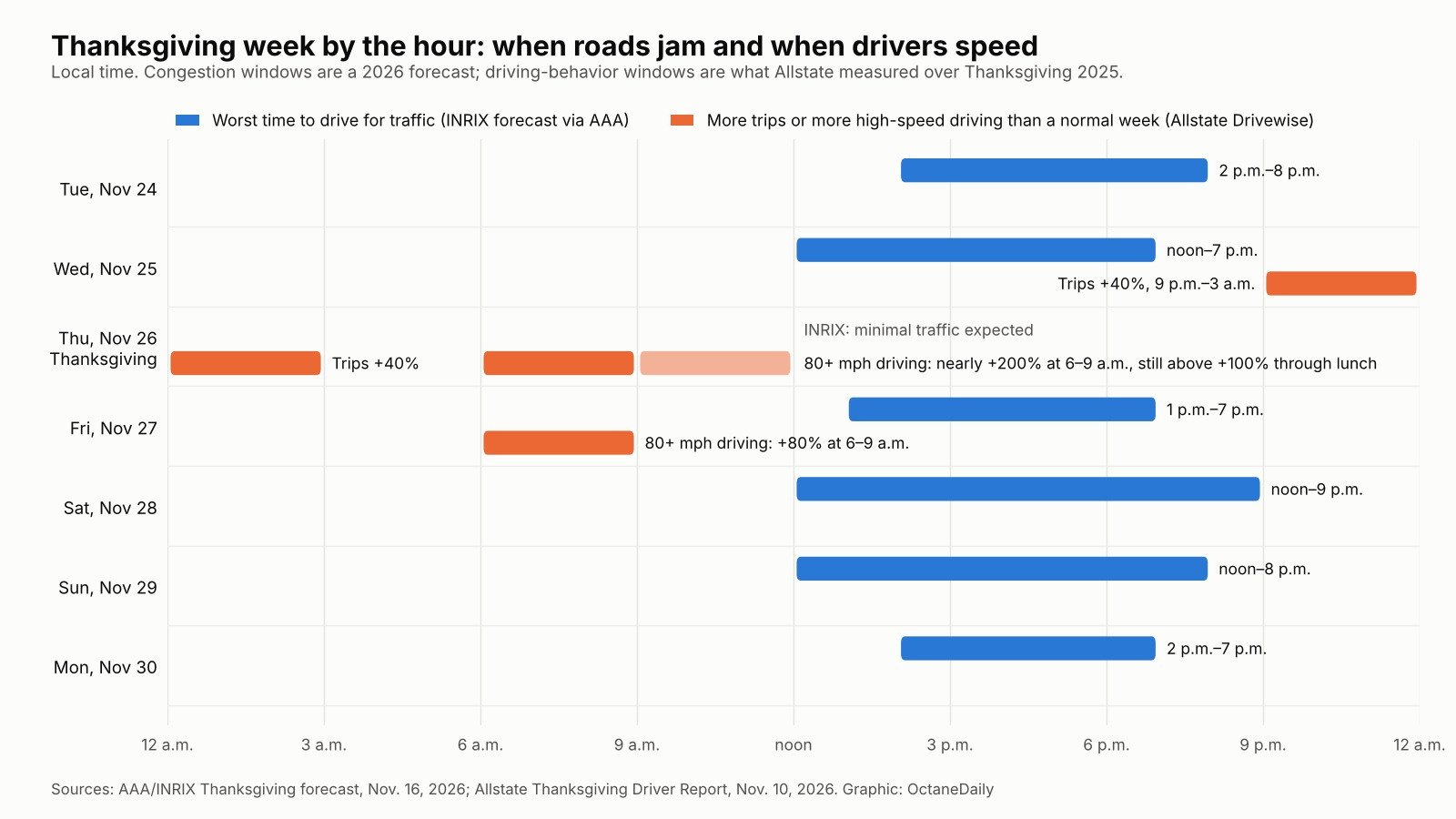
- Trips rose more than 40% between 9 p.m. Wednesday and 3 a.m. Thursday.
- The share of miles driven at 80 mph or faster rose nearly 200% between 6 and 9 a.m. on Thanksgiving, and stayed more than 100% above normal through lunch.
- About one in five Thanksgiving Day trips involved more than one risky behavior, and over 90% of those combined speeding with phone handling.
- On Black Friday morning, high-speed driving was up more than 80% on about half the usual number of trips.
South Carolina (up 151%), New York (149%), Texas (139%), North Carolina (129%) and Florida (123%) saw the largest Thanksgiving Day jumps in high-speed driving.
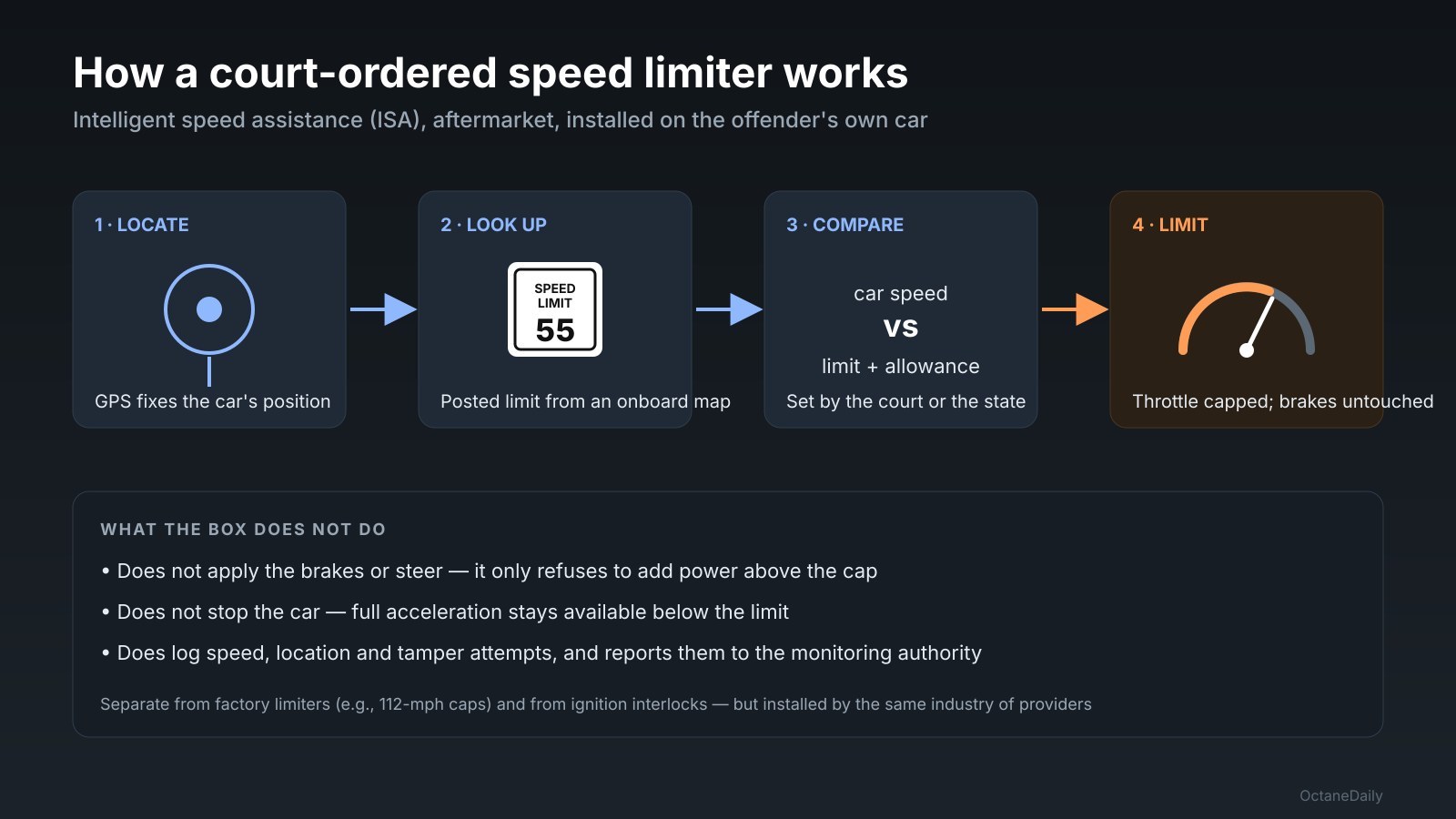
Two caveats matter. Drivewise users are Allstate customers who agreed to be tracked, not a sample of all drivers. And the metric is a share of miles, so empty roads lift it quickly: fewer cars means fewer reasons to slow down. It measures behavior, not crashes. In my view that is still the most useful finding here, because it shows the light-traffic hours people pick for safety are the ones when speeds climb. Speed is also where regulators are heading, as our explainer on court-ordered speed limiters lays out.
When to leave
INRIX, which supplies the traffic side of AAA's forecast, expects the worst congestion in these windows, all in local time:
- Tuesday, November 24: worst 2 to 8 p.m.; leave before 1 p.m.
- Wednesday, November 25: worst noon to 7 p.m.; leave before noon.
- Thursday, November 26: minimal traffic expected.
- Friday, November 27: worst 1 to 7 p.m.; leave before noon.
- Saturday, November 28: worst noon to 9 p.m.; leave before 11 a.m.
- Sunday, November 29: worst noon to 8 p.m.; leave before 11 a.m.
- Monday, November 30: worst 2 to 7 p.m.; leave before 1 p.m.
The steepest single delays INRIX projects are New York to the Hamptons on Tuesday afternoon (138% longer than usual), Washington to Baltimore the same day (132%) and Bakersfield to Los Angeles on Saturday evening (121%).
Read against the other two data sets, the morning advice holds, with one adjustment. A Wednesday or Sunday morning departure avoids both the jams and the late-night hours. Thursday morning is clear of traffic, but it is the window Allstate flags for speed, so it rewards a set cruise control more than a late start.
Wednesday night and enforcement
NHTSA's Thanksgiving impaired-driving campaign runs November 23 to 29 and singles out November 25, Thanksgiving Eve, the night bars market as "Blackout Wednesday." It is a messaging campaign. The national Drive Sober or Get Pulled Over enforcement push comes with the winter holidays, with paid advertising from December 16 to January 1. Extra patrols this week are a state decision, so check your state patrol's announcements.
On belts, the law depends on where you sit and where you are: IIHS counts 16 states that do not require adults to buckle up in the back seat.
A short checklist before you go
- Tire pressure. It falls as temperatures drop, NHTSA notes. Set it cold to the number on the driver's door frame, not the one on the tire, and replace anything at or below 2/32 inch of tread. Our winter car prep checklist covers the rest.
- Battery. AAA answered more than half a million roadside calls last Thanksgiving. Allstate says the Monday after was its second-busiest roadside day of 2025, and about three in five holiday calls needed a tow.
- Driver aids. Automatic emergency braking helps, but it has blind spots. In AAA's intersection braking test, three of four 2026 SUVs hit a target car that turned into their path.
- Child seats. Heavy coats interfere with harness fit, NHTSA warns. Buckle children in thin layers and put the coat or a blanket over the snug harness. Misuse is common, as we reported in our piece on free child car seat checks.
- Timing. Set navigation before you move, and do not try to win back lost minutes on the road.
What we don't know yet
- How 2025 compared. NHTSA's holiday figures stop at 2024, and that year's file is an early release that NHTSA will still revise.
- Whether more speeding meant more crashes. Allstate's report tracks driving behavior, not outcomes.
- How this year's roads will differ. The congestion windows are a forecast AAA prepared in mid-October; weather, crashes and roadwork can move them.
What's next
State patrols usually publish holiday enforcement and crash totals in the first days of December. We will update this page when they do.