Mercedes Beat Everyone to Eyes-Off Driving. Here's Why It's Giving Up on Level 3 for Now
CTO Jörg Burzer calls Drive Pilot "too early," and the new S-Class skips it. For 2027 buyers that means hands-free driving with eyes on the road and liability still on you.
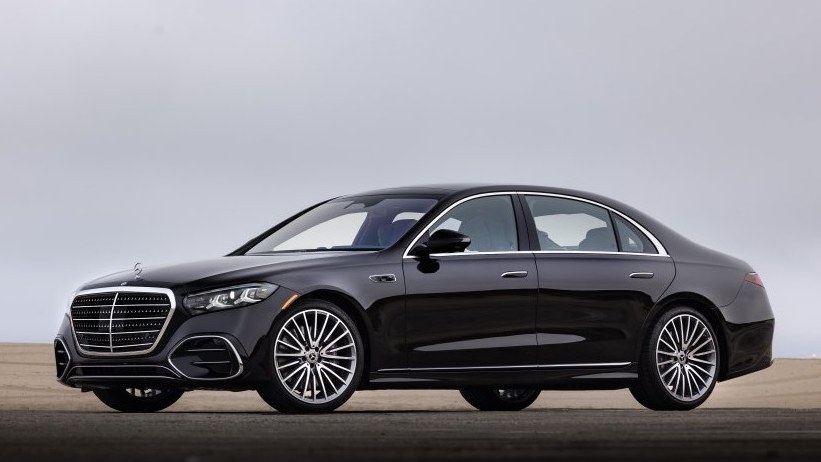
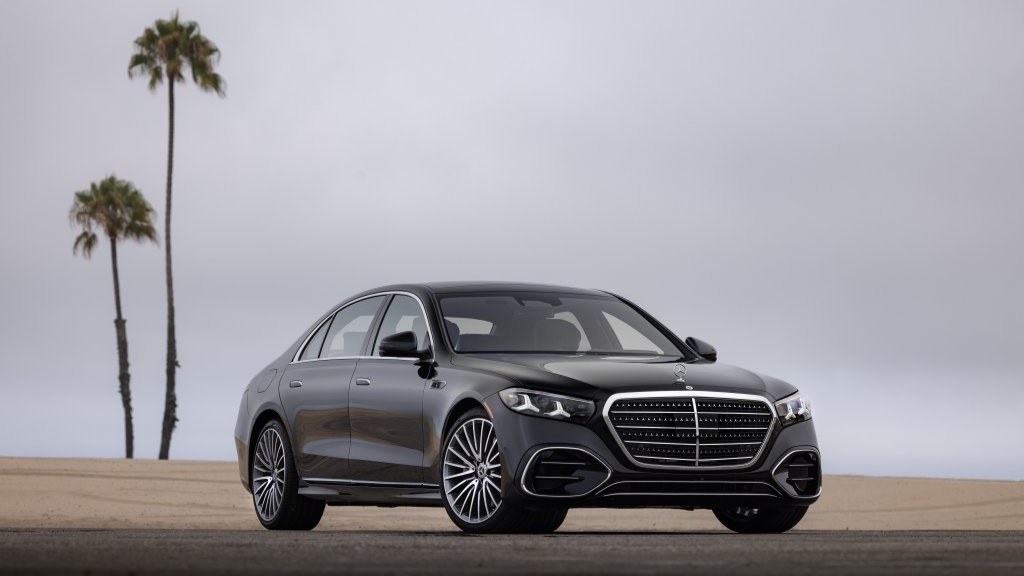
Mercedes-Benz was the first automaker allowed to sell a car in the United States that let you take your eyes off the road. Less than three years later, its chief technology officer says the company got there too early, and the new S-Class has arrived in American showrooms without that feature. That retreat is the clearest signal yet of what you will actually be able to buy in 2027: hands-free driving, with your eyes on the road and the liability on you.
Jörg Burzer, who runs research and development at Mercedes-Benz Group, told reporters at a Road & Track media roundtable this week that the company was "too early" with its Level 3 Drive Pilot, according to Motor1. His conclusion was not to build a better Level 3. It was to make the company's Level 2 systems far more capable and then jump to Level 4, the tier where the car drives itself inside set limits with no human supervision. Burzer put that after 2030, Motor1 reported; our news story on the roundtable has the details. Until then, everything Mercedes sells in the U.S. belongs on our list of every hands-free system, all of which require you to keep watching.
What Drive Pilot actually was
Drive Pilot was certified in Nevada in January 2023 and in California later that year, which made it, per Mercedes' own announcement, the first SAE Level 3 system approved for U.S. public freeways in a production car. It was an option on the 2024 S-Class and EQS sedans, priced at $2,500 for the first year, according to InsideEVs.
The conditions were the whole story. The system worked only on mapped freeways in California and Nevada, only up to 40 mph, and only in dense traffic with a vehicle ahead. Mercedes designed it for traffic jams, and it said so. When Drive Pilot was engaged, the driver could turn to certain apps on the center screen, and Mercedes said at launch that it would assume liability for crashes caused by the system while it was operating. That liability transfer is the single feature that separates Level 3 from everything else on sale today.
In January, reports in Germany's Handelsblatt, cited by electrive, said the facelifted S-Class would drop Drive Pilot and the EQS refresh would follow. Mercedes' U.S. press release for the new S-Class, published in May, describes the car's 27-sensor suite, standard lane-change assist, and an optional MB.DRIVE Assist Pro package. It does not mention Drive Pilot at all.
Why it never became a product
Burzer's "too early" is a polite way of saying buyers didn't see the value. In my view, the problem was never the engineering. Mercedes shipped a lidar-equipped system that did exactly what it promised. The trouble was that what it promised was narrow: a 40 mph traffic-jam chauffeur, in two states, for $2,500 a year, on six-figure sedans. Every other situation, which is to say most of your driving, put you right back in charge.
Compare that with what the hands-free crowd was offering at the same time. GM's Super Cruise works on more than 600,000 miles of mapped roads, according to OnStar's own FAQ, at highway speeds, across North America, and comes with three years of service included before the $39.99 monthly plan kicks in. Ford's BlueCruise runs on 97% of controlled-access highways in the U.S. and Canada for $49.99 a month, $495 a year, or $2,495 once, per Ford's owner site. Neither lets you look away. But each lets you take your hands off the wheel on the roads you actually drive, and for a lot of buyers that was the feature that felt like progress.
There's a regulatory layer, too. NHTSA has no federal safety standard written for Level 3 cars. Its Standing General Order requires makers of Level 2 and automated systems to report crashes, and the agency's current rulemakings are about adapting existing standards for cars without steering wheels. Approval to sell an eyes-off system came state by state, which is why Drive Pilot lived in California and Nevada and nowhere else. A product that cannot cross a state line is hard to advertise nationally.
What "Level 2++" means, in plain English
MB.DRIVE Assist Pro is what Mercedes is building instead, and it is the thing to watch for on your next Mercedes window sticker. Mercedes calls it an advanced SAE Level 2 system; the industry's shorthand is "Level 2++," though SAE recognizes no such tier. On the new S-Class it draws on ten cameras, five radars, and twelve ultrasonic sensors, per Mercedes-Benz USA's release, and runs on NVIDIA's DRIVE software, the subject of Mercedes' expanded NVIDIA deal we covered in October.
What it does is point-to-point driving: you enter a destination, and the car handles lane changes, intersections, turns, and traffic lights on highways and city streets. What it does not do is take responsibility. Mercedes' own description is "hands-off, eyes-on," and the driver remains liable for whatever happens. On the electric CLA, Mercedes said in January the feature would reach U.S. buyers later in 2026 at $3,950 for three years, according to electrive. A U.S. launch date for the S-Class version has not been announced, and Mercedes says the city-driving "CITY PRO" function will arrive later by over-the-air update.
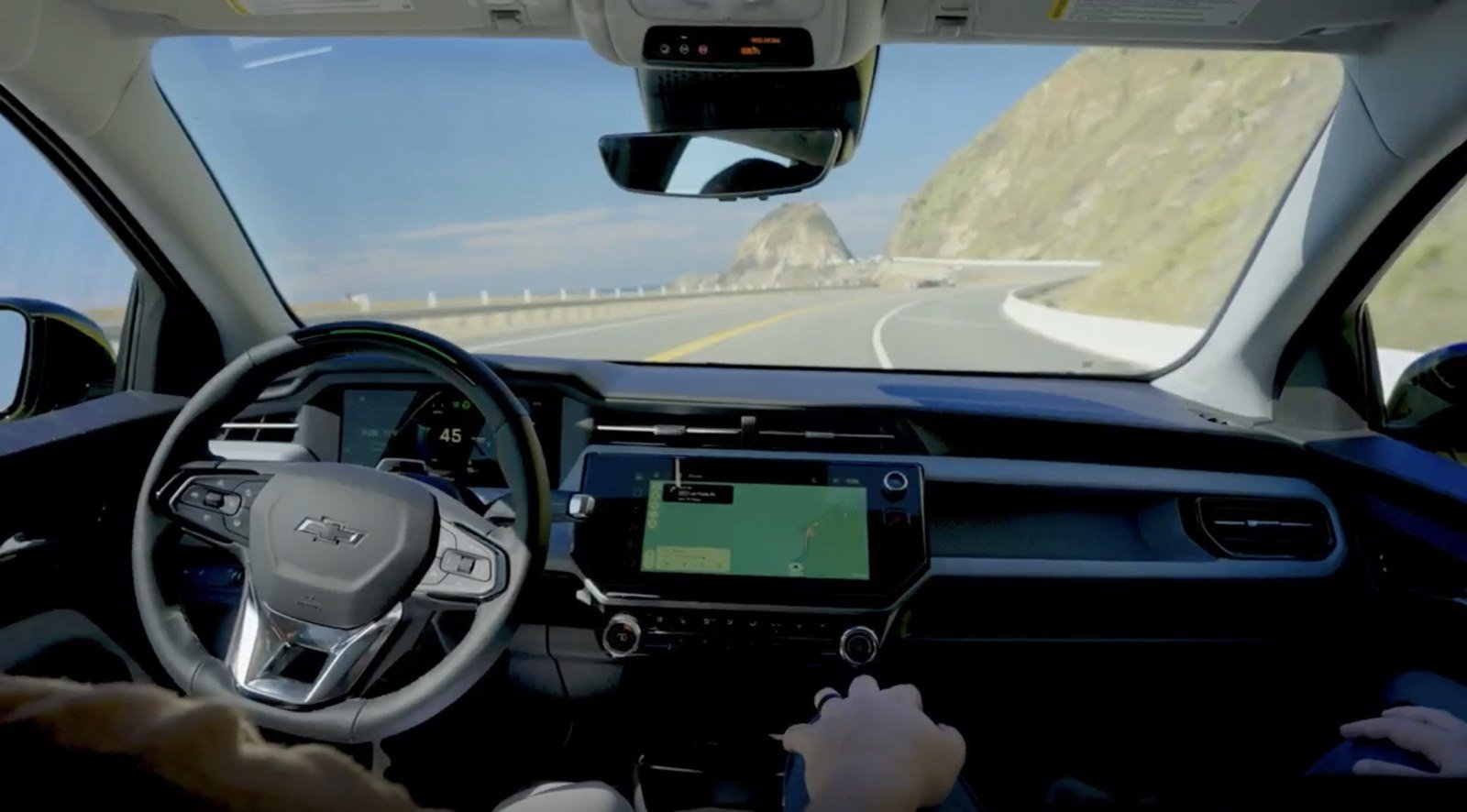
So the pitch has flipped. Drive Pilot did little but owned the outcome. Assist Pro does almost everything and owns nothing. For most buyers, I'd argue, the second deal is the one they wanted all along, because the feature is usable on every trip rather than in one kind of traffic jam. It just isn't autonomy, and the sticker should not be read that way.
The levels, from the buyer's seat
The SAE J3016 scale, revised again in September 2026, is written for engineers. Here is what it means when you are the one in the driver's seat.
| Level | What the car does | What you can do | Who is responsible | On sale in the U.S. now |
|---|---|---|---|---|
| Level 2 | Steers, brakes, accelerates; some systems change lanes | Hands off on approved roads; eyes on the road at all times | You | Yes: Super Cruise, BlueCruise, Tesla FSD (Supervised), MB.DRIVE Assist, others |
| Level 2++ (industry term) | Adds intersections, turns, traffic lights, point-to-point routing | Hands off; eyes on; take over when asked | You | Coming: MB.DRIVE Assist Pro on CLA, then S-Class |
| Level 3 | Drives itself inside a narrow domain; alerts you to take over | Eyes off until the car asks; must retake control within seconds | The automaker, while engaged (Mercedes' stated position) | No: Drive Pilot dropped from the new S-Class |
| Level 4 | Drives itself inside a defined domain with no human fallback | Nothing required inside that domain | The automaker or operator | Only as robotaxis (Waymo); GM targets 2028 on Escalade IQ, Mercedes after 2030 |
Two cautions on the table. Tesla's FSD (Supervised) is Level 2 by Tesla's own description and has no sanctioned hands-off mode, whatever the name suggests. And "eyes-off" in a retail car exists today only as a promise: GM's 2028 plan for the Escalade IQ and Volvo's NVIDIA-based "mind-off" pledge are both roadmaps, not options you can order.
What this means for your next car
- If you are shopping a 2027 model, expect hands-free highway driving to be the top tier on offer from Mercedes, GM, Ford, Rivian, and BMW. Budget for a subscription after any included period.
- Nothing you can buy in 2027 moves legal responsibility off you. Read the fine print the way GM writes it: always pay attention, always be ready to take the wheel.
- If a used 2024 or 2025 S-Class or EQS with Drive Pilot tempts you, ask the dealer in writing whether the subscription can still be activated. Mercedes has said it will return to eyes-off driving with a more capable system, but it hasn't said what happens to the one already on the road.
- Watch for the turquoise marker lights. California and Nevada already allow them on automated cars, and NHTSA has proposed making them a federal rule. When you see them on a retail car, Level 3 will be back.
What we don't know
Mercedes hasn't put a date on Level 4 beyond Burzer's "after 2030," and it hasn't said whether its first Level 4 product will be an owner-driven S-Class or the robotaxi it is developing with NVIDIA and Uber. It also hasn't confirmed, on the record, whether Drive Pilot will be switched off, maintained, or quietly left to expire on the 2024 and 2025 cars that have it. And no U.S. date or price has been published for MB.DRIVE Assist Pro on the S-Class. We'll update this story when any of that changes.