The New Elantra Is Nearly Midsize. Here's How It Compares With Five Rivals
The 2027 Elantra is longer and wider than a Civic, Corolla, Sentra, K4, or Jetta, and its rear-legroom claim checks out. Price and EPA ratings are still missing.
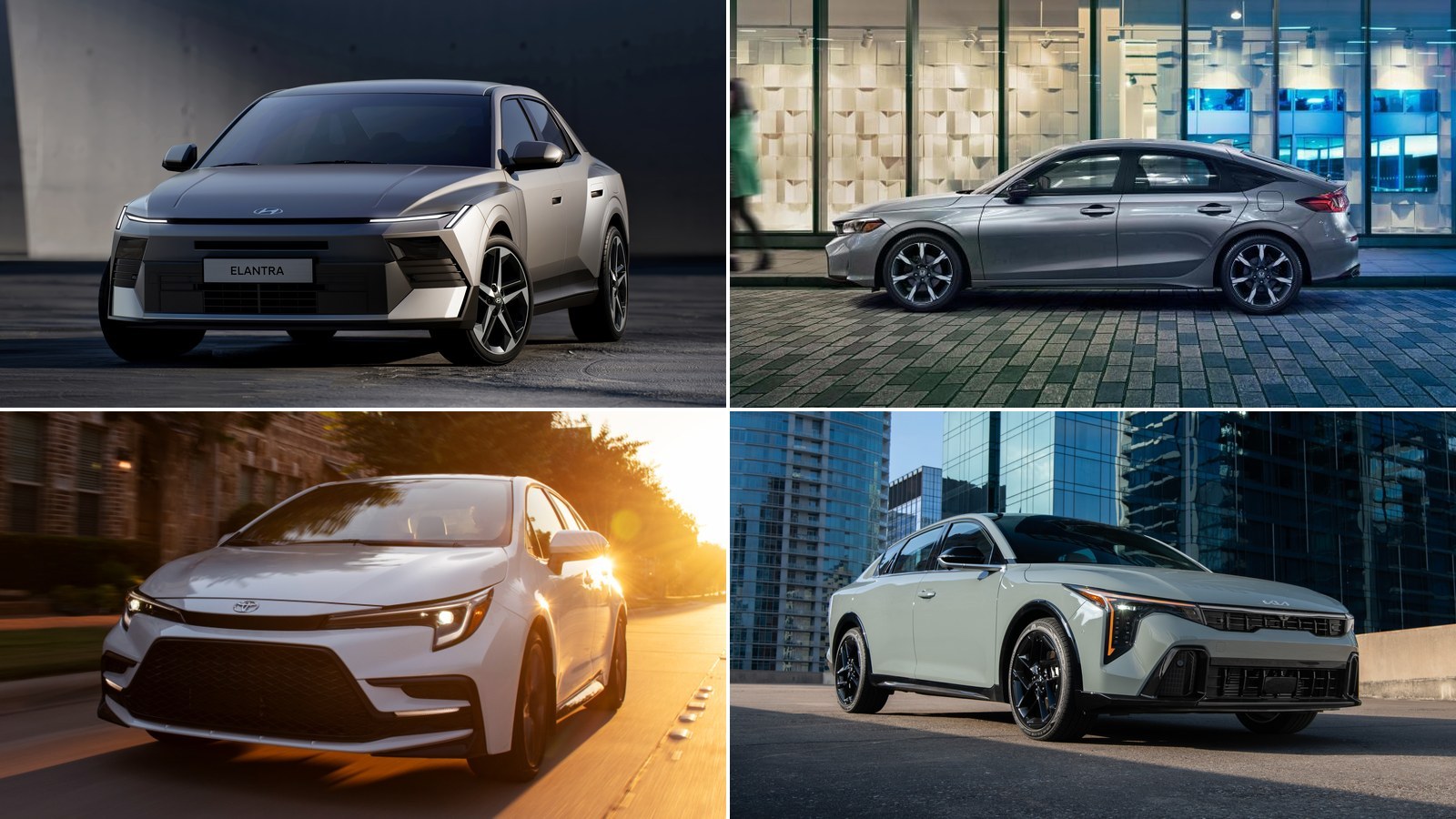
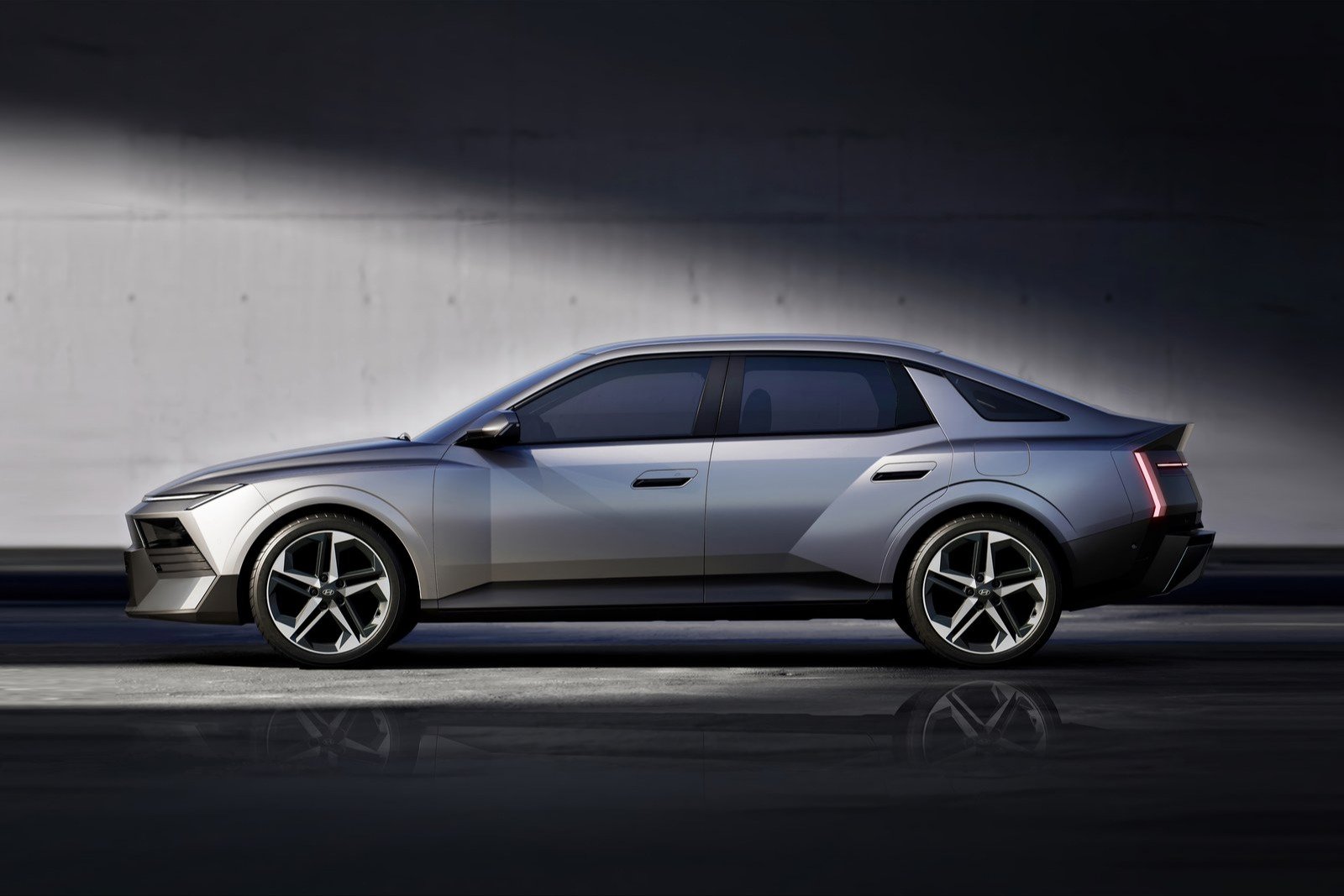
Hyundai's eighth-generation Elantra, revealed Thursday at the Los Angeles Auto Show, is 188.8 inches long. That is 3.4 inches more than the car it replaces and only 4.5 inches short of a Sonata. It is also longer and wider than each of the five sedans it gets cross-shopped against.
Hyundai says the back seat is the roomiest among compact sedans. We checked that against the manufacturers' own spec sheets for the Honda Civic, Toyota Corolla, Nissan Sentra, Kia K4, and Volkswagen Jetta, the same way we built our Civic vs. Corolla comparison. Against these five, the claim holds. What Hyundai hasn't supplied is the number that decides most purchases in this class: a price.
The numbers, side by side
Elantra figures come from Hyundai's reveal announcement. Rival prices, dimensions, and power are from each brand's U.S. consumer site or press kit as of Nov. 20, for the base sedan. Fuel economy is the EPA combined rating listed on fueleconomy.gov, except for the Elantra, where the only figures so far are Hyundai's own targets.
| 2027 Hyundai Elantra | 2027 Honda Civic | 2027 Toyota Corolla | 2027 Nissan Sentra | 2027 Kia K4 | 2027 Volkswagen Jetta | |
|---|---|---|---|---|---|---|
| Base price with destination | TBA | $26,290 (LX) | $24,620 (LE) | $24,265 (S) | $23,635 (LX) | $25,320 (S) |
| Length | 188.8 in | 184.8 in | 182.5 in | 183.3 in | 185.4 in | 186.5 in |
| Wheelbase | 108.3 in | 107.7 in | 106.3 in | 106.5 in | 107.1 in | 105.7 in |
| Width | 73.0 in | 70.9 in | 70.1 in | 71.5 in | 72.8 in | 70.8 in |
| Height | 56.1 in | 55.7 in | 56.5 in | 57.1 in | 55.9 in | 57.7 in |
| Rear legroom | 39.1 in | 37.4 in | 34.8 in | 34.8 in | 38.0 in | 37.4 in |
| Rear headroom | 37.7 in | 37.1 in | 37.1 in | 36.7 in | 37.3 in | 37.2 in |
| Rear shoulder room | 56.5 in | 56.0 in | 51.7 in | 54.6 in | 54.7 in | 54.0 in |
| Trunk | TBA | 14.8 cu ft | 13.1 cu ft | 14.3 cu ft | 14.6 cu ft | 14.1 cu ft |
| Base engine | 2.0-liter four, 147 hp (est.) | 2.0-liter four, 150 hp | 2.0-liter four, 169 hp | 2.0-liter four, 149 hp | 2.0-liter four, 147 hp | 1.5-liter turbo four, 158 hp |
| Transmission | CVT (Hyundai IVT) | CVT | CVT | CVT | CVT (Kia IVT) | 8-speed automatic |
| Combined mpg, base car | 35 (target*) | 36 | 35 | 33 | 33 | 34 |
| Hybrid | 2028 Elantra Hybrid: 155 hp, 53 mpg (target*) | 200 hp, 49 mpg | 138 hp, 50 mpg; AWD offered | None | None | None |
*Hyundai targets, not EPA ratings; the gas figure applies to cars on 16-inch wheels. Prices are MSRP plus each brand's destination charge. Kia quotes K4 rear headroom without a sunroof; with one it is 37.0 inches.
The biggest car here, by a clear margin
At 188.8 inches, the Elantra is 2.3 inches longer than the Jetta, the next-longest sedan in this group, and 6.3 inches longer than a Corolla. Its 108.3-inch wheelbase beats the Civic's by 0.6 inch, and at 73.0 inches wide it edges the K4 by 0.2 inch.
The "compact" label was already loose. The EPA sorts cars by interior volume, and it files the 2027 Civic, Sentra, and K4 sedans under midsize cars, along with the outgoing 2026 Elantra. Only the Corolla and Jetta rate as compacts. The new Elantra has no EPA listing yet.
The back-seat claim checks out
Rear legroom is 39.1 inches, up from 38.0 in the 2026 car. That is 1.1 inches more than the K4, which Kia's own site still advertises as the class leader, 1.7 inches more than the Civic and Jetta, and 4.3 inches more than the Corolla and Sentra.
The Elantra also leads this group in rear headroom, by 0.4 inch over the K4, and in rear shoulder room, by half an inch over the Civic. One comparison Hyundai didn't make: its own midsize Sonata lists 34.8 inches of rear legroom, 4.3 inches less than the new compact.
A caveat applies. Hyundai bases the claim on published dimensions, and a legroom figure depends on how the front seat is positioned for the measurement, so a lead on paper doesn't guarantee the most comfortable bench. Hyundai hasn't published trunk volume, so the cargo side of the size question stays open.
More car, no more power
The gas Elantra uses a 2.0-liter Atkinson-cycle four-cylinder that Hyundai estimates at 147 hp and 132 lb-ft, paired with a continuously variable transmission. That ties the K4 for the lowest output in this group. The Corolla makes 169 hp, and the Jetta's turbocharged 1.5-liter produces 158 hp and 184 lb-ft.
Hyundai is targeting up to 35 mpg combined. If the EPA agrees, the Elantra would match the Corolla LE and sit one mpg behind the Civic LX. It would also equal the best rating of the smaller 2026 Elantra, which the EPA lists at 35 mpg combined. Until the certified numbers arrive, treat the figure as a goal. Hyundai hasn't released a curb weight either.
Gas models use a torsion-beam rear axle. The hybrid gets a multi-link independent rear suspension.
A 12.9-inch screen, with knobs
Every 2027 Elantra, including the base SE, gets a 12.9-inch touchscreen running Pleos Connect, Hyundai's new Android Automotive-based system, with wireless Apple CarPlay and Android Auto and over-the-air updates. Climate and audio keep physical buttons and knobs. The Sentra already puts a 12.3-inch screen in its base S trim, so a big display alone isn't unique here. Adaptive cruise control with stop-and-go, rear air vents, and rear USB-C ports are also standard on the SE, per Hyundai's trim list.
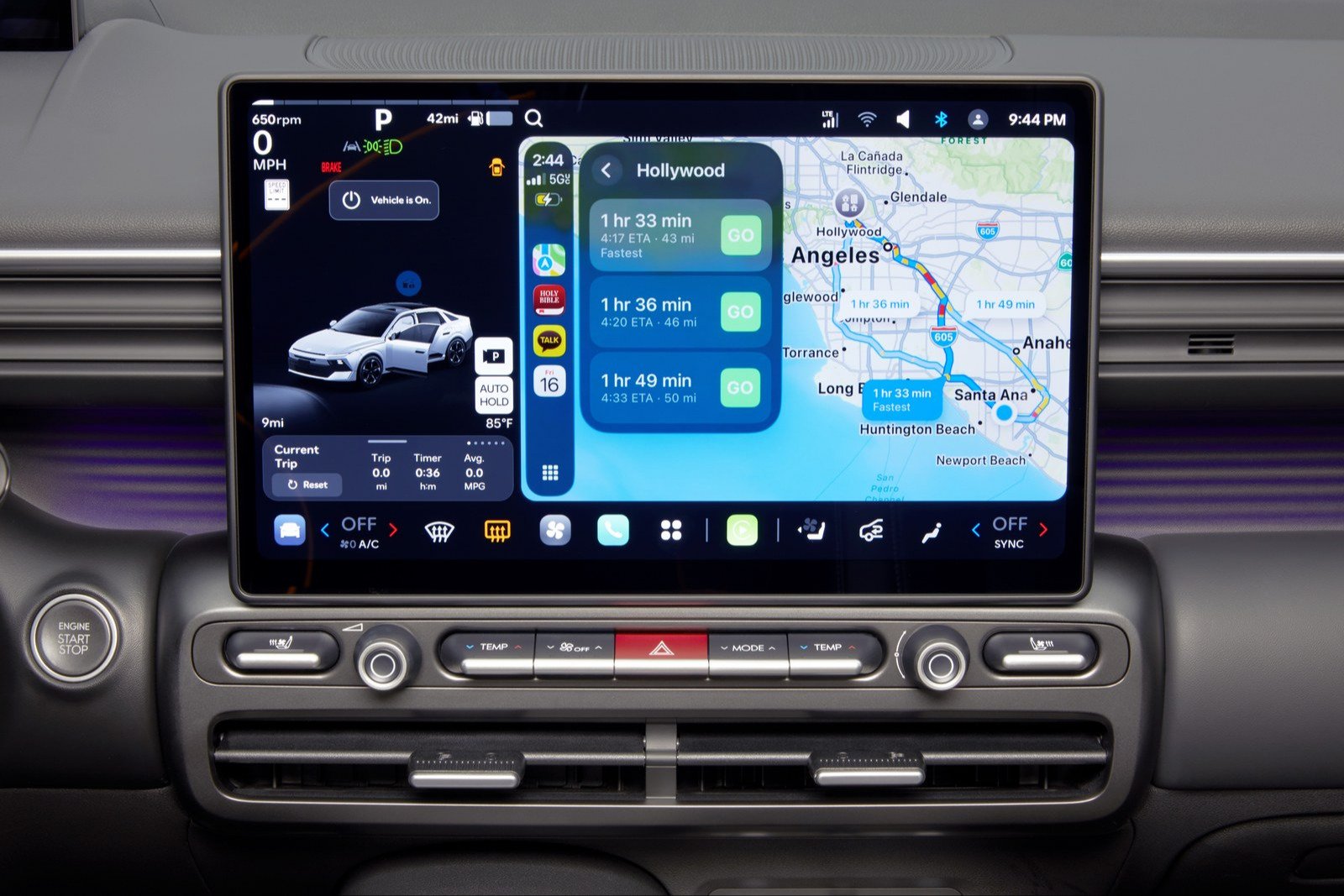
Hyundai lists three gas trims: SE, SEL Sport, and Limited. It notes that packaging is subject to change.
The hybrid is a 2028 model
Of the five rivals, only the Civic and Corolla offer a hybrid, a matchup we cover in our budget hybrid comparison. The next Elantra Hybrid arrives as a 2028 model. Hyundai hasn't said when either version goes on sale.
The hybrid keeps a 1.6-liter engine and six-speed dual-clutch transmission, and system output rises from 139 hp to 155 hp. Hyundai's target is up to 53 mpg combined. The outgoing 2026 Elantra Hybrid Blue carries an EPA rating of 54 mpg combined, so on paper the new car's goal doesn't beat the old car's certified number. The Corolla Hybrid is rated at 50 mpg and the 200-hp Civic hybrid at 49.
The new feature is Stay Mode, which runs the climate control, audio, and charge ports off the hybrid battery while parked. Hyundai's headline figure is up to 30 minutes. Its fine print says about 20 to 30 minutes on a full battery, and that the mode is available when a destination is set in the navigation system.
What we don't know yet
- Price. Hyundai gave none. For reference, the 2026 Elantra SE costs $24,120 with destination.
- On-sale dates. Hyundai says timing will be announced closer to launch.
- EPA ratings. The 35-mpg and 53-mpg figures are Hyundai targets.
- Trunk volume and curb weight. Neither is in the spec sheet.
- Crash-test results. None have been published for the new body.
- Elantra N. Hyundai has not announced a new one. The current car features in our sport compact comparison.
Which one should you buy, or wait for?
If you need a car now and carry adults in the back, the 2027 Kia K4 comes closest to the Elantra's rear-seat numbers, and the Civic has the most rear shoulder room of the cars on sale today. The Civic also holds the best EPA rating among the gas models here, and its 2027 lineup is on sale now.
If you want a hybrid in the next few months, the choice is the Civic or the Corolla. The Elantra Hybrid has no date.
If rear space and a standard big screen top your list and you can wait, the Elantra is worth holding out for. Just don't expect it to be quicker than what you can buy today. The Corolla and Sentra are the ones to skip if tall passengers ride in back often: both list 34.8 inches of rear legroom.
We aren't naming a value pick. The five rivals span $23,635 to $26,290 at the base level, and where Hyundai lands against that range will decide whether the extra inches come free. We'll update this comparison when Hyundai publishes U.S. pricing and the EPA posts its ratings.