2027 Hyundai Tucson: Everything We Know So Far
Hyundai has shown the fifth-generation Tucson in Korea — bigger, boxier, and built around new tech. US pricing, powertrains, and the on-sale date are still open questions.
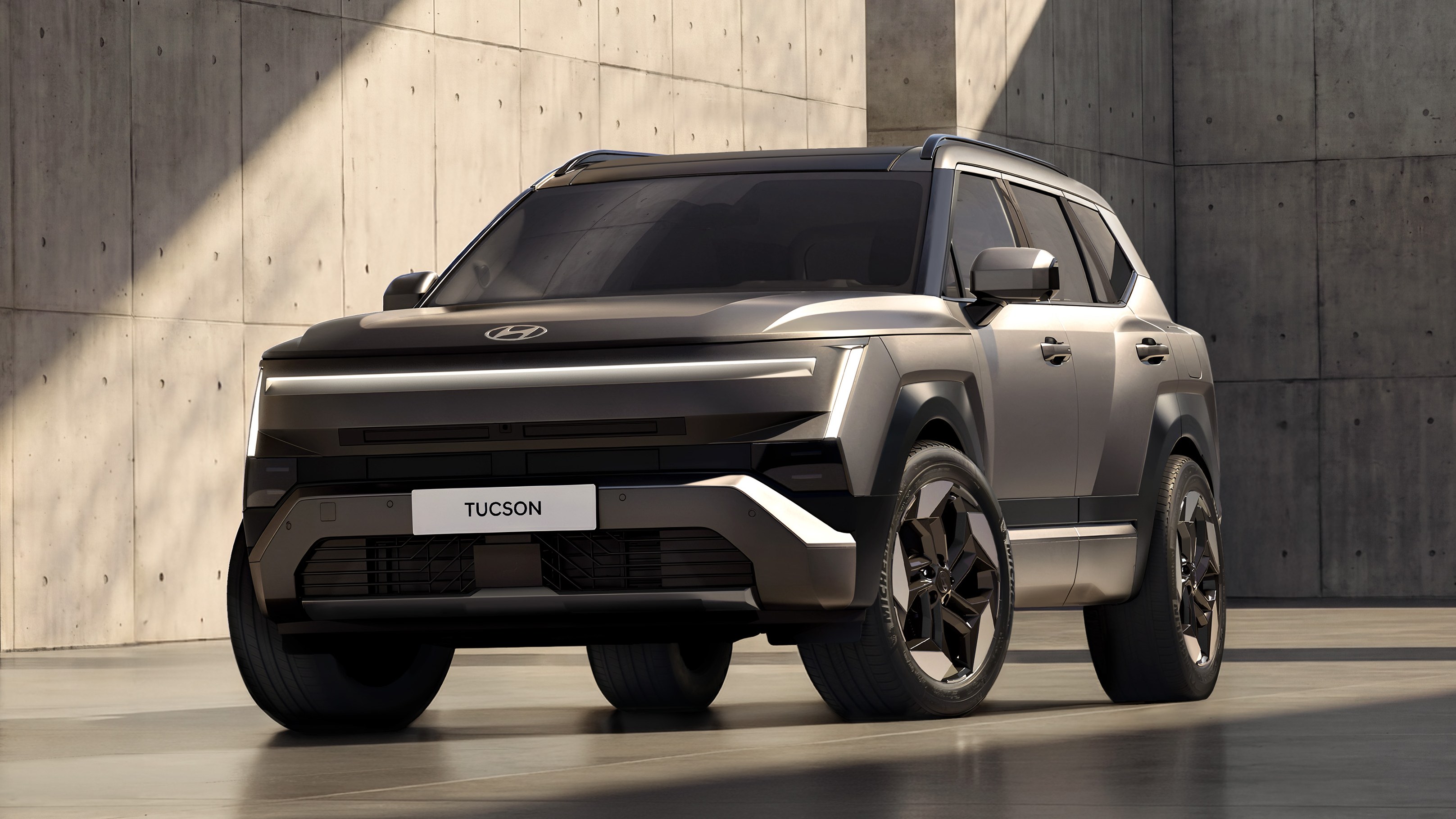
Hyundai has shown the fifth-generation Tucson, and the redesign is anything but subtle. Revealed in South Korea on August 19, the new model swaps the current car's creased, busy surfacing for an upright, boxy shape built on Hyundai's "Art of Steel" design language — the same philosophy previewed by the Boulder concept at this year's New York Auto Show and echoed by the redesigned Elantra. It is also simply a bigger vehicle: longer, wider, taller, and roomier where families will notice.
The open questions are just as significant. Hyundai has not announced US pricing, US-spec powertrains, or an on-sale date, and the reveal covered the Korean-market car. Here is everything confirmed so far, what remains unknown, and what to watch next. We will keep this page updated as Hyundai fills in the blanks.
What does the new Tucson look like?
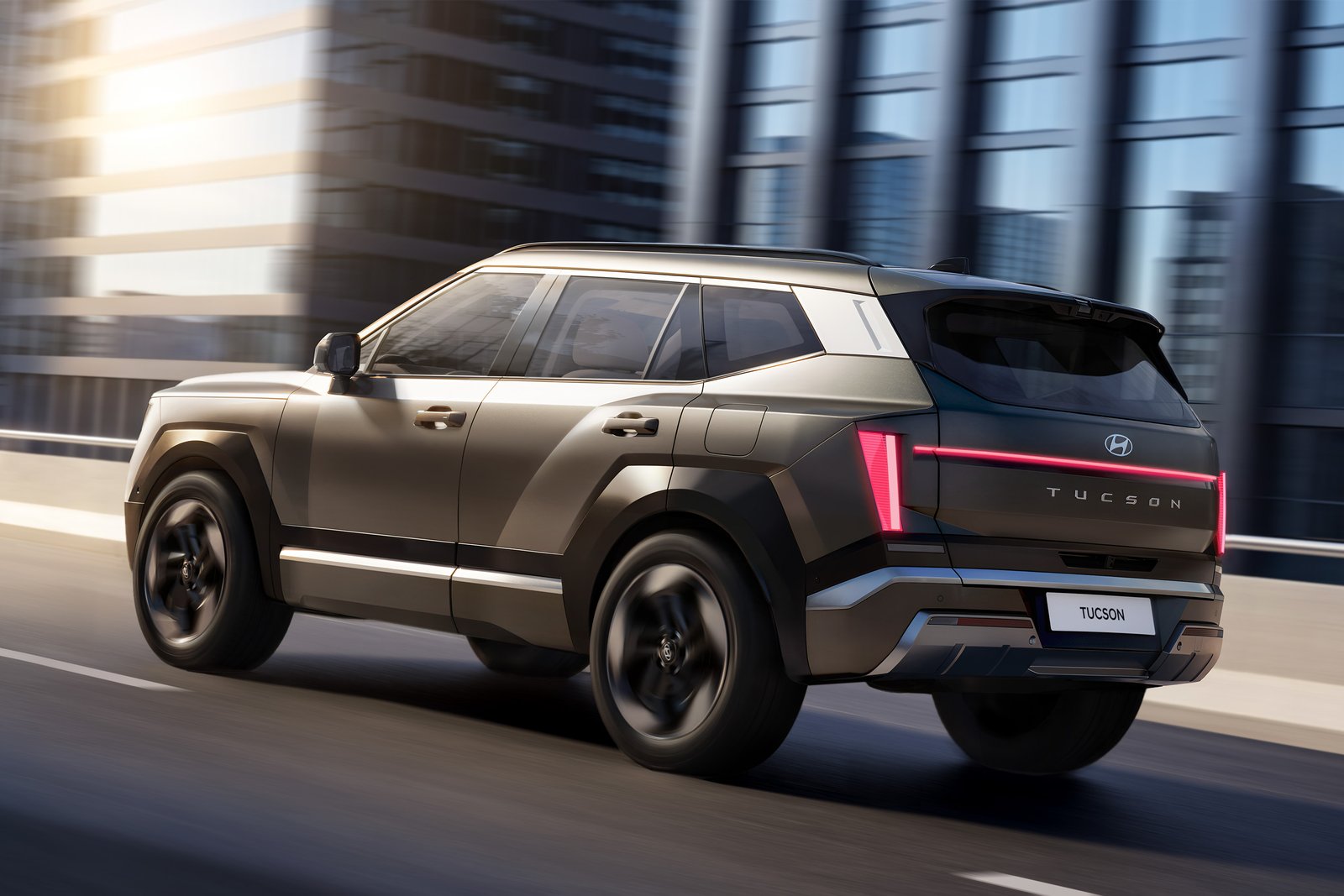
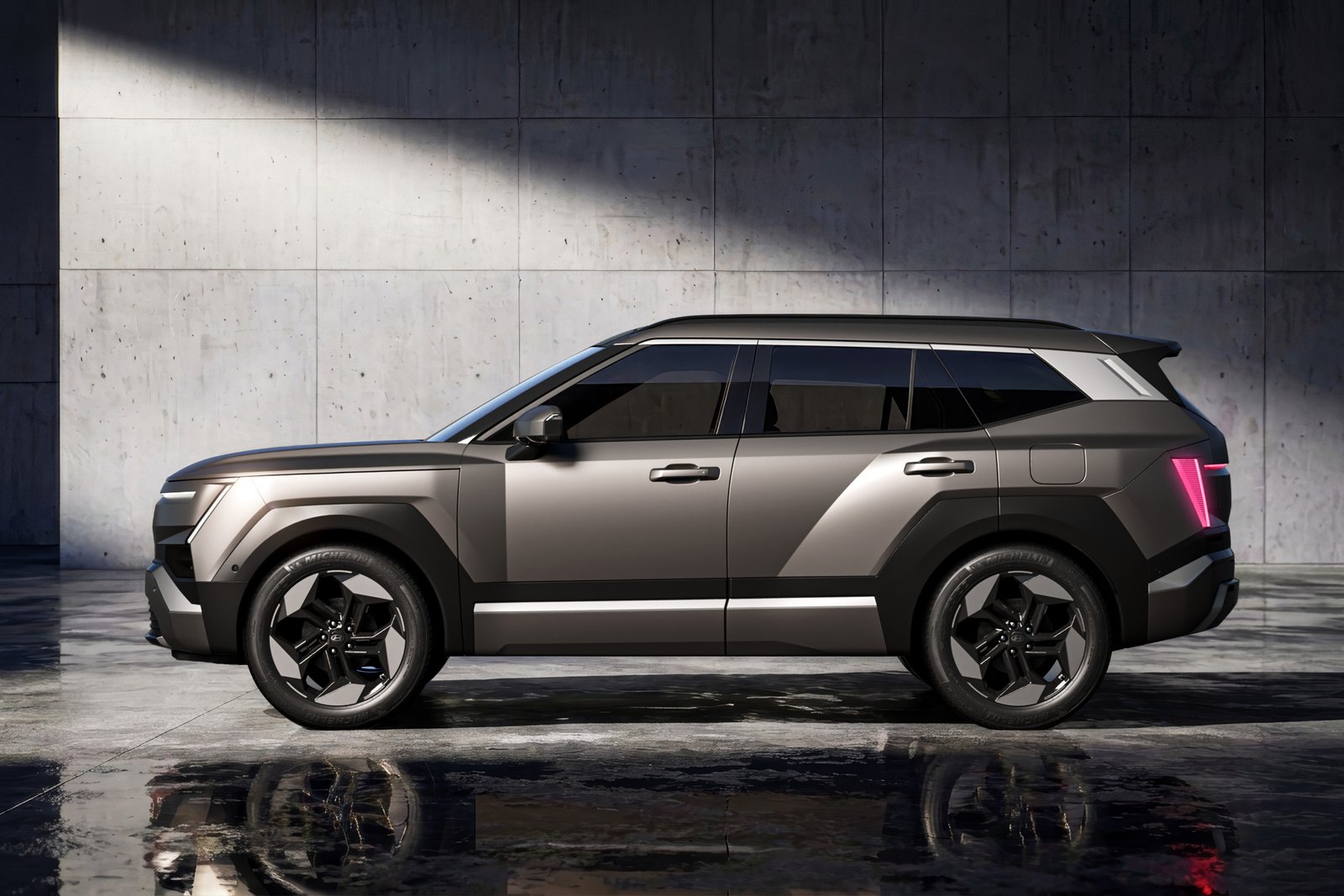
The Tucson has changed its character with every generation, and this one is the sharpest turn yet. The rounded, heavily sculpted body of the outgoing car gives way to flat panels, pronounced fenders, and a two-box profile that reads closer to the latest Santa Fe and Palisade than to any previous Tucson.
Up front, vertical "H-edge" daytime running lights flank a slim horizontal center lamp, a layout Hyundai says was inspired by architectural lighting. At the back, prism-like taillights with three-dimensional lens structures bracket another slim light bar, so the front and rear ends visually mirror each other. Thick lower bumpers and deep sills complete the rugged look — even if, like most compact crossovers, the new Tucson will spend its life on pavement.
How much bigger is it?
The fifth-generation Tucson measures about 185 inches (4,700 mm) long — roughly 2.4 inches (60 mm) more than today's car — and half of that growth went into the wheelbase, now 109.6 inches (2,785 mm). Width grows by 1.6 inches (40 mm) to 75 inches (1,905 mm), and height increases by 0.8 inches (20 mm) to 66.3 inches (1,685 mm).
The gains translate into usable space. Hyundai quotes about 1.1 inches (29 mm) of extra rear headroom, and the rear doors now open to 83 degrees instead of 73. That wider opening sounds like a small detail until you load a child seat or help an older passenger climb aboard — exactly the kind of change compact-SUV buyers feel every day.
What's inside?
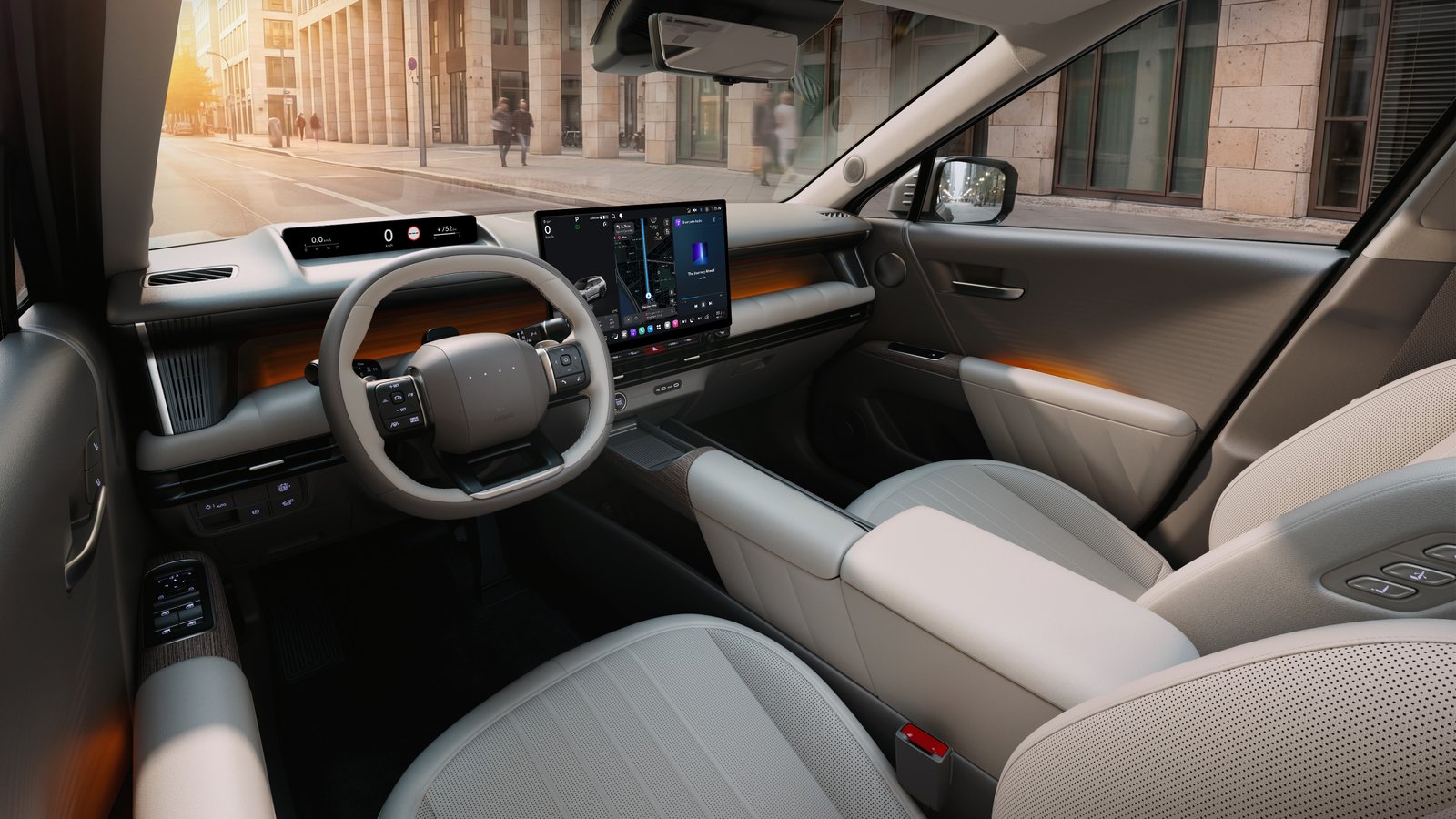
The cabin is a clean break from the outgoing car's panoramic curved display. A large central touchscreen runs Hyundai's new Pleos Connect infotainment system, built on Google's Android Automotive platform with Hyundai's own interface and app store. A slim driver display sits atop the dashboard in the driver's line of sight, and a row of physical controls survives beneath the main screen.
Hyundai claims class-leading passenger room for the segment, and the practical touches back up the family focus: two wireless phone chargers, a card holder beside the driver, extra storage around the center console, a new flat-topped steering wheel, and additional cargo-area accessories.
What powers it?
Hyundai has put exactly one powertrain on the record, and it did not arrive by press release. The company's 2026 CEO Investor Day materials, presented in late August, list the new Tucson Hybrid's 1.6-liter turbocharged setup — identified in the same materials as Hyundai's next-generation TMED-II hybrid system — at a combined 245 PS, or 242 hp, and 280 lb-ft (380 Nm). Hyundai claims 17.4 km/L on Korea's test cycle and 0–62 mph in 8.5 seconds. Converted straight across, that economy figure works out to roughly 41 mpg, but it is not an EPA rating and should not be read as one.
A non-hybrid 1.6-liter turbo appears alongside the hybrid in those same materials. What Hyundai has not said is whether either engine, or any of these numbers, carries over to the American car: there are no US-spec outputs, no EPA ratings, and no lineup breakdown. For reference, today's US Tucson offers a 187-hp 2.5-liter four, a 231-hp hybrid, and a 268-hp plug-in hybrid.
Will there be an XRT version?
Yes — Hyundai showed an XRT variant at the reveal, wearing a chunkier grille, black wheel-arch trim, unique wheels, and more aggressive skid plates. For now, treat it as a styling package: Hyundai has not announced any additional off-road hardware. A sporty N Line is reportedly likely to return as the lineup fills out, but nothing beyond the XRT has been confirmed.
When does the new Tucson go on sale?
Korea comes first. Hyundai's 2026 CEO Investor Day release states that "the all-new TUCSON and TUCSON Hybrid will launch in initial markets in the fourth quarter," which lines up with the home-market timing the company gave at the reveal. For the US, Hyundai has not confirmed a debut date. Most reports point to a November unveiling at the Los Angeles Auto Show, though some early coverage suggested the American version could appear as soon as September — neither timeline is official. US sales are expected in the first half of 2027, and the car should arrive as a 2027 model year vehicle, though Hyundai has not officially confirmed the designation either.
How much will it cost?
Hyundai has released no pricing for any market. For context, the current 2026 Tucson starts at a $29,450 MSRP for the gas SE, with the XRT at $33,475 and the Limited at $39,425 before freight. Redesigns almost always nudge the price band upward, and CarsDirect estimates the new base gas model will start around $32,000 — but that is a third-party estimate, not a Hyundai figure.
What we don't know yet
- US pricing. Nothing official; only outside estimates exist so far.
- US powertrains. The only output on the record — 242 hp and 280 lb-ft from the 1.6-liter hybrid — comes from Hyundai's investor-day materials and describes the Korean-market car. There are no US-spec figures, no EPA ratings, and no word on whether the non-hybrid 1.6 turbo is bound for America at all.
- The exact US debut date. The LA Auto Show is the consensus guess, not an announcement.
- The model year. "2027" is expected, not confirmed.
- The plug-in hybrid's future. Hyundai has not said whether the PHEV continues in the US lineup.
- Additional trims. N Line, a full N, and an upgraded XRT are all rumor territory for now.
What's next
The first hard answers should come from Korea, where sales begin in the fourth quarter and full specifications will have to surface. After that, watch the LA Auto Show window in November for the US-market car, with pricing typically landing closer to the on-sale date. In the meantime, our Tucson vs. RAV4 comparison puts the Korean-market numbers alongside the segment's benchmark. We will update this guide as each announcement drops.