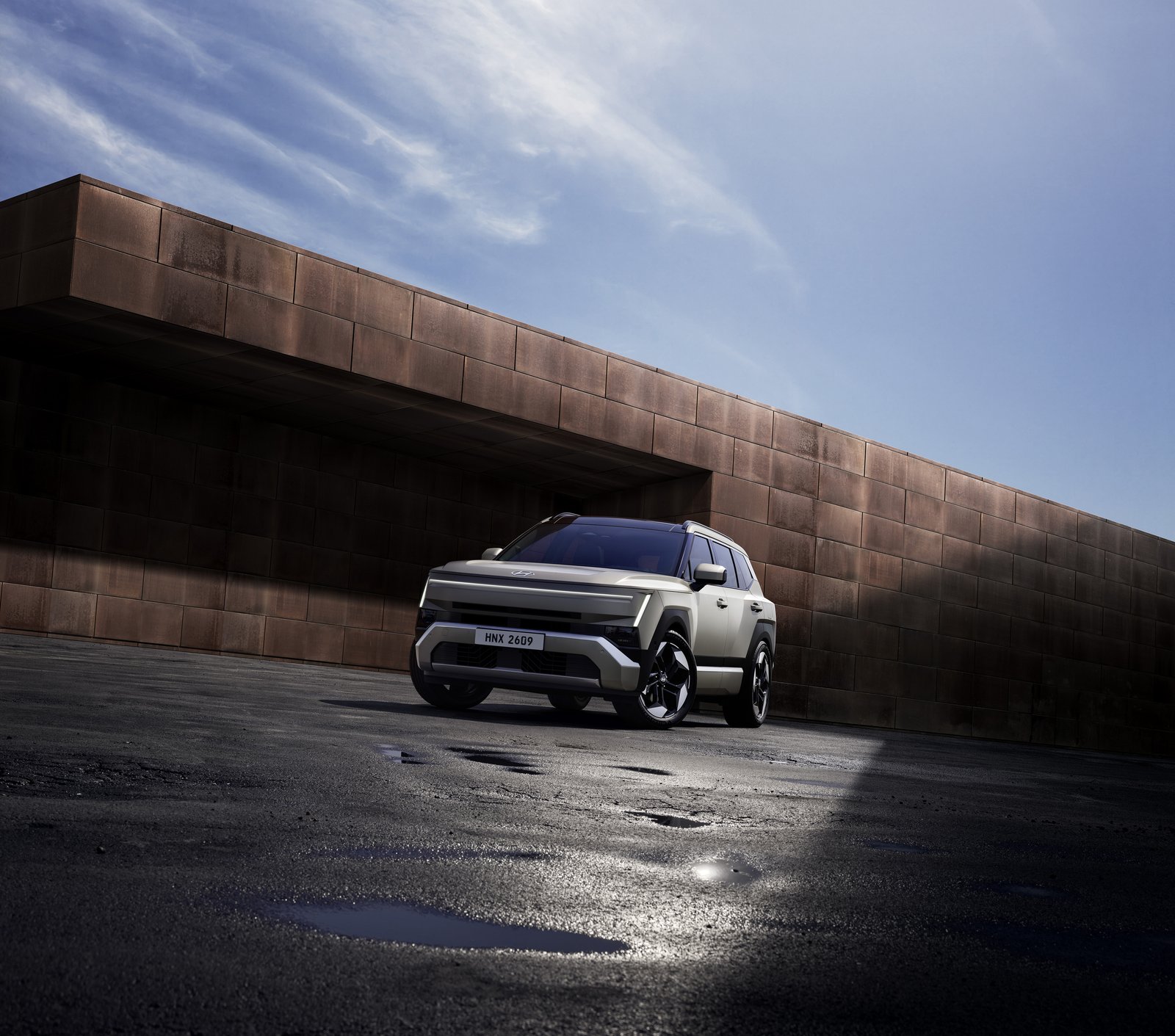
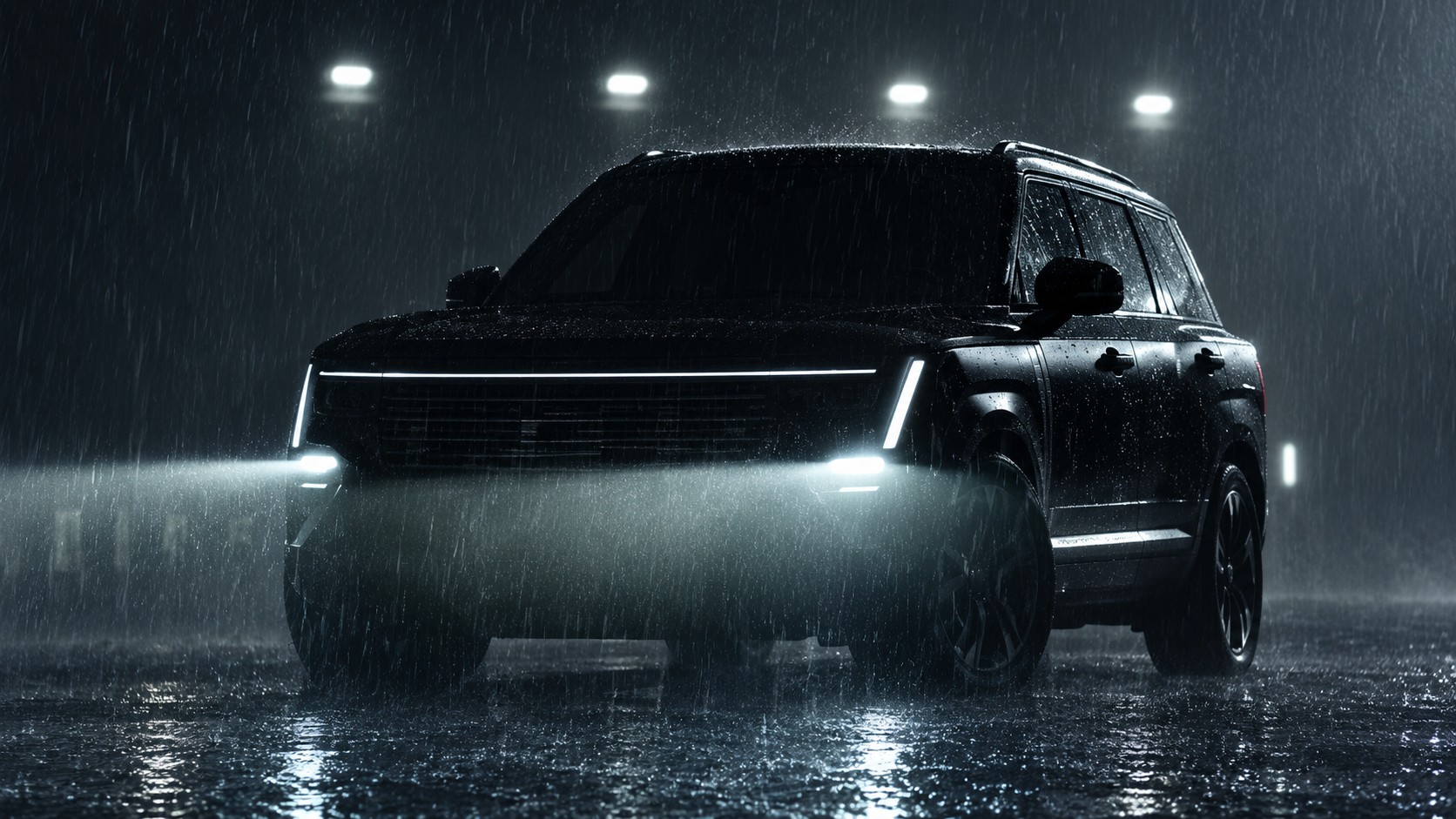
Hyundai's New Tucson Brings an AI Assistant and Android Brain to the US — and Keeps CarPlay
The 2027 Tucson gets a 17- or 12.9-inch screen, a voice assistant that answers to "Hey Hyundai," and its own app store, while wireless phone mirroring stays.
The redesigned 2027 Hyundai Tucson will be the first Hyundai sold in the US to run Pleos Connect, the group's new infotainment system built on Android Automotive. It adds a voice assistant based on a large language model and a Hyundai-run app store, and it keeps wireless Apple CarPlay and Android Auto instead of locking them out.
Hyundai Motor America confirmed the details on October 1, the day the fifth-generation SUV debuted for American audiences in New York. Our 2027 Hyundai Tucson guide covers the rest of the car. This is what changes on the dashboard.
Two screen sizes, one interface
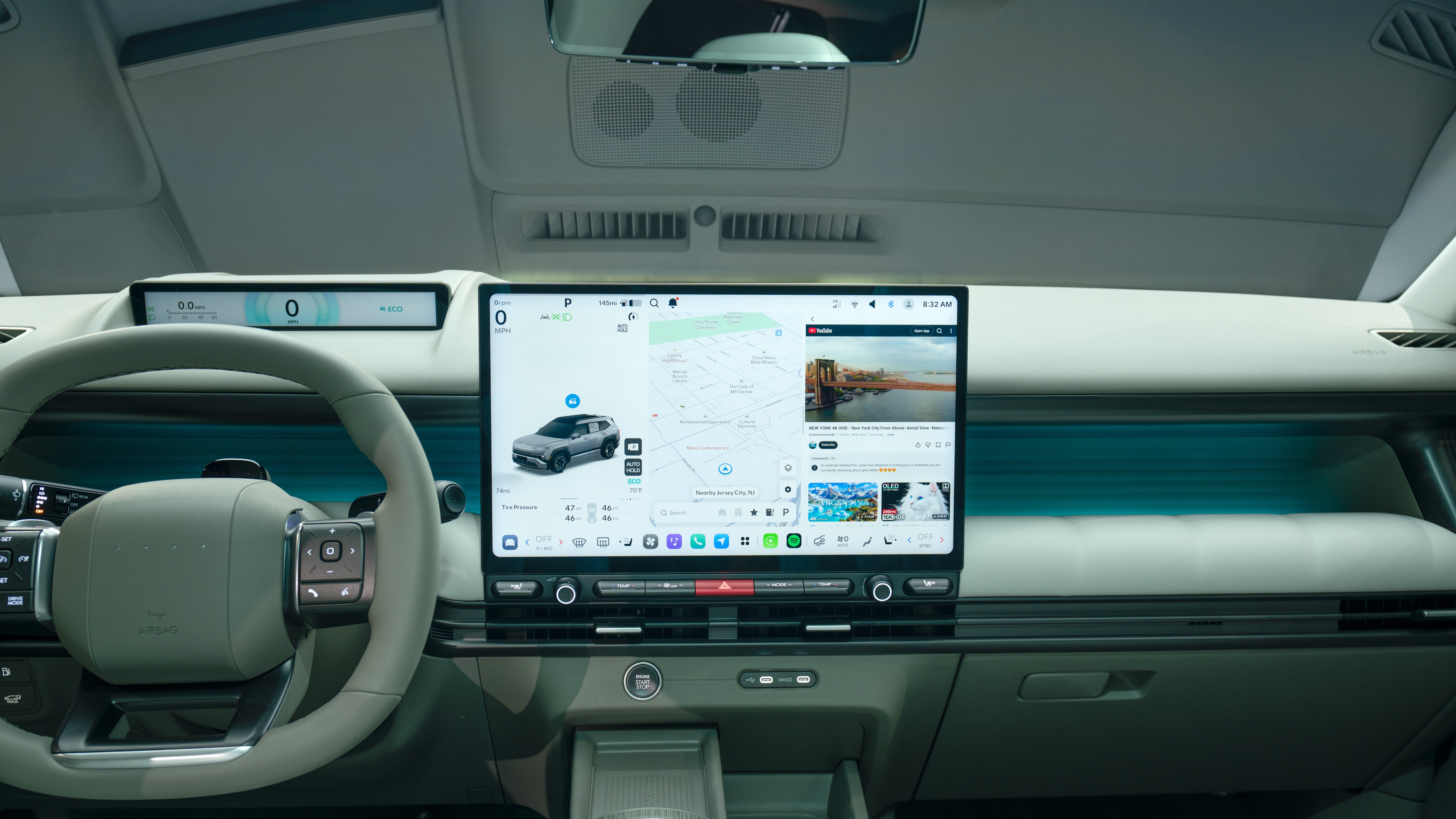
Buyers will get either a 17-inch or a 12.9-inch center touchscreen. Both are 16:9 panels with the same 2,560-by-1,440 resolution, so the smaller one runs the same layout rather than a cut-down version. A 9.9-inch strip display on top of the dash shows speed, driver-assist status, and directions, and Hyundai says it's standard on the Tucson with either screen.
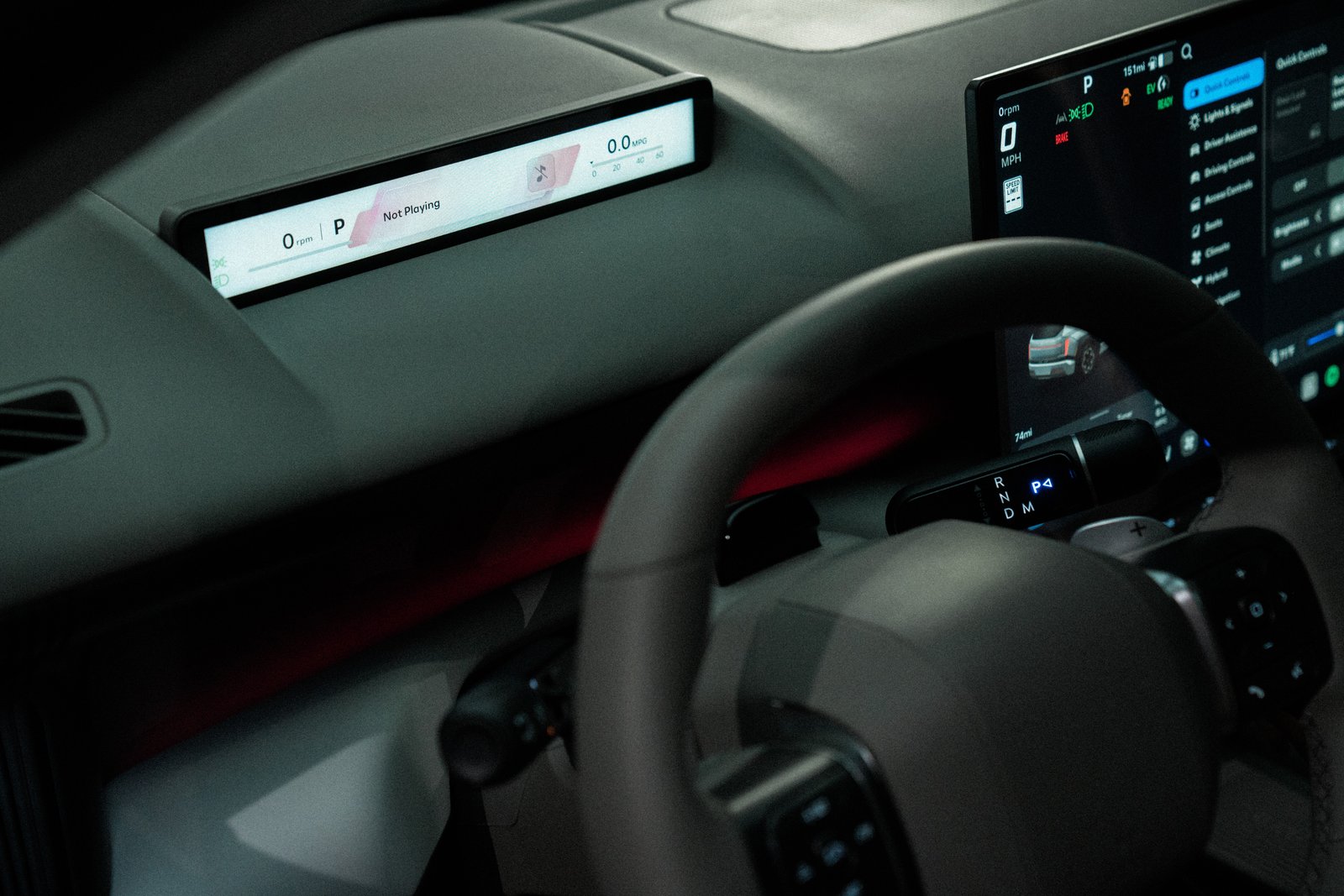
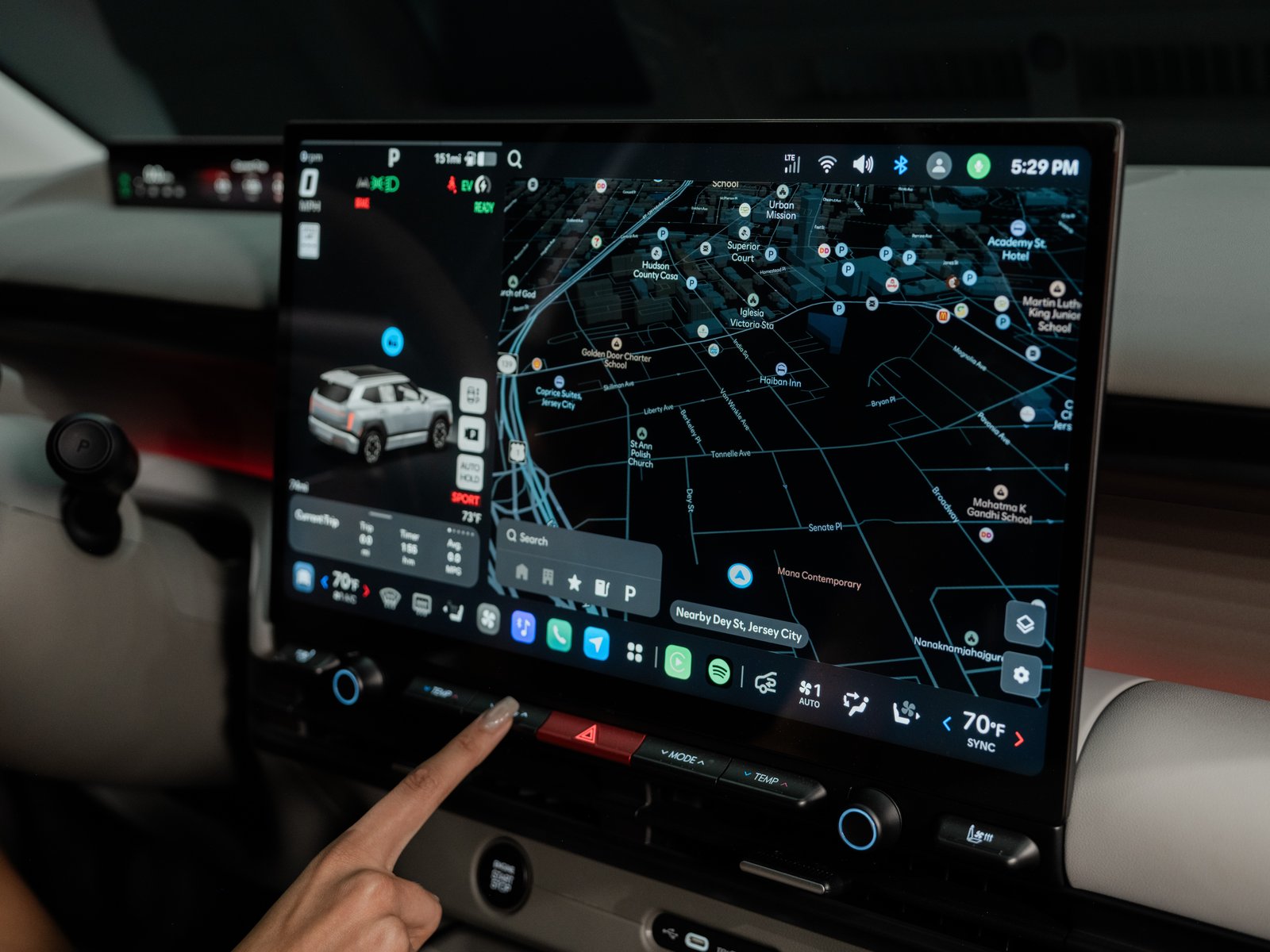
The touchscreen is divided into a driving zone and an app zone. The driving side carries speed, gear, and a 3D model of the car that doubles as a shortcut to supported functions such as the mirrors or tailgate. The app side handles navigation and media, and compatible apps can share the screen two at a time.
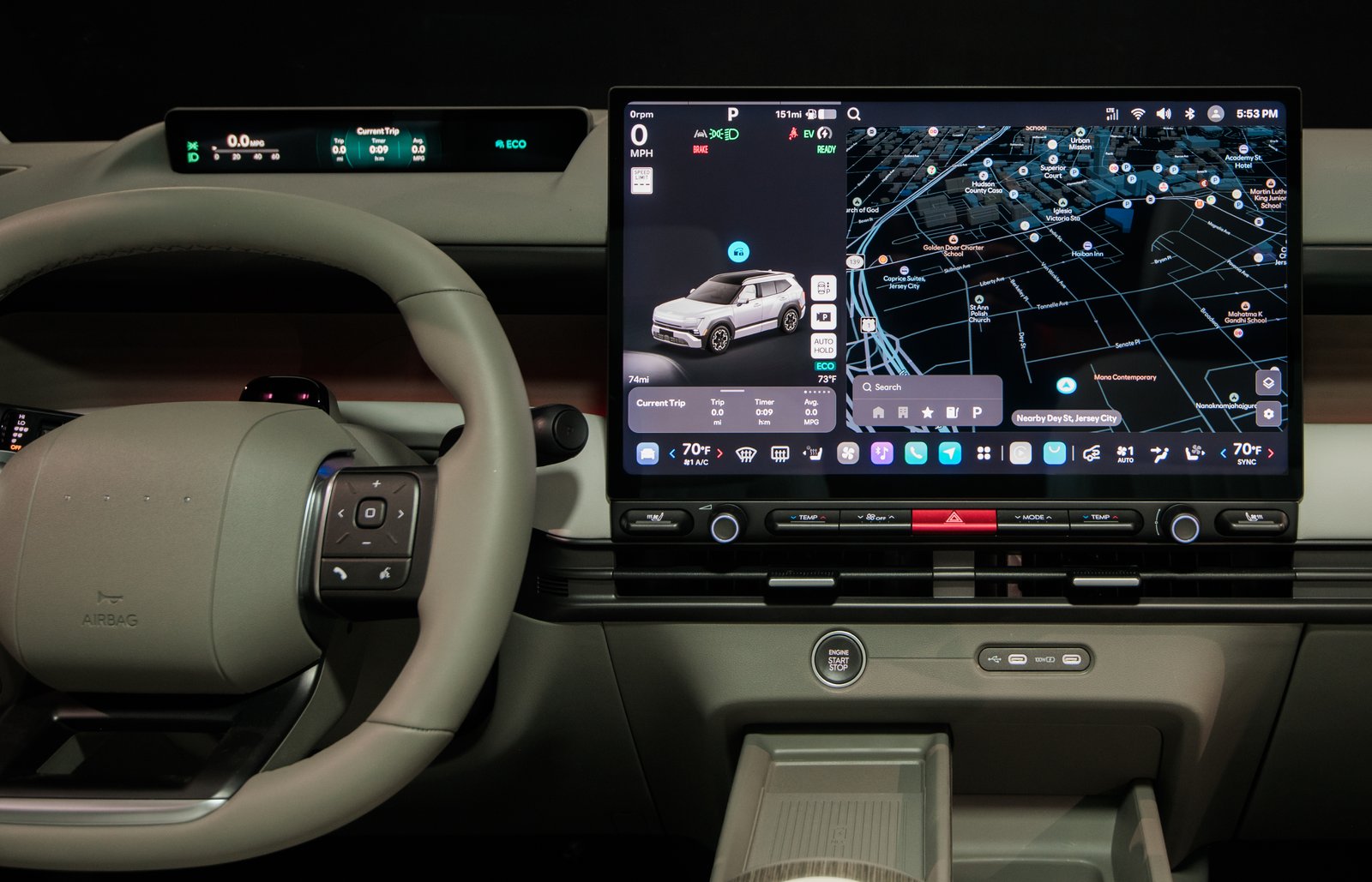
Not everything moved into software. A row of hard keys under the screen still handles temperature, fan speed, and the hazard lights.
An assistant built for conversation
The centerpiece is Gleo AI. Hyundai says it understands multi-part, conversational requests instead of fixed phrases and keeps track of what was said earlier in the exchange. US owners can wake it with "Hey Gleo" or "Hey Hyundai" to pick a destination, operate supported vehicle functions, or ask general questions. The catch: Hyundai says availability may vary by trim and hasn't said which Tucsons get it.
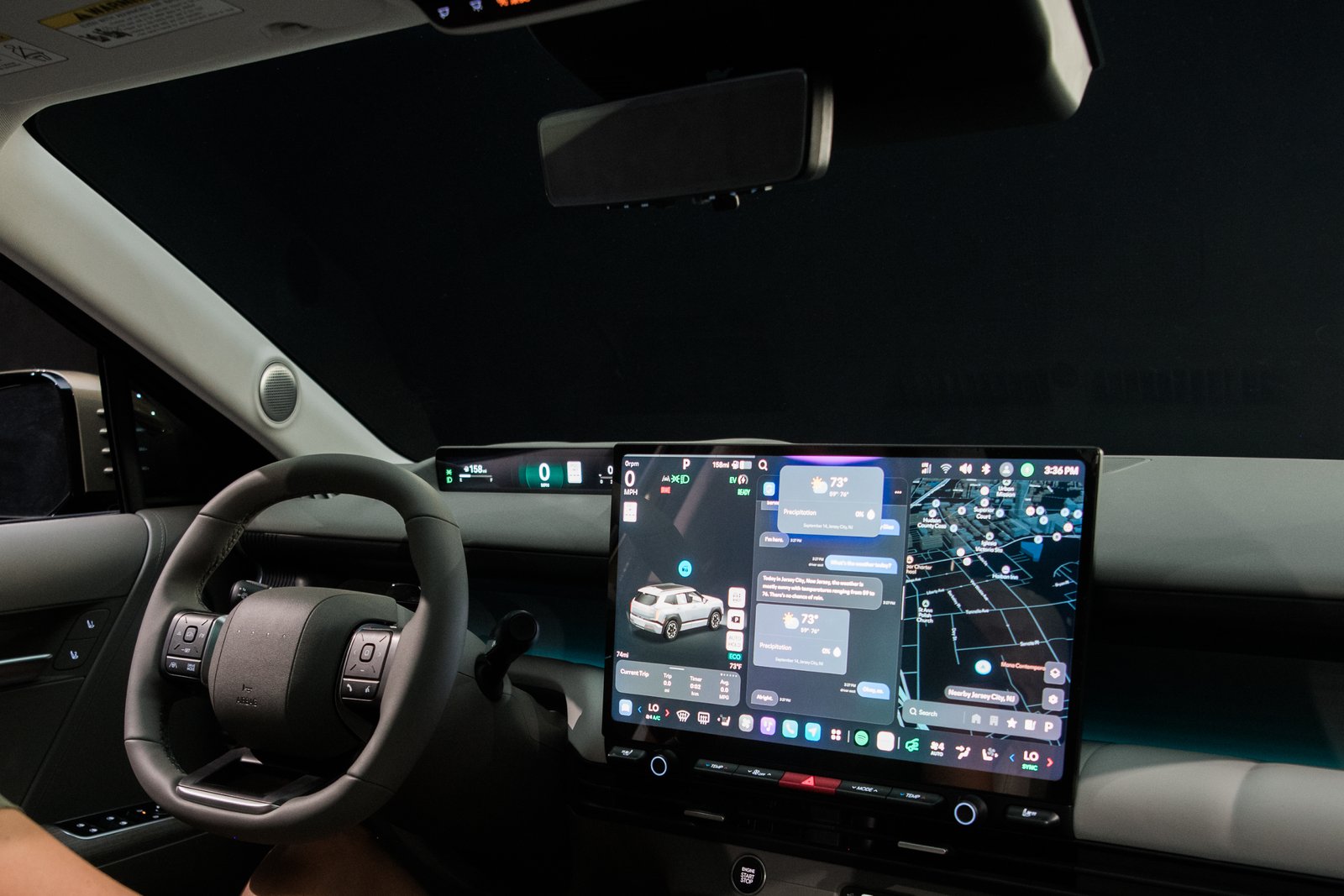
Navigation is Hyundai's own rather than Google Maps. HERE supplies the map data, Google Places handles points of interest, and maps stored in the car keep guidance working without a signal.
Why keeping CarPlay matters
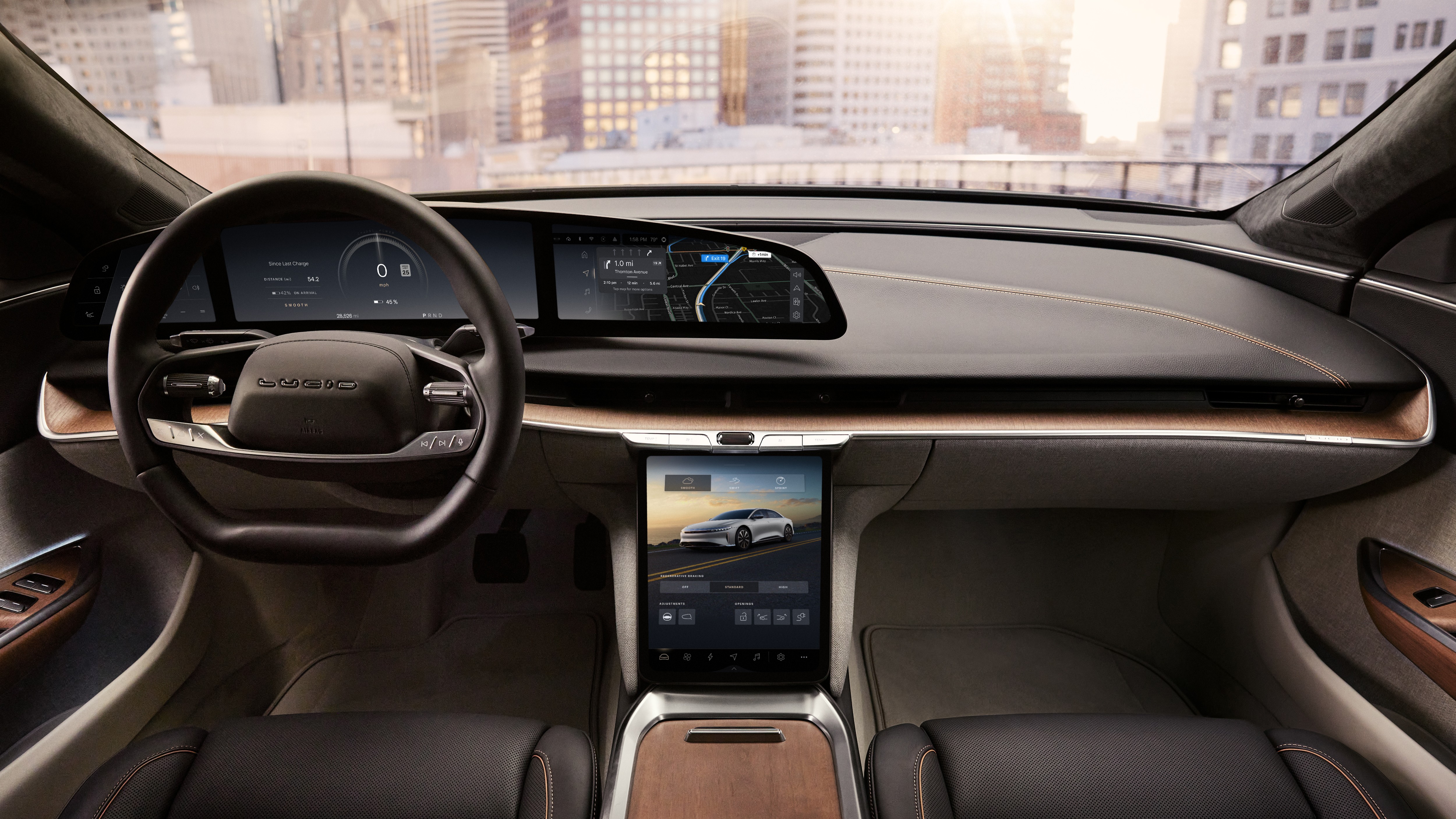
Android Automotive is also the Google foundation under GM's newer EVs, and in 2023 GM said it would phase out CarPlay and Android Auto in future EVs. Hyundai is taking a different route: its own software on top, phone mirroring still on the menu. GM has since softened its stance, and its new pickup interface puts CarPlay front and center.
Phones are also where owners report the most friction. Infotainment now makes up a quarter of all new-car problems in J.D. Power's data, and CarPlay and Android Auto connection faults were the biggest contributor to that category's slide this year. That gives Hyundai good reason to make its native side strong enough that drivers don't need their phones.
The Pleos App Market is the other half of that bet. Its apps run directly on the car and update on their own schedule, separate from system updates, and outside developers get a software kit plus a set of vehicle APIs. Music streaming and video-sharing apps are in the catalog. Connected apps need a data plan, and Hyundai hasn't said what that will cost.
The system entered production on the Korean-market Grandeur sedan in May, and Hyundai Motor Group aims to fit it to about 20 million Hyundai, Kia, and Genesis vehicles by 2030.
For the US, Hyundai's global launch release lists a 184-hp gas Tucson and a 233-hp hybrid. Still missing are prices, an on-sale date, and which trims get the larger screen and Gleo AI. Hyundai says those details will come closer to launch.