Chinese Cars Are Headed for Canada. Here's Why They Still Won't Reach Your U.S. Dealer
Chery is weighing a Canadian plant and a Stellantis venture may ship China-built Jeeps north. Three scenarios, one table, and the three U.S. rules that stop each of them.
Two stories out of Canada this month point in the same direction. Chery is weighing a plant there, and a Stellantis joint venture in China has named Canada as a possible market for two electrified Jeeps it plans to build in Wuhan next year. Together they raise an obvious question: is the northern border about to become the industry's way around America's wall against Chinese cars?
The short answer is no, and the longer answer is more useful. We laid out the five barriers between Chery and U.S. showrooms last week. This piece looks at the Canadian route specifically: what the rules let a Chinese-built or Chinese-owned car do once it is in Canada, what they don't, and what it means for buyers in Detroit, Buffalo, and Seattle.
What actually happened in Canada
Start with what is confirmed. Chery executive vice president Zhang Guibing told Bloomberg at the company's Wuhu headquarters that Canada is worth a factory even without access to the U.S. market, and that Chery is looking at idle Canadian plant capacity and at partners who could co-invest. No site, partner, volume, or model has been named; the sales launch is planned for 2027. "Chery will build in Canada" is a headline that doesn't exist yet. "Chery is shopping for a way to build in Canada" is the one that does.
The Jeep story is a report, not a plan. According to Automotive News Canada, the Dongfeng-Stellantis joint venture intends to build two electrified Jeeps in Wuhan in 2027, one battery-electric and one plug-in hybrid, and its general manager named Canada among potential export markets. Stellantis has not confirmed a Canadian launch. The United States does not appear in those plans at all, and Unifor, which represents the workers at the idle Brampton plant, called the idea "entirely unacceptable."
What makes Canada a candidate in the first place is policy. In January, Ottawa and Beijing signed a preliminary arrangement under which Canada intends to admit an initial 49,000 Chinese-built EVs a year at the standard 6.1 percent tariff instead of the 106.1 percent that applied before, with a growing share reserved for vehicles priced at C$35,000 or less. Above the quota, the 100 percent surtax from 2024 still applies, according to the CBSA customs notice reported by electrive. One detail gets lost in the coverage: the surtax only ever covered electric and certain hybrid vehicles. A gas-only Chery crossover faces the plain 6.1 percent duty with no quota at all.
Ottawa also attached strings to any factory. Industry Minister Mélanie Joly told Chinese automakers in June that a Canadian assembly plant would have to be a joint venture with majority Canadian ownership, use Canadian suppliers, follow Canadian labor law, and guarantee that vehicle data never reaches the Chinese government, CTV News reported. And on October 21 the Prime Minister's Office announced an C$8.7 billion package for tariff-hit industries that includes up to C$2.5 billion for auto investment over two years and freezes the light-duty fleet emissions standard at its 2026 level through the 2029 model year, with tightening resuming for 2030.
So Canada has opened its market, set terms for Chinese investment, loosened its emissions rules, and put money on the table. What it cannot do is change a single U.S. rule, and that is where every Canadian route ends.
The three walls on the U.S. side
Three separate instruments stand between a car in Ontario and a dealer in Michigan, and clearing one doesn't help with the others.
The first is the Section 232 tariff. Proclamation 10908 has put a 25 percent duty on imported passenger vehicles since April 3, 2025. A car that qualifies under USMCA gets one concession: with Commerce approval, the 25 percent applies only to its non-U.S. content. A car that doesn't qualify pays it on the full value. There is no Canada exception, and an importer that overstates its U.S. content pays the duty on the full value of every car in that model line, back to April 2025.
The second is USMCA's own rule of origin, which decides whether a car counts as North American at all. As our Chery checklist explains, a passenger car needs 75 percent regional value content, seven core parts sourced in the region, 70 percent regional steel and aluminum, and 40 percent of its value from production at wages averaging at least $16 an hour. A kit shipped from Wuhu and bolted together in Brampton gets nowhere near that.
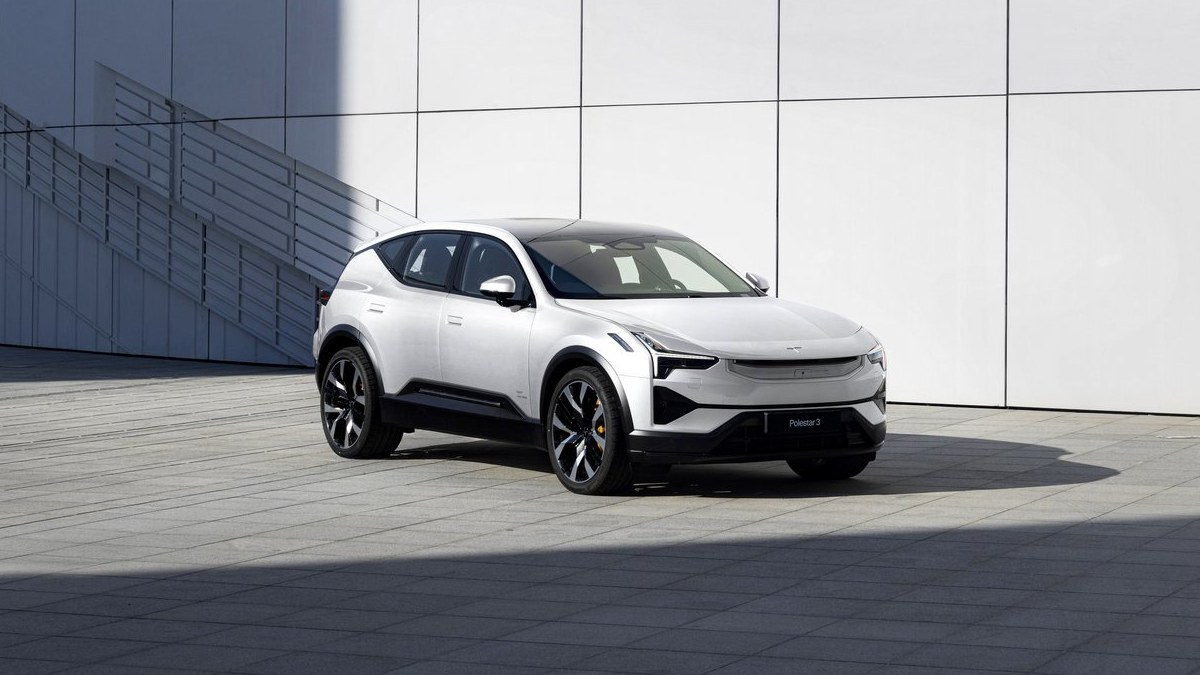
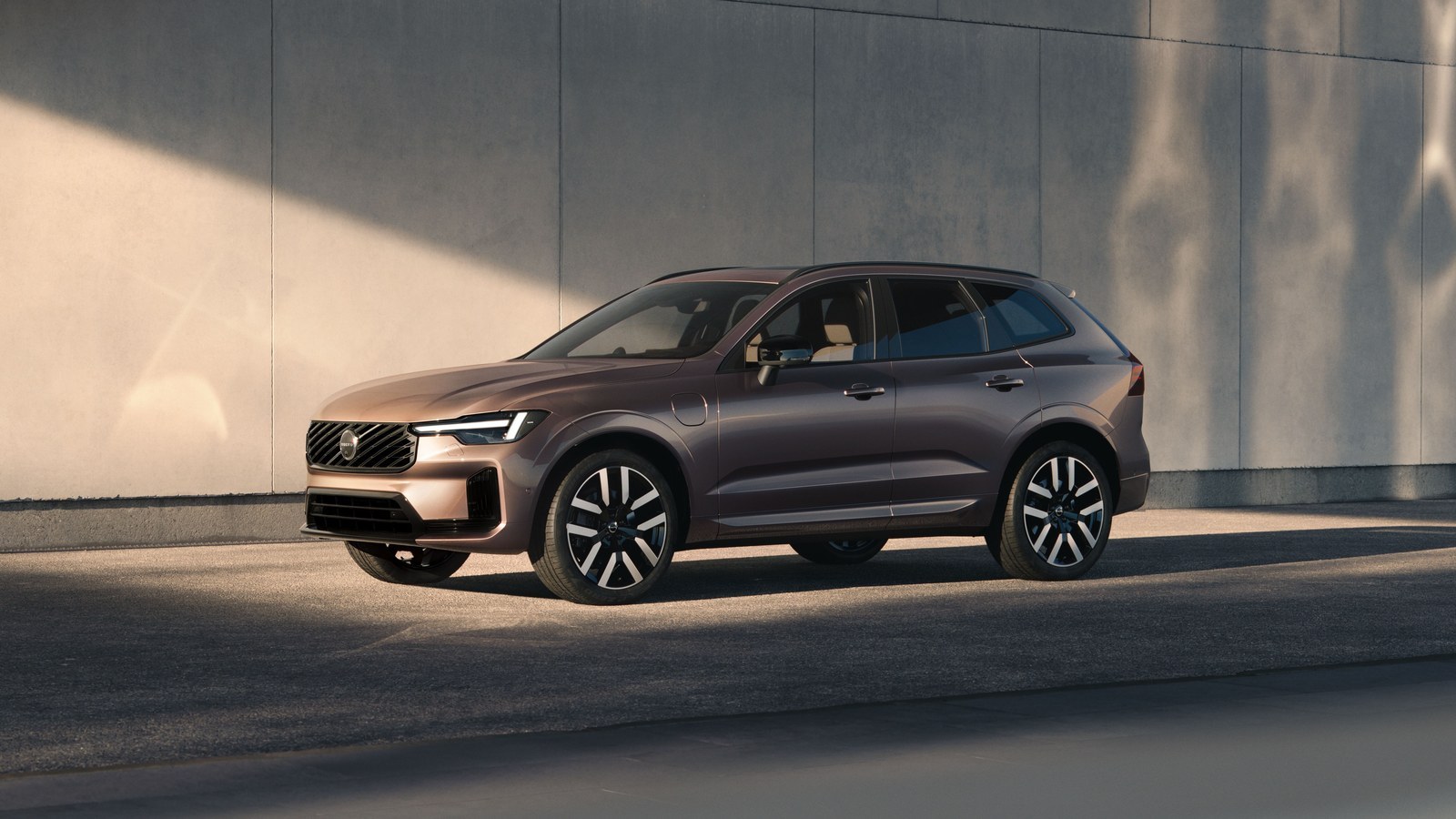
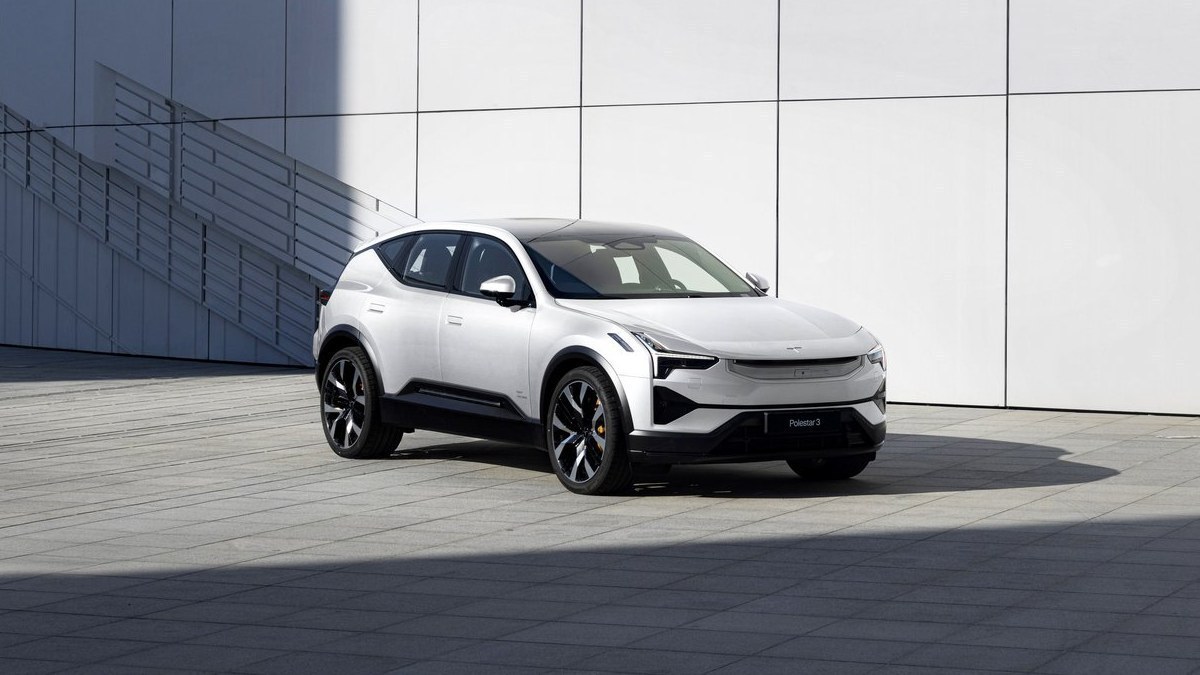
The third is the Commerce Department's Connected Vehicle Rule, and it is the one that doesn't care where the factory sits. Our explainer covers the mechanics: from the 2027 model year, no one may import or sell a connected vehicle whose connectivity or automated-driving software comes from a company tied to China, and a manufacturer owned by, controlled by, or subject to the jurisdiction of China may not sell connected vehicles in the U.S. at all. The precedent is Polestar: it builds the Polestar 3 in Charleston, South Carolina, and the Bureau of Industry and Security still declined to authorize its sales from model year 2027. Volvo, also Geely-owned, got a specific authorization in May, and Commerce has not explained the difference.
Pete Hoekstra, the U.S. ambassador to Canada, summarized Washington's position on Chinese cars crossing from Canada in a podcast interview Bloomberg reported in March: "That ain't gonna happen." He cited data security, which points at the third wall, not the first two.
Barrier by barrier: Canada versus the United States
| Barrier | Canada | United States |
|---|---|---|
| Tariff on a China-built EV | 6.1 percent inside a 49,000-unit annual quota; 100 percent surtax above it | 100 percent Section 301 duty, plus 25 percent Section 232 and any other applicable duties |
| Tariff on a China-built gas car | 6.1 percent, no quota | 25 percent Section 232 on top of the regular duty |
| Tariff on a Canadian-built car | None | 25 percent on non-U.S. content if it meets USMCA origin rules; 25 percent on full value if it doesn't |
| Local-content rule | Joly's conditions for a Chinese plant: majority Canadian JV, Canadian suppliers, Canadian labor law, data guarantees | USMCA: 75 percent regional value, core parts, 70 percent regional steel and aluminum, 40 percent high-wage labor content |
| Chinese software and ownership | Data-security condition attached to a plant; no sales ban | Connected Vehicle Rule: software ban from MY2027, hardware ban from MY2030, Chinese-controlled makers barred from selling unless BIS authorizes |
| Safety and emissions certification | CMVSS; fleet CO2 standard frozen at 2026 level through MY2029 | FMVSS and EPA; Canadian-certified cars need a manufacturer compliance letter or a Registered Importer |
| Private cross-border import | Not relevant | Manufacturer letter or RI conversion, 150 percent bond, NHTSA eligibility; 25-year exemption for classics |
Scenario A: kits from China, assembled in Canada
This is the cheapest way to put a "Made in Canada" label on a Chery, and the one that fails fastest. Final assembly of imported knock-down kits adds little regional value, so the car misses the 75 percent threshold and the labor-content test, enters the U.S. as a non-USMCA vehicle, and pays 25 percent on its full value under Section 232. A crossover that competes on price loses its reason to exist at that rate. It is the same arithmetic that has Ford paying 52.5 percent on the China-built Nautilus and moving Lincoln production home from 2030.
The Connected Vehicle Rule applies on top of that: a kit car running Chery's software is barred from MY2027 regardless of the tariff math. Scenario A isn't a loophole. It's a Canadian-market product with a Canadian-market ceiling, which is what Zhang said Chery would accept.
Scenario B: a real Canadian plant with real local content
Now assume Chery, or Dongfeng-Stellantis, does it properly: a Canadian-majority joint venture, stamping and powertrain sourced in North America, wages that clear the $16 test. The car qualifies under USMCA, and the Section 232 bill shrinks to 25 percent of whatever content isn't American. That is where every Canadian-built Toyota, Honda, and GM product sits today, and it is survivable.
The tariff wall is cleared. The software wall isn't. The Connected Vehicle Rule regulates the software's origin and the manufacturer's ownership, not the plant's postal code, and Polestar's Charleston-built SUV is the proof that a North American address earns nothing on its own. Whether a majority-Canadian joint venture with a Chinese minority partner counts as "subject to the jurisdiction or direction" of China is a question BIS has never answered in public. Joly's data-security condition was written for Ottawa, not for Commerce, and nothing obliges BIS to accept it. Until a Canadian JV applies for a specific authorization and gets a yes, I'd treat Scenario B as a plant that serves Canada and whatever export markets will take its cars. The U.S. isn't on that list.
There is also a timing problem. The USMCA joint review on July 1 ended without the U.S. agreeing to renew the deal in its current form, which means annual reviews from here. A Chinese-backed plant built around USMCA origin rules would be a bet on rules that are themselves under negotiation, and in my view that is a bet a Canadian majority partner will find hard to finance.
Scenario C: Canada only, and what that does to border-state prices
This is the scenario that is actually happening. Chery launches in Canada in 2027; Geely announced its own Canadian entry on October 9 with first models due the same year, according to CnEVPost; the Dongfeng Jeeps, if they come, serve Canada and other export markets. Chinese cars become a visible part of the Canadian market and an invisible one south of the line.
Can a buyer in Buffalo simply drive to Ontario and bring one back? In practice, no. NHTSA's Canadian-vehicle import guidelines let a Canadian-market car under 25 years old enter as a conforming vehicle only if the manufacturer itself provides a letter stating that the specific VIN meets U.S. safety standards, and NHTSA can't compel a manufacturer to write one. Without that letter the car needs a Registered Importer, a 150 percent bond, and a NHTSA eligibility decision, and a Chery with no FMVSS program behind it has no basis for one. The EPA runs a separate emissions gate, and the 25-year exemption won't help anyone until 2052. From model year 2027, the Connected Vehicle Rule bars importing a connected car with Chinese software in the first place. The gray market isn't gray. It's closed.
What does cross the border is price pressure, and only in one direction. A Chinese-built EV at 6.1 percent duty, and a Kia or Hyundai priced to fight it in Toronto, don't change what a dealer in Detroit can charge, because the Detroit dealer never competes with them. If anything the gap widens: Canadian list prices for compact EVs will have a floor set by Chery, Geely, and BYD, and U.S. prices will keep being set by whoever is cutting prices this quarter among the brands that are already here. That is the real consequence of the back door for American buyers. It isn't cheaper cars. It's a daily reminder, one bridge away, of what a cheaper car looks like.
Why the industry's real answer is south, not north
Notice what automakers that can enter the U.S. are doing. Audi picked a $4 billion site in Georgia for its first American plant. Volvo is moving XC60 production to Charleston. Hyundai, Rivian, BMW, Mercedes-Benz, and Toyota are all expanding along the Southern auto belt, where a plant clears Section 232 outright and USMCA questions don't arise. Canada's pitch, by contrast, is aimed at companies that can't come south anyway. That isn't a loophole in the American wall. It's a market forming in its shadow.
What we don't know
- Where, how big, and with whom any Chery plant in Canada would be. Chery has named no city, partner, volume, or model, and Bloomberg's report describes an evaluation, not a decision.
- Whether Stellantis will approve a Canadian launch for the Dongfeng-built Jeeps, and which two models they are. Stellantis has not confirmed the report.
- How BIS would treat a majority-Canadian joint venture with a Chinese minority partner under the Connected Vehicle Rule. No such application has been made public, and BIS doesn't publish its decisions.
- Whether the USMCA annual reviews change the 75 percent rule or the Section 232 content treatment before any Canadian plant could open.
- How Tesla's Shanghai-built Model 3 and the Chinese brands will split the 49,000-unit quota in practice. Reports have suggested Tesla could take about half, but Ottawa has published no allocation.
Our bet is simple. The next time a Chinese-brand car is sold new in the United States, it will arrive through a U.S. partner's badge or a BIS authorization, not through a Canadian plant. Canada is where Chery will learn to sell in North America. It isn't where it gets in.