EV Tire Bills, Ranked: Ioniq 5's $1,160 Set to Cybertruck's $2,080, and Why They Wear Faster
We priced factory tires for five EVs and two gas twins on one day: the Cybertruck's cover-matched Goodyears top $2,000, while a Lightning costs no more to shoe than a gas F-150.
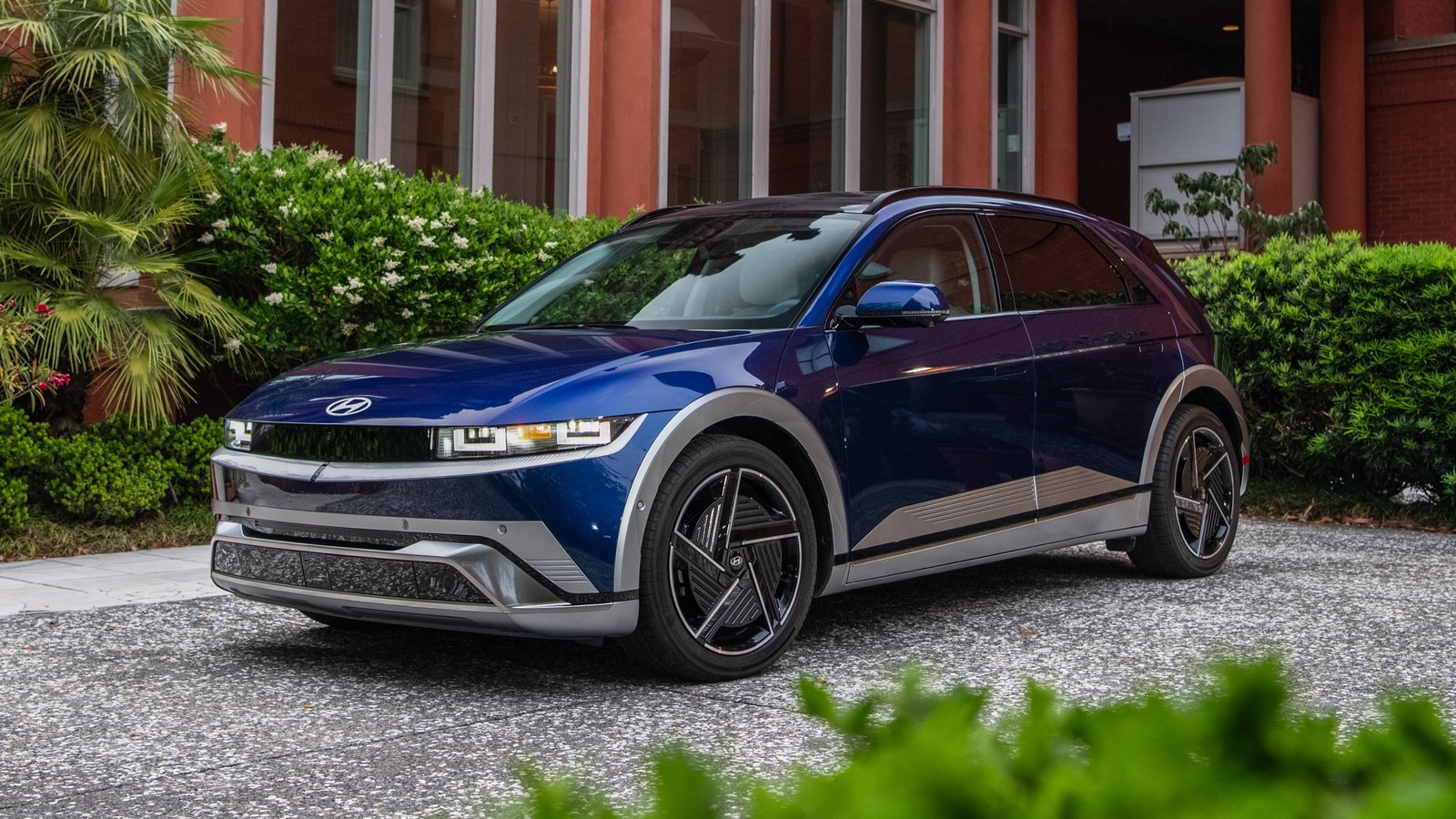
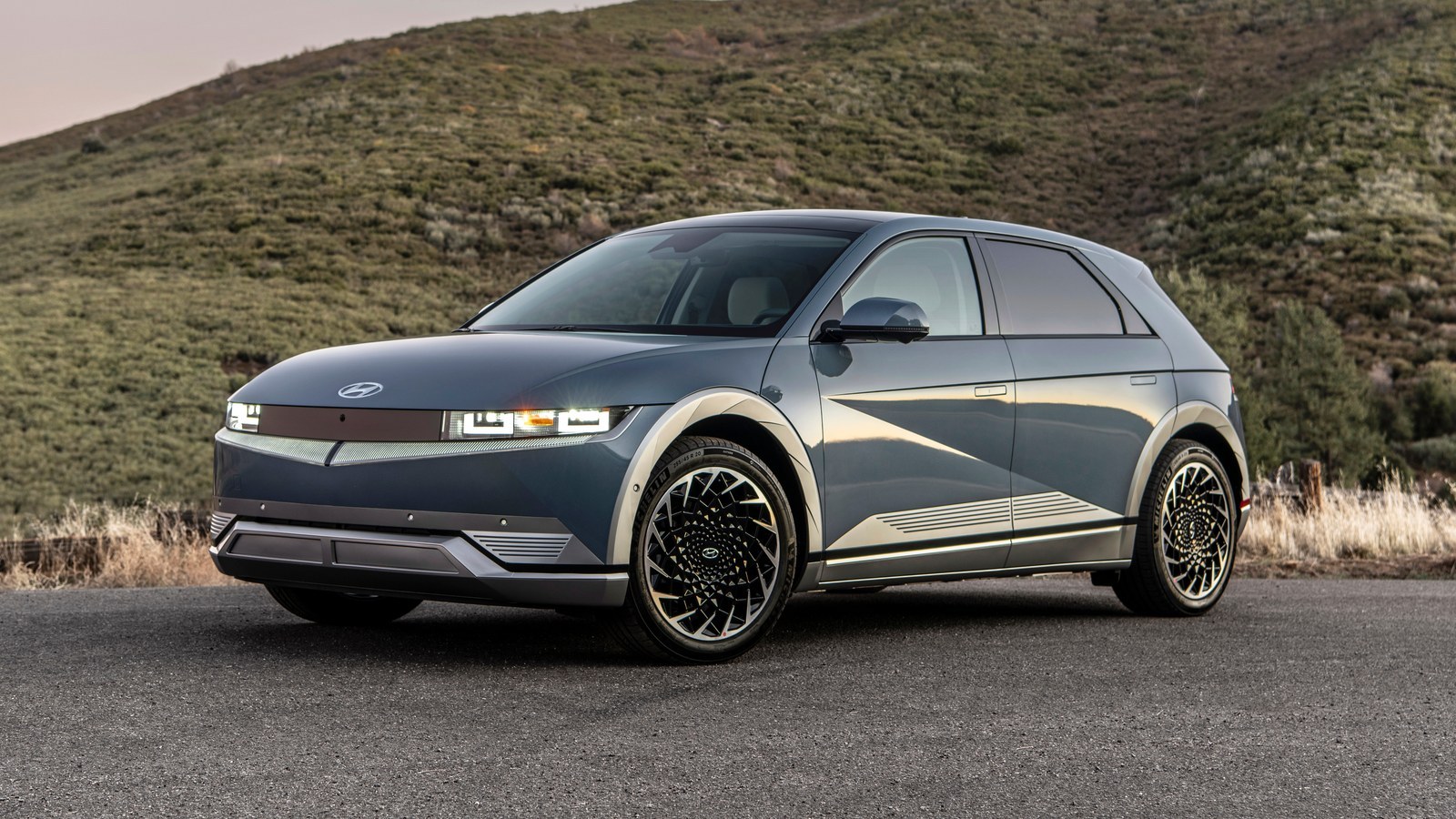
A set of four factory-spec tires for a Tesla Cybertruck runs about $2,080 at Goodyear's own Just Tires stores and $2,120 from Tesla's online shop, as of November 9, 2026. A set for a Hyundai Ioniq 5 on its standard 19-inch wheels is roughly $1,160. Between them sit the Ford F-150 Lightning, the Rivian R1T, and the Tesla Model Y, and the spread says as much about wheel size and tire type as it does about electric power.
The question matters more now than it did a year ago. Tesla says Cybertruck production ends around mid-2027, which puts every owner on a fixed supply of a tire built for one truck, and the shoppers weighing which electric pickup to buy instead are asking the same thing: what does the second set of rubber cost, and how soon does it come due? We priced the factory tire for five EVs and two gas twins through the same retailers on the same day, and then looked at why electric cars wear through them faster.
The tire bill, ranked
All prices are per set of four, tire only, before mounting, balancing, disposal fees, and tax, checked November 9, 2026. Where a factory brand could not be confirmed from the automaker's own documents, we say so and price the closest match the retailer labels as original equipment.
| Vehicle (wheel) | Factory tire and size | Set of four, factory spec | Cheapest in size | Curb weight | Rotation interval | Treadwear warranty |
|---|---|---|---|---|---|---|
| Tesla Cybertruck AWD (20-in. Core) | Goodyear Wrangler Territory RT, LT285/65R20 | $2,080 (Just Tires, $519.99 each); $2,120 (Tesla shop) | $996 (Advanta ATX-850, Tire Rack) | 6,634 lb | 6,250 mi | None |
| Tesla Model Y Long Range AWD (19-in.) | Hankook iON evo AS SUV, 255/45R19 XL* | $1,400 (Walmart, $349.99 each); Continental ProContact RX OE match $1,336 (Tire Rack) | $591 (Radar Dimax AS-8, Tire Rack) | 4,396 lb | 6,250 mi | 50,000 mi (Hankook, replacement market) |
| Rivian R1T Dual (20-in. All-Terrain) | Pirelli Scorpion All Terrain Plus, 275/65R20 | $1,391 (Tire Rack, $347.73 each) | Same tire is the cheapest on the page | 6,772 lb | 9,000 mi | 50,000 mi |
| Hyundai Ioniq 5 SEL AWD (19-in.) | Michelin Primacy A/S "GOE Hyundai," 235/55R19* | $1,159 (Tire Rack, $289.63 each) | $856 (General AltiMAX RT45, Tire Rack) | 4,641 lb | 8,000 mi or 12 months | Michelin excludes factory tires from mileage coverage |
| Ford F-150 Lightning Lariat (20-in.) | Hankook Dynapro HT, 275/60R20* | $1,044 (Priority Tire, $260.99 each) | $992 (Kumho Road Venture AT52, Tire Rack) | 6,893 lb | 10,000 mi | 70,000 mi (P-metric) |
| Ford F-150 XLT 4x4, gas (18-in.) | All-terrain, 275/65R18 (brand not published by Ford) | $1,020 to $1,168 (Falken Rubitrek A/T01 to Goodyear Wrangler Workhorse AT2, Tire Rack) | $1,020 | 4,941 lb | Per Ford schedule | Varies |
| Toyota RAV4 XLE Premium Hybrid, gas (18-in.) | All-season, 235/60R18 (brand not published by Toyota) | $772 to $920 (Goodyear Assurance ComfortDrive to Michelin Defender2, Tire Rack) | $772 | 3,770 lb | Per Toyota schedule | Varies |
*Factory fitment confirmed by the tire maker or retailer OE marking, not by an automaker document. Tesla's owner's manual lists 255/45R19 as the Model Y size and Hankook announced its tires as original equipment on the refreshed Model Y; Hyundai's 2027 spec sheet gives the size only; Ford publishes the size but not the brand. Curb weights for the Cybertruck, Model Y, R1T, Lightning, F-150 and RAV4 are from Kelley Blue Book, Cars.com, Edmunds and dealer spec sheets; the Ioniq 5 figure is Hyundai's own.
What the table actually shows
The Cybertruck is an outlier for a specific reason. Its 20-inch tire is a light-truck-rated 34.6-inch Goodyear with one sidewall shaped to work with Tesla's aero wheel cover, and Goodyear lists no mileage warranty on it at all. The 18-inch Wrangler Territory HT on the Long Range trim is cheaper; Carscoops priced a set at $1,474 from independent retailers on November 8. Step off the factory spec entirely and a set of generic 285/65R20 all-terrains costs under $1,000 at Tire Rack, though you lose the wheel-cover fit and Tesla's matched-set guidance for all-terrain rubber.
The Lightning is the surprise in the other direction. Its 20-inch highway tire costs about the same as a set for a gas F-150 XLT on 18s, because both are mainstream truck sizes with a dozen brands competing. Electric power did not make the Ford's tires expensive; the 22-inch Platinum wheel would, but so would a 22-inch wheel on a gas truck.
The R1T's all-terrain Pirelli is a reminder that the tire type costs more than the drivetrain. The same 275/65R20 size on a gas pickup would price about the same; Rivian's complication is that it publishes the range penalty of its all-terrain package, which turns the tire choice into a running-cost decision rather than a styling one.
Against their gas twins, the two crossovers show the real EV premium. The Ioniq 5's factory Michelin set costs about $240 more than a Michelin Defender2 set for a RAV4, roughly 25 percent. The Model Y's factory-match set costs around $400 to $500 more than the RAV4's. Part of that is the lower-profile 19-inch sizing, part is the XL load rating, and part is the acoustic foam glued inside most EV-fitment tires.
Why EVs wear tires faster
Three things work against the tire on an electric car, and none of them is exotic. The first is mass: a Model Y Long Range weighs about 600 pounds more than a RAV4 hybrid, and an Ioniq 5 SEL AWD about 870 pounds more. Michelin's own guidance puts a typical battery pack at roughly 1,000 pounds, and every pound of it rides on four contact patches.
The second is torque delivery. An electric motor produces its peak twist from a standstill, so every launch, even a gentle one, puts more shear through the tread than a gas engine spooling up through a transmission. Michelin's European newsroom put a number on the combined effect in 2023: tires can wear out up to 20 percent faster on an EV than on a comparable combustion car, which it attributed to instant torque and battery weight. Pirelli's North American technical chief told Cars.com in 2024 that a conventional tire on an EV might wear 5 to 20 percent faster than an EV-specific one. Both are manufacturer statements, not independent measurements, which is why we don't repeat any single mileage figure as fact.
The third is the compound trade-off. Automakers specify low-rolling-resistance tires to protect the EPA range number, and J.D. Power's 2024 original-equipment tire study named exactly that tension, between maximizing range and optimizing wear, as the reason EV owners were less satisfied with their factory tires than gas-car owners. The 2026 edition of the study shows the gap narrowing to 14 points on a 1,000-point scale, from 47 the year before, and also finds that owners who have replaced two or more tires are far less likely to buy the same brand again, with wear cited as the main reason.
Regenerative braking is sometimes blamed as well. Its effect on wear is indirect: the deceleration force still passes through the tire, as Michelin notes, and because regen acts mostly on the driven axle, it can shift wear toward the rear on a rear-biased EV. That is an argument for rotating on schedule, not a reason to turn regen down.
What "EV-rated" means and what it costs
Tire makers now stamp "EV" or "EV Ready" on sidewalls, and the term is marketing shorthand for three engineering choices. A reinforced casing or higher load index (XL or the newer HL marking) carries the extra mass. A low-rolling-resistance compound protects range; Michelin quotes its Pilot Sport EV at 6.7 kg per metric ton of rolling resistance against 8.8 for the gas-car Pilot Sport 4 SUV. And a ring of polyurethane foam bonded inside the tire absorbs cavity resonance, which an EV's silent drivetrain would otherwise expose; Continental claims up to 9 dB(A) less cabin noise from its version, Goodyear up to half the interior tire noise from its SoundComfort inserts.
Two things follow for the owner. Continental and Michelin both say any of their current tires with the correct load rating is suitable for an EV, so the badge is not a requirement. And the wear-versus-range trade is still being made inside the compound. Michelin's purpose-built Pilot Sport EV, for example, carries a 20,000-mile treadwear warranty, against 60,000 miles for the company's CrossClimate2 all-season, which many EV owners fit as a replacement and which Tire Rack lists at $351.99 for the Model Y's 19-inch size.
Rotation, pressure, and the cheap half of the bill
The automakers' own intervals are the first line of defense, and they are shorter than most owners expect. Tesla's service documentation for the Cybertruck and Model Y calls for rotation every 6,250 miles or whenever tread depth differs by 2/32 inch across axles, whichever comes first. Rivian says every 9,000 miles. Hyundai's EV maintenance schedule says 8,000 miles or 12 months. Ford's Lightning schedule runs 10,000 miles. Tesla also tells Cybertruck owners to replace all-terrain tires as a matched set of four and to keep the most tread on the rear axle.
Pressure matters more on a heavy car than a light one, because an underinflated tire flexes more and heats up more under 6,000-plus pounds. Check it cold against the door-jamb label rather than waiting for the tire-pressure warning, which on most EVs triggers only well below the recommended figure. If you are switching to winter rubber, the EV winter checklist covers how cold and tire choice compound each other on range.
The Cybertruck question
With the Austin line winding down in mid-2027, Cybertruck owners are asking whether the Territory RT will stay in production. Neither Goodyear nor Tesla has said anything about tire supply since the announcement, and the tire remains listed on Goodyear's and Tesla's sites. The honest answer is that nobody outside the two companies knows. What owners can control is the alternative: a dozen all-terrain tires fit the 285/65R20 size, at $250 to $500 each, if they accept losing the cover-matched sidewall. The wind-down itself is covered in our news report, including what Tesla has and has not said about existing orders.
What we don't know
- Real-world tire life for any of these five. Consumer Reports' reader survey found more than half of Tesla owners replaced tires at or before 30,000 miles; no equivalent public dataset exists for the trucks, and we have not used forum reports.
- Dealer-installed pricing. The figures above are tire-only retail; mounting, balancing, TPMS service and tax come on top and vary by shop, and Tesla and Rivian mobile service quote differently.
- Factory tire brands on the Lightning, the F-150 and the RAV4, which the automakers' spec sheets do not publish.
- Whether Goodyear will keep the cover-matched Cybertruck tire in production after 2027.
The bottom line
Budget for tires as a recurring line item, not a surprise. On a mainstream EV crossover, plan on roughly $1,100 to $1,400 for a factory-spec set and expect to buy it sooner than you would on the gas equivalent; rotating at the automaker's interval is the cheapest way to push that date back. On an electric truck, the drivetrain matters less than the wheel: a 20-inch highway tire on a Lightning costs no more than on a gas F-150, while a 20-inch all-terrain on an R1T or a cover-matched tire on a Cybertruck carries the premium. If you are shopping a used Lightning or a leftover Cybertruck, look at the tread before you look at the battery report; four new tires on the latter is a four-figure line in the first year of ownership.
Read Next
Cybertruck Costs $7,500 More on Its Way Out. Here's the Electric Pickup to Buy Instead
Tundra Hybrid vs. F-150 Hybrid: Toyota Wins Torque, Ford Wins Towing, MPG and Power