Genesis Finally Has Hybrids. Here's How the GV80 and G80 Systems Work
The 2028 GV80 Hybrid and G80 Hybrid pair a 2.5-liter turbo with two motors for 347 hp. What the liquid-cooled battery does, and what Genesis hasn't said.
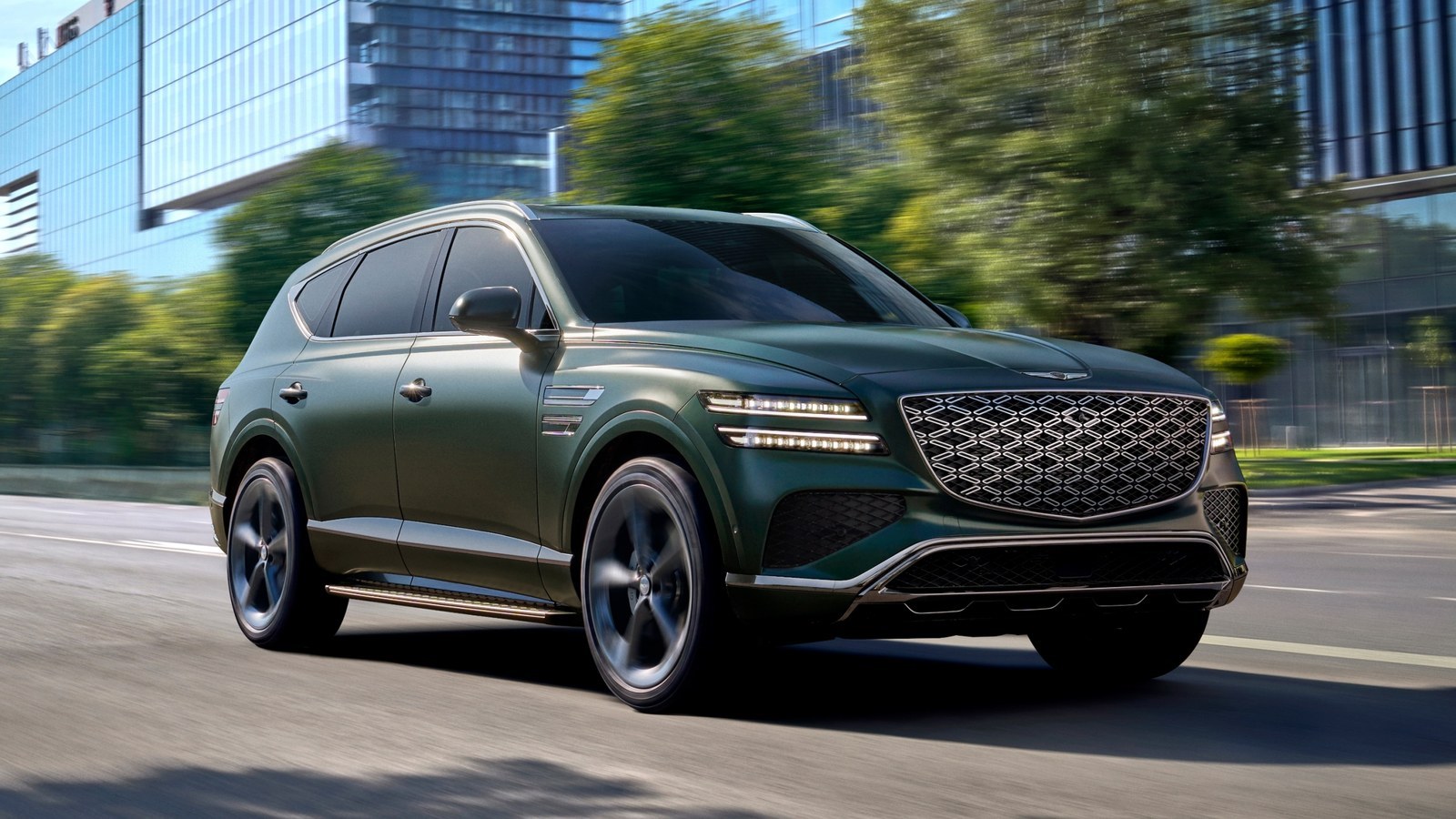
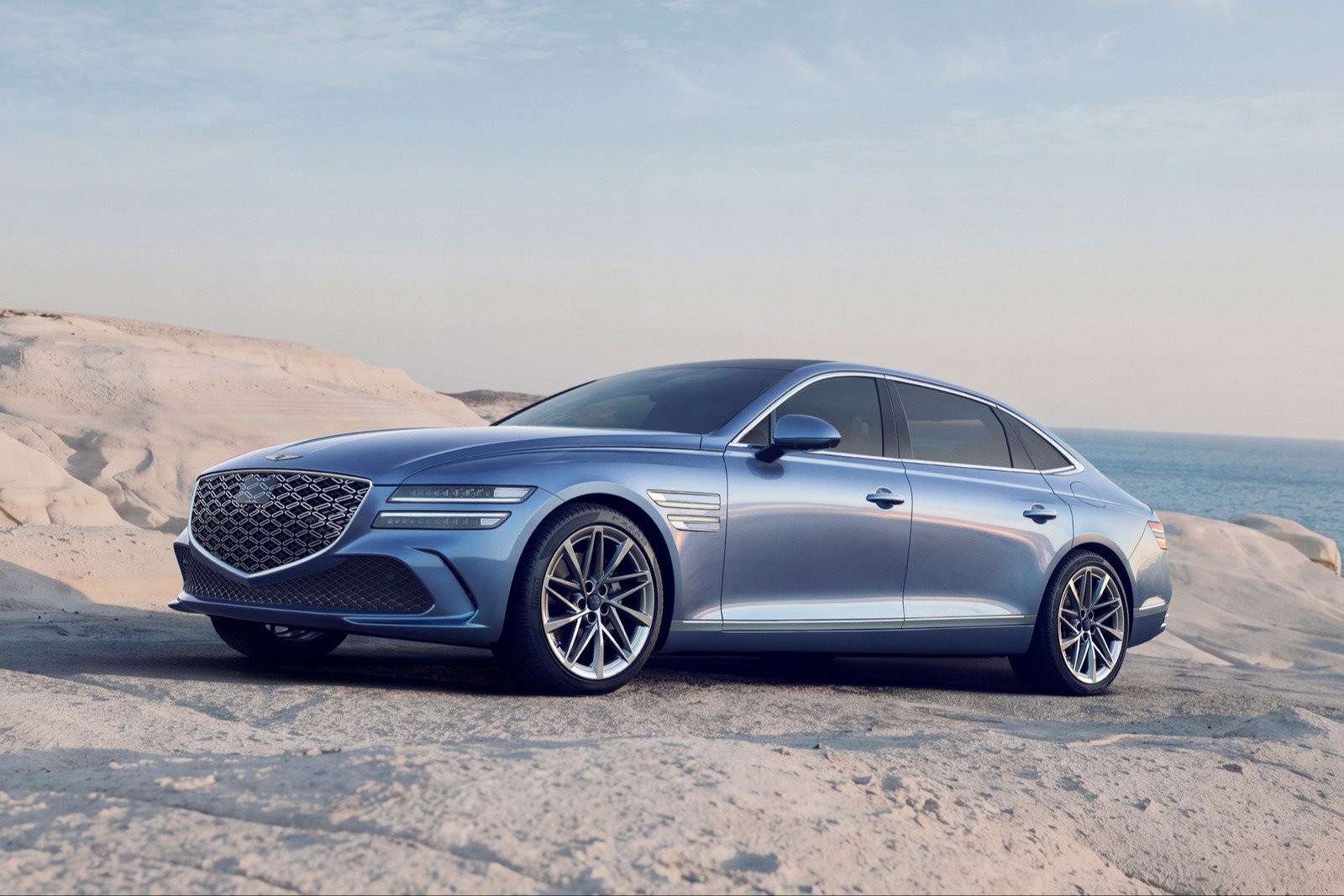
Until now, Genesis buyers chose between gasoline and battery power. The brand had no full hybrid. That changed in Los Angeles this week, where the GV80 Hybrid SUV made its North American debut and the G80 Hybrid sedan its global one. Both use a new 2.5-liter turbocharged hybrid system rated at 347 hp and 391 lb-ft of torque.
Genesis lists both on its U.S. site as 2028 models, the same model year as the electric GV90 flagship. Pricing, EPA ratings and an on-sale date have not been announced. What Genesis has published is still enough to explain how the system works, where it sits against the brand's own engines, and which rivals it has to beat.
The short version
- Powertrain: 2.5-liter turbo four-cylinder, two electric motors, seven-speed automatic.
- Output: 347 hp and 391 lb-ft combined.
- Type: a conventional hybrid with no plug. Genesis' consumer site calls the technology self-charging.
- Efficiency: 24% better than the gas GV80 and 30% better than the gas G80, according to Genesis' internal testing.
- Range: more than 500 miles per tank, also a Genesis estimate.
- Not announced: price, EPA figures, on-sale date.
How the system works
In its announcement, Genesis describes a parallel hybrid. That means the gasoline engine and an electric drive motor can each turn the wheels through the same transmission, separately or together. A second unit, the starter-generator, does what its name says. An engine clutch lets the car disconnect the four-cylinder and run in EV Mode.
That is a different approach from a series hybrid, where the engine only generates electricity and never drives the wheels. We covered that layout in our explainer on Nissan's e-Power series hybrid.
Two details set the Genesis system apart. First, it sends power through a seven-speed automatic with real gears. The gas GV80 and G80 use an eight-speed. Second, Genesis says it was engineered specifically for the brand's longitudinal, rear-wheel-drive-based platforms, so the hybrids keep the layout of the gas cars.
Why the liquid-cooled battery matters
Genesis says this is the first hybrid system in Hyundai Motor Group with a liquid-cooled hybrid battery. It draws the comparison with air-cooled packs.
A hybrid battery is small and works hard. It charges and discharges constantly, and heat limits how much current it can safely deliver. According to Genesis, liquid cooling manages temperature more efficiently, which allows a higher peak discharge and lets the car use more of the battery's available power.
In practice, that should mean the electric motor can help more often and for longer.
Heat is also the main thing that ages a pack over time, as we explain in our guide to how long hybrid batteries last. Genesis has not published the battery's capacity or chemistry, or the output of either motor.
347 hp: between the four-cylinder and the V6
The hybrid slots between the two existing engines. The gas 2.5T makes 300 hp and the 3.5-liter twin-turbo V6 makes 375 hp, per Genesis' U.S. site. At 347 hp, the hybrid is nearly 16% stronger than the four-cylinder and 28 hp short of the V6.
Torque is the bigger story. Genesis says the hybrid's 391 lb-ft matches the V6. Electric motors deliver their torque from a standstill, so the hybrid should feel closer to the six-cylinder in everyday driving than the horsepower gap suggests. Genesis has not published acceleration times.
What 24% and 30% could mean in mpg
Genesis has not given mpg figures. Its percentages come from internal testing of all-wheel-drive hybrids on 19-inch wheels against comparable gas models, and the EPA has not certified either car.
We can sketch the math, with a caveat. The release does not name the gas engine used as the baseline, but the 16% power comparison points to the 2.5T. The EPA's fueleconomy.gov rates the 2027 GV80 2.5T AWD at 21 mpg combined and the 2027 G80 2.5T AWD at 23 mpg combined.
Apply Genesis' percentages and you get roughly 26 mpg for the GV80 Hybrid and about 30 mpg for the G80 Hybrid. Those are our calculations, not ratings. For comparison, the V6 versions are rated at 19 mpg combined in the GV80 and 18 mpg in the G80.
One discrepancy is worth flagging. Genesis' consumer page for the G80 hybrid advertises 25% better fuel economy, not 30%. A footnote on that page cites internal testing of two-wheel-drive models on 19-inch wheels. Every 2027 G80 sold in the U.S. has all-wheel drive. Treat both numbers as provisional until the EPA publishes its own.
The same goes for range: the press release says more than 500 miles, while the GV80 hybrid page on Genesis' site says up to 500.
Three hybrid features to know
- Stay Mode runs climate control and the multimedia system without starting the engine.
- Hierarchical Predictive Control reads the navigation route and road conditions ahead, then manages the battery's state of charge for the whole trip.
- Smart Regenerative Braking adjusts regeneration automatically using navigation and traffic data. Drivers can also set the level manually.
What else changes
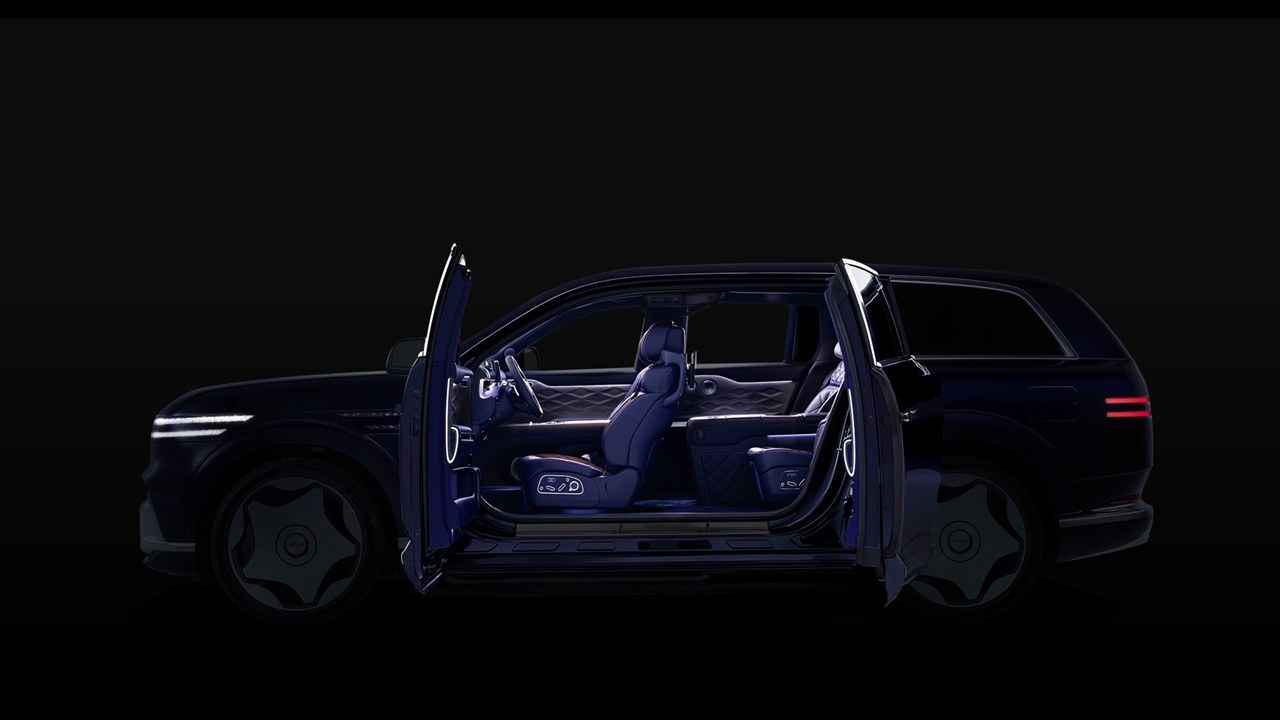
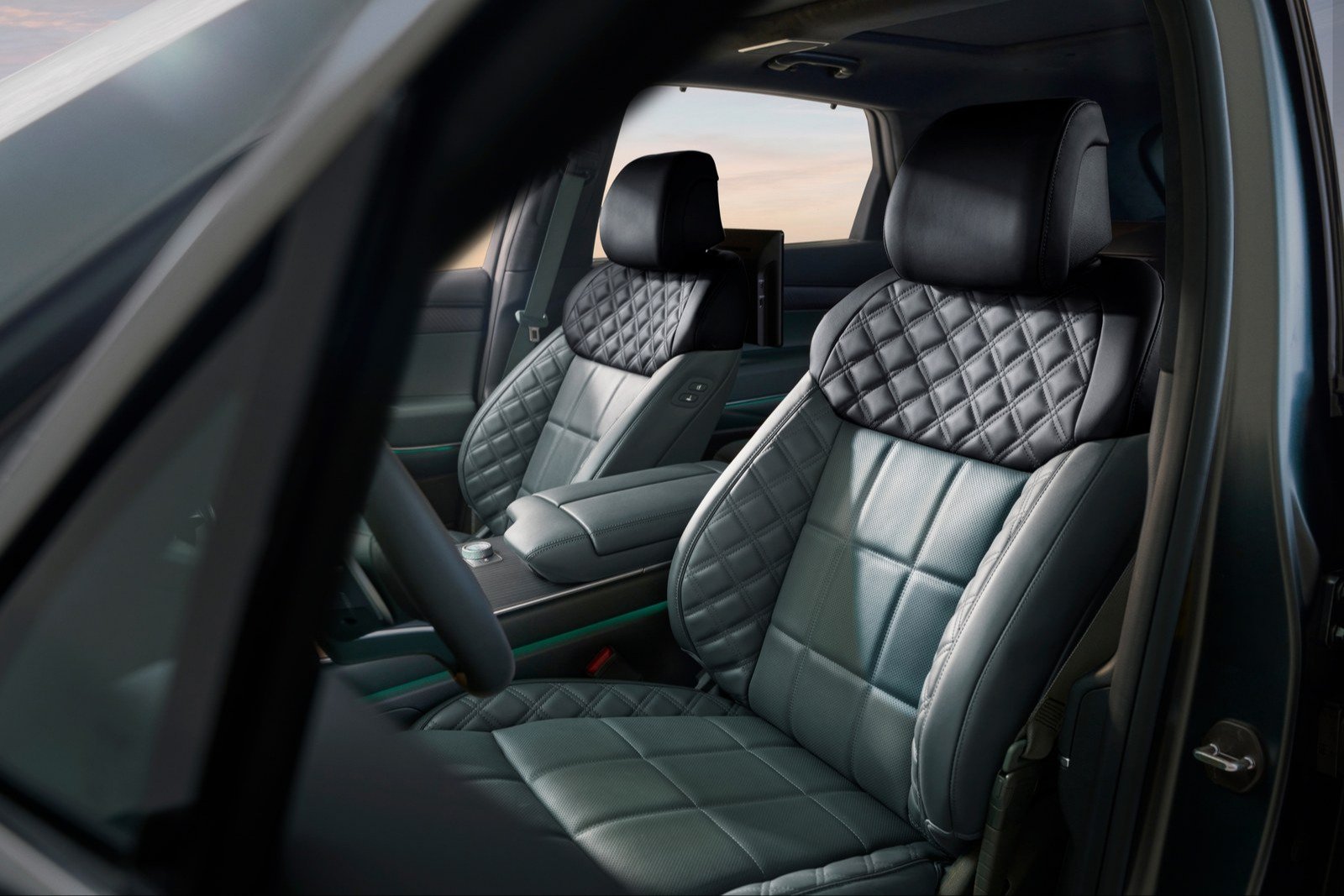
Both hybrids get a redesigned grille, new wheel designs and new paint colors. The G80 Hybrid is 5.1 inches (130 mm) longer overall, and Genesis' site mentions an expanded second row. Inside, both carry a 27-inch OLED display that combines the instrument cluster and navigation screen.
The rivals it has to beat
Electrified rivals fall into two camps. All figures below come from the manufacturers.
Conventional hybrids, no plug:
- Lexus RX 500h F SPORT Performance: 366 hp and 406 lb-ft from a 2.4-liter turbo hybrid with a six-speed automatic. $68,950 including delivery. The EPA rated the 2026 model at 27 mpg combined.
- Lexus TX 500h: the same 366-hp system in a three-row body, from $72,410 including delivery. Lexus lists 27 mpg combined.
Plug-in hybrids:
- BMW X5 50e xDrive: the redesigned 2027 model makes 483 hp, with a BMW-estimated 44 miles of electric range. $78,950 with destination, due in the first quarter of 2027.
- Mercedes-Benz GLE 500e: 429 hp and 50 miles of electric range by Mercedes' figures. $82,450 with destination. It replaces the GLE 450e, as covered in our 2027 GLE and GLS price breakdown.
- Volvo XC90 T8: 455 hp and up to 32 miles of EPA-estimated electric range. The 2026 model starts at $77,595 with destination.
The Lexus pair is the closest match. Both use a turbo four, a stepped automatic and no plug. On paper the Lexus system has 19 hp and 15 lb-ft more than the Genesis. If the efficiency claims hold, the GV80 Hybrid would land near the RX 500h's 27 mpg with a rear-drive-based layout.
The plug-ins are stronger and can cover a typical commute on electricity, but only if you charge them. We ranked those in our list of the longest-range plug-in hybrids. Genesis' pitch is simpler: better mileage with nothing to plug in.
Pricing is the open question. For reference, the 2027 GV80 starts at $58,850 and the 2027 G80 at $59,450 before destination.
What we don't know yet
- Price. Genesis says North American pricing will be announced closer to launch.
- EPA fuel economy and range. Certification is pending, and Genesis says final figures may differ from its estimates.
- On-sale date. None has been given. Both cars are marked "coming soon" on the U.S. site.
- Model year in the fine print. The press release names no model year. Genesis' U.S. site and its press photos label both cars as 2028 models.
- Trims and drivetrains. Genesis has not said whether the U.S. gets rear-wheel drive, all-wheel drive or both, or how the hybrid fits into the trim ladder.
- Hardware details. Battery capacity, motor output, curb weight, acceleration and GV80 towing capacity are all unpublished.
What buyers should do now
- If you need a car this winter, the hybrid is not an option. The gas GV80 and G80 remain the only choices for now.
- If you can wait, hold off until the EPA numbers and the price are out. The value case depends on both.
- If you were choosing the V6 for its torque, the hybrid deserves a test drive. It promises the same 391 lb-ft with better mileage.
- If you want to drive on electricity alone for more than short stretches, this is the wrong system. Look at the plug-in rivals or Genesis' EVs.
We will update this explainer when Genesis announces U.S. pricing, EPA ratings or an on-sale date.