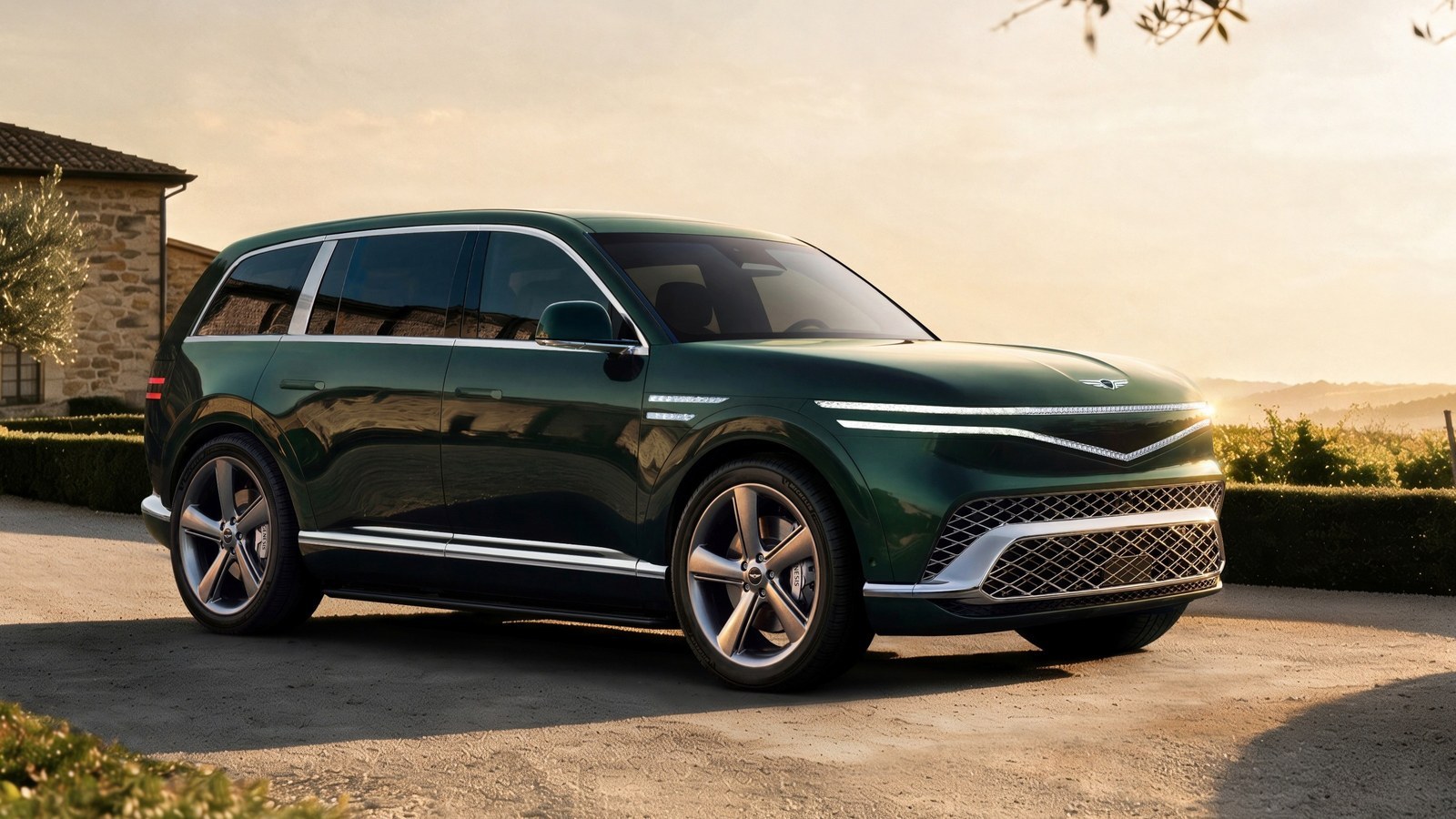
Genesis Says the Pillarless GV90 Neolun Is 12% Stiffer Than the Regular GV90
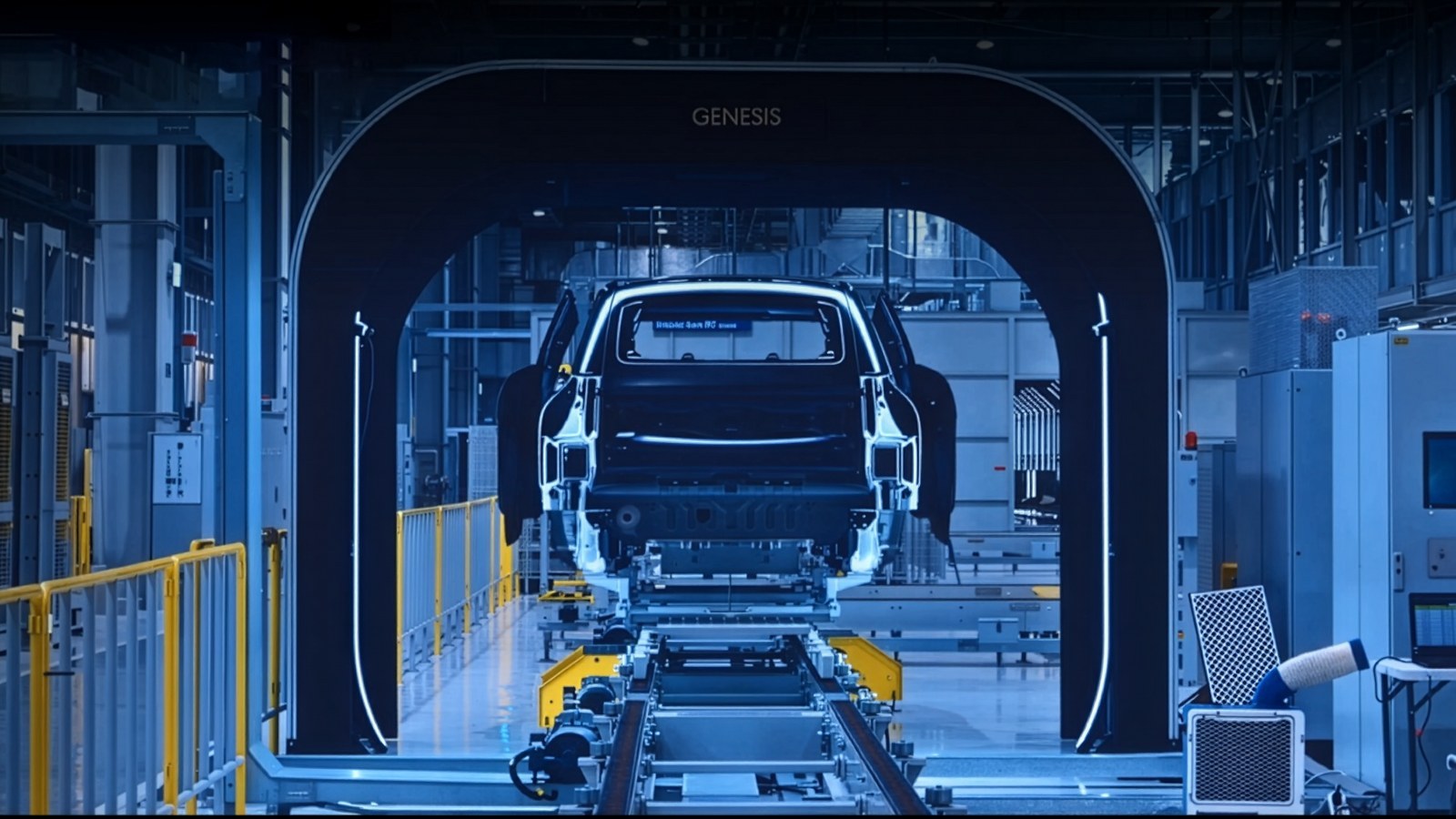
Genesis' second GV90 engineering briefing answers what the coach doors raised: a 72-percent-aluminum body, a roof that holds nearly 31,000 pounds, and a Neolun stiffer than the swing-door GV90.
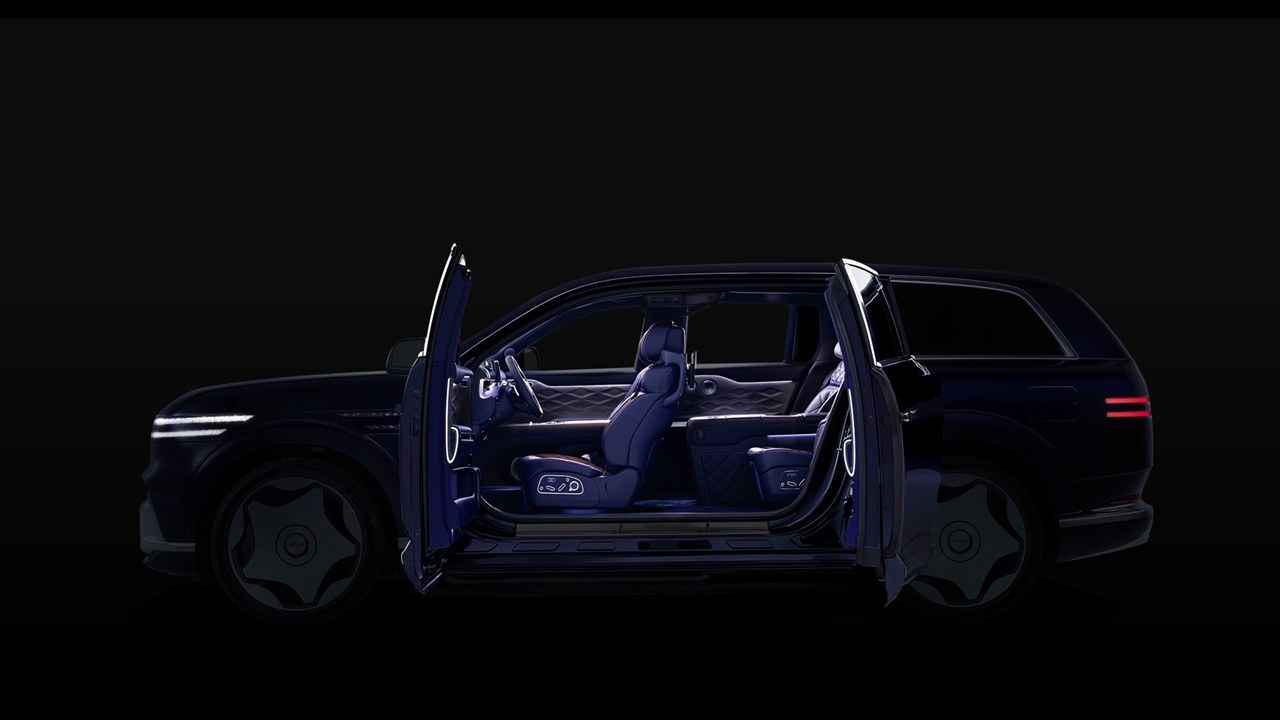
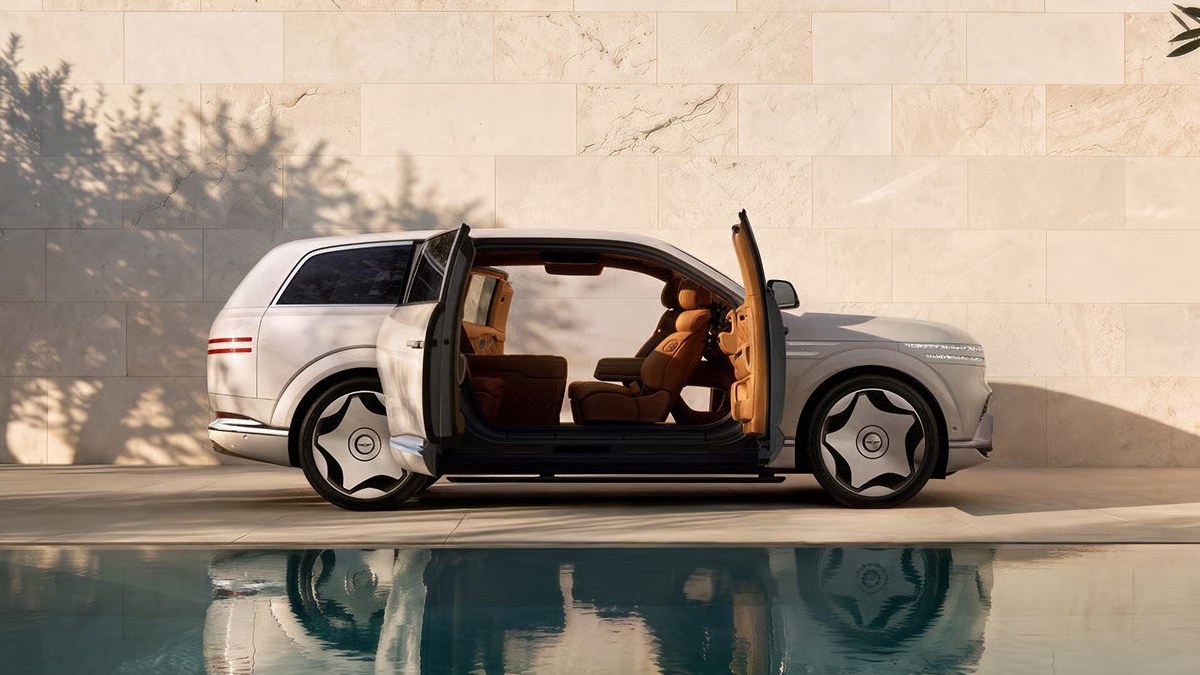
Genesis has finally put numbers on the question it left open when it showed the GV90 Neolun's coach doors: the pillarless version is 12 percent stiffer than the standard GV90 with conventional swing doors, according to the company's in-house testing, and matches it in crash performance. The figure comes from the second installment of the brand's GV90 engineering series, published on the Genesis U.S. newsroom on October 23.
When we covered the Neolun's B-pillar-free cabin last week, Genesis had described the hidden reinforcements but hadn't said how the body compared with the pillared GV90. Now it has, and it has added a material mix the brand hadn't disclosed before: aluminum makes up 72 percent of the GV90's body, up from 35 percent in the company's previous models.
A B-pillar you can't see, and a roll cage you can't either
The pillar didn't disappear so much as move into the doors. Each door on the Neolun carries two beams of 1.8-GPa ultra-high-strength steel, one vertical and one horizontal, and locks to the body through four latches backed by an upper stopper and a lower impact hook. In a side impact, that assembly is meant to take the load a conventional pillar would.
Around the cabin, Genesis built what Daehee Lee, head of its body design group, calls a reinterpreted roll cage: 1.5-GPa steel tubes, structural foam, and a ring of horizontal and vertical members that runs around the passenger space but is invisible from outside. Where the heavy rear-door hinges bolt on, large high-pressure die-cast aluminum reinforcements take the load.
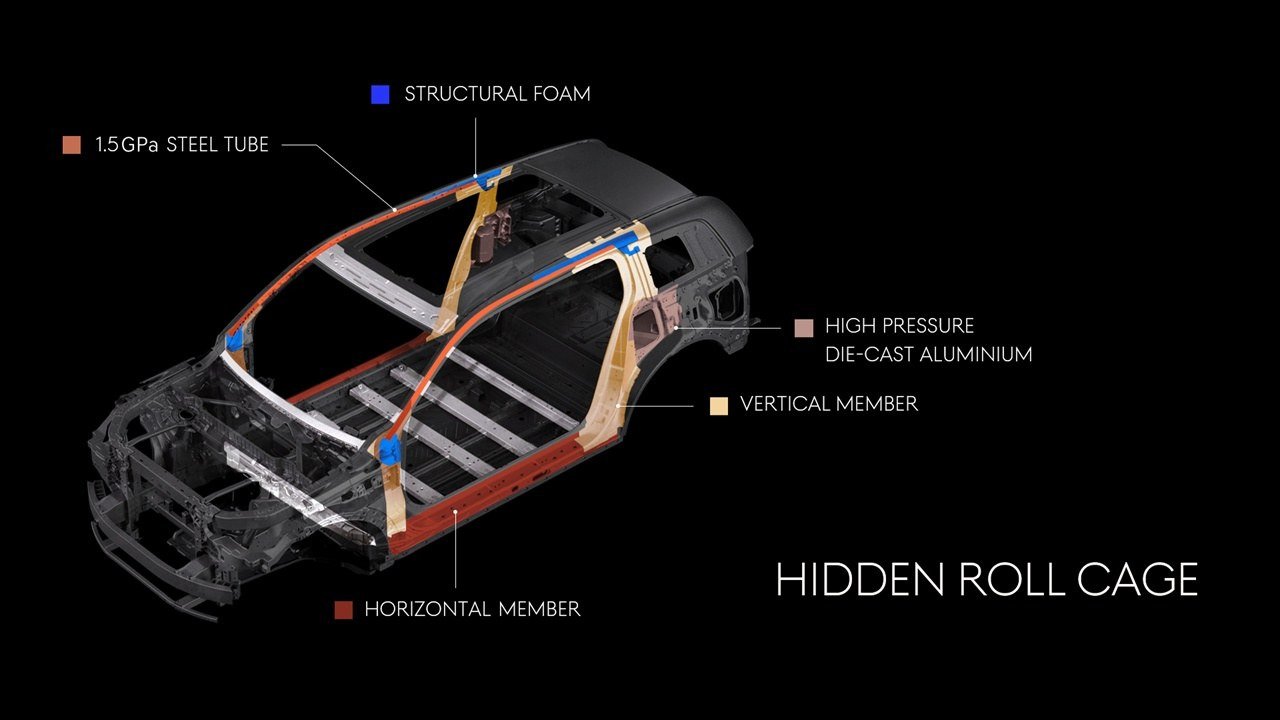
Those hinges are a story of their own. Each rear door weighs nearly 70 kilograms (about 154 pounds), and the dual-motion hinge first slides it outward, then swings it open, so it clears the front door without the two touching. The center block, where the door's weight concentrates, is high-strength cast iron; the housing around it is aluminum, which Genesis says saves roughly 20 percent of the mechanism's weight, and more than 500 ball bearings carry the door along its rail.
Roof strength of nearly 31,000 pounds
The release also quantifies the rollover margins. Genesis quotes a minimum roof strength of 13,924 kilogram-force, which works out to about 30,700 pounds. For context, the Insurance Institute for Highway Safety's top roof-strength mark requires a roof to withstand at least four times the vehicle's curb weight, so a figure that high would clear the bar for any vehicle under roughly 7,600 pounds. Genesis hasn't published a U.S. curb weight for the GV90, and IIHS hasn't tested the SUV, so treat that as arithmetic rather than a rating.
In side-impact testing, the company says the GV90 keeps at least 320 millimeters (12.6 inches) of survival space at the seat center, against the 180 millimeters it cites as the threshold for an "Excellent" result. The release doesn't say which test protocol that threshold belongs to.
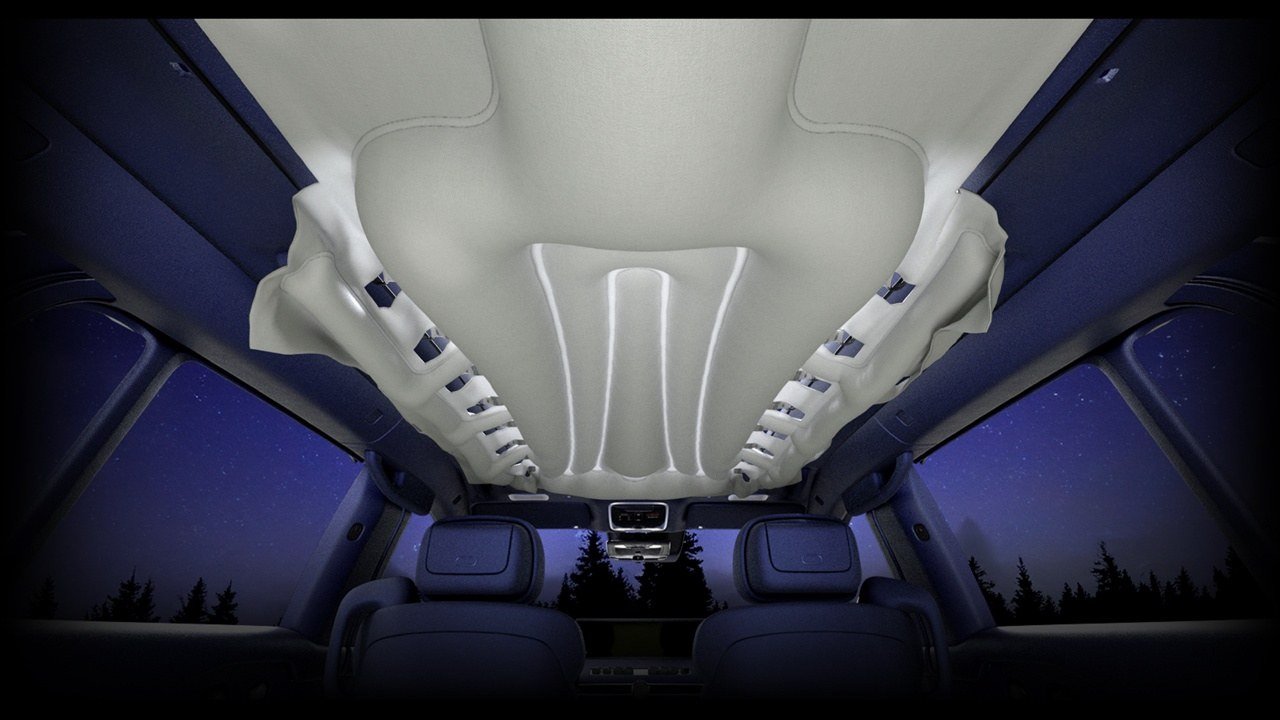
The roof airbag, which Genesis describes as a world first and which it previewed at the August reveal, now comes with test conditions: it was evaluated in lateral-tilt rollovers and in ramp tests at 110 km/h (68 mph). The bag deploys forward along wires at the sides of the glass roof, from the back of the cabin, to keep occupants inside and away from broken glass. It is one of 12 airbags, a count that also includes a two-stage front passenger bag that adapts to a reclined seat, seat-cushion bags to stop submarining under the belt, and curtains that reach the third row.
What happens to the 123.5-kWh pack in a frontal hit
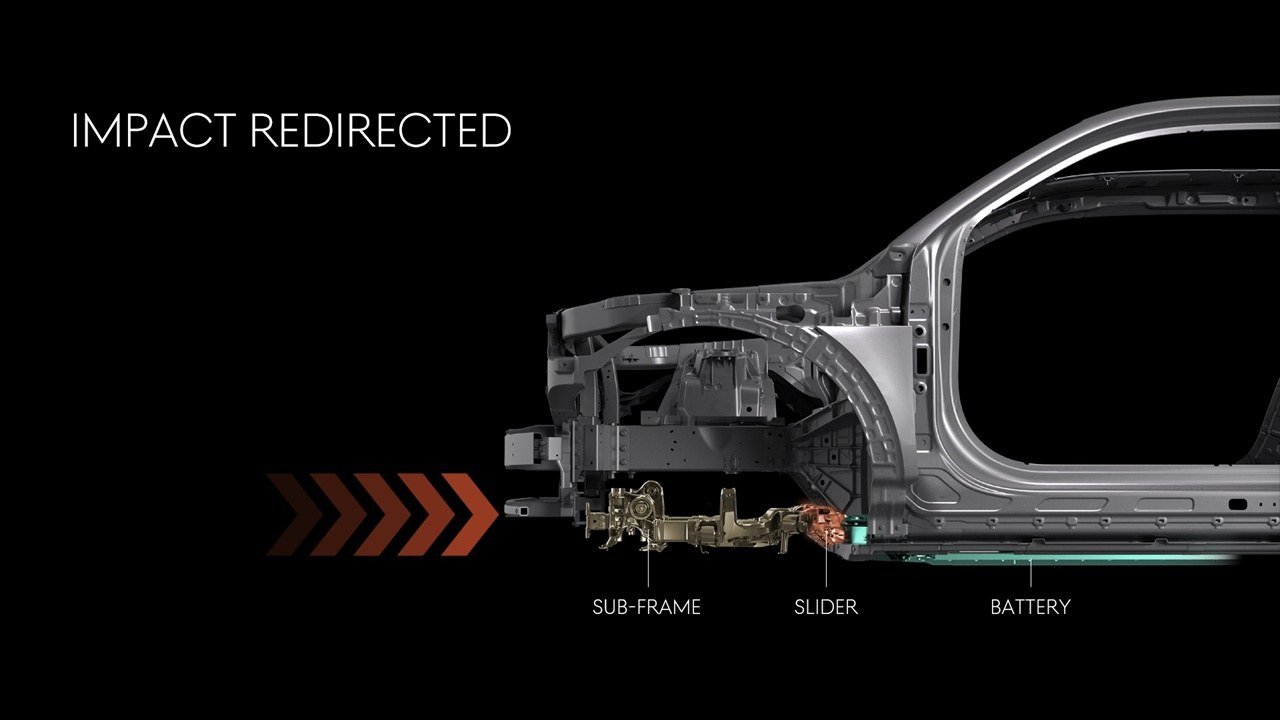
Underneath, the GV90 sits on the Genesis-only eMP platform (how eMP differs from E-GMP), and the release details three measures for frontal crashes. Deflectors ahead of the front wheels are meant to push the car sideways in a small-overlap hit rather than let the barrier intrude into the cabin. A slider below the front subframe steers the subframe and motor underneath the 123.5-kWh battery pack in a high-speed frontal crash, and a crossmember ahead of the pack is there to lift the car over curbs and road debris. Inside the pack, thermal barriers between cells are designed to stop heat spreading, and a cloud-connected battery management system is supposed to warn the driver of trouble before it happens.
Genesis frames all of this against its U.S. record: the company says every new model it has launched since 2021 has earned IIHS's highest rating. That's the brand's own claim, and the GV90 can't join the list until it reaches U.S. roads, which our GV90 guide still pegs at early 2027 as a 2028 model. This installment, like the suspension and noise briefing before it, adds no price, no EPA range, and no U.S. trim breakdown, so the two numbers buyers care about most are still missing.