A Hybrid With No Gearbox: How Nissan's e-Power Differs From Toyota, Honda, and Hyundai
In the new Rogue Hybrid, only electric motors drive the wheels. Here's how that differs from RAV4, CR-V, and Tucson hybrids, and what it costs on the highway.
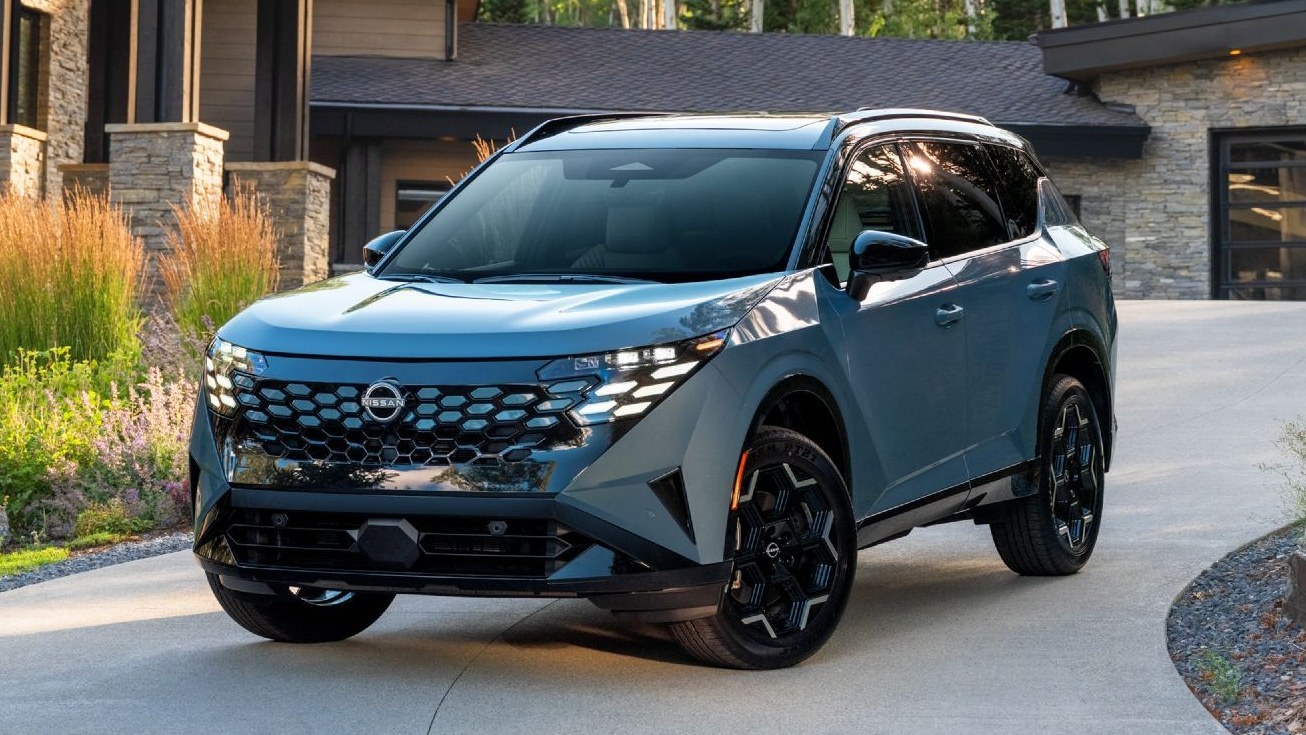
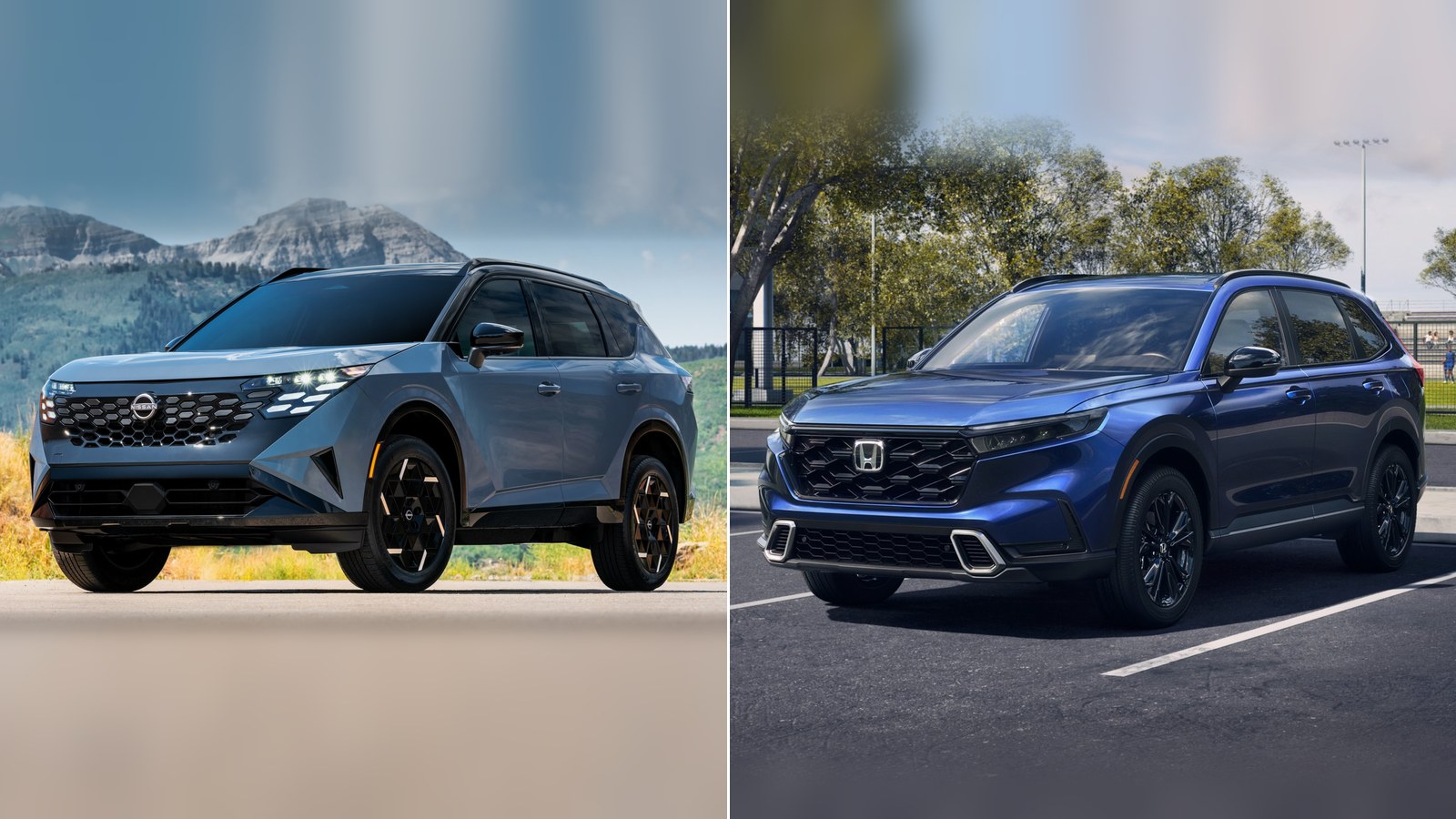
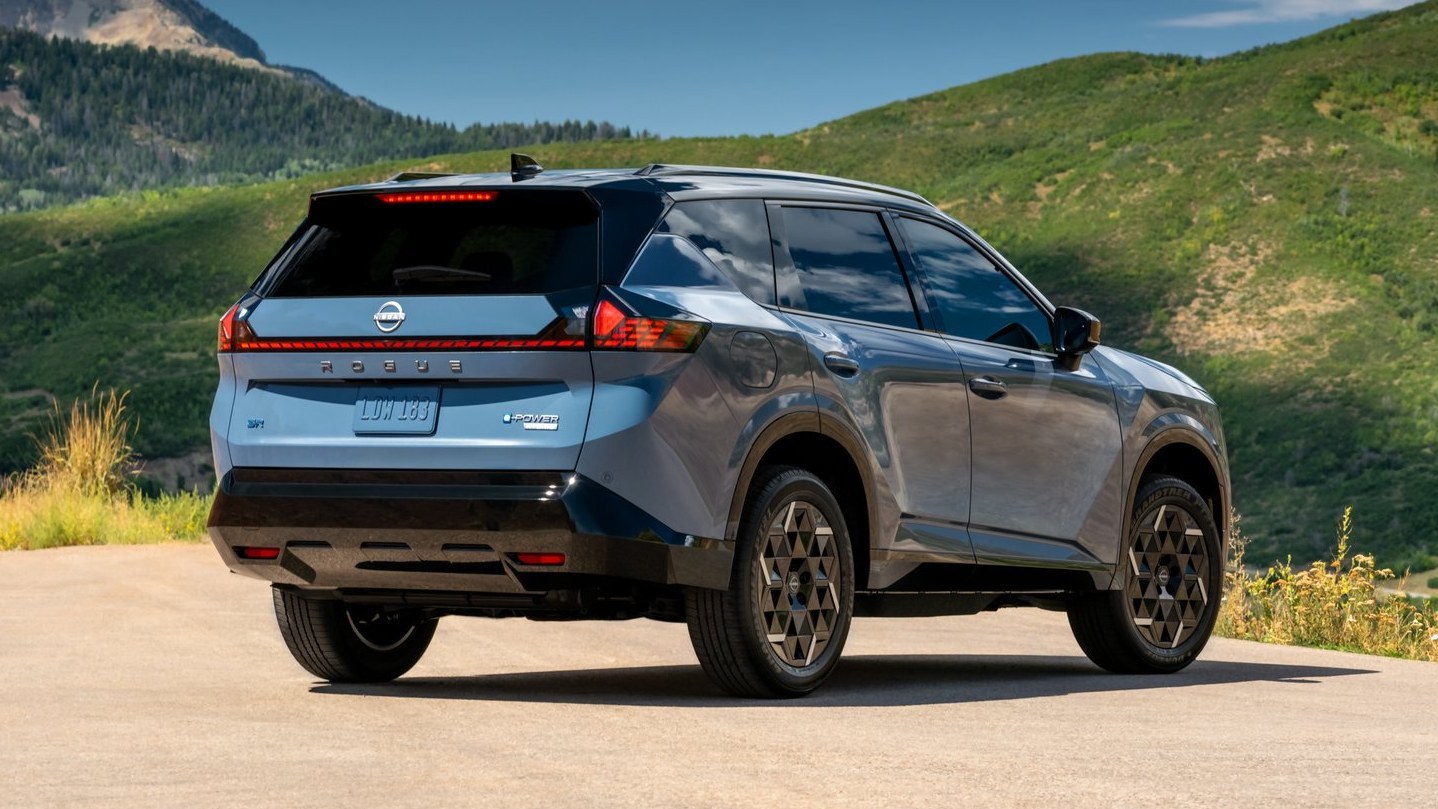
Every hybrid compact SUV on sale in America pairs a gas engine with electric motors. What separates them is who gets to turn the wheels. In the 2027 Nissan Rogue Hybrid, the answer is simple: only the motors. The engine never touches the drivetrain at all.
Nissan laid out the case for that layout in a November 10 explainer, timed to the first cars reaching showrooms. Only the SR with the Technology Package is on sale now; the other trims follow in January, as our Rogue Hybrid launch and 38-mpg rating story explains. Here is how Nissan's e-Power system works, how it differs from the hybrids Toyota, Honda, and Hyundai sell, and what that means once you're behind the wheel.
Three ways to build a hybrid
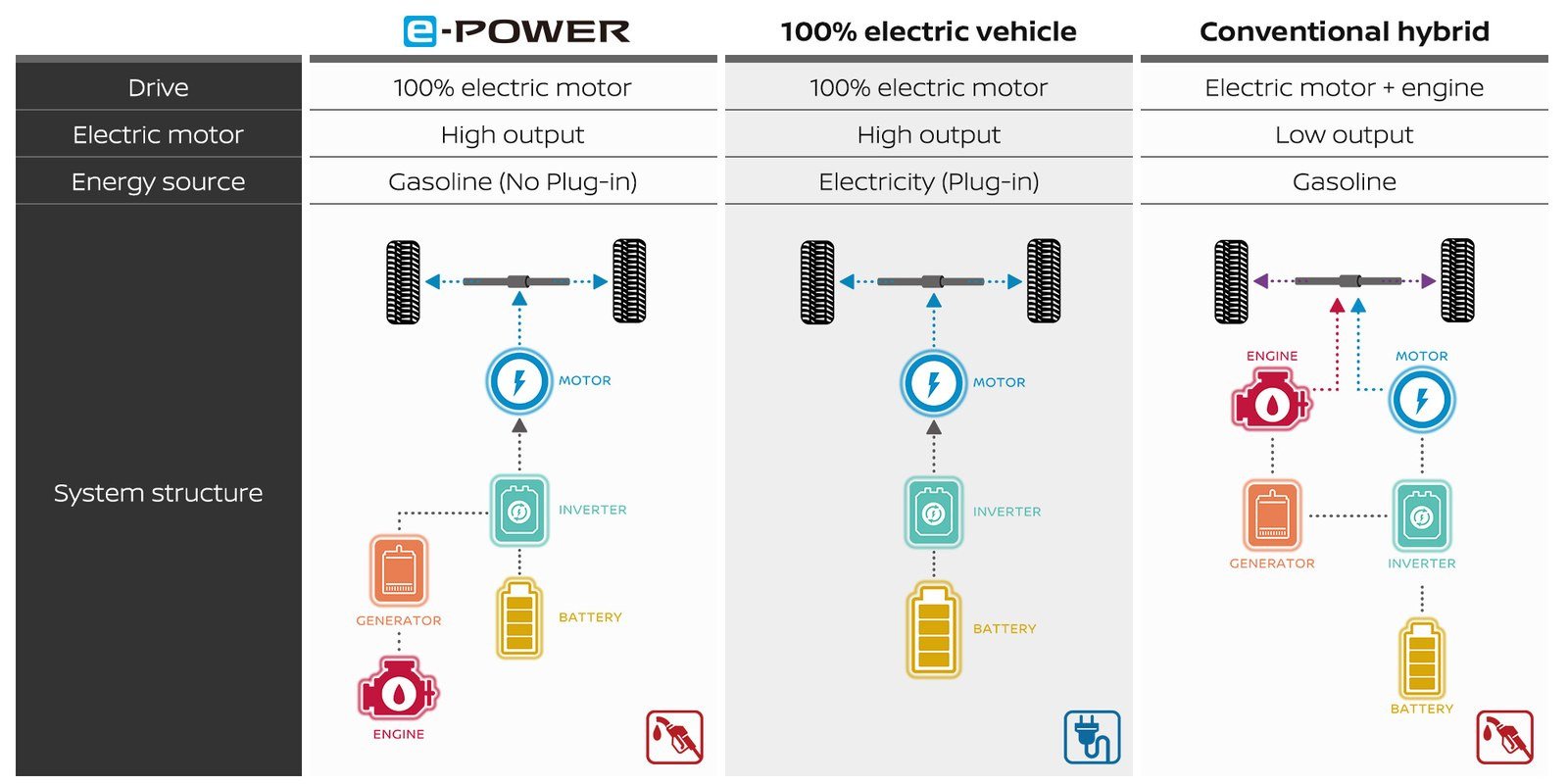
Series (Nissan e-Power). The engine drives a generator and nothing else. Electricity goes to a small battery and to the drive motors, which do 100% of the propelling. In the Rogue, a 148-hp 1.5-liter turbocharged three-cylinder feeds a 1.67-kWh lithium-ion battery and two motors, one per axle, for 225 hp combined. All-wheel drive is standard because the rear axle has its own motor. Nissan calls this its third-generation e-Power system. The technology launched in the 2016 Note and has sold nearly 2 million units in 68 countries, but the Rogue is its first U.S. application.
Parallel (Hyundai). The engine and an electric motor can both push the car through the same gearbox. The 2026 Tucson Hybrid puts its motor between the 1.6-liter turbo engine and a six-speed automatic. Hyundai's European press materials say its hybrids skip the torque converter and let the motor handle pulling away. The 2027 Tucson adds a second, smaller motor on the engine side to start the engine and generate electricity, according to InsideEVs. It keeps the six-speed, so it is still a geared parallel hybrid at heart.
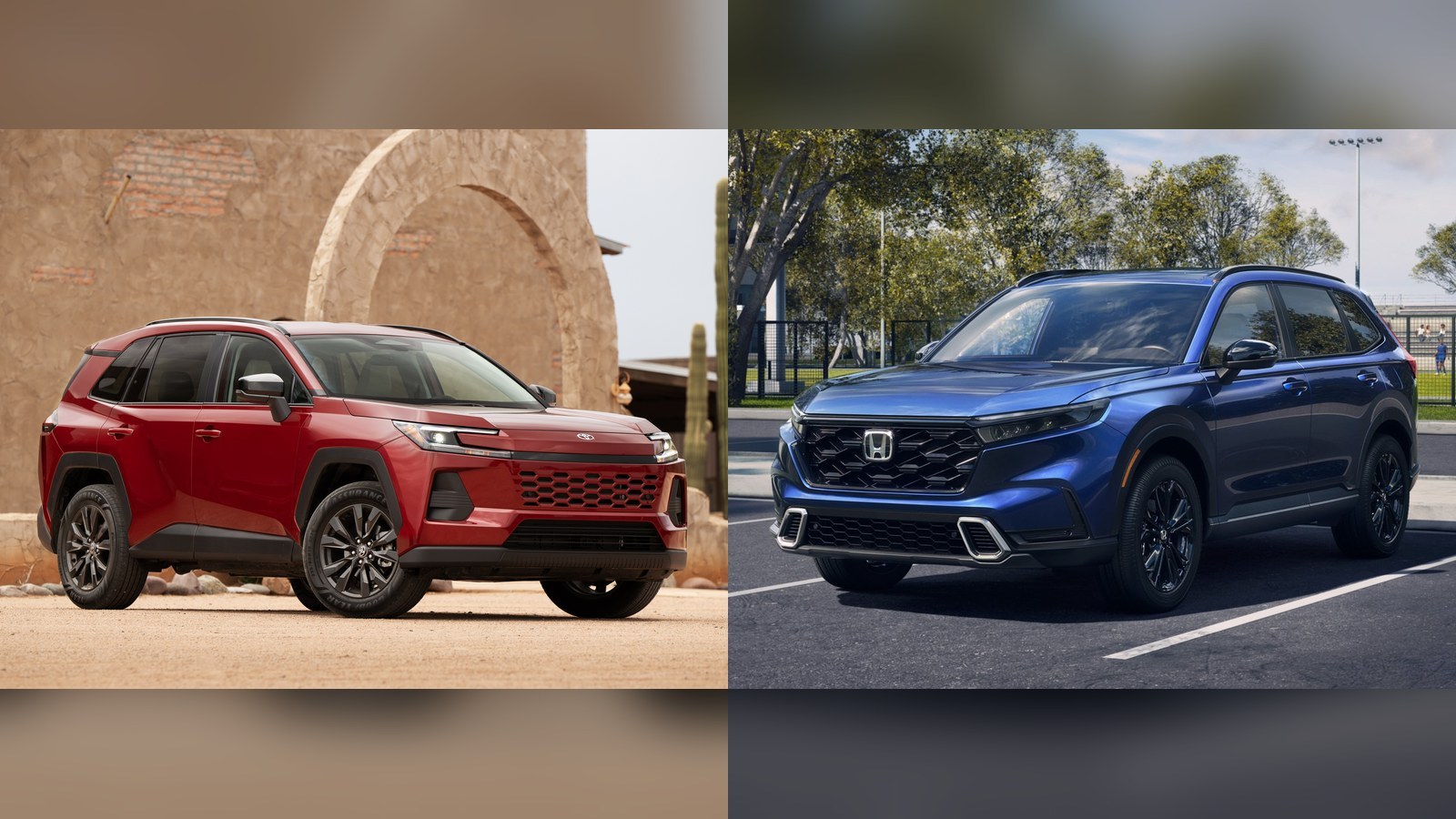
Power split (Toyota). Toyota's system uses a planetary gearset as a "power split device." Toyota's own description says engine output is divided into two streams. One spins a generator that feeds the electric motor. The other goes straight to the wheels, and the system constantly varies the ratio between the two. That's why the RAV4 Hybrid has no conventional stepped transmission yet still lets the engine drive the wheels mechanically. It's neither pure series nor pure parallel.
Honda's two-motor hybrid. This is the one most often mislabeled. Honda's system has a generator motor bolted to the engine and a separate propulsion motor that drives the wheels. Most of the time it works like a series hybrid, which is why the CR-V Hybrid also feels electric off the line. But Honda says a lock-up clutch lets the engine drive the wheels directly, mainly when cruising on the highway. The CR-V adds a second, low-speed lock-up clutch that allows engine drive at urban speeds. So a Honda is a series hybrid that switches to direct engine drive when that's more efficient. The Rogue never makes that switch.
Why there's no gearbox — and what that costs
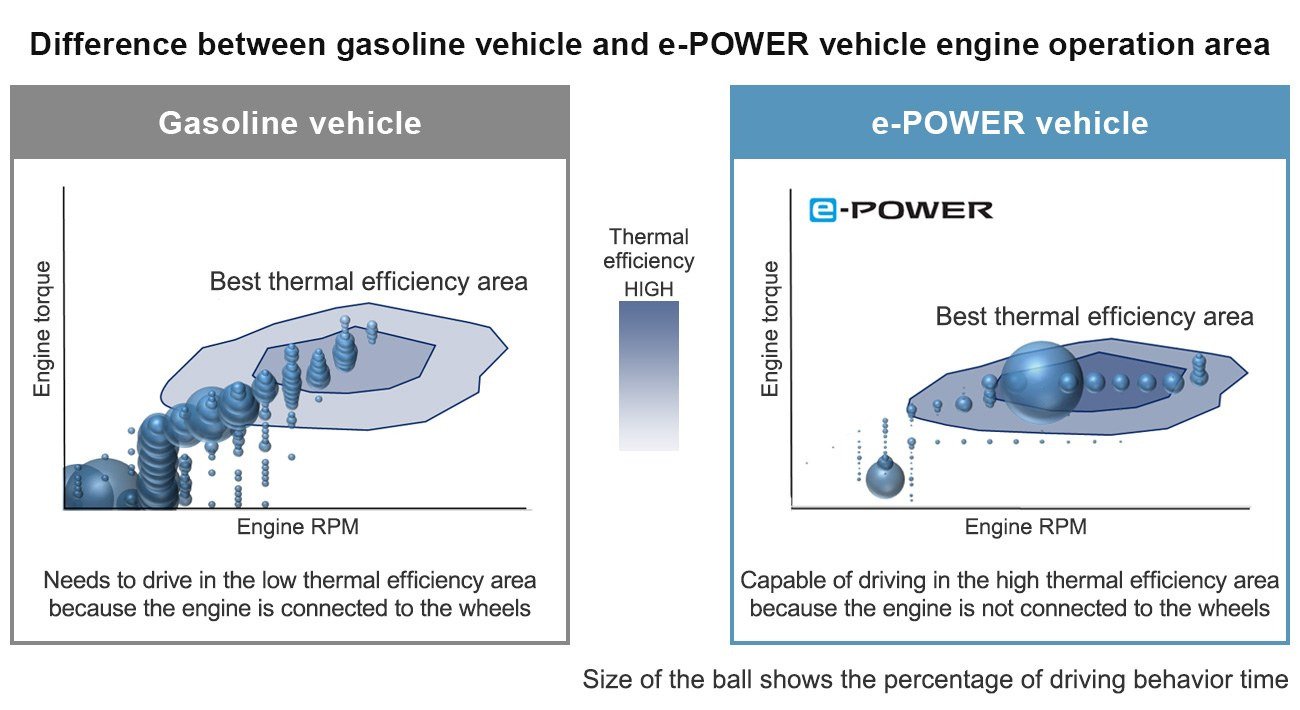
An engine connected to the wheels has to run at whatever speed the road demands, which is why conventional cars need several gear ratios. Cut that link and the engine can sit in its most efficient zone while the motors deal with speed. Nissan's engine-mapping chart makes the point: in an e-Power car, operation clusters inside the best-efficiency area, while a gas car spends much of its time below it. The drive motors work like an EV's, so a single fixed reduction does the job. There are no shifts, no lag while the gearbox picks a gear, and no rubber-band drone from an engine revving ahead of the car.
The trade-off is energy conversion. In a series hybrid, every bit of engine power is turned into electricity and then back into motion, and each step loses some. At low speeds, regenerative braking and engine-off driving more than make up for that. At a steady highway cruise, connecting the engine mechanically is the shorter path. That's exactly why Honda added its lock-up clutch. Nissan's own explainer concedes that on highways or under heavy load the engine runs more often to keep the battery charged. Nissan also says it tuned the U.S. car for highway efficiency, because Americans drive more highway miles than e-Power's earlier markets.
The EPA numbers, side by side
The trade-off shows up on the window sticker, though less dramatically than the theory suggests. All four ratings below are for all-wheel-drive versions.
| Model (AWD) | Hybrid architecture | City | Highway | Combined |
|---|---|---|---|---|
| 2027 Nissan Rogue Hybrid SR | Series (e-Power): engine only generates power | 41 mpg | 36 mpg | 38 mpg |
| 2026 Toyota RAV4 Hybrid SE/LE | Power split (planetary gearset) | 46 mpg | 39 mpg | 42 mpg |
| 2027 Honda CR-V Hybrid | Two-motor; engine drives wheels via lock-up clutch | 40 mpg | 34 mpg | 37 mpg |
| 2026 Hyundai Tucson Hybrid | Parallel, six-speed automatic | 36 mpg | 37 mpg | 36 mpg |
| 2026 Hyundai Tucson Hybrid Blue | Parallel, six-speed automatic | 38 mpg | 38 mpg | 38 mpg |
Sources: Toyota, Honda, and Hyundai figures from fueleconomy.gov. The Rogue Hybrid figure is Nissan's published EPA estimate for the SR AWD; on November 11, the car did not yet have a fueleconomy.gov listing. Nissan rates the SV and Platinum at 37 mpg combined.
Three patterns stand out. The Rogue beats the CR-V everywhere, including on the highway, so e-Power's conversion penalty is not a disaster in EPA testing. Toyota's power-split RAV4 still leads on every line. And the Tucson, the only geared parallel hybrid here, is the only one with highway mileage equal to or better than its city figure. That's the parallel layout's signature: strong cruising, weaker stop-and-go. Front-drive versions of the RAV4, CR-V, and Tucson score higher, but the Rogue Hybrid comes only with all-wheel drive. Our CR-V Hybrid vs. RAV4 Hybrid comparison covers those versions.
One caveat: the EPA highway cycle averages well under 75 mph. How much a series hybrid gives up at sustained interstate speeds is the number we still don't have. Car and Driver runs a 75-mph highway fuel-economy loop in its testing, but we couldn't confirm a published Rogue Hybrid result. Until a figure like that appears, that remains the open question.
What it means behind the wheel
It drives like an EV. Testers agree on this. Car and Driver's verdict, published November 10, is that the Rogue Hybrid is "more electric than gas." Edmunds recorded 0–60 mph in 6.9 seconds, against 8.0 for an AWD CR-V Hybrid and 7.6 for a Tucson Hybrid in its testing. MotorTrend measured 6.2 seconds. Nissan's own claim is 6.4. The Rogue also offers e-Pedal one-pedal driving, which Nissan says no other hybrid in the class has.
You'll still hear the engine. Nissan says the engine runs infrequently in city driving and more often on highways or under heavy load, such as a freeway merge. Because it is managing the battery rather than following your speed, it doesn't always rev in step with your right foot. Edmunds found the cabin very quiet around town, but noted the engine kicks in noticeably under hard acceleration before shutting off again once the car is up to speed. Expect that to take some getting used to.
Real-world mileage depends on your commute. Edmunds averaged 42.2 mpg over 175 miles. Kelley Blue Book saw 49.7 mpg in Los Angeles stop-and-go traffic with e-Pedal on, and 37.4 mpg on a mixed drive with it off. If most of your miles are urban, a series hybrid plays to its strengths. If you mostly cruise the interstate, the RAV4's mechanical path to the wheels counts for more.
Service and warranty. There's still a gas engine, so routine engine maintenance stays. Nissan covers the whole e-Power drivetrain and battery for eight years or 100,000 miles. Honda covers the CR-V's hybrid battery for the same term. Towing is modest: 1,500 pounds for the Rogue against 1,000 for the CR-V, as detailed in our Rogue Hybrid vs. CR-V Hybrid comparison. Trim-by-trim prices are in our 2027 Rogue Hybrid price guide.
What's next
The architectures are moving toward each other. Honda is preparing a next-generation version of its two-motor system for 15 models by 2030, as our Honda Hybrid explainer reports. Hyundai's 2027 Tucson adds a generator motor to its parallel setup. Nissan, meanwhile, is betting the U.S. market will pay for the smoothest version of the idea. The cheaper SV trim arrives in January, and that's when the e-Power argument gets tested on price as well as refinement.