The Plug-In Hybrids With the Longest Electric Range, Ranked by EPA Numbers
Only one plug-in hybrid on sale in the U.S. tops 50 EPA-rated electric miles, and the RAV4's 52-mile figure isn't an EPA rating yet.
Plug-in hybrids are the compromise a lot of American buyers are settling on, and the number that decides whether one makes sense is its electric range. Here is the uncomfortable part: the figure most shoppers quote first, the Toyota RAV4 Plug-in Hybrid's 52 miles, is not an EPA rating. As of November 15, fueleconomy.gov has no listing for the 2026 or 2027 RAV4 plug-in, and Toyota's 2027 release calls 52 miles a manufacturer estimate. We covered how it stacks up against its Lexus twin in our Lexus NX 450h+ vs. RAV4 Plug-in Hybrid comparison.
So this ranking uses EPA numbers only: the official listing on fueleconomy.gov, or an EPA estimate the automaker has published for a newer model year that the site hasn't posted yet. Each row names the model year behind its number. Manufacturer estimates and preliminary figures sit in a separate section below, and so do plug-ins that have already left the market.
The ranking: EPA electric range, plug-in hybrids on sale now
We limited the table to models under $100,000 that you can still order or find new. Prices are the cheapest version of each plug-in, including destination.
| # | Model (year, trim) | EPA electric range | MPGe | Gas-only mpg | Battery | Price with destination | DC fast charging |
|---|---|---|---|---|---|---|---|
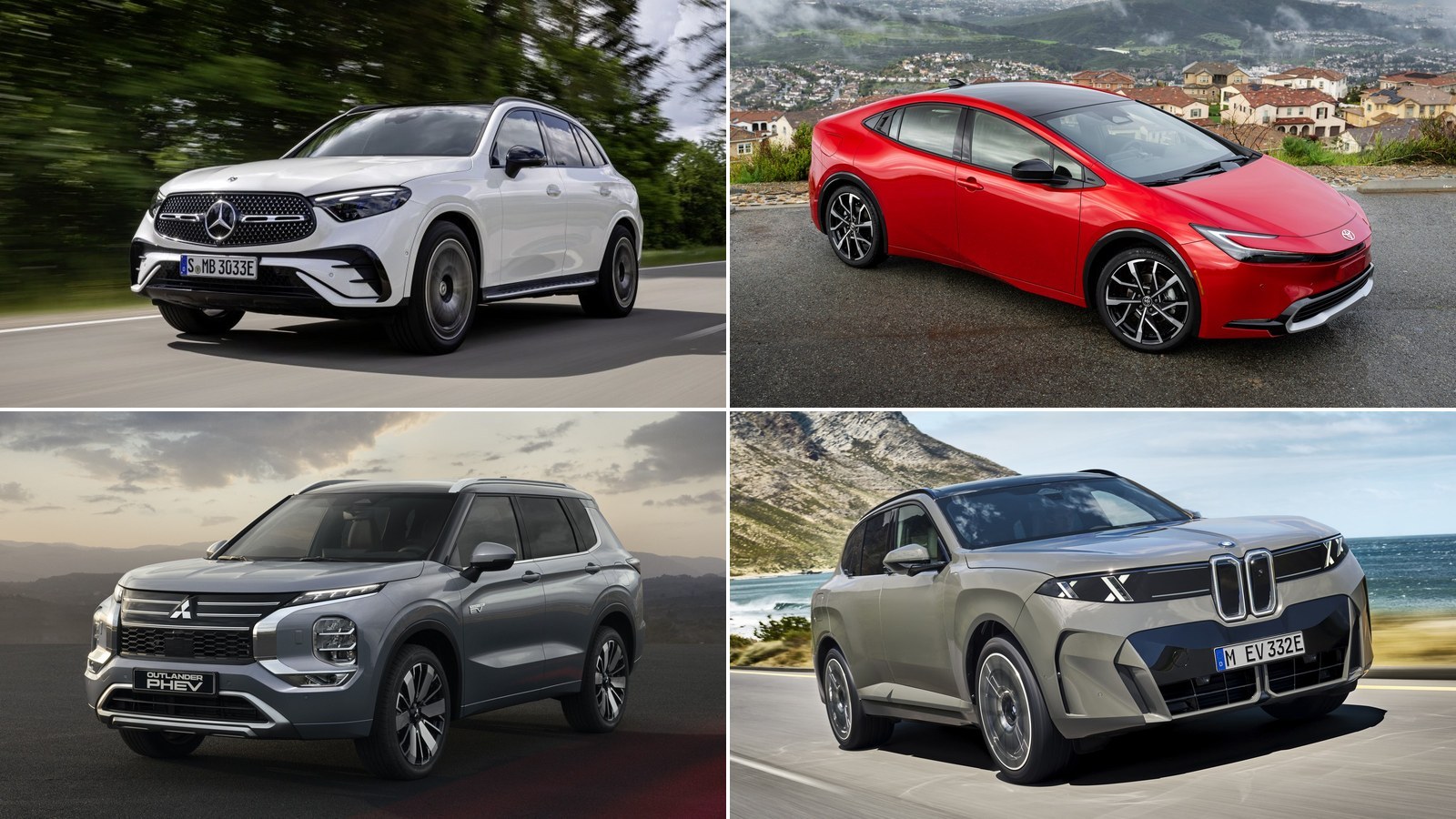
| 1 | Mercedes-Benz GLC 350e 4MATIC (2027) | 54 mi (latest EPA listing: 2025) | 64 | 25 | 23.3 kWh | $64,150 | Yes, 60 kW |
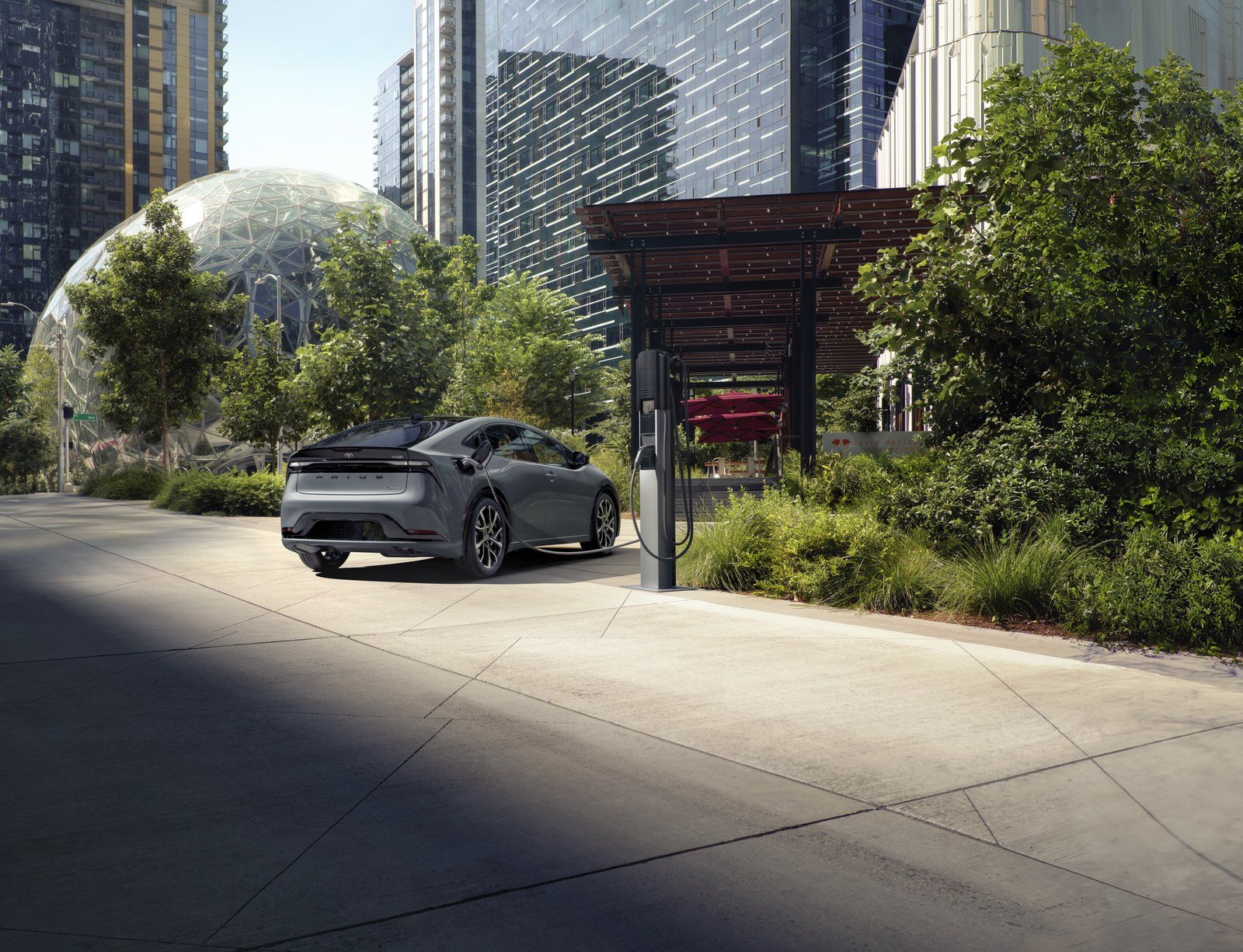
| 2 | Toyota Prius Plug-in Hybrid SE (2027) | 44 mi (EPA est., Toyota); 39 mi on XSE and Nightshade | 127 | 51 | 13.6 kWh | $35,275 | No |
| 2 | Mitsubishi Outlander PHEV ES (2026) | 44 mi | 73 | 27 | 22.7 kWh | $44,990 | Yes, CHAdeMO |
| 4 | BMW X5 xDrive50e (2026) | 40 mi | 60 | 22 | — | 2026 stock; 2027 X5 50e from $78,950 | No |
| 5 | Lexus RX 450h+ Premium (2027) | 38 mi (EPA est., Lexus) | 85 | 35 | 18.1 kWh | $66,880 | No |
| 6 | Lexus NX 450h+ (2026) | 37 mi (latest EPA listing: 2025) | 84 | 36 | 18.1 kWh | $59,505 | No |
| 7 | Volvo XC60 T8 Plus (2027) | 35 mi (EPA est., Volvo) | 69 | 29 | 18.8 kWh | $67,595 | No |
| 8 | Kia Sportage Plug-in Hybrid X-Line (2027) | 33 mi | 83 | 36 | 13.8 kWh | $42,085 | No |
| 8 | Volvo XC90 T8 (2026) | 33 mi | 58 | 27 | 18.8 kWh | $77,595 | No |
| 10 | Hyundai Tucson Plug-in Hybrid SEL (2026) | 32 mi | 77 | 35 | 13.8 kWh | $40,325 | No |
| 11 | Kia Sorento Plug-in Hybrid X-Line SX-Prestige (2027) | 30 mi (2026 EPA) | 74 | 33 | 13.8 kWh | $55,385 | No |
| 12 | Mazda CX-90 PHEV Preferred (2027) | 27 mi (2026 EPA) | 56 | 26 | 17.8 kWh | $52,340 | No |
Sources: fueleconomy.gov, plus Toyota, Lexus, and Volvo where the table says "EPA est." Prices from each automaker's U.S. pricing; MPGe and gas-only mpg come from the same EPA source as the range figure. A dash means the automaker's U.S. materials we checked don't state it.
Three things stand out. The Mercedes still leads by 10 miles, and it is one of only two plug-ins here that can use a DC fast charger. The cheapest car on the list, the Prius, ties for second. And the Outlander is the only three-row SUV in the top half; the next three-row options, the XC90 and Sorento, give up 11 to 14 miles.
The Volvo numbers come with a caveat. The 2027 XC60 T8 on sale now is rated at 35 miles; the long-range XC60 and XC90 that Volvo revealed in September are separate versions that haven't reached customers yet. More on those below, and in our story on Volvo's 78-mile plug-ins.
Electric miles per dollar
Range alone flatters expensive cars. Divide each price by its EPA electric miles and the order changes:
- Toyota Prius Plug-in SE: $802 per mile of EPA range
- Mitsubishi Outlander PHEV: $1,022
- Mercedes-Benz GLC 350e: $1,188
- Hyundai Tucson Plug-in Hybrid: $1,260
- Kia Sportage Plug-in Hybrid: $1,275
- Lexus NX 450h+ (2026): $1,608
- Lexus RX 450h+: $1,760
- Kia Sorento Plug-in Hybrid: $1,846
- Volvo XC60 T8: $1,931
- Mazda CX-90 PHEV: $1,939
- Volvo XC90 T8: $2,351
The Mercedes is the surprise: it costs more than most of the field, but its range is long enough to land third. The Sorento shows the opposite effect. Kia dropped the cheaper EX for 2027, so the only Sorento plug-in left is a $55,385 X-Line SX-Prestige, as we reported when Kia priced the 2027 Sorento PHEV.
If you run the same math on the RAV4 using Toyota's own 52-mile estimate and the 2027 SE's $43,695 price, it comes to $840 per mile, second only to the Prius. That is why the missing EPA listing matters.
Not EPA-rated yet
These are the numbers you will see in ads and dealer listings. None of them is an EPA rating as of today:
- Toyota RAV4 Plug-in Hybrid (2027): 52 miles on the SE, 50 on the XSE, 46 on the Woodland, and 45 on the GR SPORT, all manufacturer estimates from Toyota's 2027 RAV4 release. Some 2026 models are also covered by a recall for a fault that can cut drive power, fixed with a software update.
- Volvo XC60 and XC90 T8 Long Range: up to 78 and 73 miles, preliminary figures Volvo says are based on EPA test procedures. Deliveries are expected in early 2027; pricing hasn't been announced.
- Mercedes-Benz GLE 500e 4MATIC (2027): 50 miles by Mercedes' figures, $82,450 with destination. It replaces the GLE 450e.
- Lexus NX 450h+ (2027): 45 miles, a Lexus estimate, with DC fast charging now standard. Pricing hasn't been announced.
- BMW X5 50e xDrive (2027): 44 miles, based on BMW's testing under EPA procedures, from $78,950 with destination. It arrives in the first quarter of 2027.
If the Volvo figures survive certification, the GLC loses its top spot. Until they do, the Mercedes is the only plug-in hybrid on this list that clears 50 EPA-rated miles.
Over $100,000, and the ones that are gone
Above the price cap, fueleconomy.gov lists 48 miles for the Mercedes-Benz S 580e (2025 listing), 44 for the Mercedes-AMG E 53 Hybrid sedan and 41 for the wagon (2026), 35 for the BMW 750e (2026), 34 for the BMW 550e (2027), and 29 for the 2027 Porsche Cayenne E-Hybrid, which starts at $105,450. The Range Rover P550e is a special case. The EPA treats it as a blended plug-in and lists 21 miles of electric range for 2025, with 0 to 53 miles of electric-only driving depending on how hard it is driven.
Several familiar plug-ins are no longer an option. Stellantis said in January that it was phasing out its North American plug-in hybrids starting with the 2026 model year. That decision took the Jeep Wrangler 4xe and Grand Cherokee 4xe out of the lineup, even though fueleconomy.gov still carries 2026 entries for both at 22 and 26 miles; we covered what killed the Wrangler 4xe. Kia dropped the Niro plug-in for 2026. Lexus cut the TX 550h+ for 2027, as we reported when Lexus priced the 2027 TX. Mazda folded the CX-70 into the CX-90, and Ford ended Escape and Corsair production in December 2025. Hyundai has said the plug-in version of the redesigned 2027 Tucson is not coming to the U.S., so the 2026 Tucson in our table is the last one.
The Ram 1500 REV, the pickup first shown as the Ramcharger, isn't on this list either. It is an extended-range EV, with a gas engine that only makes electricity, and it has no EPA rating yet. Our EREV explainer covers how that setup differs from a plug-in hybrid.
When a plug-in hybrid makes sense
The range figure only pays off if the battery gets charged. Our five-year cost comparison of the RAV4 Hybrid, RAV4 Plug-in Hybrid, and bZ found that at $4.49 gas, the regular hybrid was the cheapest to own in every scenario we ran, and the plug-in only narrowed the gap when it was charged nearly every night.
A plug-in hybrid fits drivers who can charge at home, whose daily driving fits inside the EPA range with a margin for winter, and who still need gas for long trips. If you rarely plug in, you are carrying a heavier battery for nothing. If you charge every night and rarely leave town, an EV may cost less to run.
No federal tax credit
None of these cars qualifies for a federal credit. Public Law 119-21 ended the Section 30D clean-vehicle credit, up to $7,500, for vehicles acquired after September 30, 2025, and plug-in hybrids lost it along with EVs. Some states still offer their own programs. Our look at the EV market a year after the credit ended lists a few of them.