GM's Hybrid Pivot Gets a Factory: Lansing Plant That Builds Traverse Will Build Hybrids
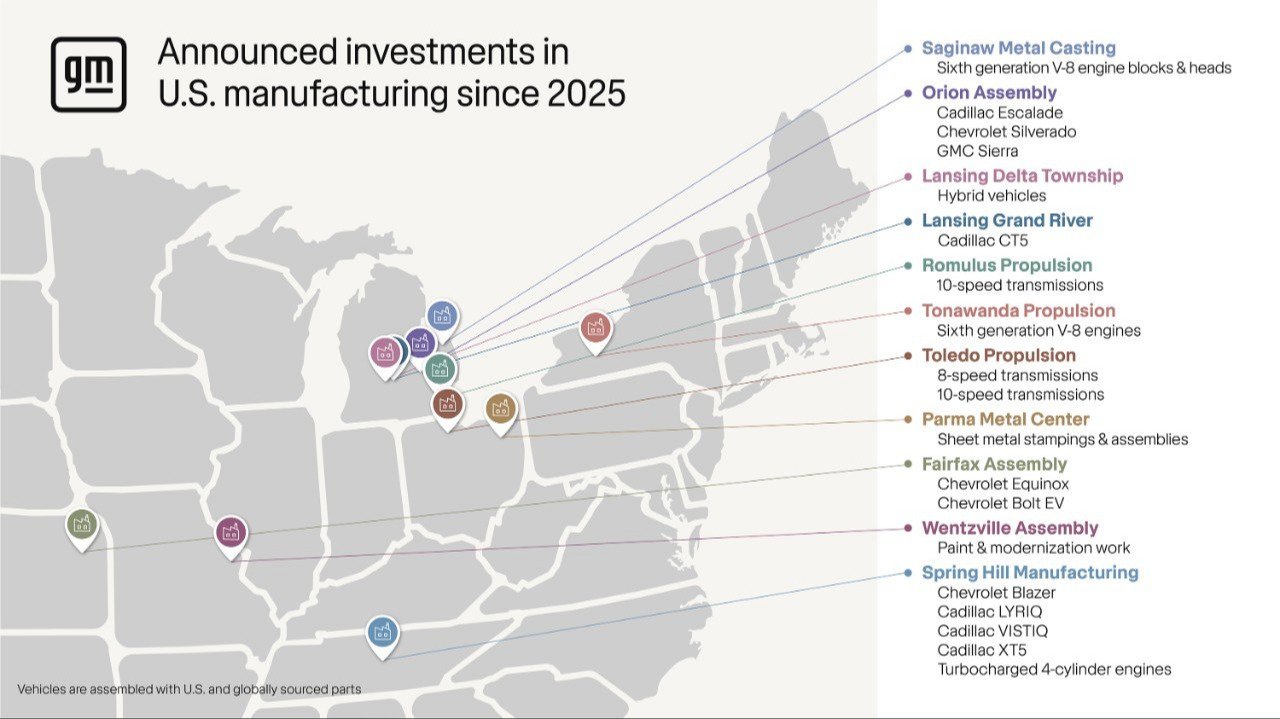
GM will ready Lansing Delta Township, home of the Traverse, Acadia and Enclave, for hybrid production, backed by a restructured $500 million DOE grant. Models and timing are still unannounced.
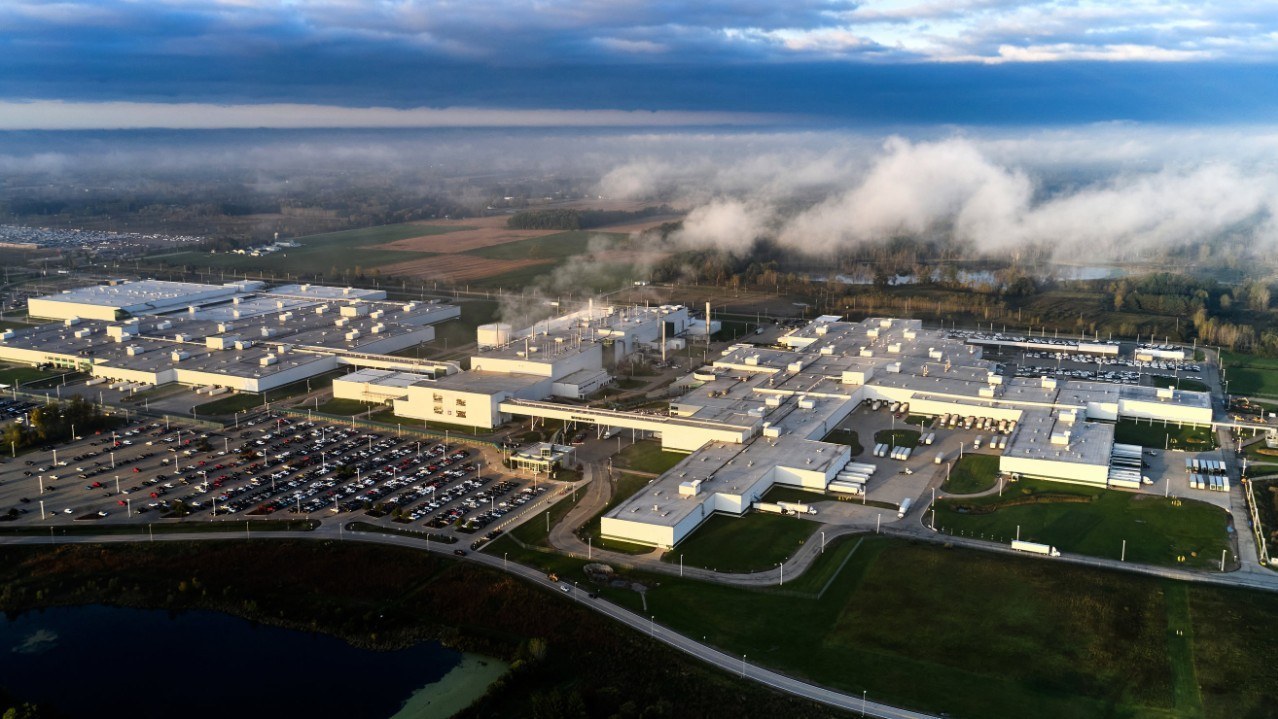
General Motors has picked the factory for its hybrid comeback. The company said Tuesday it will prepare Lansing Delta Township Assembly in Michigan, the plant that builds the Chevrolet Traverse, GMC Acadia, and Buick Enclave, for hybrid-electric vehicle production, and that a $500 million federal grant originally awarded for EV retooling will be restructured to help pay for it.
It is GM's first concrete factory commitment to hybrids after years of putting its money into battery-electric vehicles, and it comes two weeks after a third quarter in which GM's EV sales fell 62 percent while Toyota, Honda, Hyundai, and Kia set hybrid records.
What GM committed to, and what it didn't
The headline number is more than $2 billion, which GM says it will invest across its Lansing-area sites over the next several years. Read the statement closely, though, and $1.25 billion of that is a previously announced sum earmarked for Lansing Grand River Assembly, the Cadillac CT5 plant across town, which Bridge Michigan traced to the 2023 UAW contract. GM did not put a dollar figure on Delta Township itself. Automotive News reports the plant's share at $750 million, which is simply the remainder; GM hasn't confirmed that split.
Nor did GM name the vehicles. Its statement says details about nameplates and timing will come closer to launch. Reuters, citing people familiar with the plans, reported earlier on Tuesday that the hybrids will be versions of the Traverse, Enclave, and Acadia, the three mechanically related three-row SUVs the plant already builds. That is the obvious reading, but it remains unconfirmed, and GM has said nothing about whether the system will be a full hybrid or something lighter.
"That means investing in our people, our facilities, and the ability to build a broad range of vehicles," said Mike Trevorrow, GM's senior vice president of global manufacturing.
The grant that was supposed to build EVs
The federal money has its own history. In July 2024, the Department of Energy awarded GM $500 million under its Domestic Manufacturing Conversion Grant program to prepare Lansing Grand River for electrified vehicles. The program's rules always covered hybrids and plug-ins as well as battery EVs and fuel-cell vehicles, which is what makes the switch possible on paper. GM says the funds were never released.
The restructured grant now moves to the other Lansing plant and to hybrids. Neither GM nor the DOE has published the new terms, so it is not yet clear whether the full $500 million carries over or what GM must put up alongside it. A DOE assistant secretary toured the plant on Tuesday, according to Reuters, and the announcement lands a week before the November 3 midterm elections, in which several Michigan seats are in play.
Why this plant
Delta Township is GM's newest U.S. assembly plant, opened in 2006, and it just had its best year: more than 291,000 vehicles built in 2025, a site record. Its three SUVs sell well without electrification of any kind, which is exactly the problem. None of them appears in our ranking of three-row hybrid SUVs under $50,000, because no hybrid version exists, while the Telluride, Palisade, Grand Highlander, and Sorento all do.
GM's U.S. hybrid lineup today consists of the Corvette. The E-Ray, the company's only hybrid until this year, sold 2,444 units in 2025 and has been discontinued; the ZR1X picked up the hybrid baton in March, according to TechCrunch. Meanwhile, GM's U.S. market share slipped to 16.6 percent through September from 17.4 percent a year earlier, Reuters reported, with Toyota and Honda gaining.
The choice of Michigan is itself a signal. Much of the industry's recent capacity has gone to the Southern auto belt; GM is instead adding a new powertrain to a unionized plant with a 20-year track record and three high-volume nameplates ready to take it. The company says it will spend about $9 billion on U.S. manufacturing and more than $7 billion on U.S. research and development this year.
What to watch
Three things are still open: which models get the hybrid system, what kind of hybrid it is, and when the first one ships. GM says all of that will come closer to launch. The DOE paperwork is the other tell; once the restructured grant is published, it will show how much federal money is actually behind GM's hybrid pivot.