Honda's $462 Million V6 Hybrid Bet: What It Means for the Pilot, Odyssey and Ridgeline
Honda's Lincoln plant, sole source of the Pilot, Passport, Odyssey and Ridgeline, gets a V6 hybrid engine line. Honda hasn't said which models get it, or when.
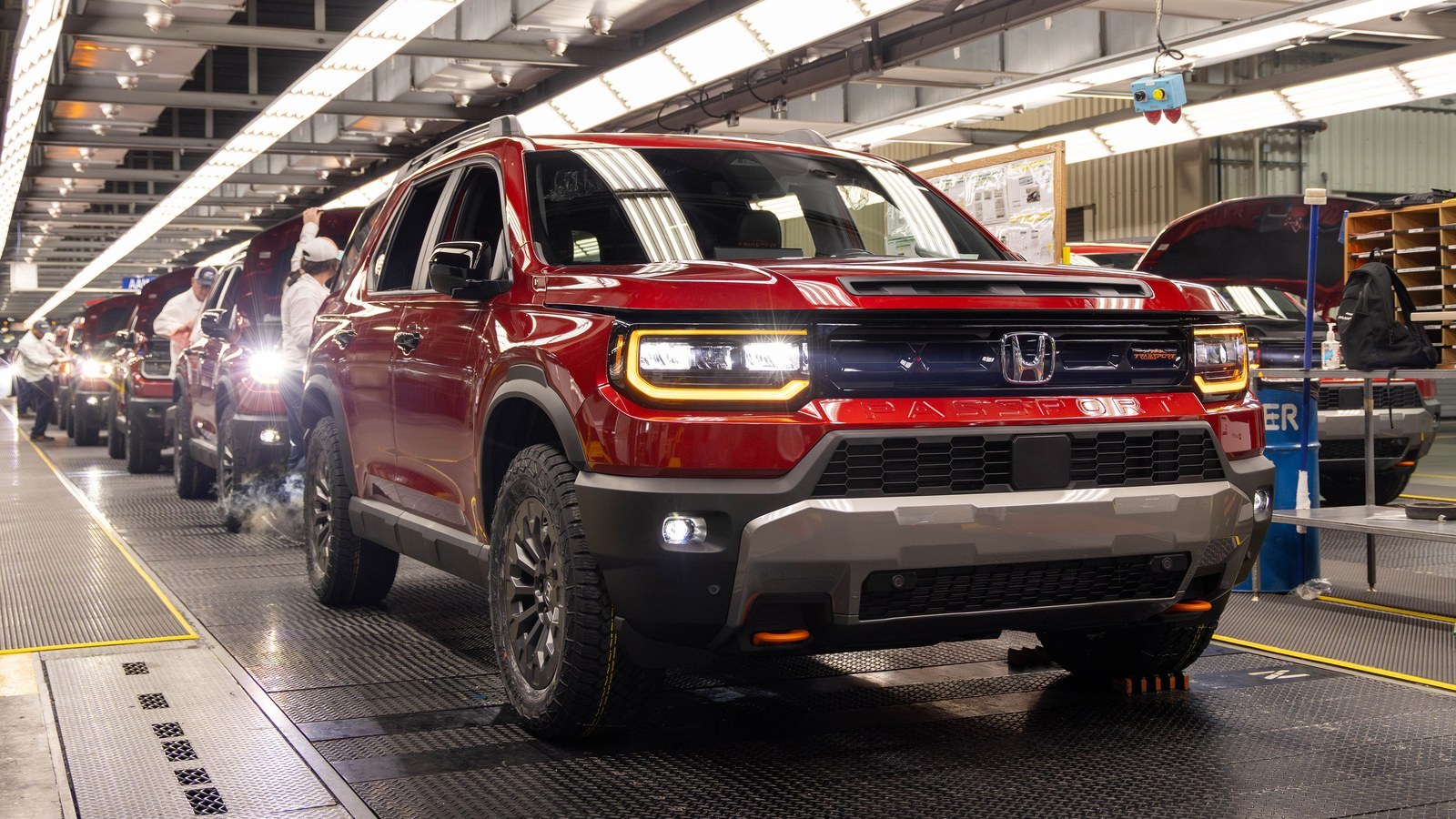
Honda will spend $462 million at its Alabama Auto Plant in Lincoln to add a new V6 hybrid engine assembly line and let the factory build multiple models on the same line, the company announced on November 17. The project adds 200 jobs at a plant that already employs more than 5,000 people.
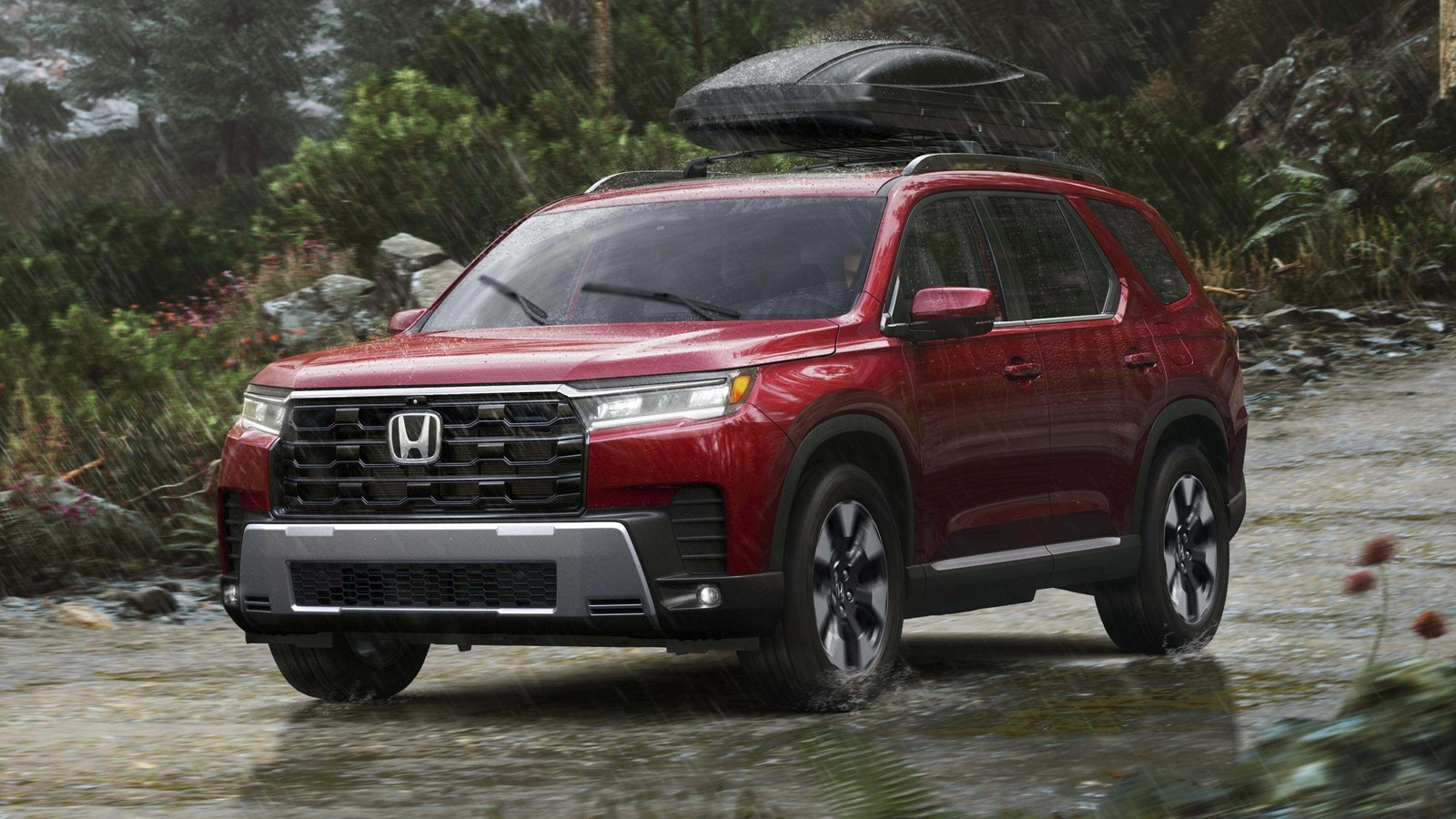
The location is the story. Lincoln is the only place in the world that builds the Pilot, Passport, Odyssey, and Ridgeline, and every one of them uses a gas V6 today. The news follows the $3 billion Ohio plant and hybrid retooling Honda announced a week earlier, which first tied a V6 hybrid to Alabama.
What Honda announced, and what it didn't
The release covers money, jobs, and capability. Honda says the investment supports higher output of "high-demand models," expanded production of a new V6 hybrid engine, and more flexibility on the assembly lines. The Ohio announcement added one detail: Line 1 is being upgraded to build the Passport, which today comes only off Line 2.
What the release doesn't say matters more to buyers. Honda hasn't named a single vehicle that will use the V6 hybrid. It hasn't given a start date for the engine line, an output figure, fuel economy, or pricing. Nothing in either release says whether the gas V6 continues alongside the hybrid. Treat any model-and-year pairing you see elsewhere as a guess.
The plant itself is large: capacity for 340,000 vehicles and 340,000 engines a year, more than 7 million vehicles and nearly 6.6 million V6 engines built since the first Odyssey left the line on November 14, 2001. Honda says AAP is its only U.S. facility building engines and vehicles on the same site.
What Honda has already said about big hybrids
The clearest statement came at Honda's business briefing in Tokyo on May 14. One slide on the North American lineup reads: "Introducing next-generation large-size model equipped with newly-developed V6 engine + newly-developed drive units and battery pack," with large hybrids in "D-segment or above" scheduled for 2029. CEO Toshihiro Mibe said in the briefing script that those models would combine strong driving and towing capability with environmental performance.
That fits with the rest of the plan. Honda says 15 next-generation Honda Hybrid models will launch globally by March 2030, mostly for North America. Its November 10 release says Transmission Plant-Ohio will be the lead plant for a hybrid system "for larger models," with Transmission Plant-Georgia adding a line for the same kind of system. Honda hasn't formally said the Alabama V6 and that larger hybrid system go into the same vehicle, but a V6 engine built in Alabama and a large-vehicle hybrid unit built in Ohio and Georgia point in one direction.
Honda also wants volume. Automotive News reported that Honda told dealers at a November 11 meeting it is aiming for 1.6 million U.S. sales early next decade, up from about 1.37 million this year, citing a retailer who attended. Honda hasn't published that target. The four Alabama models carry real weight in that math: in October they accounted for 26,456 sales, about a quarter of the Honda brand's 109,162, by Honda's count.
Where Honda's lineup stands now
Honda's smaller cars are already heavily hybrid. The 2028 CR-V goes hybrid-only next year, the Prelude is sold only as a hybrid, and in October hybrids made up 53 percent of CR-V sales, 45 percent of Accord sales, and 36 percent of Civic sales. The light trucks built in Alabama haven't moved at all.
| Model | Engine today | EPA combined | Hybrid status |
|---|---|---|---|
| 2026 Honda Pilot | 3.5-liter V6, 10-speed | 20–22 mpg | None announced |
| 2027 Honda Passport (AWD only) | 3.5-liter V6, 10-speed | 20–21 mpg | None announced |
| 2027 Honda Odyssey | 3.5-liter V6, 10-speed | 22 mpg | None announced |
| 2026 Honda Ridgeline (AWD only) | 3.5-liter V6, 9-speed | 20–21 mpg | None announced |
| 2026 Toyota Grand Highlander Hybrid | 2.5-liter four-cylinder hybrid | 34–36 mpg | Hybrid |
| 2026 Toyota Sienna | 2.5-liter four-cylinder hybrid | 35–36 mpg | Hybrid only |
Ratings are from fueleconomy.gov; ranges cover FWD, AWD, and TrailSport versions. The Grand Highlander figures exclude the turbocharged Hybrid Max, rated at 27 mpg.
What a hybrid would change: the Toyota benchmark
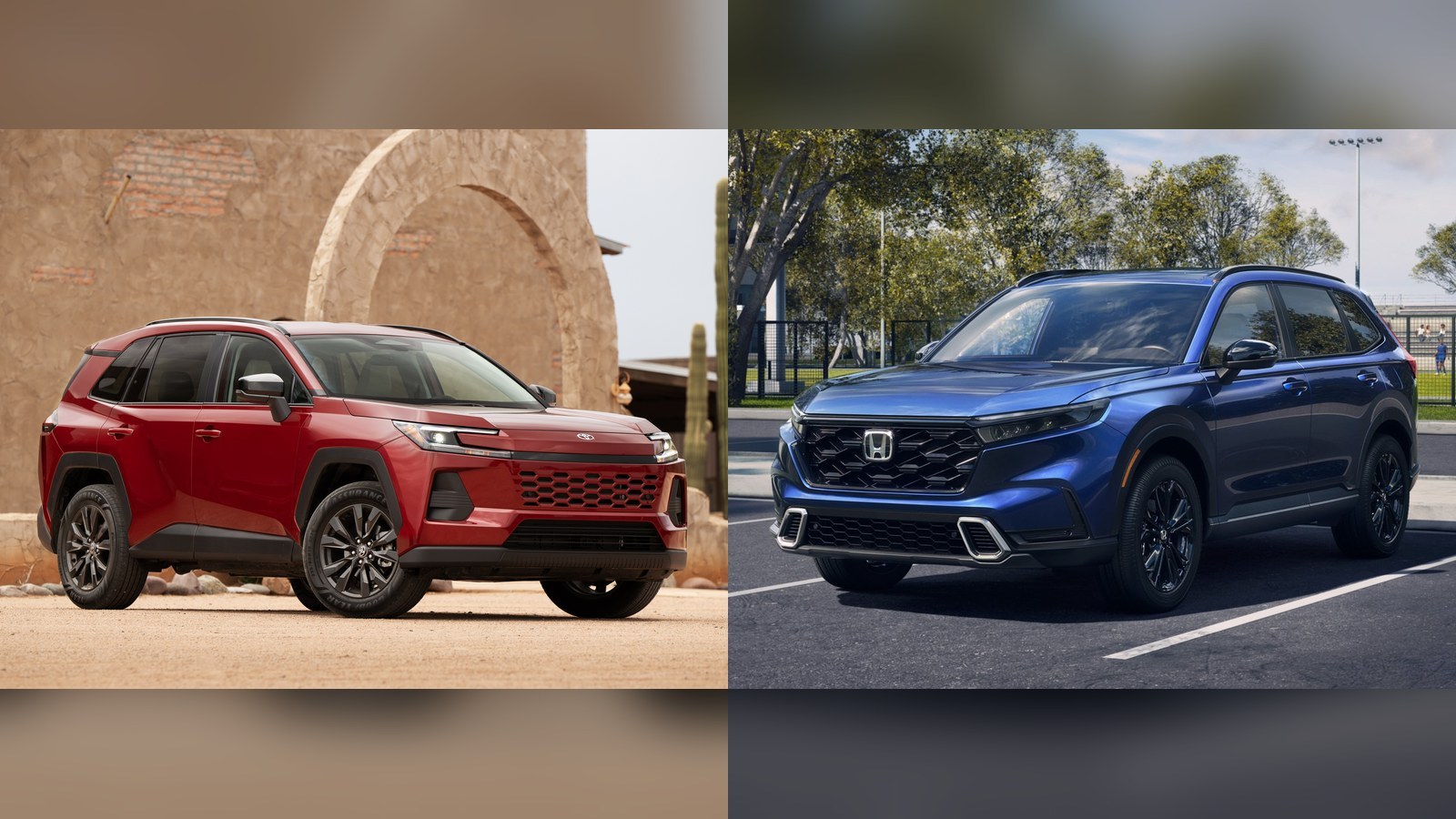
The gap is large. A front-drive Pilot and the Odyssey are both rated at 22 mpg combined; a front-drive Grand Highlander Hybrid and a front-drive Sienna are both at 36. At EPA's current fuel-price assumptions, that is $2,750 a year in fuel for each Honda against $1,650 for each Toyota, a $1,100 difference every year.
Honda's pitch, though, isn't a four-cylinder copy of Toyota's formula. The May slide pairs the V6 with "powerful driving and towing capability," and that matters for the Ridgeline and the tow-rated versions of the Pilot and Passport. Honda hasn't released a single number for that hybrid, so how much of the 14-mpg gap it closes is unknown. For a sense of what three-row hybrid buyers can get today, see our ranking of three-row hybrid SUVs under $50,000.
Why build it in Alabama
Honda is already heavily localized: nearly 99 percent of the Honda and Acura vehicles it sold in the U.S. in 2025 were built in North America, the company says. Lincoln assembles those trucks with domestic and globally made parts, according to Honda, so the open question under U.S. tariffs is less about where the vehicle is built and more about where its expensive pieces come from.
Honda has cited tariffs, along with EV-related charges, as reasons for lower automobile profits in its results this year. Building the engine in Lincoln and the hybrid systems in Ohio and Georgia keeps more of the most costly hardware inside the U.S., and the multi-model line gives Honda room to shift output between the four trucks as demand moves.
What it means if you're shopping or already own one
For now, nothing changes at the dealership. Every Pilot, Passport, Odyssey, and Ridgeline on sale uses the gas V6, and Honda hasn't given a date for a hybrid version of any of them. The only official timing for large Honda hybrids in North America is 2029, and Honda hasn't said which models that covers.
If you need three rows and hybrid fuel economy today, the hybrid alternatives come from other brands. If you already own a 2024–2026 V6 Honda, the more relevant news this week is NHTSA's open investigation into engines that won't restart after Auto Stop; it's a probe, not a recall.
The next thing to watch is Honda naming the first vehicle to use the V6 hybrid. Until then, the $462 million is a factory announcement, not a product one.