Europe’s New Hyundai Tucson Gets a 288-HP Plug-In Hybrid — America Hasn’t Been Promised One
The European fifth-gen Tucson gets a 288-hp plug-in with up to 50 WLTP miles, and Hyundai and Waymo are eyeing robotaxi markets beyond the US. Paris also brought a new Bayon and an electric Staria Cargo.
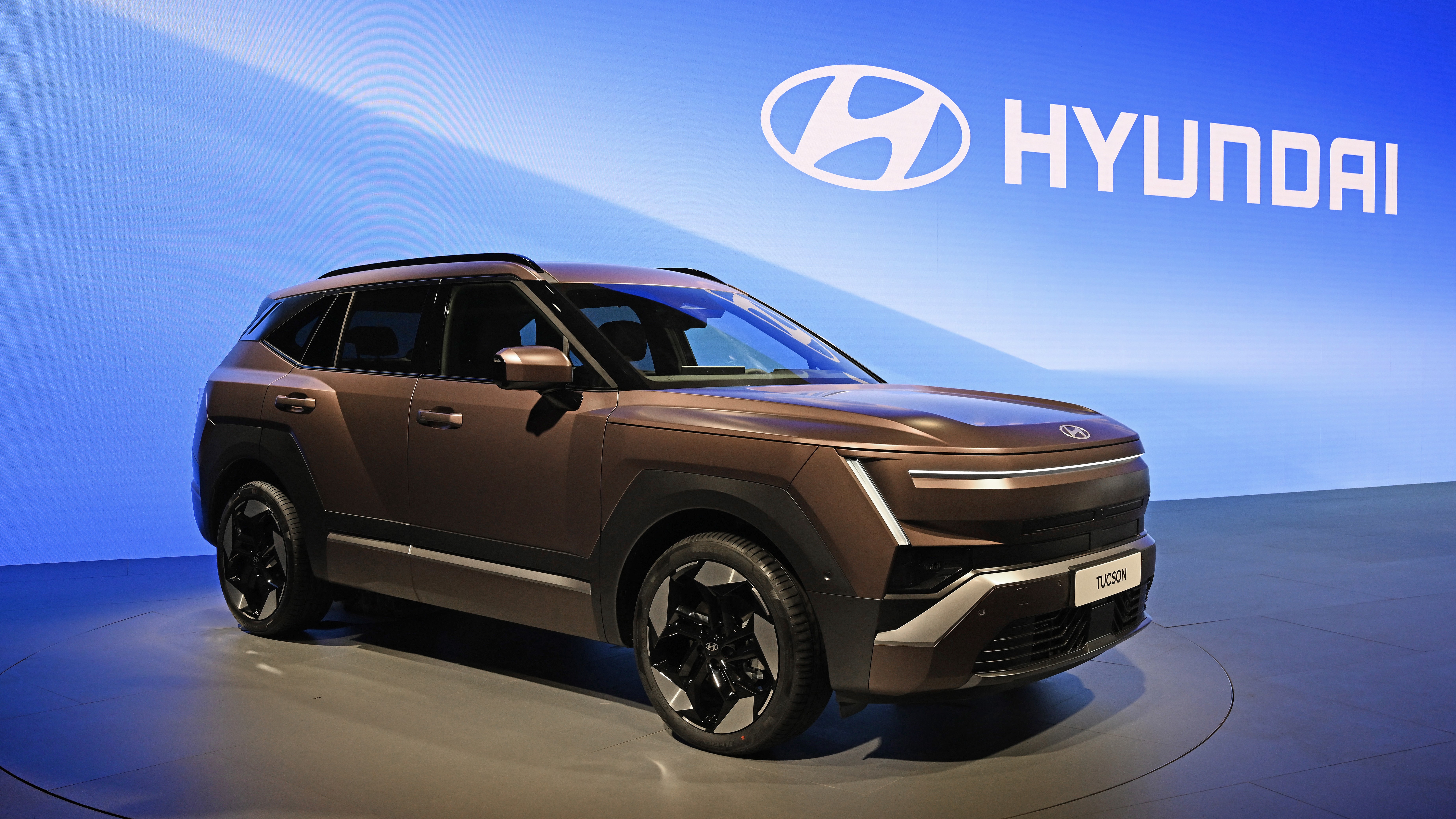
Hyundai's Paris Motor Show press day confirmed two things American buyers should notice: the European fifth-generation Tucson gets a 288-hp plug-in hybrid with up to 50 miles of electric range, and Hyundai and Waymo want to take their robotaxi partnership beyond the United States. Neither has a US date attached.
The stand also hosted the world premiere of the second-generation Bayon, a Europe-only subcompact SUV, and an electric Staria Cargo van. For the US-spec Tucson, see our 2027 Hyundai Tucson guide; this story covers what Paris added.
Europe's Tucson gets the plug-in America hasn't been promised
The European Tucson lineup starts with a 148-hp (150 PS) 1.6-liter turbo, offered with a six-speed manual or a 48-volt mild-hybrid setup and a seven-speed dual-clutch gearbox. Above it sits the next-generation hybrid at 242 hp (245 PS) and 280 lb-ft (380 Nm) — the same output Hyundai quoted at the Korean reveal in September, and nine horsepower more than the 233-hp figure Hyundai Motor America gave for the US car in New York on October 1.
The headline powertrain is the plug-in hybrid: 288 hp (292 PS), 280 lb-ft, a 17.1-kWh battery, and an electric-only range of up to 50 miles (81 km) on the WLTP cycle with 17-inch wheels, pending homologation. A 7.2-kW onboard charger handles AC charging. For comparison, the current US-market Tucson Plug-in Hybrid makes 268 hp and is EPA-rated at 32 miles of electric range, with pricing from $40,675 including destination, according to Hyundai's US site. WLTP figures run optimistic next to EPA ratings, so expect a smaller gap than 50 versus 32 if the car ever gets an American label — but the direction is clear.
Hyundai hasn't said whether the new plug-in is coming to North America. The New York debut covered only the gas and hybrid versions, and that gap is now the biggest open question about the US car, especially with Toyota's RAV4 Plug-in Hybrid as the segment's reference point — see how the new Tucson stacks up against the RAV4.
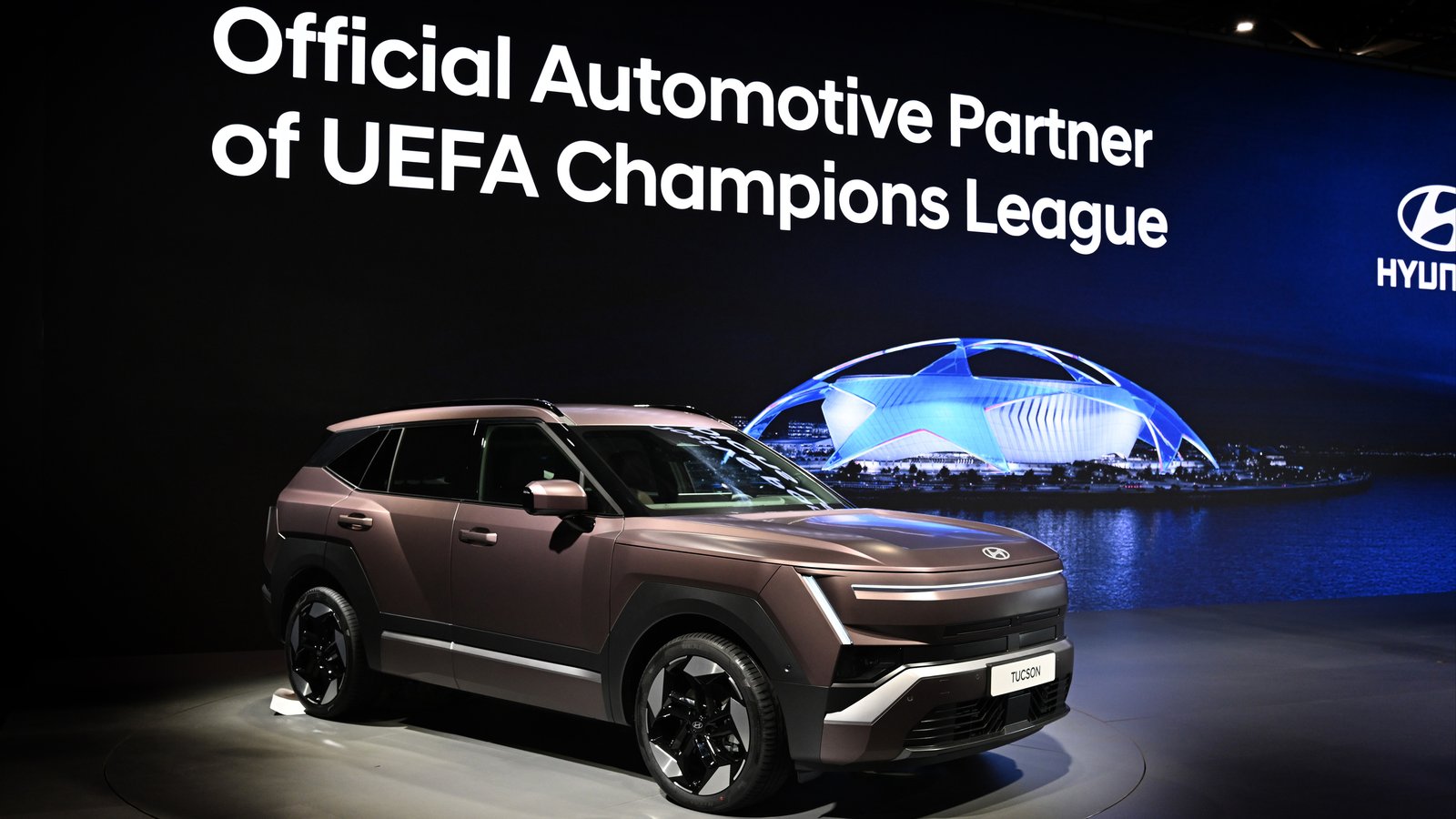
Other European figures: 24.5 cubic feet (695 liters) of cargo space, towing of up to 4,211 pounds (1,910 kg) for the hybrid and 3,990 pounds (1,810 kg) for the plug-in, and an optional Micro Pixel Lighting system with 25,600 LED pixels for adaptive beam patterns. The Tucson N Line — 20-inch wheels, a chin spoiler, twin exhaust outlets, and a black-and-red cabin — made its global debut in Paris. European production will run at Hyundai's plant in Nošovice, Czech Republic.
Waymo: Ioniq 5 robotaxis are headed abroad
The second US-relevant announcement was short on specifics but clear in direction. Hyundai and Waymo said they will explore expanding their partnership to international markets. The first Ioniq 5s built to accept Waymo's sixth-generation hardware are being delivered to Waymo in the US this year, and one of them sat on the Paris stand.
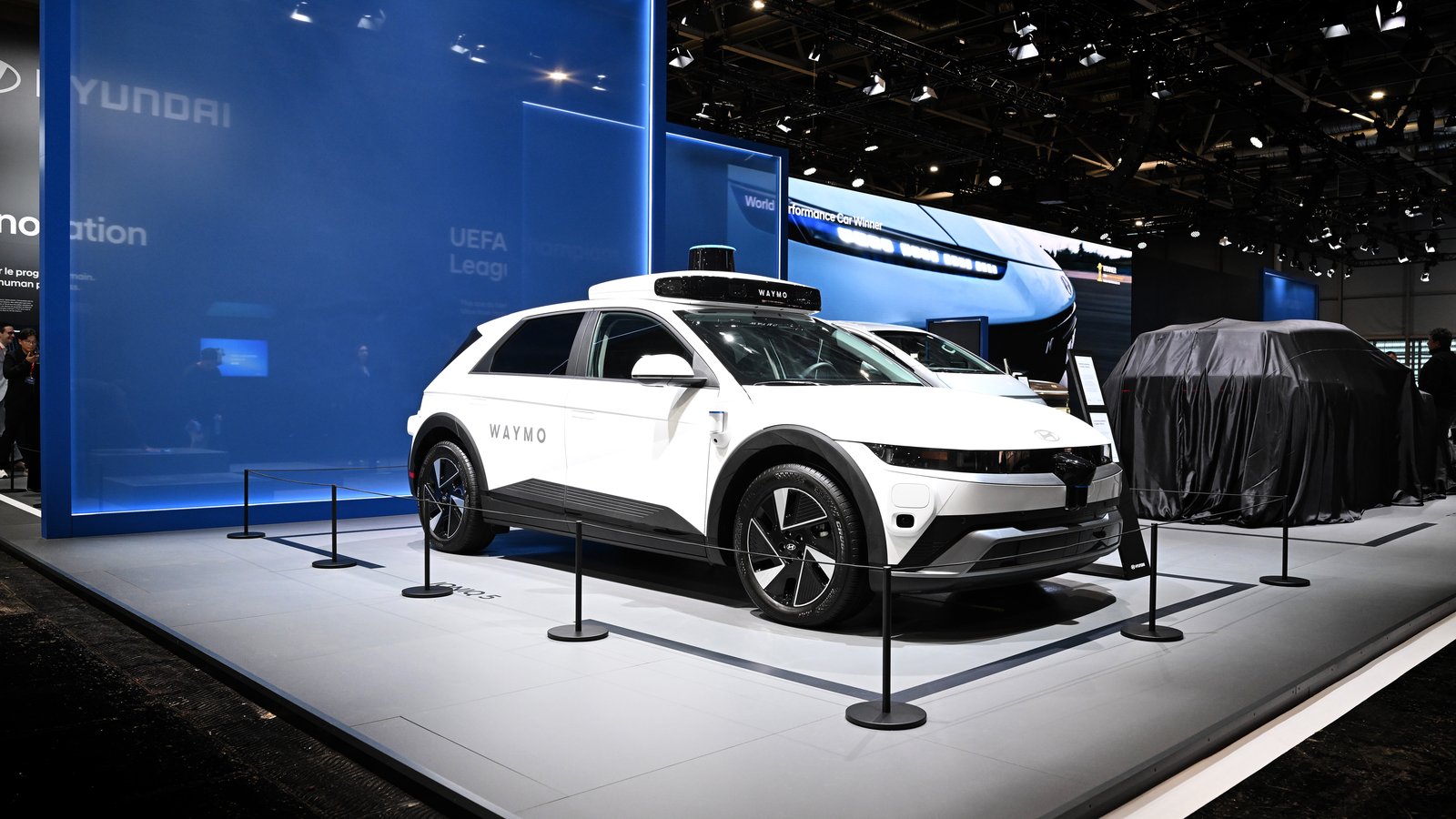
The original deal, announced in October 2024, called for Ioniq 5s assembled at Hyundai's Metaplant in Georgia to join the Waymo One fleet, with on-road testing beginning in late 2025, according to Hyundai Motor Group. No countries, cities, or timeline were named for the international expansion. Hyundai is pursuing its own driver-assistance program in parallel, as we covered in its autonomous-driving roadmap.
Bayon and Staria Cargo stay in Europe
The all-new Bayon, built in Izmit, Turkey, launches with a 1.0-liter turbo three-cylinder in 89-hp (90 PS) and 113-hp (115 PS) versions; a 136-hp (138 PS) 1.6-liter hybrid with paddle-controlled regenerative braking follows in 2027. Hyundai claims class-leading head and shoulder room, 15.5 cubic feet (440 liters) of cargo space, and features such as ventilated front seats and a panoramic sunroof. The release doesn't include pricing.
All-new Hyundai Tucson front three-quarter view on the Paris Motor Show stand
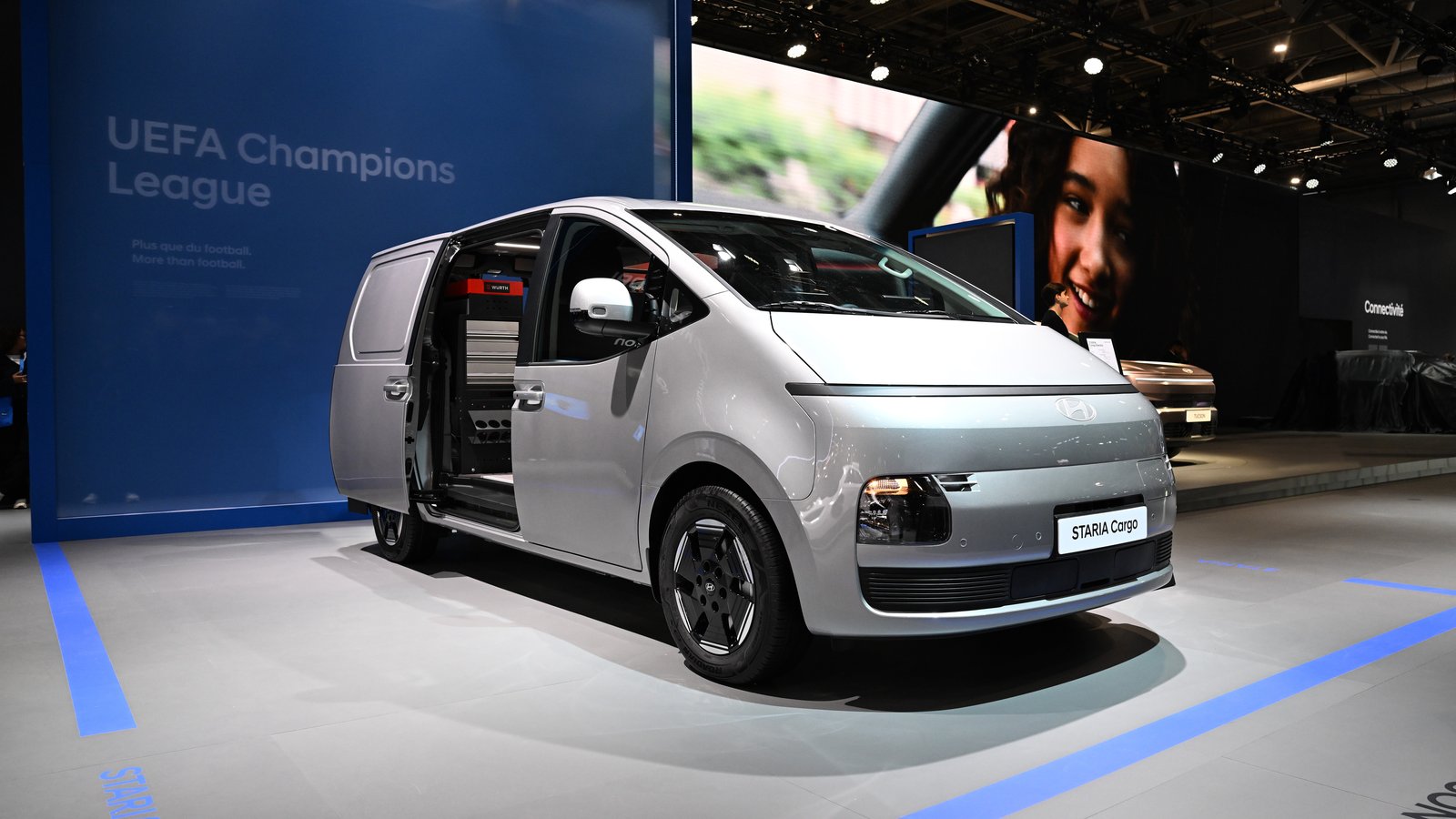
The Staria Cargo is Hyundai's entry into Europe's electric van market: a 215-hp (160 kW) motor, an 800-volt architecture that Hyundai says charges from 10 to 80 percent in 20 minutes, up to 280 miles (450 km) of WLTP range, a 2,293-pound (1,040 kg) payload, and 4,409 pounds (2,000 kg) of towing. Neither the Bayon nor the Staria is sold in the US, and nothing in Paris suggested that will change.
Why Hyundai is spending in Europe
CEO José Muñoz said nearly 80 percent of what Hyundai sells in Europe is built there, and that the company will have invested close to €3 billion in the region by 2030. Hyundai also confirmed a deal as official automotive partner of the UEFA Champions League from the 2026/27 season through 2030/31 — the European counterpart to its Atlanta Braves sponsorship at home.
The show runs through October 18 at Paris Expo Porte de Versailles. The full release is on Hyundai's European newsroom; the next thing to watch is whether Hyundai Motor America adds a plug-in to the 2027 Tucson lineup when US pricing arrives.