NHTSA Wants Self-Driving Cars to Glow Cyan. Here's What the Rule Would Change
The Federal Register filing makes blue-green marker lamps optional, strips driver-only lighting rules from robotaxis, and openly conflicts with California's law. Comments close November 25.
The cyan "I'm driving myself" light is now officially on the federal rulebook's doorstep. NHTSA's proposal to let automated vehicles carry blue-green marker lamps was published in the Federal Register on October 26, which starts a 30-day clock: comments on docket NHTSA-2026-1519 are due November 25, 2026.
The agency previewed the package on October 23, and it is a separate track from the negotiated rewrite of the headlight-glare rules announced earlier this month. Both touch the same standard, FMVSS 108, but this one is about cars that have no driver to glare at.
Two caveats up front. This is a proposal, not a final rule, and the lamps would be optional: NHTSA says it lacks the evidence for a mandate, so the standard applies only "if equipped." And the headline change rides along with a quieter one that frees vehicles without a steering wheel or pedals from lighting rules written for human hands and feet.
What the cyan lamp would have to be
NHTSA defines an ADS marker lamp as a light telling other road users that nobody inside is expected to be watching the road. The color is cyan, the blue-green band in SAE J578, chosen because amber, red, and white already mean something on a car and because it is distinct from police blue.
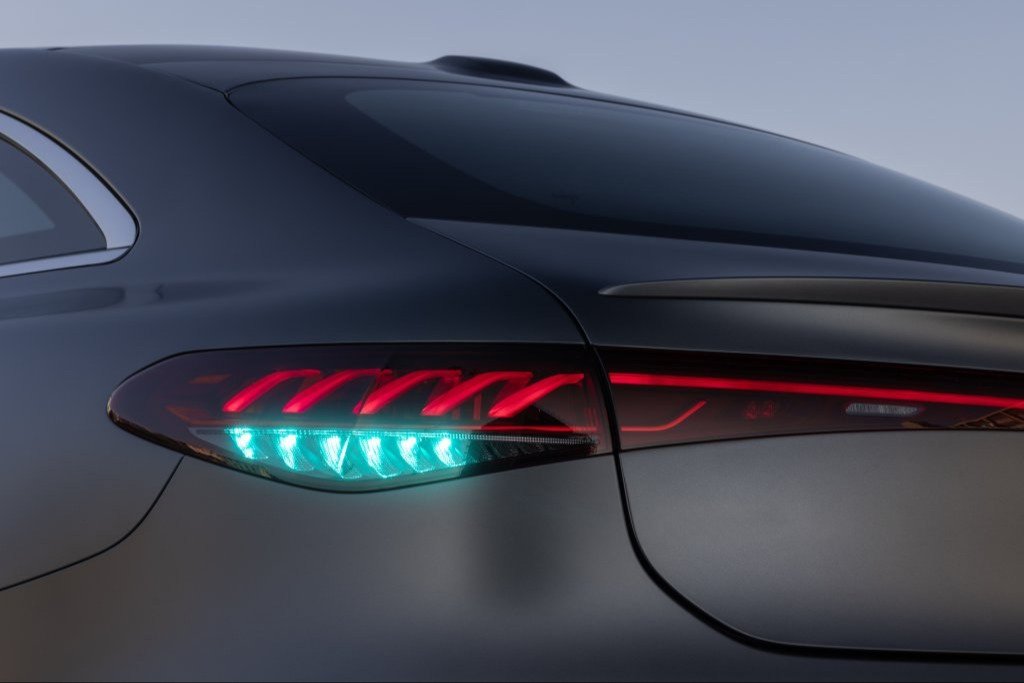
A vehicle could carry four to eight of them: one or two each at the front, rear, and both sides, mounted at least 15 inches off the ground, inside or outside the body. They would burn steadily, could not be optically combined with any other lamp, and could not be fitted to a vehicle without an automated driving system. Front units would be capped at 125 candela, the same ceiling as a parking lamp, so they cannot drown out turn signals. NHTSA asks whether a flashing mode for signaling pedestrians should be allowed, but says it has no research to support that yet.
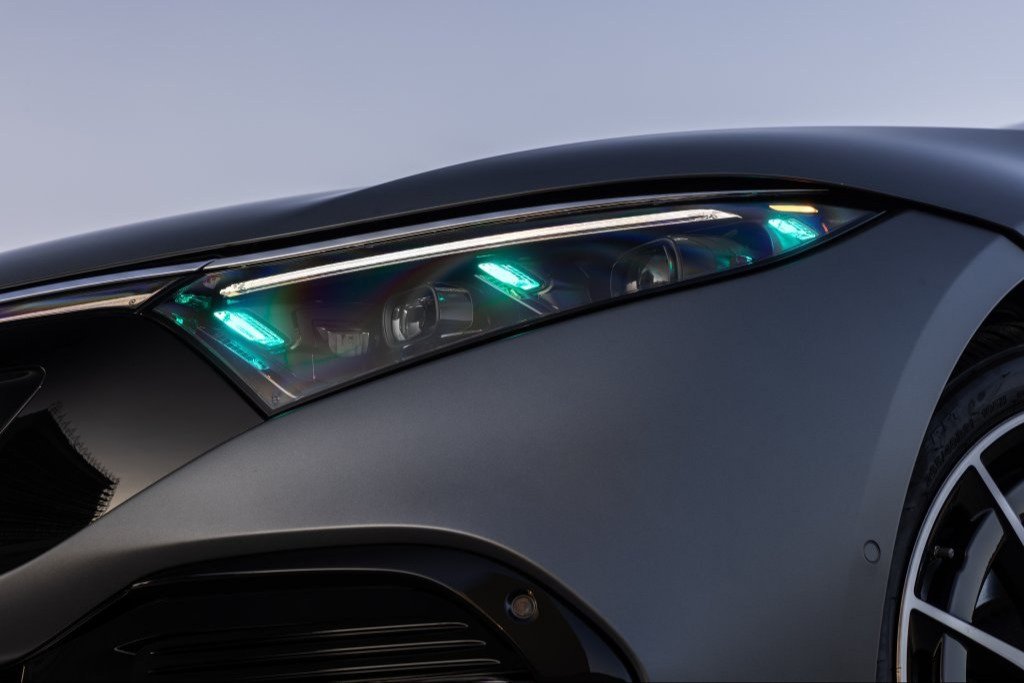
The proposal is built on SAE J3134, the industry practice revised in December 2025, but NHTSA is not adopting it wholesale. The agency rewrote the brightness tables, banned combining the marker with other lamps, and dropped SAE's prohibition on a manual on/off switch. It openly flags that those deviations conflict with J3134 and, by extension, with California, whose vehicle code already permits J3134-compliant lamps. NHTSA's tentative view is that a final rule would preempt the California provisions where the two differ, and it is asking for comment on exactly that.
Who is already running these lights
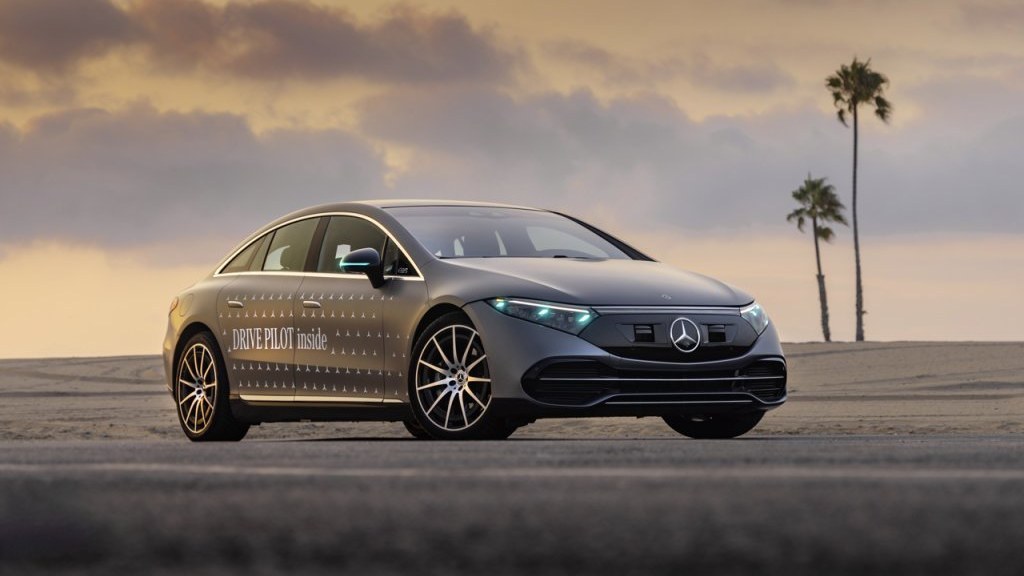
The only production system with turquoise lamps on U.S. roads belongs to Mercedes-Benz. The company secured permits in California and Nevada in December 2023 for DRIVE PILOT cars, with the lamps integrated into the headlights, taillights, and mirror housings. The federal filing credits Mercedes with a two-year, five-car on-road validation in California from 2023 to 2025 and with the 360-degree placement logic the proposal follows. Next up is a Level 4 S-Class robotaxi built with NVIDIA, which would be exactly the kind of vehicle this lamp is meant for.
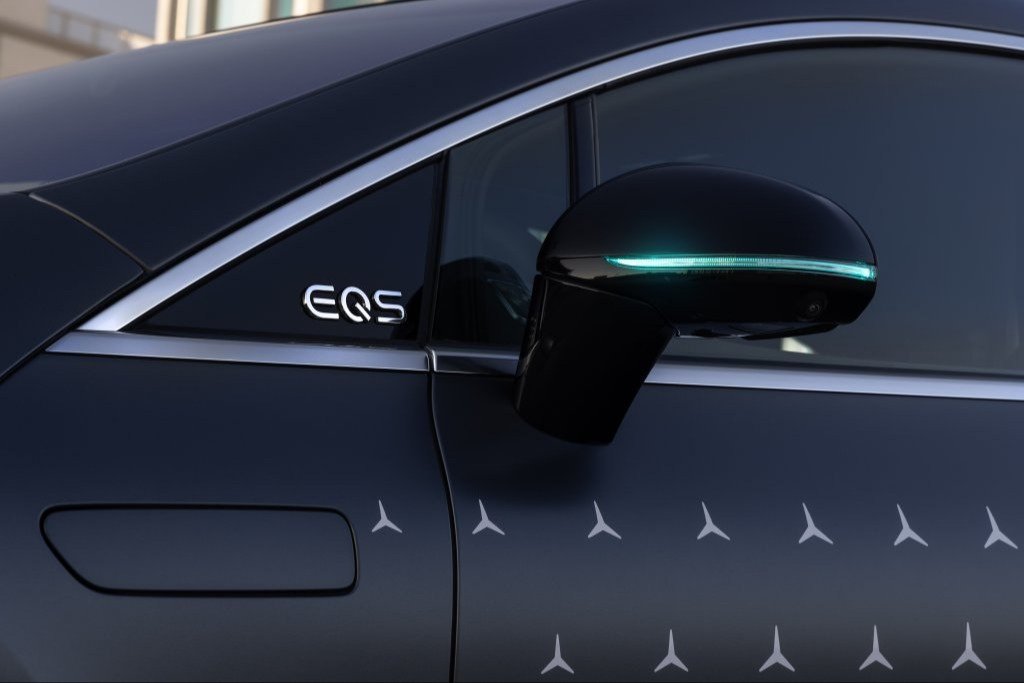
Public appetite seems to be there. A survey of more than 4,400 drivers in the U.S., U.K., Germany, and Japan, cited in the filing, found that upwards of 80 percent of American and British respondents want automated vehicles to carry a marker lamp.
The robotaxi half of the rule
For vehicles with no manual controls, FMVSS 108 currently demands turn signals that self-cancel when the steering wheel straightens, a high-beam switch within reach of a driver's hand or foot, and dashboard telltales for a driver who does not exist. The proposal keeps the turn signals and the beam switch but lets the automated system run them, and limits the telltale rules to cars with a wheel and pedals. NHTSA notes such vehicles are already deployed in several cities even though none are sold to consumers, and it has said it will lean on defect authority if an automated system misuses its lights.
Two changes apply to every car. Integral LED headlamps would be tested at the voltage their maker marks on them instead of a fixed 12.8 volts, a figure that dates to 1967 sealed beams. And the rule that low beams must sit above high beams in a vertically stacked headlamp would go away, which NHTSA says may even trim glare slightly.
What the filing leaves out matters too. NHTSA has not estimated costs or benefits, cannot count how many vehicles would be affected, and has not named a final-rule date, though it argues the changes should take effect immediately once adopted because nothing becomes mandatory. The document never mentions Tesla, Waymo, or Zoox, and none of them has publicly taken a position on cyan lamps. Whether either robotaxi camp files comments by November 25, and whether California pushes back on preemption, will decide how much of this survives into a final rule.