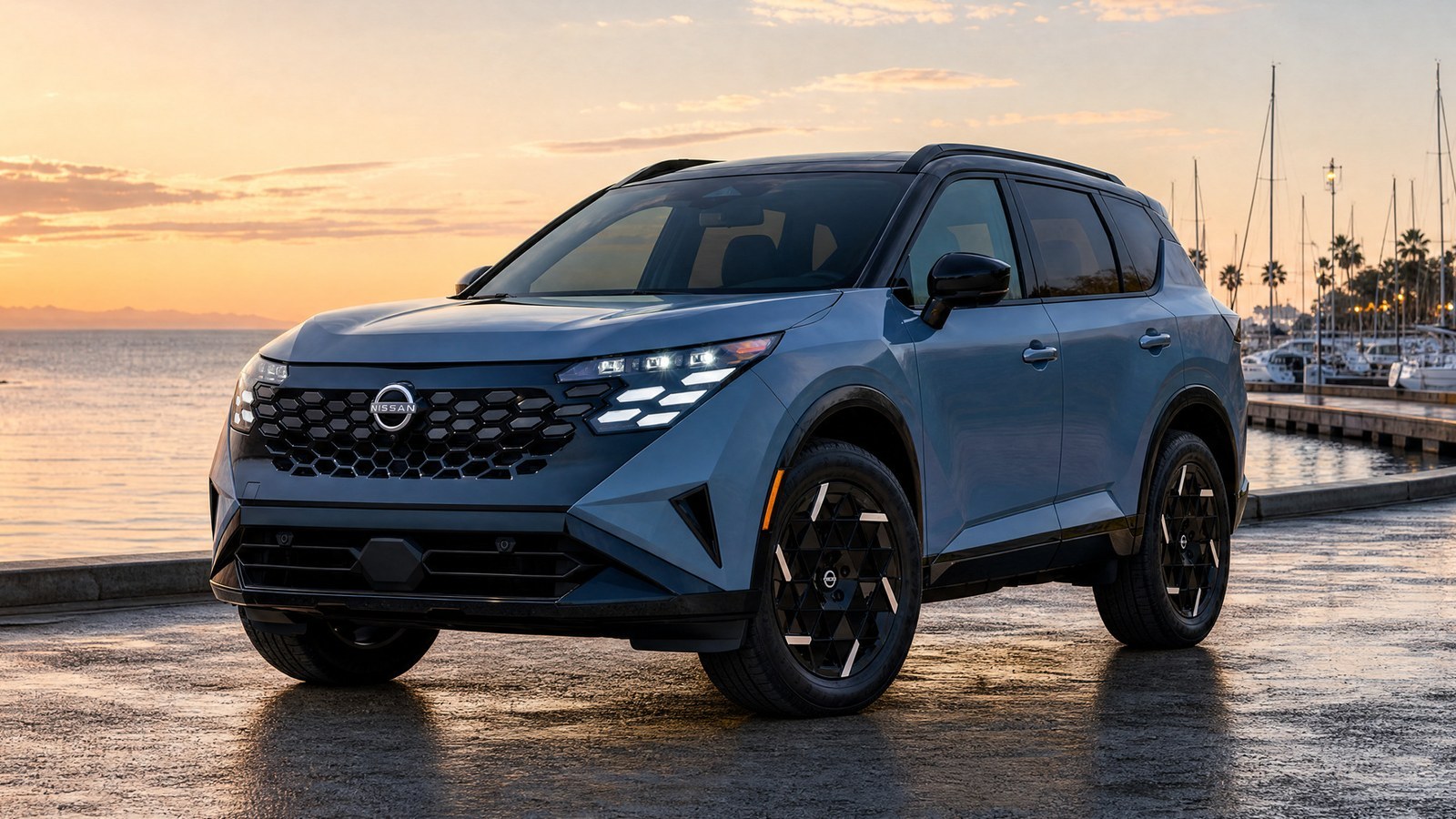
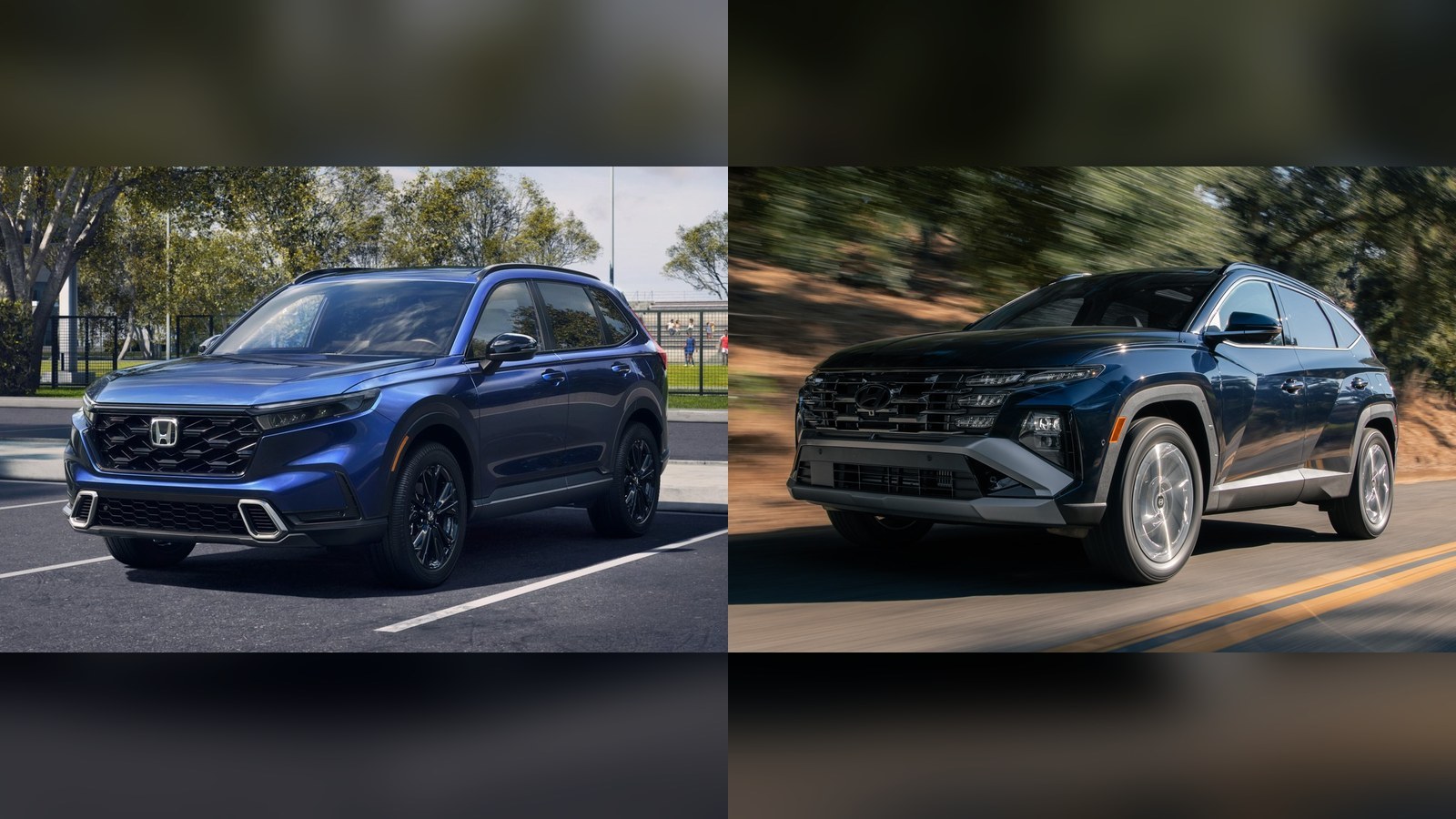
Rogue Hybrid vs. CR-V Hybrid: Nissan Undercuts Honda on AWD, Honda Still Wins on Choice
Every Rogue Hybrid has all-wheel drive, and the SV undercuts the cheapest AWD CR-V Hybrid by $2,015. Honda answers with more space, more trims, and cars on the lot today.
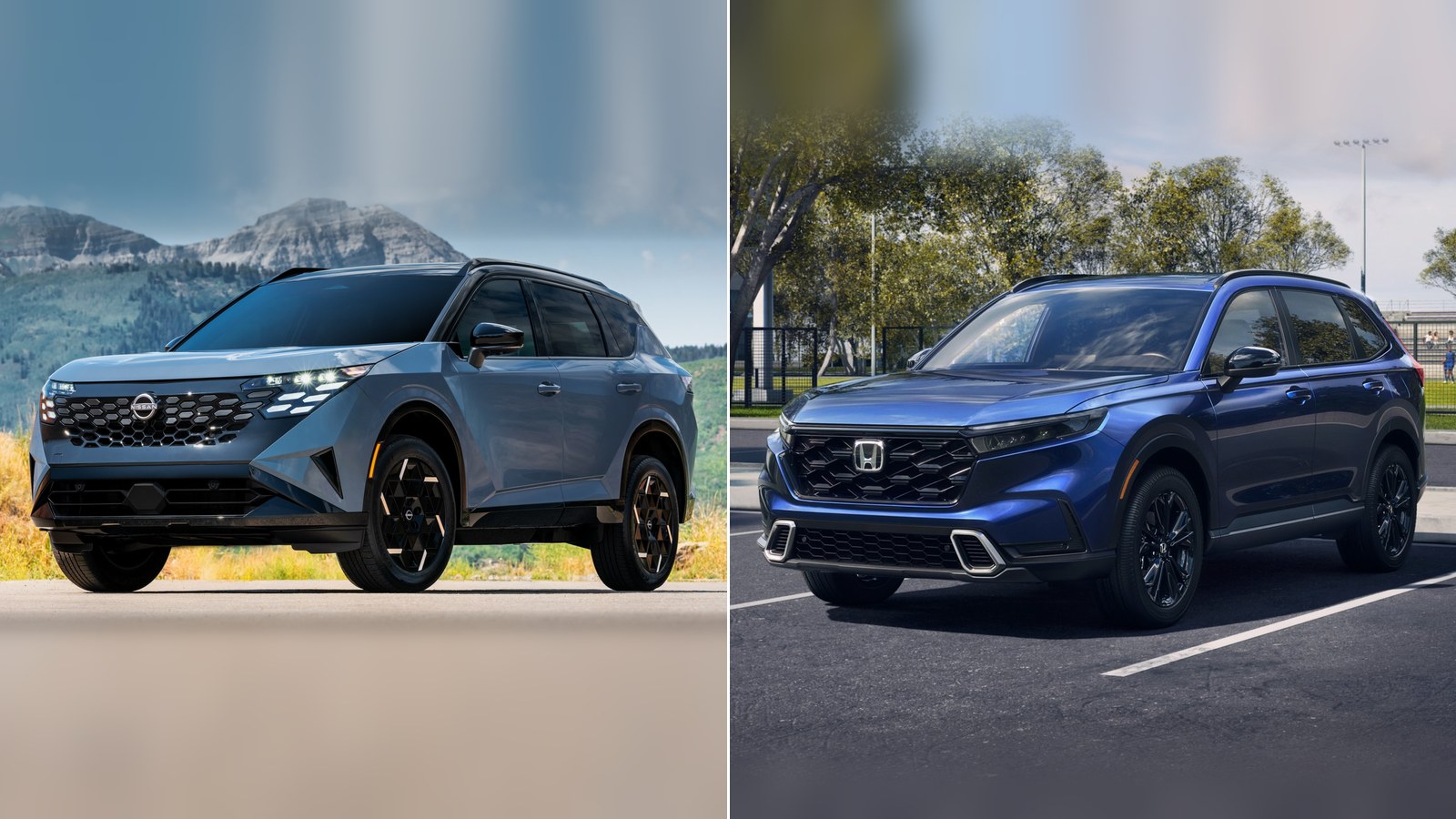
For years, the cheapest way into an all-wheel-drive hybrid from a mainstream brand meant a Honda CR-V or a Toyota RAV4. Nissan now has its own answer. The 2027 Rogue Hybrid starts reaching dealers this week, and every version comes with all-wheel drive as standard.
On paper, it beats the CR-V Hybrid where most buyers start: the price of an AWD hybrid. A Rogue Hybrid SV costs $37,065 with destination, $2,015 less than the cheapest all-wheel-drive CR-V Hybrid. The catch is timing. The SV doesn't arrive until January, and the only Rogue Hybrid you can order this month is the $43,065 SR with the Technology Package. Our 2027 Rogue Hybrid price and release-date guide has the full Nissan lineup.
The numbers, side by side
Prices are MSRP plus destination: $1,575 for the Nissan, $1,550 for the Honda. Honda hasn't issued a 2027 price release; the CR-V figures come from Cars.com's 2027 CR-V price list, which carries Honda's $1,500 all-wheel-drive charge on the Sport and Sport-L. Rogue Hybrid specifications come from Nissan's press kit. Fuel costs assume 15,000 miles a year at the AAA national average of $4.18 a gallon on October 31.
| 2027 Nissan Rogue Hybrid | 2027 Honda CR-V Hybrid | |
|---|---|---|
| Cheapest hybrid, with destination | $37,065 (SV, AWD), arrives January | $37,580 (Sport Hybrid, FWD) |
| Cheapest AWD hybrid | $37,065 (SV) | $39,080 (Sport Hybrid AWD) |
| Mid-range AWD | $39,065 (SR); $43,065 (SR with Technology Package) | $42,175 (Sport-L Hybrid AWD); $40,750 (TrailSport Hybrid) |
| Top trim | $45,065 (Platinum) | $44,500 (Sport Touring Hybrid) |
| On sale now | SR with Technology Package only, limited numbers from late November | Full lineup |
| Hybrid layout | Series hybrid (e-Power): 1.5-liter turbo three-cylinder generator, motor on each axle | Two-motor hybrid with 2.0-liter four; engine can drive the wheels directly at cruise |
| System power | 225 hp | 204 hp, 247 lb-ft |
| Drive motors | Front 202 hp / 243 lb-ft; rear 134 hp / 144 lb-ft | One drive motor; AWD via driveshaft to the rear axle |
| Hybrid battery | 1.67 kWh lithium-ion | Not listed in Honda's release |
| EPA combined, AWD | 38 mpg (SR); 37 mpg SV and Platinum (Nissan figure) | 37 mpg (35 TrailSport) |
| EPA combined, FWD | Not offered | 40 mpg |
| Fuel cost per year, AWD | $1,651 (SR) / $1,696 (SV, Platinum) | $1,696 ($1,793 TrailSport) |
| Cargo, behind rear seat / max | 31.1 cu ft (34.4 with seat slid forward) / 65.9 cu ft | 36.3 cu ft (34.7 Sport Touring) / 76.5 cu ft |
| Towing | 1,500 lb | 1,000 lb |
| Hybrid system warranty | 8 yr / 100,000 mi (e-Power drivetrain and battery) | 8 yr / 100,000 mi (hybrid battery) |
| IIHS 2026 | Not yet tested | No award; Poor in the updated moderate overlap test (rear passenger) |
| Built in | Japan | Ohio and Indiana |
Price: Nissan wins on AWD, but not on the car you can buy this month
Compare all-wheel drive to all-wheel drive and the Rogue Hybrid is cheaper at almost every rung. The SV undercuts the CR-V Sport Hybrid AWD by $2,015. The SR undercuts the Sport-L AWD by $3,110, though the two aren't equipped the same, so treat that gap as a starting point, not a verdict. Even against a front-drive CR-V Sport Hybrid, the all-wheel-drive Rogue SV is $515 cheaper.
The order flips at the top. A Rogue Hybrid Platinum costs $565 more than a CR-V Sport Touring Hybrid. The $43,065 SR with the Technology Package, the only Rogue Hybrid in showrooms before January, sits $1,435 under the Sport Touring and $3,985 over the CR-V Sport Hybrid AWD.
Honda also has the deeper menu. The CR-V Hybrid comes in four trims, with front- or all-wheel drive on two of them, plus the TrailSport with all-terrain tires. The Rogue Hybrid has three trims and one drivetrain. If you want the cheapest hybrid in either showroom and live where front-wheel drive is enough, the CR-V Sport Hybrid FWD at $37,580 is a real option that Nissan doesn't offer.
Two different kinds of hybrid
This is the part most spec sheets skip, and it explains how the two drive. In the Rogue Hybrid, the gas engine never turns the wheels. Nissan's e-Power system uses the 148-hp 1.5-liter turbo three-cylinder purely as a generator. It charges a small battery and feeds two electric motors, one on each axle, and switches off when the battery has enough charge. From the driver's seat, the car always accelerates like an EV.
Honda's system is a two-motor hybrid. One motor drives the front wheels, the other works as a generator, and most of the time the CR-V also runs as an electric car fed by its engine. At steady highway speeds, though, a clutch lets the 2.0-liter four drive the front wheels directly, which is more efficient than turning gasoline into electricity and back. The CR-V's all-wheel drive is mechanical, sending torque to the rear axle through a driveshaft. The Rogue's rear wheels have their own motor.
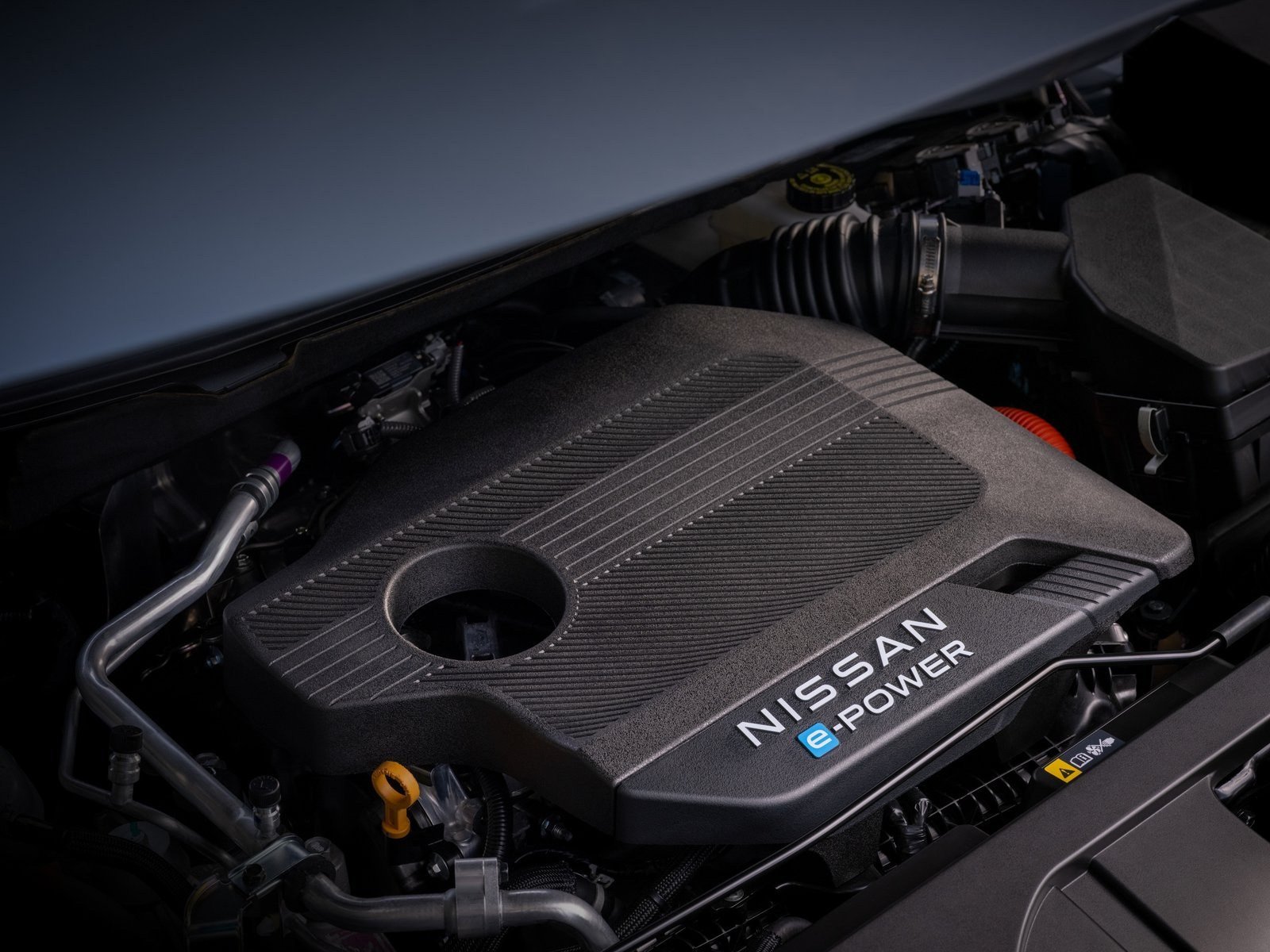
The result shows up in the numbers. The Rogue makes 225 hp combined, 21 more than the CR-V, both by the automakers' own ratings. Nissan quotes 0–60 mph in 6.4 seconds, a figure repeated in first drives by Jalopnik and Kelley Blue Book but not independently measured yet. Honda doesn't publish a 0–60 time, so we aren't declaring an acceleration winner.
Fuel economy is closer than the "all-electric drive" pitch suggests. The Rogue Hybrid SR is EPA-rated at 38 mpg combined, one better than an all-wheel-drive CR-V Hybrid. That's worth about $45 a year at today's prices. Nissan lists the SV and Platinum at 37 mpg, level with the Honda. A front-drive CR-V Hybrid gets 40. Highway mileage, where Honda's direct-drive mode helps, is 34 to 36 mpg for both. In city driving, the Rogue's 41 mpg beats the AWD CR-V's 40. Kelley Blue Book recorded 49.7 mpg on a 74-mile Los Angeles commute with Nissan's one-pedal e-Pedal mode on, and 37.4 mpg on a mixed drive with it off. That's a hint that stop-and-go commuters will see the biggest gains.
Space, towing, and the fine print
The CR-V is the bigger box. It has 36.3 cubic feet behind the rear seat to the Rogue's 31.1, and 76.5 cubic feet with the seats folded to 65.9. Nissan's 34.4-cubic-foot figure needs the sliding rear seat moved all the way forward, which takes legroom from the people back there. If you haul strollers, dogs, or flat-pack furniture, that ten-cubic-foot gap at maximum is the biggest practical difference between these cars.
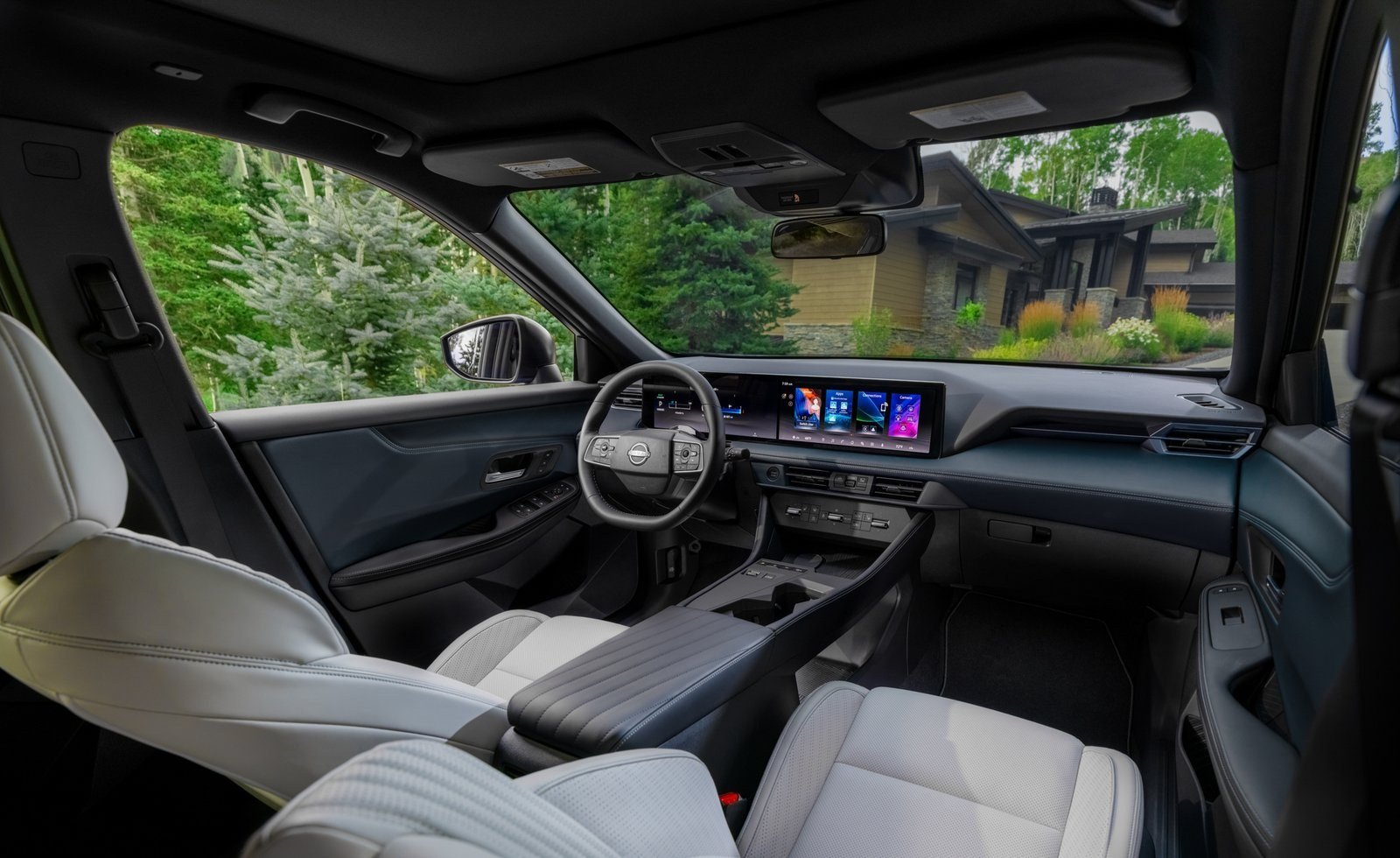
The Rogue tows more, 1,500 pounds against 1,000, and offers Nissan's latest ProPILOT Assist with available hands-off traffic-jam support. Both brands cover the hybrid system for eight years or 100,000 miles. Nissan's coverage explicitly includes the whole e-Power drivetrain, not just the battery.
The safety picture is incomplete. The current CR-V has no 2026 IIHS award because of a Poor rating for the rear passenger in the updated moderate overlap test; our CR-V Hybrid vs. Tucson Hybrid comparison breaks down what that test measures. The Rogue Hybrid is a new car, and IIHS hasn't crashed it yet, so there's no score to set against Honda's.
Where the cars are built may matter for prices later. Nissan builds the Rogue Hybrid in Japan, and Honda builds CR-V Hybrids in Ohio and Indiana. Nissan has kept its announced prices since September, but imported models carry more tariff exposure than domestic ones.
What about the RAV4?
Toyota's RAV4 Hybrid is still the efficiency leader. We've covered it in our CR-V Hybrid vs. RAV4 Hybrid and Tucson vs. RAV4 comparisons.
What we don't know
- Real transaction prices for the Rogue Hybrid. It has no incentive or lease history yet, while CR-Vs have been selling below sticker. Honda's October financing ended November 2, and its November offers weren't posted at publication.
- How many SR Technology Package cars are in the first wave, and whether SV stock arrives on schedule in January.
- Independent instrumented acceleration and braking results for the Rogue Hybrid, and an IIHS rating.
- Official 2027 Honda pricing. Honda hasn't published a 2027 CR-V price release; confirm figures on Honda's configurator before you buy.
Which one should you buy?
If you need all-wheel drive, can wait until January, and don't fill your cargo area to the roof, the Rogue Hybrid SV is the better deal on paper. It's $2,015 under the cheapest AWD CR-V, has more power, and tows 500 pounds more. Its drivetrain behaves more like an EV in daily driving than anything else in the class. The first drive reviews back up Nissan's refinement claims, and so does the early real-world mileage in traffic.
The CR-V Hybrid is still the safer pick for most families, and the only one with a full lineup to choose from this month. It has more cargo space, more trims, a front-drive version with better highway mileage, and a dealer network that's been discounting it. Buy the Honda if you need a car before January, want the cheapest hybrid with front-wheel drive, or value cargo room over power.
The car to skip, for now, is the one Nissan is selling first. At $43,065, the Rogue Hybrid SR with the Technology Package loses most of the Rogue's price advantage. Unless you need the Technology Package's extra equipment right away, waiting about two months for the SV saves you $6,000.