CR-V Hybrid vs. Tucson Hybrid: $4,630, a Crash-Test Gap, and a New Tucson Coming
The Tucson Hybrid undercuts the CR-V Hybrid by $4,630, holds the 2026 IIHS award the Honda lacks, and is months from replacement. Here's the full math.
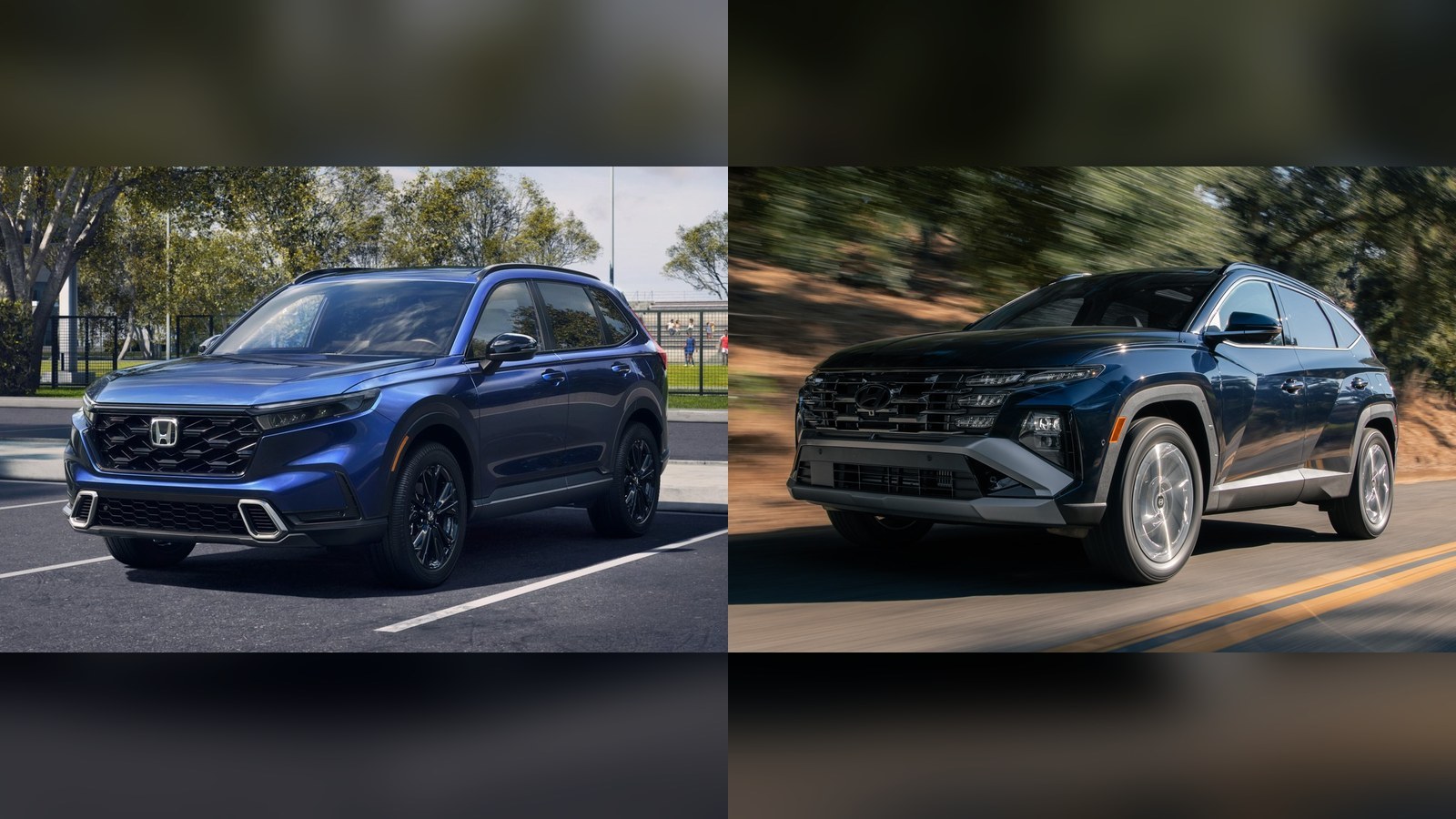
Two of America's best-selling compact SUVs are in strange places this fall. The Honda CR-V has no 2026 Insurance Institute for Highway Safety award, because the current body rates Poor in the updated moderate overlap crash test that now decides who wins. The Hyundai Tucson holds a Top Safety Pick+, but the Tucson that holds it is the outgoing fourth-generation car, and its replacement has already been shown in New York. We covered every compact SUV that still has a 2026 IIHS award; this is the head-to-head for the two hybrids that sit on either side of that line.
The short version: the Tucson Hybrid is cheaper by more than $4,000 at the bottom of the range, carries the longer warranty and the safety award, and tows twice as much. The CR-V Hybrid has more room with the seats folded, better mileage with front-wheel drive, and far bigger sales. Neither will be on sale in this form a year from now, and that matters more than any single row in the table.
The numbers, side by side
Prices are MSRP plus destination. Honda lists the 2027 CR-V, which replaced the 2026 on dealer lots in September with no changes other than price, at a $1,550 destination charge. Hyundai's July 29 price sheet for the 2026 Tucson Hybrid carries a $1,650 freight charge. Fuel costs assume 15,000 miles a year at the AAA national average of $4.29 a gallon on October 26; the five-year figure is purchase price plus five years of fuel, before interest, taxes, or discounts.
| 2027 Honda CR-V Hybrid | 2026 Hyundai Tucson Hybrid | |
|---|---|---|
| Base hybrid, with destination | $37,580 (Sport Hybrid 2WD) | $32,950 (SE FWD) |
| Cheapest AWD hybrid | $39,080 (Sport Hybrid AWD) | $34,450 (Blue SE AWD) |
| Top hybrid, with destination | $44,500 (Sport Touring Hybrid AWD) | $44,075 (Limited AWD); $44,575 (Night AWD) |
| Power | 204 hp, 247 lb-ft; two-motor hybrid, 2.0-liter four | 231 hp, 271 lb-ft; 1.6-liter turbo four, six-speed automatic |
| EPA combined | 40 mpg 2WD; 37 mpg AWD; 35 mpg TrailSport | 38 mpg (SE FWD, Blue SE AWD); 36 mpg (other trims) |
| Fuel cost per year, best / worst | $1,607 / $1,837 | $1,692 / $1,786 |
| Cargo, behind rear seat / max | 36.3 cu ft (34.7 Sport Touring) / 76.5 cu ft | 38.7 cu ft / 74.5 cu ft |
| Towing | 1,000 lb | 2,000 lb |
| Basic / powertrain warranty | 3 yr / 36,000 mi; 5 yr / 60,000 mi | 5 yr / 60,000 mi; 10 yr / 100,000 mi |
| Hybrid battery warranty | 8 yr / 100,000 mi | 10 yr / 100,000 mi |
| IIHS 2026 | No award; Poor in the updated moderate overlap test (rear passenger), Good in every other crash test | Top Safety Pick+ (2024–26 models built after March 2024) |
| NHTSA overall | 5 stars | TBA; we could not confirm a 2026 rating before publication |
| Financing through Nov. 2, 60 months | 4.99% (2027); 3.99% (leftover 2026) | 2.9%, or $1,750 finance bonus instead (varies by region) |
| Five years, purchase plus fuel: base / cheapest AWD / top | $45,616 / $47,767 / $53,187 | $41,409 / $42,909 / $53,004 |
| Q3 2026 US sales, all versions | 110,730 (53% hybrid) | 64,075 (hybrids were 31% of 2025 sales) |
| Next generation | Not announced | 2027 Tucson revealed Oct. 1; US arrival in 2027, price and EPA ratings TBA |
What "Poor" means in the new test, and why the CR-V is Good everywhere else
IIHS's updated moderate overlap test keeps the 40-mph offset crash but adds a second dummy, the size of a small woman or a 12-year-old, in the back seat behind the driver. For 2026, both awards require a Good rating there; last year, Acceptable was enough for a Top Safety Pick.
On the CR-V's IIHS card, the structure and the driver's injury measures are Good. The rear dummy's head and thigh readings are Good too. Two lines drag the overall rating down: the chest measure is Marginal, and the rating for rear-passenger restraints and kinematics, which is how well the belt held the dummy in place, is Poor. The test car was a 2024 CR-V LX, and IIHS applies the result to 2023 through 2027 models. Honda's 2026 refresh added a bigger screen and the TrailSport Hybrid trim; nothing in the release describes a change to the rear seat belts, and IIHS has not retested the car.
Everything else on the CR-V's card is Good: small overlap front, the updated side test, headlights on every trim, seat belt reminders. Front crash prevention rates Acceptable against both vehicles and pedestrians, and that detail matters for anyone waiting on a fix: a Good moderate overlap result would get the CR-V back to Top Safety Pick, but the plus requires Good pedestrian braking, which the current system doesn't have.
The Tucson's card has fine print too. Its rear passenger scored Acceptable for head and neck and for restraints, enough for a Good overall; headlights are Good only on the Limited; and the card carries one Poor, for whiplash protection on 2025–26 models with power synthetic-leather seats, which doesn't count toward the award.
Price: the Tucson is $4,630 cheaper, and the gap barely shrinks on the lot
The base Tucson Hybrid SE with front-wheel drive is $4,630 under the cheapest CR-V Hybrid, and the cheapest all-wheel-drive Tucson Hybrid, the Blue SE, is $4,630 under the cheapest AWD CR-V. Only at the top of the range do the two converge: a Tucson Hybrid Limited is $425 under a CR-V Sport Touring Hybrid, and the blacked-out Night trim is $75 over it.
Financing widens the gap. Honda's national offer on the 2027 CR-V is 4.99% for 60 months through November 2, or 3.99% on leftover 2026 models, according to Cars.com's October roundup. Hyundai is advertising 2.9% for 60 months on the Tucson Hybrid in most regions, or a $1,750 finance bonus instead, according to offer trackers; we could not reach Hyundai's own offers page before publication, so confirm the terms at the dealer. Run both on the base cars and the CR-V costs about $4,960 in interest over five years against about $2,490 for the Tucson, on top of the sticker difference.
Honda's counter is supply. CR-Vs have been selling about $1,300 under sticker on average, with the deepest discounts on leftover 2026s, which list from $37,025 for a Sport Hybrid 2WD; our CR-V Hybrid vs. RAV4 Hybrid comparison has the detail. Tucson sales jumped 23% in the third quarter, so Hyundai dealers have less reason to deal.
Power, mileage, and the stuff in the back
The Tucson has 27 more horsepower and 24 more lb-ft, and a conventional six-speed automatic instead of the CR-V's two-motor hybrid drive. The CR-V pays that back at the pump only with front-wheel drive: 40 mpg combined against 38 for the best Tucson, worth about $85 a year at today's prices. With all-wheel drive the order flips, because the AWD CR-V drops to 37 mpg while the Tucson Blue SE AWD holds 38. Most Tucson Hybrid trims rate 36.
Cargo is a split decision: 38.7 cubic feet behind the Tucson's rear seat against 36.3 in the CR-V, but 76.5 cubic feet with the Honda's seats folded against 74.5. Towing isn't close. The Tucson Hybrid is rated for 2,000 pounds, the CR-V Hybrid for 1,000; a small utility trailer fits inside the Hyundai's rating and not the Honda's.
The warranty gap is the oldest argument in this segment and it hasn't gone away: five years or 60,000 miles and ten years or 100,000 on the powertrain from Hyundai, against three years or 36,000 and five years or 60,000 from Honda. The hybrid battery is covered for eight years on the CR-V and ten on the Tucson, both to 100,000 miles.
Should you wait for the 2027 Tucson?
Hyundai revealed the fifth-generation Tucson with US specifications on October 1, and our 2027 Hyundai Tucson guide tracks everything confirmed so far. The hybrid moves to Hyundai's next-generation system with 233 hp and 280 lb-ft, a 0–60 mph time of 8.5 seconds, and a 3,000-pound tow rating with all-wheel drive, 1,000 pounds more than today's hybrid. Hyundai's targets are up to 42 mpg combined for the FWD hybrid on 17-inch wheels and 38 to 40 mpg with AWD. The body is 2.4 inches longer, 1.6 inches wider, and rides on a wheelbase stretched 1.2 inches, with 41.7 cubic feet of cargo space behind the rear seat by Hyundai's count, according to the launch release.
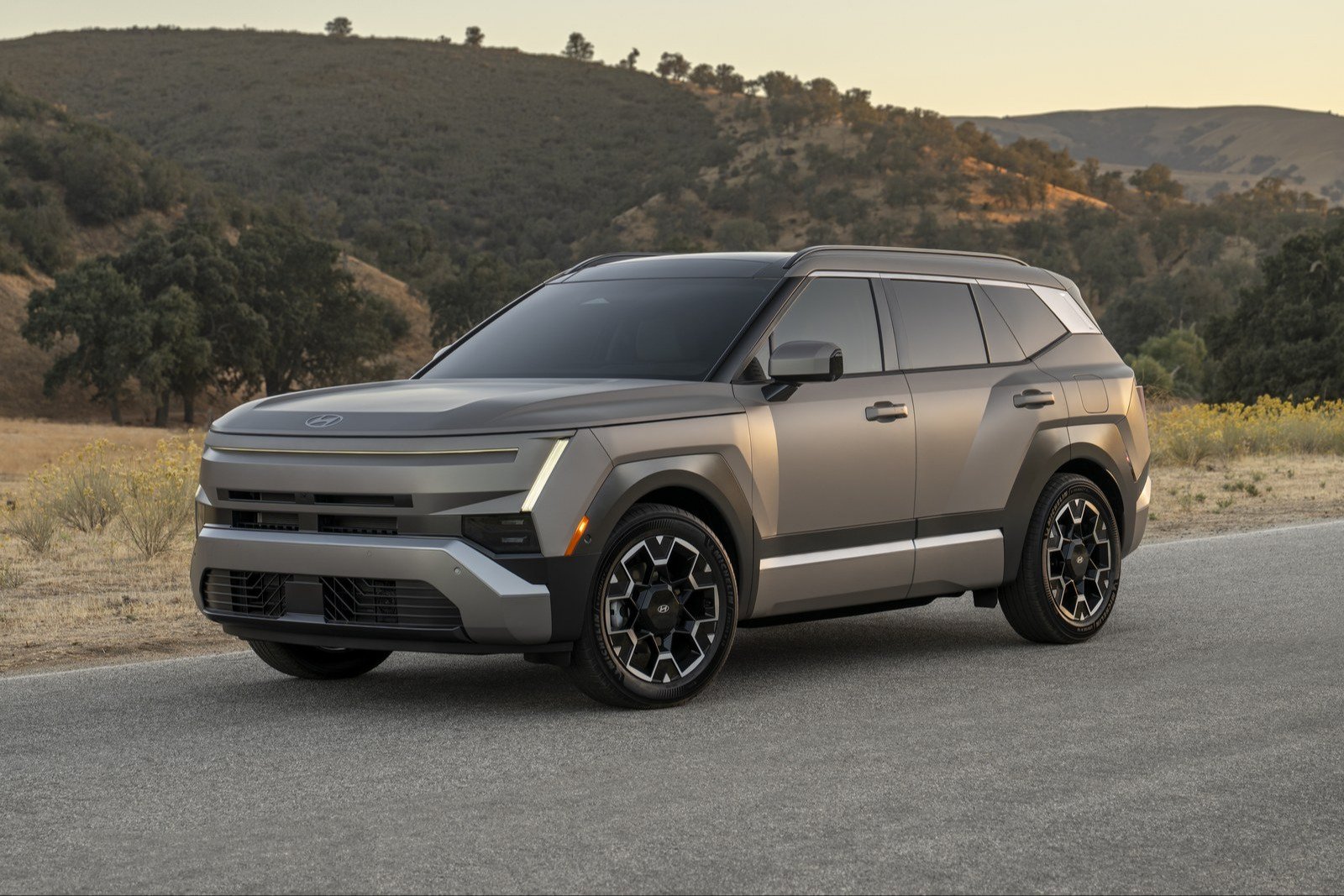
Korean orders opened on October 21, with the hybrid from 36.15 million won after tax breaks and more than 15,000 orders on the first day, according to the Seoul Economic Daily. Korean prices don't translate to US stickers, and Hyundai Motor America has announced no price, on-sale month, or EPA ratings; "2027" is all it has said. IIHS has not crashed the new car, so the award you are buying today belongs to the 2026 only.
So: wait if you are not in a hurry. The new car is more powerful, more efficient on paper, roomier, and tows more. Don't wait if you need the car this winter, want the 2.9% rate before it expires, or want a crash-test result rather than a target. Redesigns rarely get cheaper, and the first months of a new generation are not where discounts live. Our 2027 Tucson vs. RAV4 comparison sets the new car against the segment's benchmark.
What we don't know
- US pricing, trims, and EPA ratings for the 2027 Tucson. Hyundai has given targets, not ratings.
- Whether Honda will retest the CR-V in the updated moderate overlap test, or change the rear restraints before the next model year. Honda has announced nothing, and we are not treating reports about a future CR-V as fact.
- A confirmed NHTSA overall rating for the 2026 Tucson Hybrid. Check nhtsa.gov by model year and drivetrain before you buy.
- Hyundai's official national APR for October; the 2.9% figure comes from offer trackers, not from Hyundai's site.
Which one should you buy today?
If you are buying this month, the Tucson Hybrid is the better value, and it is not especially close below $40,000. It costs $4,630 less, finances cheaper, carries the award and the warranty, and gives up only a little cargo room and, with front-wheel drive, about two miles per gallon. Buy the Blue SE AWD at $34,450 if you want the best mileage in the lineup, or the SEL Convenience at $36,900 if you want the digital cluster and H-Tex seats without paying Limited money.
The CR-V Hybrid wins two arguments. One is the lot: it is in stock, selling under sticker, and a leftover 2026 at 3.99% narrows the gap to something negotiation can close. The other is demand. The CR-V's 110,730-unit quarter, more than half of it hybrids, is the kind of volume that holds resale value; Hyundai's record third quarter still left the Tucson at a little over half of it. The rear-seat crash result is a real mark against the Honda for anyone who regularly carries kids back there, and no discount changes the IIHS card. If that is you, the Tucson is the answer. If the back seat is for groceries and the occasional adult, the CR-V's discount is worth having, and its Good ratings everywhere else are not nothing.
And if you can wait until the 2027 Tucson has a price, you should. The 2026 Tucson is the better buy today; the 2027 is likely the better car.