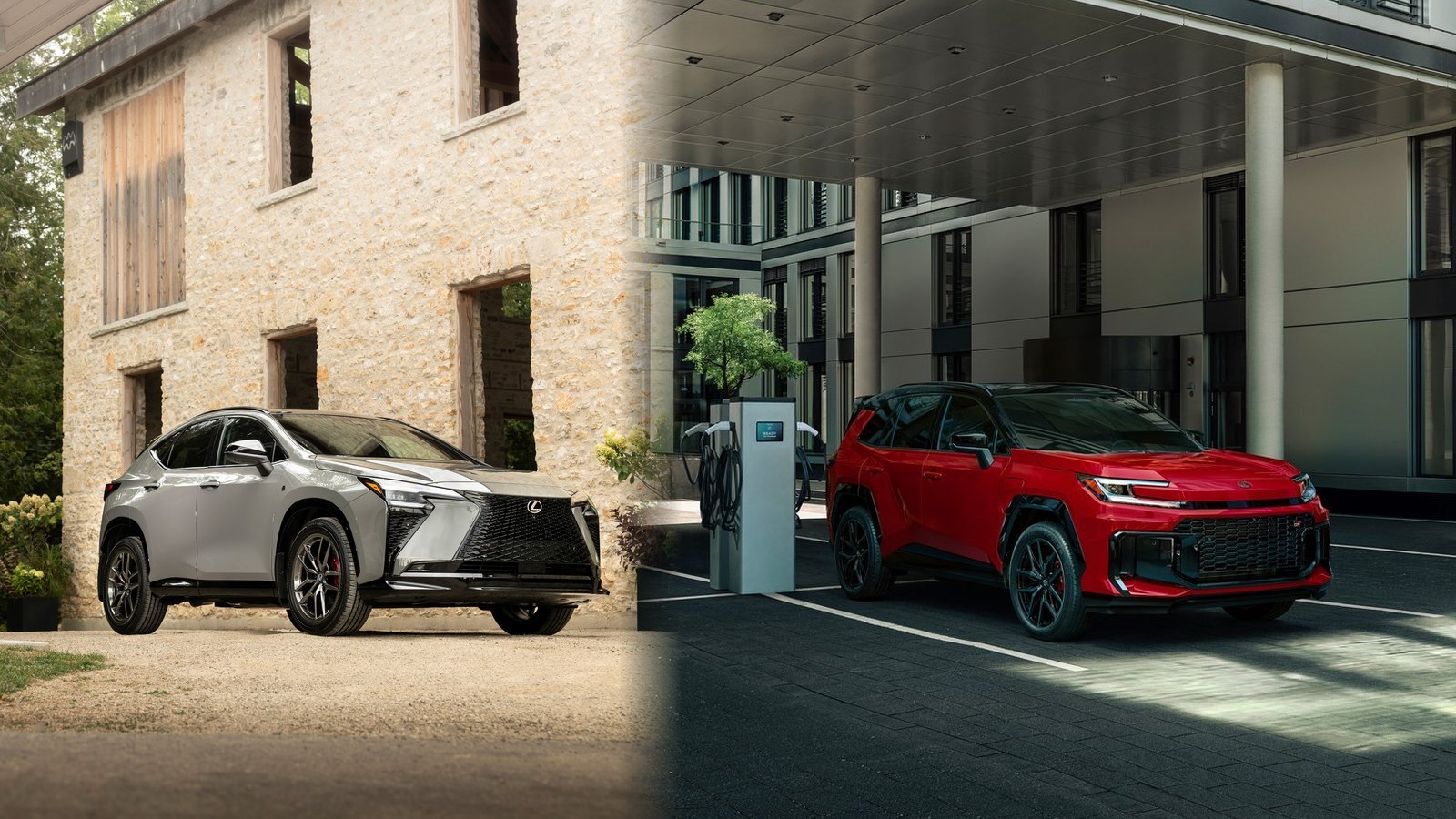
Camry, RAV4, Now the Lexus NX: Toyota Is Quietly Killing the Base Gas Car in America
The Camry, RAV4, and now the NX have lost their gas versions. On the first two, entry prices rose about $2,000, a hybrid premium rivals still can't match.
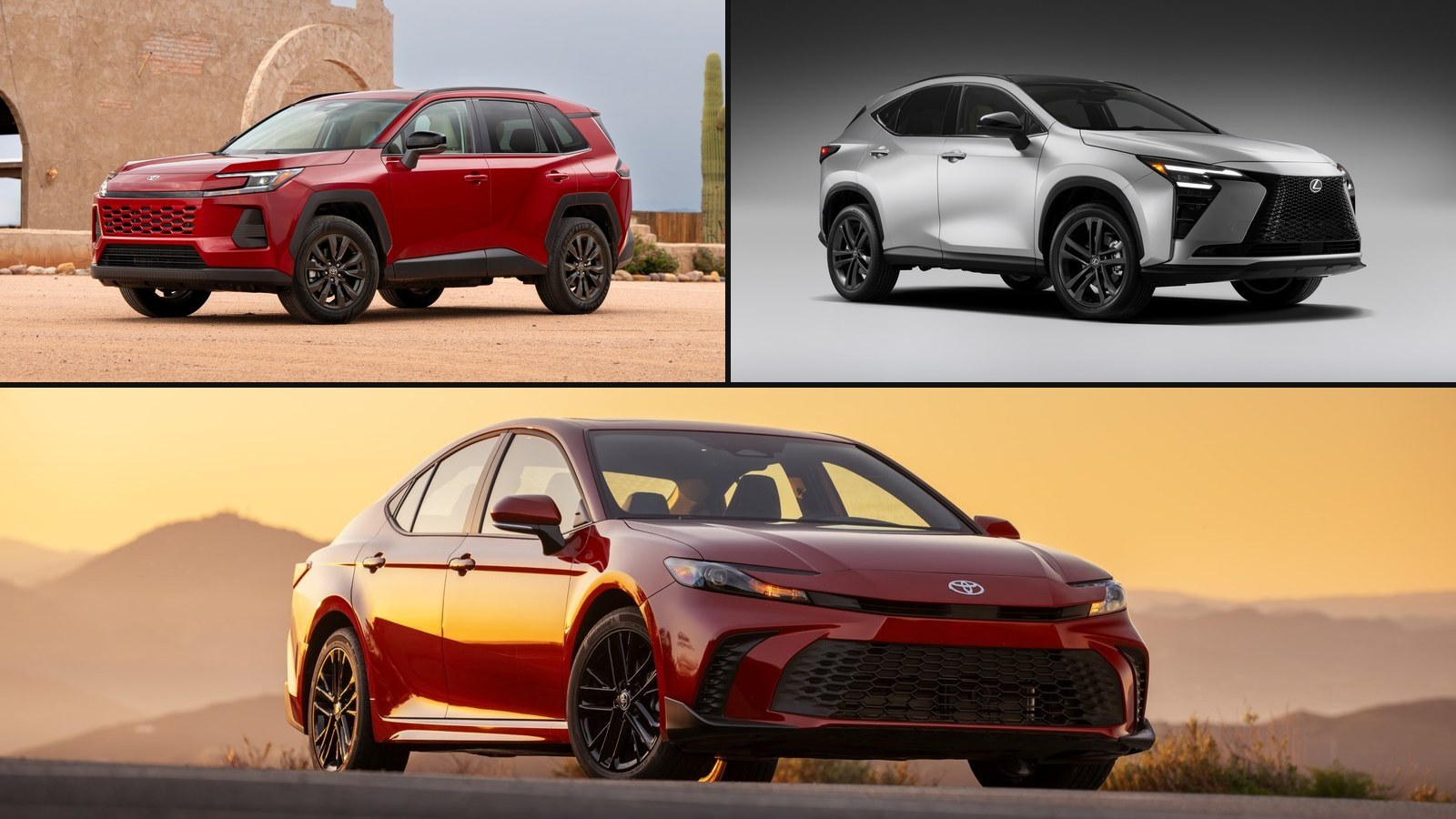
Toyota never announced that it was retiring the base gas car in America. It simply stopped building one, a nameplate at a time. The Camry went hybrid-only for 2025, the RAV4 for 2026, and on October 20 Lexus detailed a 2027 NX that comes only as a hybrid or plug-in hybrid. On the Camry and RAV4, the cheapest version got about $2,000 more expensive, and Camry sales are still up 11.2 percent this year.
That last number is the story. The 2027 NX's U.S. numbers are the newest data point, but the pattern is clearer in the sales: electrified models made up 57.4 percent of Toyota and Lexus sales in the third quarter, and the cars Toyota still sells with gas-only power are the ones shrinking. I'd argue this is less a green pivot than a pricing move that only Toyota can currently afford to make.
What has already gone hybrid-only
Here is where the U.S. lineup stands today, by what you can actually order. Battery-electric models such as the bZ, C-HR, and RZ are left out; they are a separate story.
| U.S. status, October 2026 | Toyota | Lexus |
|---|---|---|
| Hybrid or plug-in hybrid only | Camry (since 2025), RAV4 (since 2026), Sienna (since 2021), Sequoia, Crown, Crown Signia, Prius, Land Cruiser | NX (from 2027), ES (hybrid; other versions are electric), UX |
| Gas and hybrid | Corolla sedan, Corolla Cross, Highlander, Grand Highlander, 4Runner, Tacoma, Tundra | RX, TX, LX |
| Gas only | Corolla Hatchback, GR Corolla, GR86 | IS, GX, LC |
| Recently dropped | GR Supra (production ended March 2026) | LS (no 2027 U.S. model); TX 550h+ plug-in (gone for 2027) |
The hybrid-only column now holds the Camry and the RAV4, Toyota's two biggest nameplates. Through September, they accounted for 260,684 and 253,664 U.S. sales, respectively, with the RAV4's total held back by its model changeover.
The price of entry, model by model
The figures below are manufacturer list prices before destination, except where noted.
| Model | Last cheapest gas version | First hybrid-only base | Change |
|---|---|---|---|
| Camry | 2024 LE: about $26,400 | 2025 LE: $28,400 | +$1,990 |
| RAV4 | 2025 LE FWD: $29,800 | 2026 LE FWD: $31,900 | +$2,100 |
| Lexus NX | The cheapest 2026 NX was already a hybrid: 350h FWD, $45,570 with $1,395 DPH | 2027 NX: TBA | TBA |
The Camry number hides a detail that matters. The 2025 LE cost about $2,000 more than the last gas LE, but $455 less than the 2024 Camry Hybrid LE it replaced. Toyota didn't charge buyers for the hybrid system so much as stop offering a cheaper car without it. The 2027 Camry LE is $29,700, still under $30,000 before destination.
The RAV4 did the same thing with a twist. The 2026 hybrid LE costs $31,900, exactly what a 2025 RAV4 Hybrid LE cost. But the 2025 hybrid came with all-wheel drive, and the 2026 car at that price is front-drive; the AWD LE is $33,300. So the hybrid floor held, the gas floor disappeared, and AWD moved up a rung.
The NX is the odd one out, and it undercuts the simple version of this story. Lexus dropped the cheaper NX 250 for 2026, so the entry price jumped a year early. The gas car leaving for 2027 is the NX 350 turbo, which started at $46,220 with DPH, above the 350h. Its departure removes the quicker gas option, not the cheap one.
Why Toyota can do this and Nissan can't
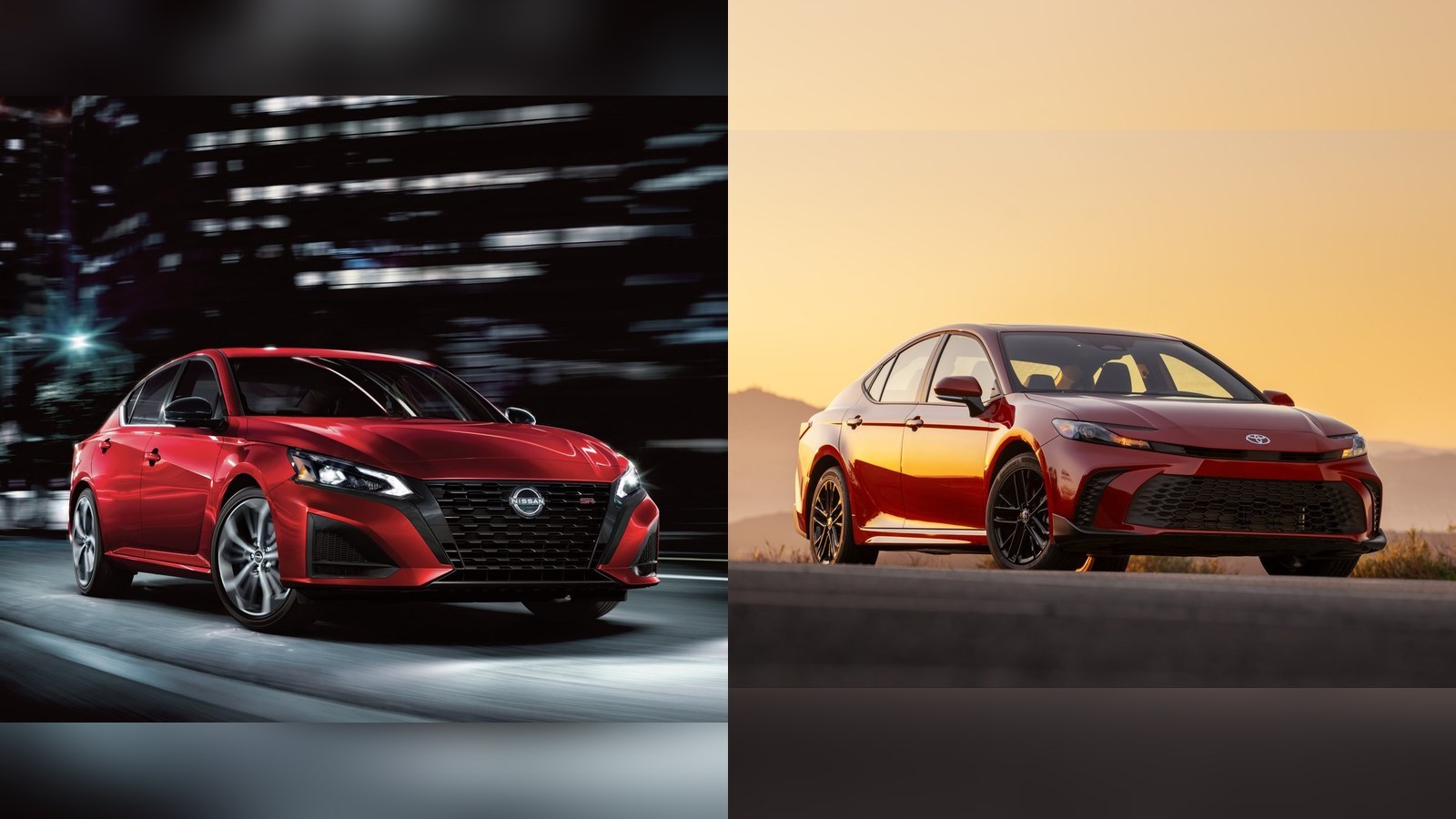
The economics come down to the hybrid premium. On the 2027 Corolla sedan, the Hybrid LE lists at $25,175 against $23,325 for the gas LE, a $1,850 gap. Nissan's newest hybrid shows the other end: the 2027 Rogue Hybrid starts at $35,490, and the gas Rogue at $29,690, a $5,800 difference. Nissan has no hybrid Altima at all, which is why the gas Altima at $27,790 remains its answer to the Camry. Our Altima vs. Camry break-even math shows how quickly that gap closes at today's fuel prices.
Honda's problem is demand, not cost. In the third quarter, hybrids were 53 percent of CR-V sales and 44 percent of Accord sales. Drop the gas Accord LX at $28,395 and Honda would be asking more than half of its Accord buyers to pay over $4,000 more for the cheapest hybrid. Toyota could make the jump because its buyers had largely already moved.
The rest is scale. Toyota sold 363,367 electrified vehicles in the U.S. in the third quarter, up 28.5 percent, while total volume rose 0.6 percent. By our math from Toyota's release, its non-electrified sales fell about 22 percent, as we noted in our look at Toyota's Q3 results. The company says its incentives are among the lowest of any full-line automaker. A brand that can drop a powertrain without discounting is a brand whose buyers aren't fighting the change.
Where gas survives, and why
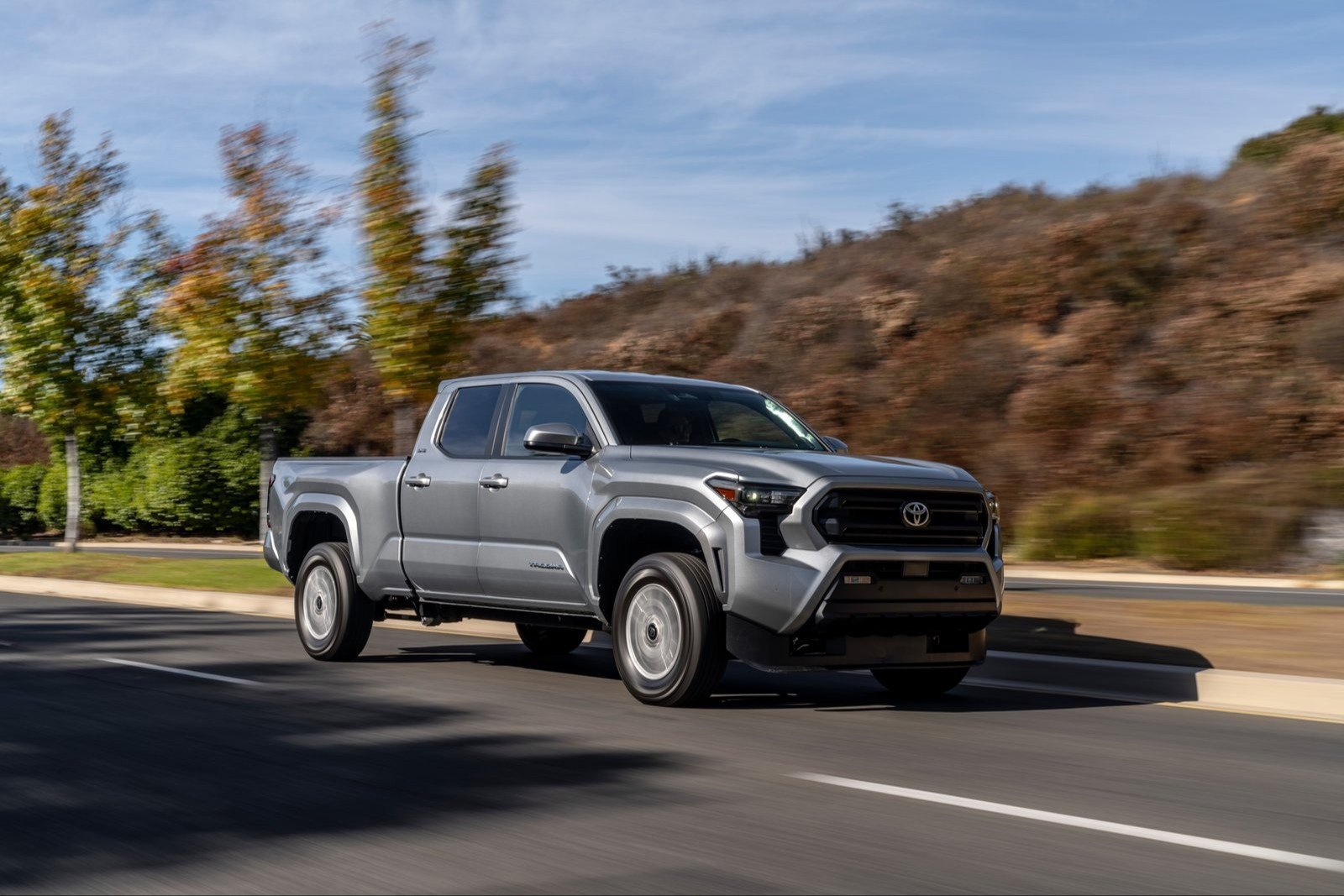
The gas holdouts aren't random. They fall into three groups: the cheapest cars (Corolla, Corolla Cross), trucks and body-on-frame SUVs where towing and payload sell (Tacoma, Tundra, 4Runner, GX), and enthusiast cars (GR86, GR Corolla, IS). Toyota offers hybrids in the trucks, but as an upgrade, not a replacement.
The recent moves also show that Toyota isn't pushing electrification at any price. For 2027 it cut the Corolla Cross Hybrid's entry-level S grade, raising the hybrid's starting price to $31,415, while keeping all three gas grades. Lexus dropped the TX plug-in hybrid and kept the gas TX 350, as we reported in our 2027 TX pricing story. In my view, the rule Toyota is following is narrow: go hybrid-only where the premium is small and the buyers have already switched, and keep gas where it holds the price floor.
What it does to the under-$30,000 car
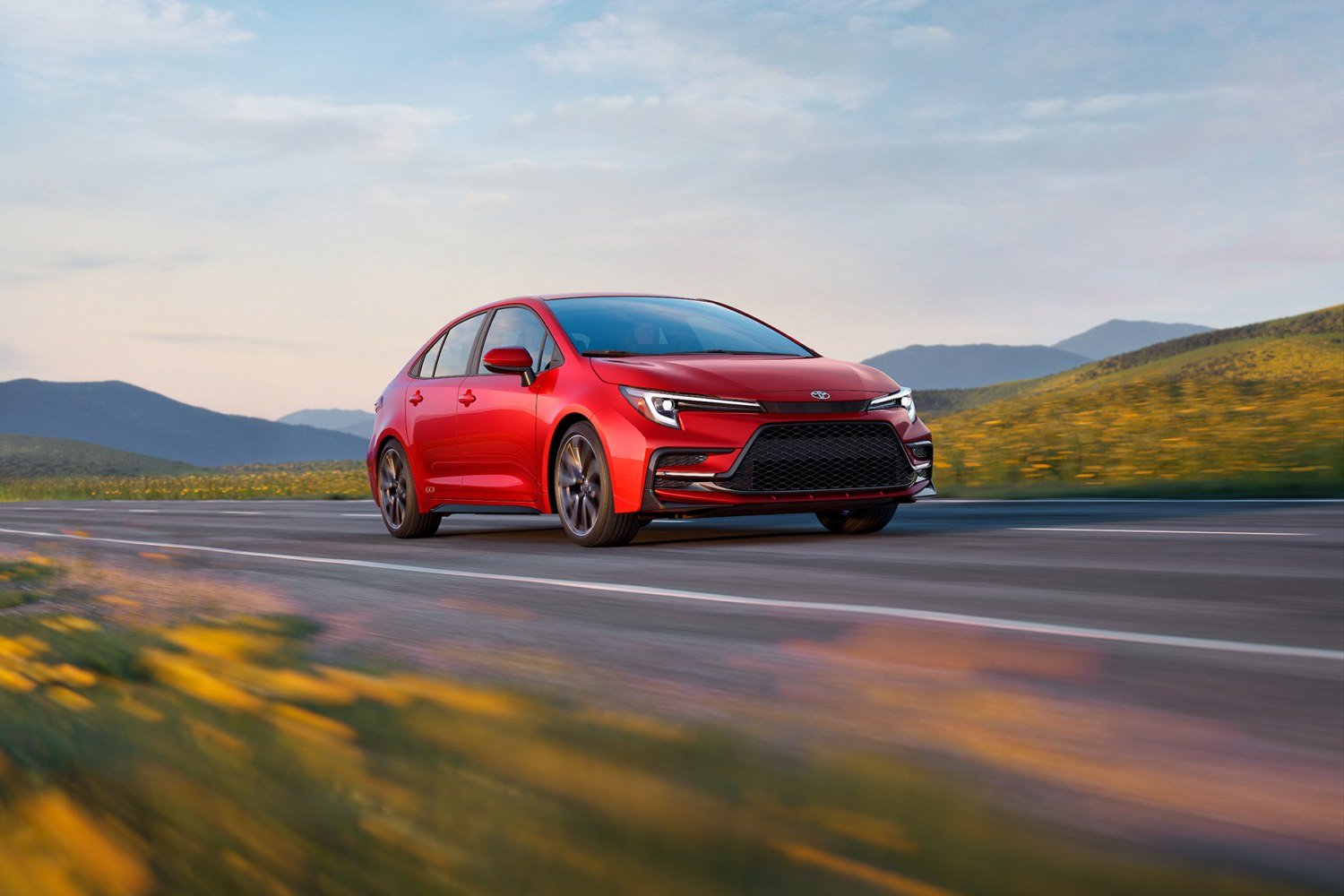
That floor is now the Corolla family. With the RAV4 starting at $31,900 before destination, Toyota's under-$30,000 choices are mostly Corollas: the sedan in gas and hybrid form, the hatchback, and the gas Corolla Cross. The Camry LE makes the cut by $300. Toyota is building capacity for that floor to electrify too: the Corolla Hybrid will be assembled in Blue Springs, Mississippi, from 2028.
The used market is where buyers will feel this first. My bet is that the 2018 to 2024 gas Camry, from the last generation that offered one, becomes the default for shoppers who want a Camry under new-car money. We don't have clean data on that yet, so treat it as a prediction to test, not a finding. What is certain is that every new Camry and RAV4 Toyota sells from here adds to the supply of used hybrids, not gas cars.
What we don't know yet
- 2027 NX pricing. Lexus has published specs but no prices, so the NX row in the table above stays open.
- The next Corolla's powertrains. Toyota hasn't said whether the next-generation Corolla will keep a gas version in the U.S. There is no official source either way.
- The hybrid share of Toyota's electrified sales. Toyota's quarterly figures don't split hybrids, plug-ins, and EVs, or say how much of the gas decline comes from models that no longer offer gas.
- Which nameplate is next. Toyota hasn't announced another hybrid-only switch. When it does, the move will tell us whether the rule above still holds.
Toyota's own line on all this is that customers want choices. Its lineup says something slightly different: you can still choose gas, just not on the Toyotas most people buy.