Your Brake Pedal Goes Dead. Bosch Wants You to Stop the Car From the Screen
A new Bosch patent filing adds a stop button on the screen or steering wheel for cars whose by-wire brake electronics fail. Here's what it does, and what it can't.
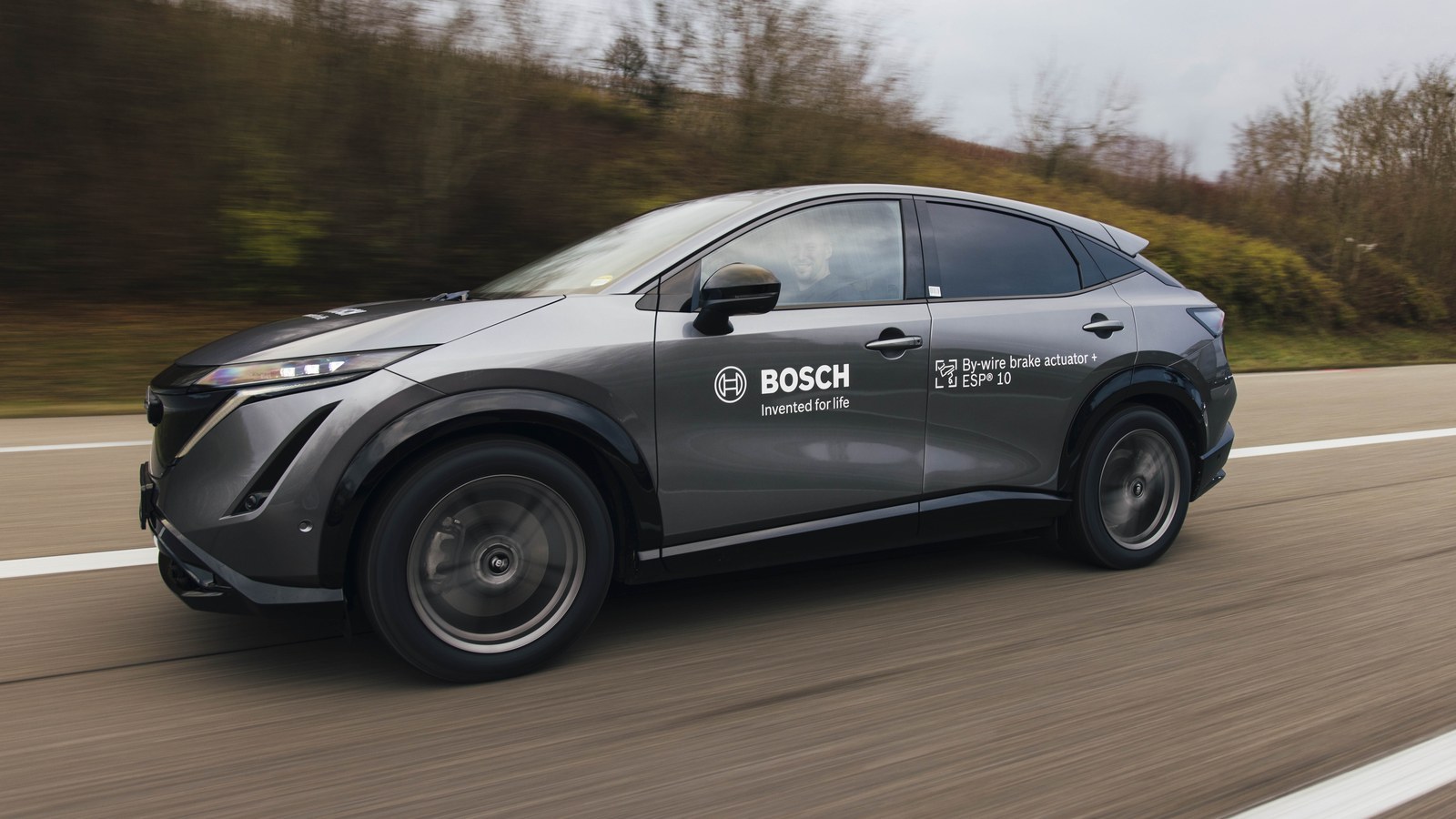
Picture the worst case for a modern brake system: you press the pedal, and the electronics that are supposed to read it have stopped listening. Bosch, which already supplies brake-by-wire hardware to automakers, has published a patent application with a fallback for exactly that moment: a stop button on the center touchscreen or the steering wheel.
The application, published through the World Intellectual Property Organization as WO2026214964A1, is not a product announcement. It is a look at how suppliers are planning for failures in cars whose brake pedals no longer connect mechanically to the brakes, the same territory regulators are probing with the Tesla Cybercab's on-screen driving controls.
What the patent describes
According to Autoblog's reading of the filing, the system uses three control units. Two handle normal braking. The third does nothing but watch the other two.
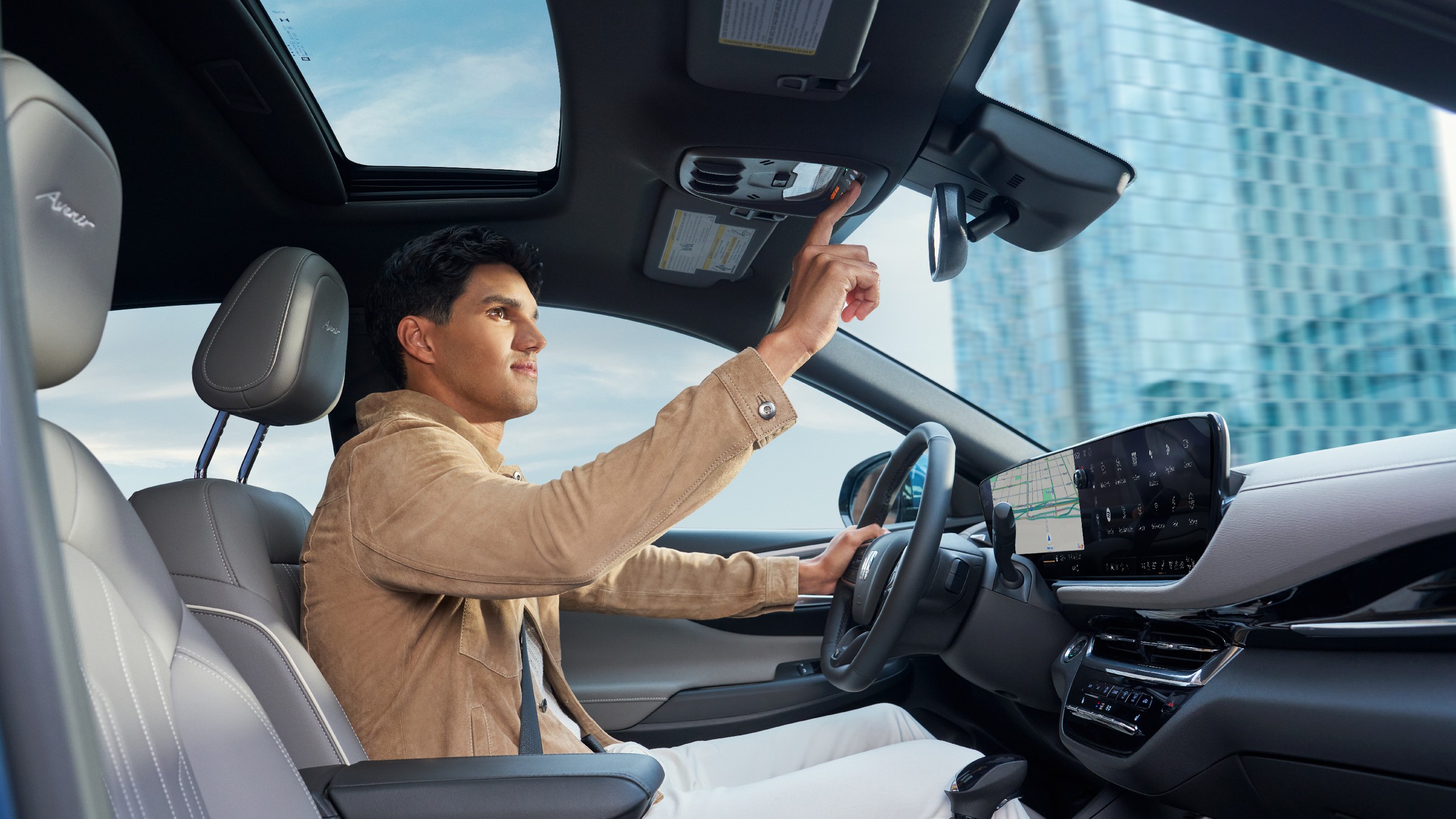
If that watchdog spots a fault in either primary unit, it switches on an emergency braking mode and warns the driver with visual, audible, or haptic alerts. The driver then gets a brake control that doesn't depend on the pedal: a button on the infotainment screen or one on the steering wheel. CarMoses, which first reported the filing, describes it as a flashing stop button.
The control is modulated, not on-off. Holding it adds braking force, and tapping it eases off, so the driver can bring the car to a controlled stop rather than a single hard one.
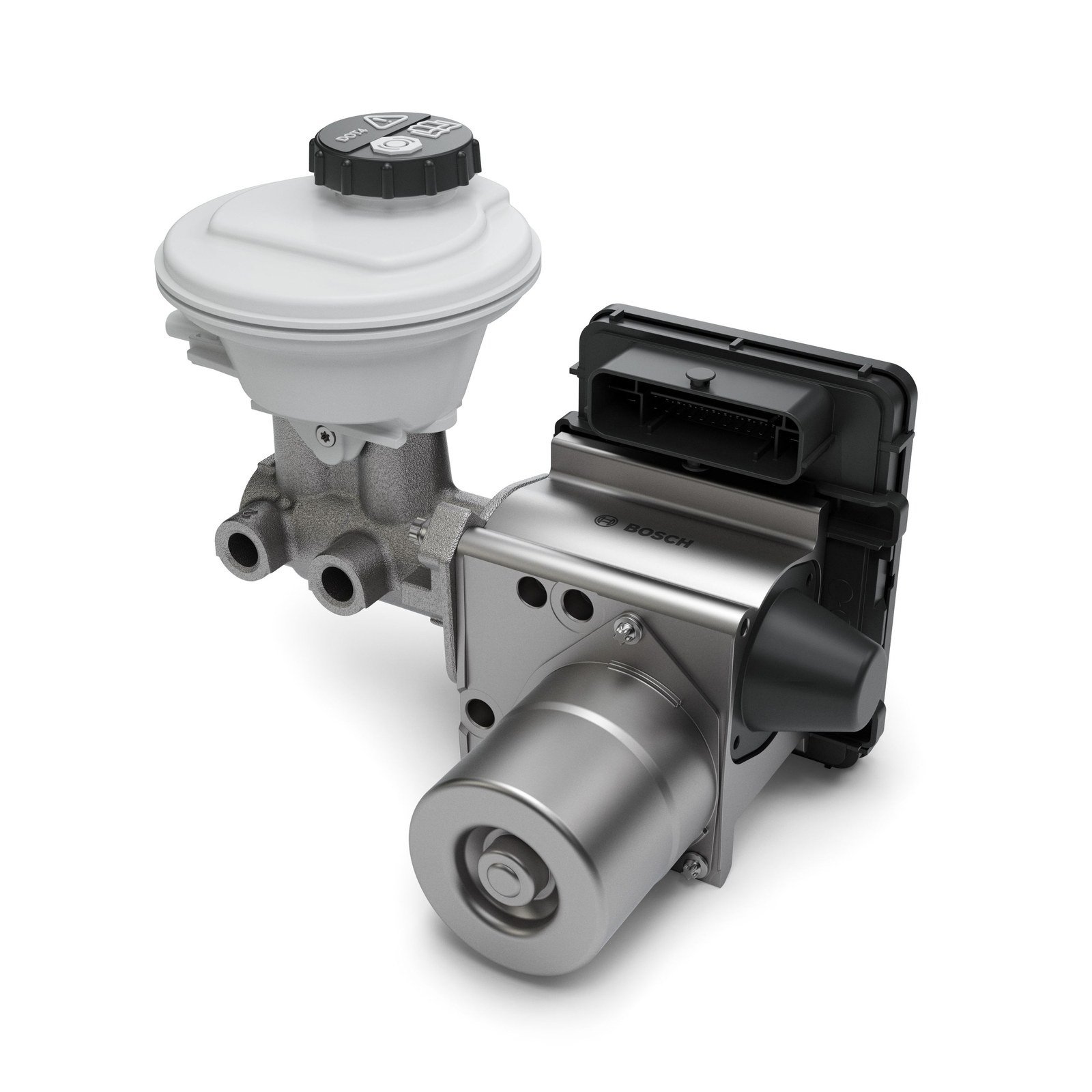
Why brake-by-wire needs a plan B
In a conventional car, your foot pushes fluid through a master cylinder to the calipers. In a brake-by-wire car, the pedal is a sensor. Your request travels as an electrical signal, and computers decide how hard each wheel brakes.
Bosch's production system already assumes things will break. In a January 2025 release, the company described redundant signal lines and two independent hydraulic actuators, a dedicated by-wire brake actuator and the ESP stability-control unit. Each sits on its own channel of a redundant electrical system, and each can brake all four wheels by itself. Bosch said in August 2025 that a large Asian automaker it did not name had put the system into series production, and it expects more than 5.5 million vehicles worldwide to have brake-by-wire by 2030. Brembo says its fluid-free Sensify system has also entered production for an unnamed customer.
The patent goes after a different weak point: the electronics that interpret what the driver wants. If they fail, a pedal that still moves but no longer commands anything is little help. The screen or wheel button gives the driver a second way to ask for braking.
These failures are not theoretical
Partial brake-by-wire faults have already reached owners. In 2023, Volvo recalled 27,457 vehicles across eight 2023 models after a diagnostic check could trip a fault in a component called Brake Control Module 2. The cars fell back to their hydraulic brakes and could still stop, but ABS, stability control, adaptive cruise, and one-pedal driving dropped out, and drivers could feel a stiff pedal. Volvo reported no crashes or injuries and fixed it with an over-the-air update.
That is the real design question behind Bosch's filing. Every by-wire system degrades somehow when parts fail. The engineering choice is what the driver is left with when it does.
The obvious objections
A touchscreen is a hard place to put a brake. In an emergency, drivers reach for the pedal by reflex, and few would think to look at the screen, let alone find a button on it. Nobody practices this.
The screen is also electronics. A fault broad enough to take out two brake controllers could take the display with it. That may be why the filing names a steering-wheel button as an alternative, but reports don't say which control would take priority, or what happens if both go dark.
And a button on a screen is only as useful as the hardware behind it. If the actuators themselves lose power, no input device will stop the car. The redundancy in Bosch's production system has to do that job first.
Could it be legal in the US?
Light-vehicle brakes in the US fall under Federal Motor Vehicle Safety Standard No. 135. In June 2026, NHTSA proposed dropping its requirement for hand- or foot-operated brake controls, but only for vehicles that drive themselves with no provision for a human driver. Cars with manual controls would keep every existing requirement. The agency is reworking several decades-old standards at once, from the headlight glare rules to cyan marker lamps for self-driving cars.
So in a car you drive, a screen button could only be a backup to the pedal, not a replacement, which is how Bosch's concept is framed. Whether regulators would accept a touchscreen as a credible emergency brake control is untested. NHTSA's Special Order to Tesla, which asks how a car with no wheel or pedals meets the foot-control rule in FMVSS No. 135, shows the agency is paying close attention to exactly this kind of interface.
What we don't know
- Whether Bosch plans to build it, or whether any automaker has asked for it. Bosch has not commented, and a published application is not a granted patent, let alone a product.
- How quickly the emergency mode can stop a car, and whether ABS and stability control stay active while it works.
- Which control wins if the screen and the wheel button disagree, and what the system does if both fail.
- Whether the concept is aimed at conventional cars, robotaxis, or both.
What it means for you
Nothing changes in your car today. Suppliers patent far more ideas than they ever ship, and this one would need an automaker, a validation program, and regulators' comfort before it reached a dashboard.
If you already drive a car with brake-by-wire, the practical steps are the old ones. Treat any brake warning light as a reason to stop and call for service. Read the owner's manual section on reduced braking modes, so a stiff pedal doesn't surprise you. And check your VIN for open recalls on NHTSA's lookup tool, because brake-control software is increasingly something that gets fixed over the air.