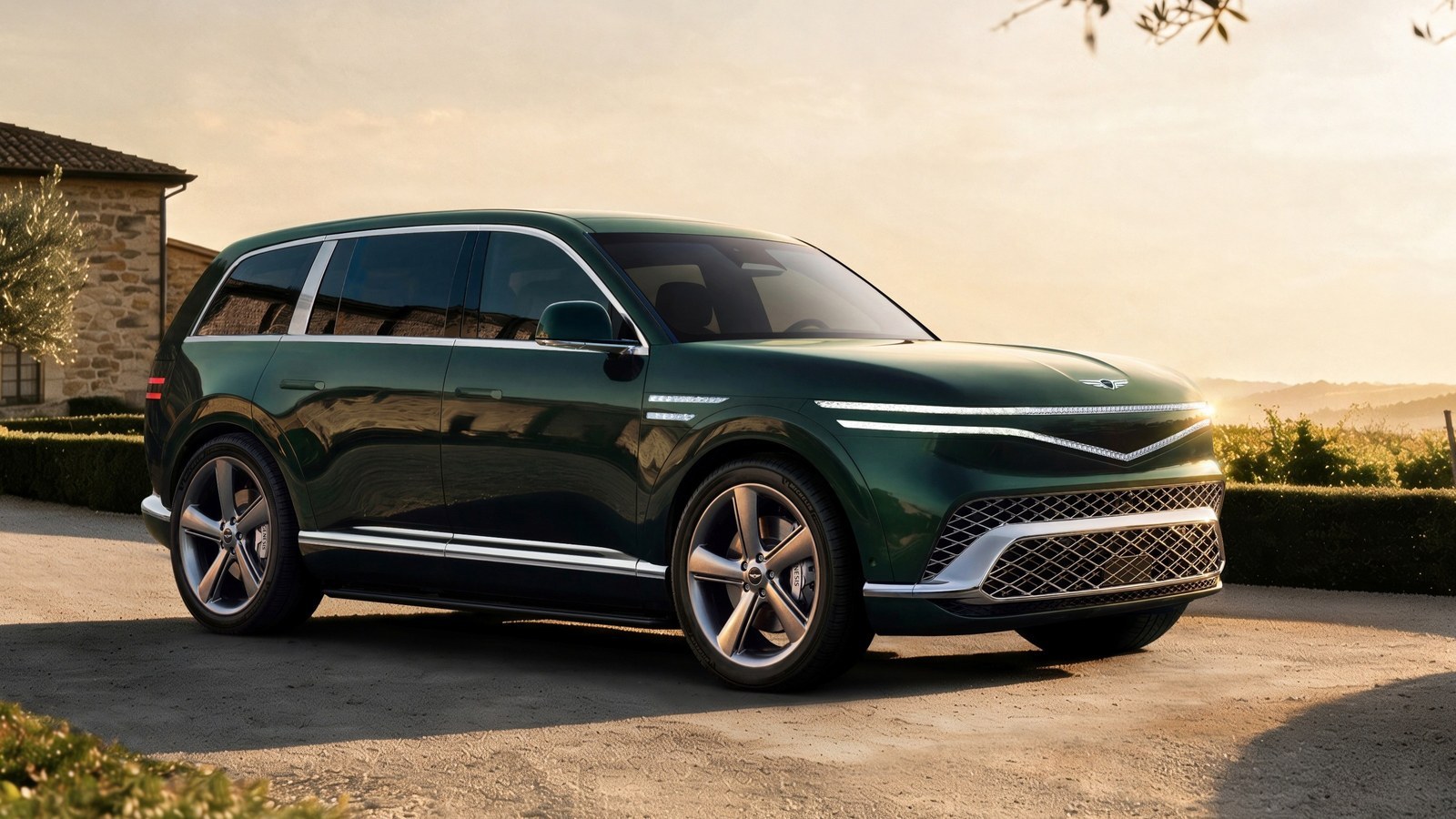
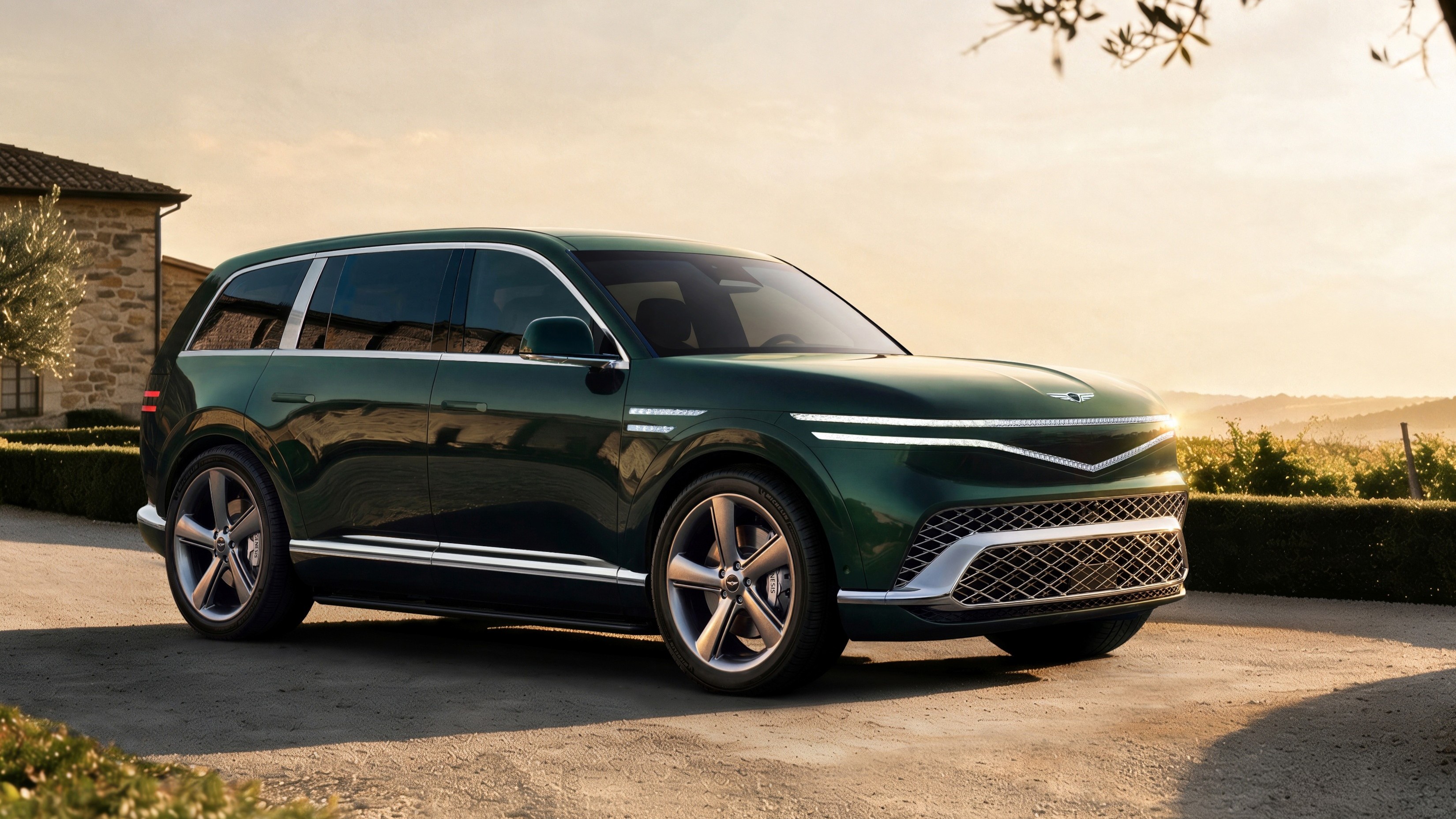
The Genesis GV90 Neolun Has No B-Pillar, No Start Button, and Front Seats That Turn Around
Genesis's latest GV90 briefing explains the hidden-pillar coach doors, the door-activated startup, and a lounge with swiveling seats and Korean-style floor heating. U.S. pricing is still missing.
The Genesis GV90 Neolun has no B-pillar you can see, the GV90 has no start button at all, and its front seats can turn around to face the second row. Those are the headline points of a new Genesis briefing on the flagship's cabin, labeled Part 1 of its GV90 deep-dive series and posted to the brand's U.S. newsroom on October 21.
It covers the hospitality side of an SUV whose hard numbers are already in our 2028 Genesis GV90 guide: 657 hp, a 123.5-kWh battery, and a U.S. arrival in early 2027 as a 2028 model. Like the engineering installments before it, it leaves pricing and EPA range unanswered.
Coach doors with the pillar inside the frame
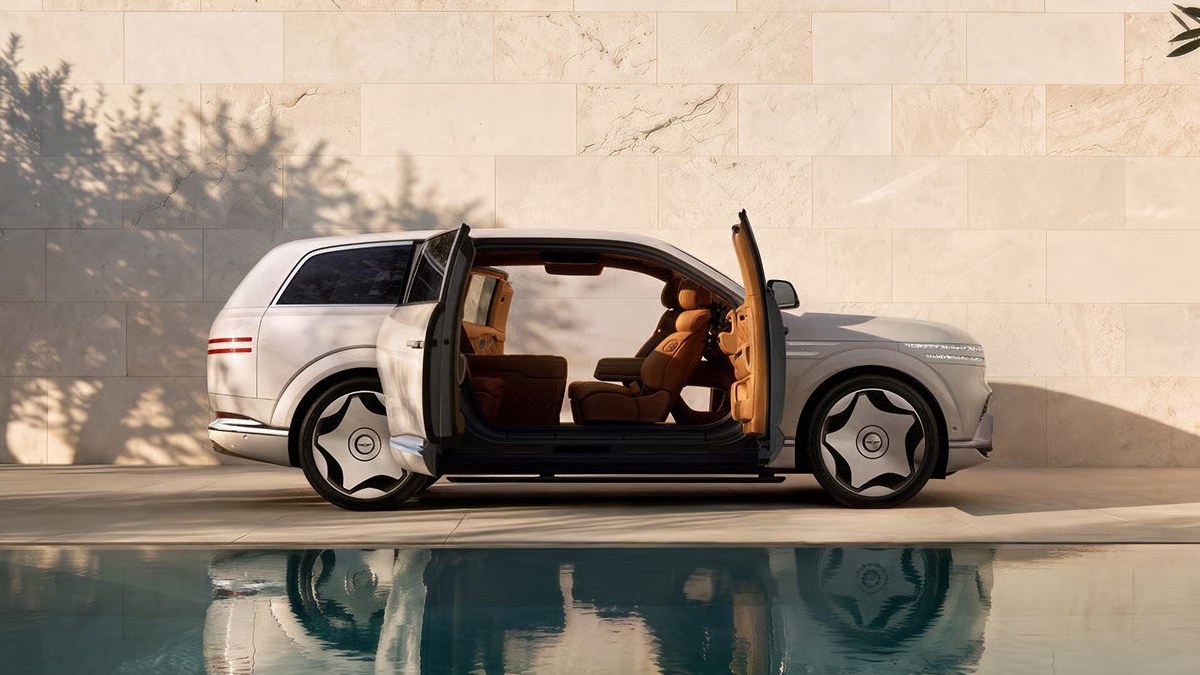
On the Neolun, the front and rear doors open in opposite directions, leaving one tall opening with nothing in the middle. Genesis says the B-pillar hasn't been deleted so much as hidden inside the door frames. A newly developed dual-motion hinge moves the rear door slightly outward before it swings open, and occupants can open or close the doors from inside with a button.
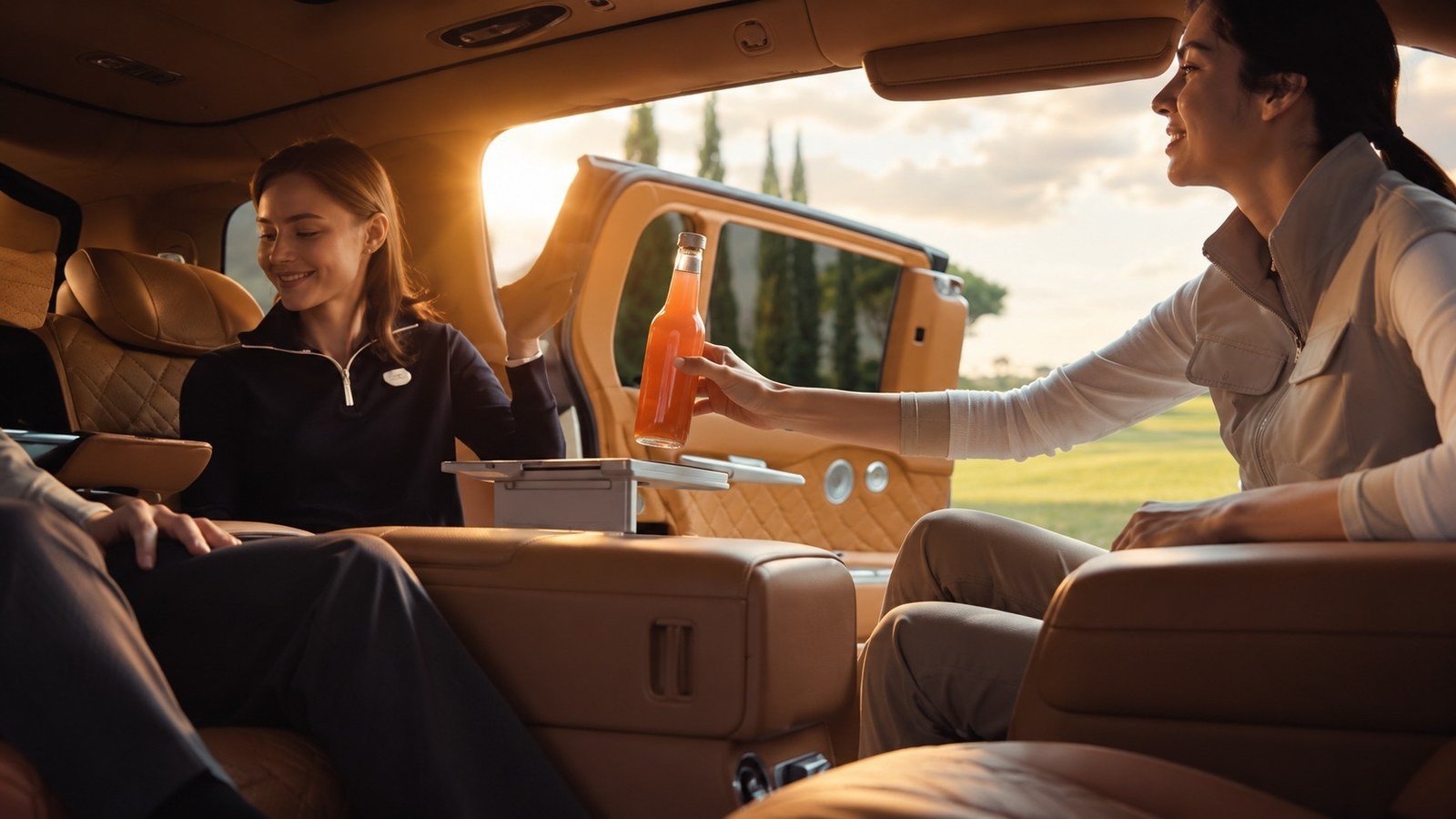
Taking away the visible pillar raises the obvious question about side impacts. Genesis says its internal testing shows crash and side-impact protection equivalent to a conventional pillared body. It hasn't published that data, and because the GV90 isn't on sale in the U.S. yet, NHTSA and IIHS haven't rated it. The standard GV90 keeps conventional doors.
Close the door, and it wakes up
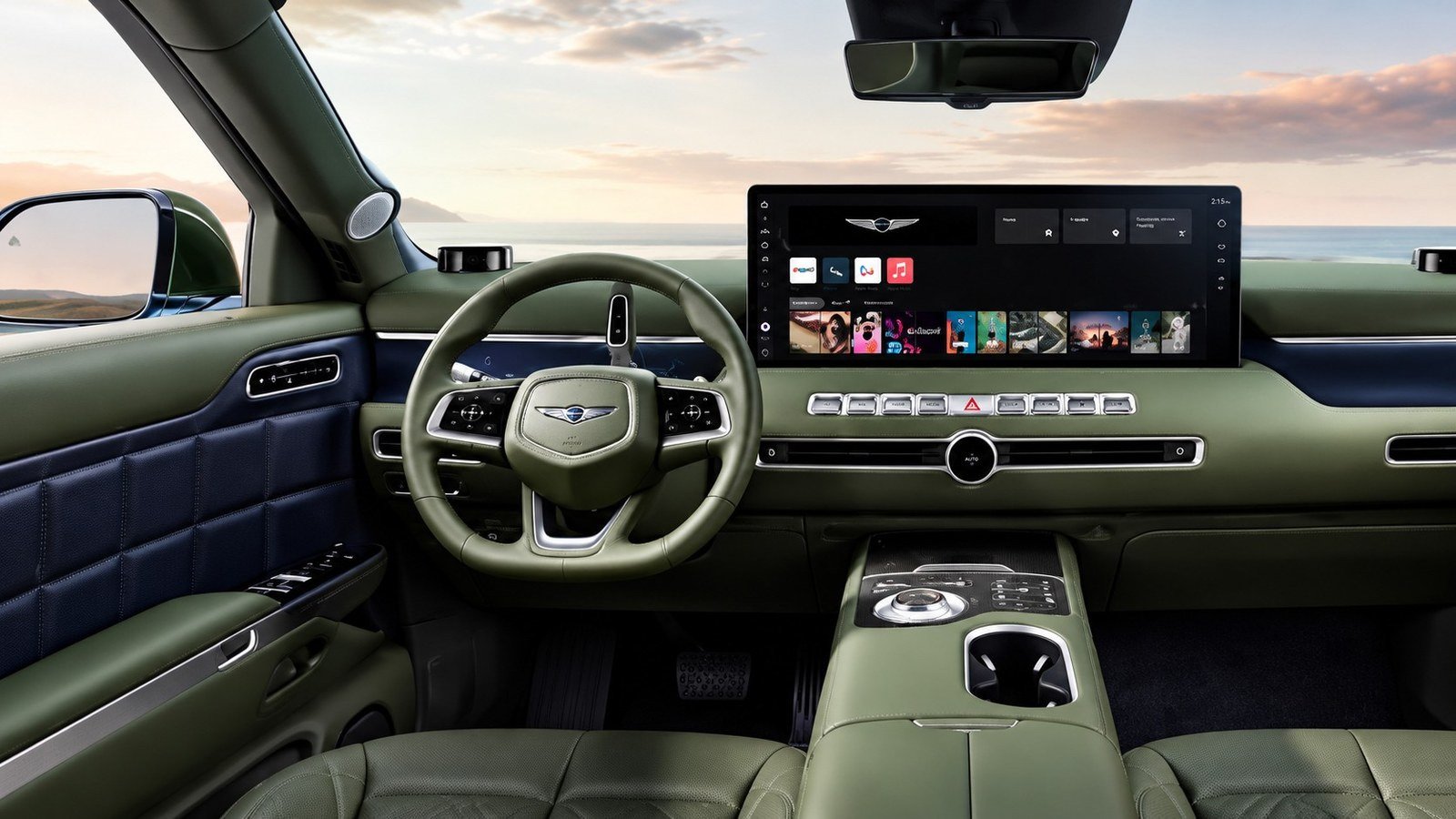
There is no start button. Pulling the door shut by its handle powers the SUV on, and the door finishes closing by itself. The Motion Column Shifter rotates from the 12 o'clock to the 2 o'clock position, the Crystal Sphere Controller on the console turns to reveal its controls, and the dashboard tweeter covers slide apart. Pressing the brake pedal engages Drive.
A lounge with Korean floor heating
The front seats swivel 180 degrees to face the rear passengers. The seats recline deeply, have power leg rests, and get a massage system with 15 air cells. The second-row floor is real wood veneer heated from below, an idea Genesis takes from ondol, Korea's traditional underfloor heating. The radiant panels also cover the console armrests, side panels, and door trims in both rows. A refrigerator, heated cupholders, and fold-away second-row tables complete the list.
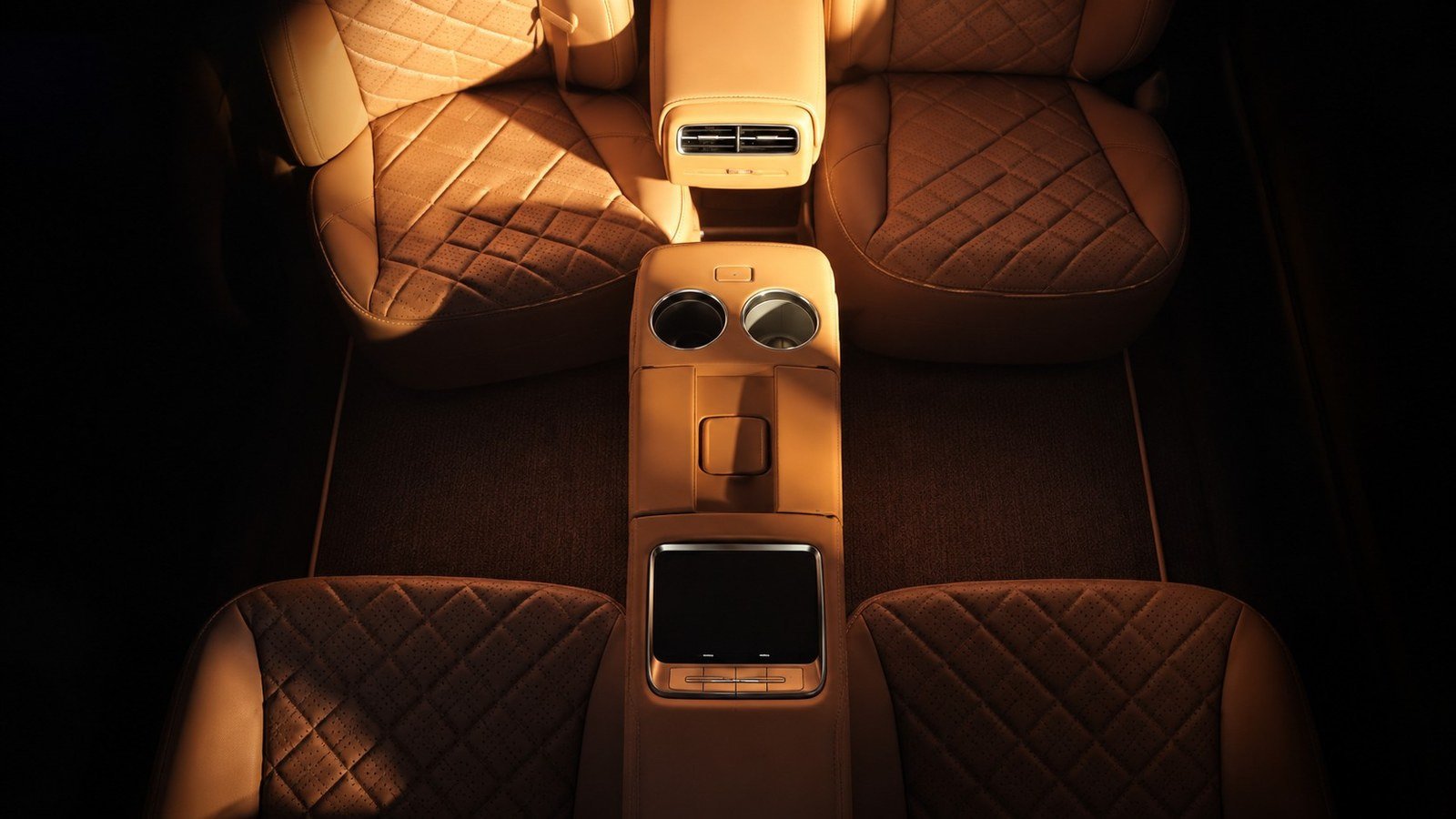
The Neolun Executive Suite adds a Comfort Partition that walls the second row off from the cargo area to block noise, plus roll blinds for the rear windows. Overhead, the Smart Vision Roof uses polymer-dispersed liquid crystal (PDLC) glass whose transparency can be set separately in six zones.
Cadillac is selling a different idea of rear-seat luxury. For the Escalade IQ and IQL, its Executive Second Row package brings stowable tray tables, 12.6-inch personal screens, a rear command center, and heated, ventilated massage seats with 14-way adjustment. That is a better back seat. Genesis is trying to turn the whole cabin into a room, with the 23.6-inch OLED that grows to 24.6 inches when parked (how the GV90's pop-up screen works) and a 25-speaker Bang & Olufsen system in a 7.1.4-channel Dolby Atmos layout. The rest of the matchup is in our GV90 vs. Escalade IQ comparison.
What Genesis still hasn't said
The briefing doesn't say which of these features are standard and which belong to the Neolun or the Executive Suite in the U.S. It doesn't give prices either. Those answers will decide whether the swivel-seat lounge is a showpiece or the version people actually buy. The previous installment covered the hardware underneath: standard air suspension and twin e-LSDs.