eMP vs. E-GMP: Why Genesis Built the GV90 on a Platform Hyundai and Kia Don't Get
The GV90 skips the platform under every other Hyundai Motor Group EV. eMP brings a bigger battery, an aluminum structure, and two e-LSDs — plus open questions Genesis hasn't answered.
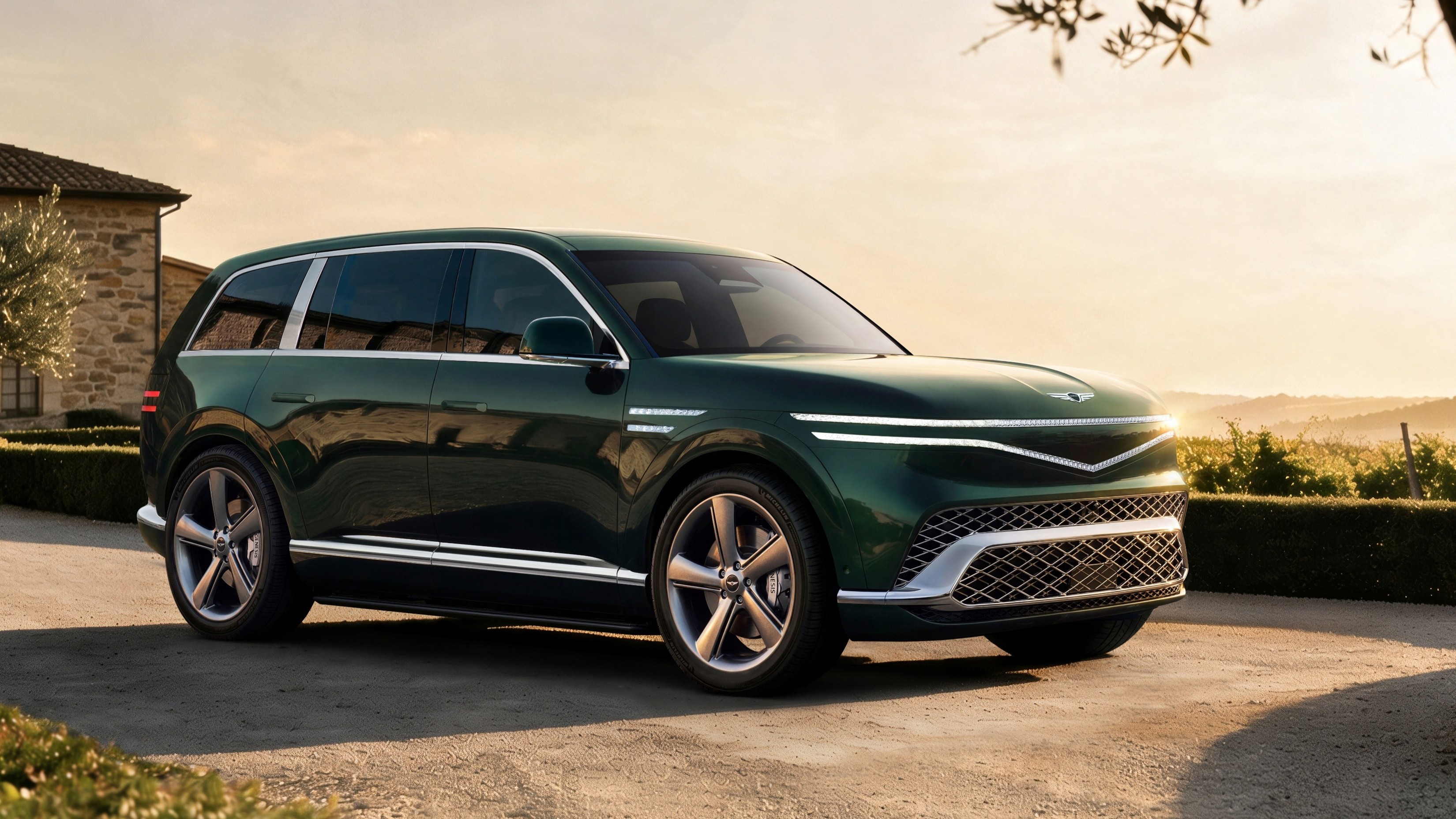
Hyundai Motor Group's dedicated EVs, from the Ioniq 5 to the three-row Ioniq 9 and the Genesis GV60, share one skeleton: E-GMP. The Genesis GV90 doesn't. It debuts eMP, short for Electric Mobility Prime, a platform Genesis says is reserved for its flagship.
That choice explains most of what makes the GV90 different from the Ioniq 9 it will inevitably be compared with. For price, timing, and the rest of the launch picture, see our 2028 Genesis GV90 guide. This piece is about what sits underneath.
What E-GMP is, and why it has limits
E-GMP, the Electric Global Modular Platform, was Hyundai's first architecture built only for EVs. Hyundai describes it as a chassis that packages the battery, motors, and power electronics together, with a wheelbase that can stretch to fit different body styles. No engine or driveshaft means a flat floor and more cabin space.
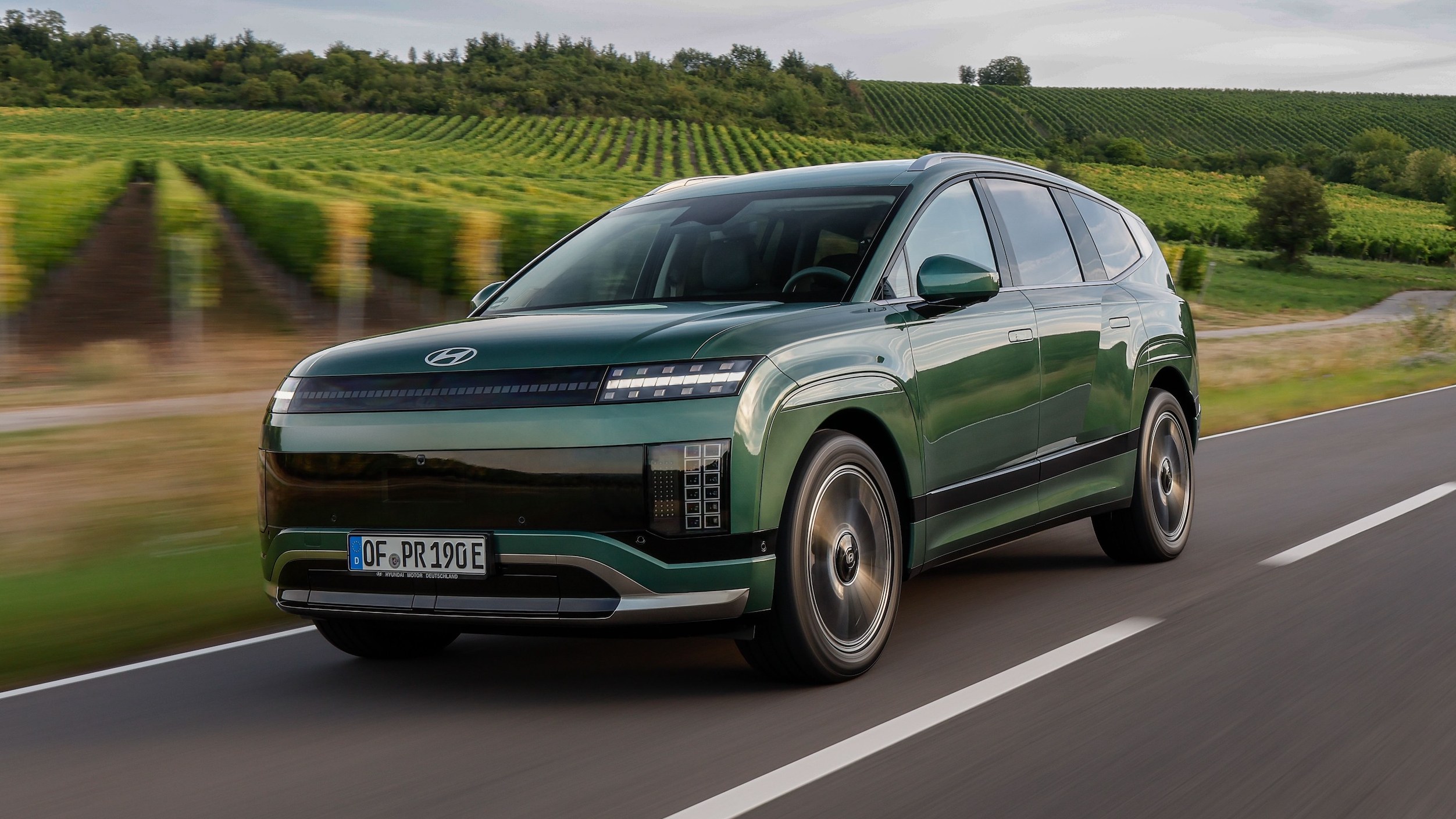
It is a volume platform. It has to underpin a compact crossover and a 199-inch three-row SUV, across three brands, at mainstream prices. The Ioniq 9 shows how far it stretches: Hyundai's U.S. spec sheet lists a 123.2-inch wheelbase, a 110.3-kWh battery, a steel unibody, and a peak of 422 hp in the Performance trim.
What eMP changes
Genesis has not published a full technical breakdown of eMP. What it has released, in the GV90's launch materials, points to four clear breaks from E-GMP.
A bigger battery. The GV90 carries a 123.5-kWh pack, which Genesis calls the largest in any Hyundai Motor Group EV. A wireless battery management system, Genesis says, improves packaging efficiency inside the pack.
More power. Two motors make a combined 657 hp and 590 lb-ft. That is 235 hp more than the most powerful Ioniq 9. Genesis also fits electronic limited-slip differentials to both axles, which it says is a first for the group.
A different body structure. Where the Ioniq 9 uses high-strength steel, the GV90's underbody is a skeleton of cast and extruded aluminum, with aluminum used widely for exterior panels. Genesis says this raises rigidity while cutting weight. It has not published a curb weight.
A flagship chassis. Multi-chamber air suspension, adaptive dampers, and rear-wheel steering of up to five degrees replace the Ioniq 9's conventional passive setup. The wheelbase grows to 127.8 inches.
| E-GMP (2026 Hyundai Ioniq 9) | eMP (Genesis GV90) | |
|---|---|---|
| Used by | Hyundai, Kia, Genesis | Genesis flagship only |
| Battery | 110.3 kWh | 123.5 kWh |
| Peak output | 422 hp / 516 lb-ft | 657 hp / 590 lb-ft |
| Wheelbase | 123.2 in | 127.8 in |
| Body structure | High-strength steel unibody | Cast and extruded aluminum underbody |
| Suspension | MacPherson front, five-link rear, passive dampers | Multi-chamber air, adaptive dampers |
| Rear-wheel steering | Not listed | Up to 5 degrees |
| Dual e-LSD | No | Yes (a group first, per Genesis) |
| DC fast charge, 10–80% (350 kW) | 24 min | 22 min (Genesis claim) |
| Range | Up to 335 miles (EPA) | About 310 miles (Genesis estimate); EPA TBA |
| B-pillarless doors | No | Yes (GV90 Neolun) |
Why Genesis needed its own platform
The clearest answer is the GV90 Neolun's doors. Front and rear doors open in opposite directions with no fixed pillar between them. Removing a B-pillar is hard on any car because that pillar carries crash loads and stiffens the body.
Genesis replaced it with high-strength dual steel beams where the doors meet the body, plus a cabin frame 1.5 times thicker than conventional designs, reinforced with steel tubes and structural foam. Genesis says that hidden roll cage delivers crash performance equivalent to a car with normal pillars.
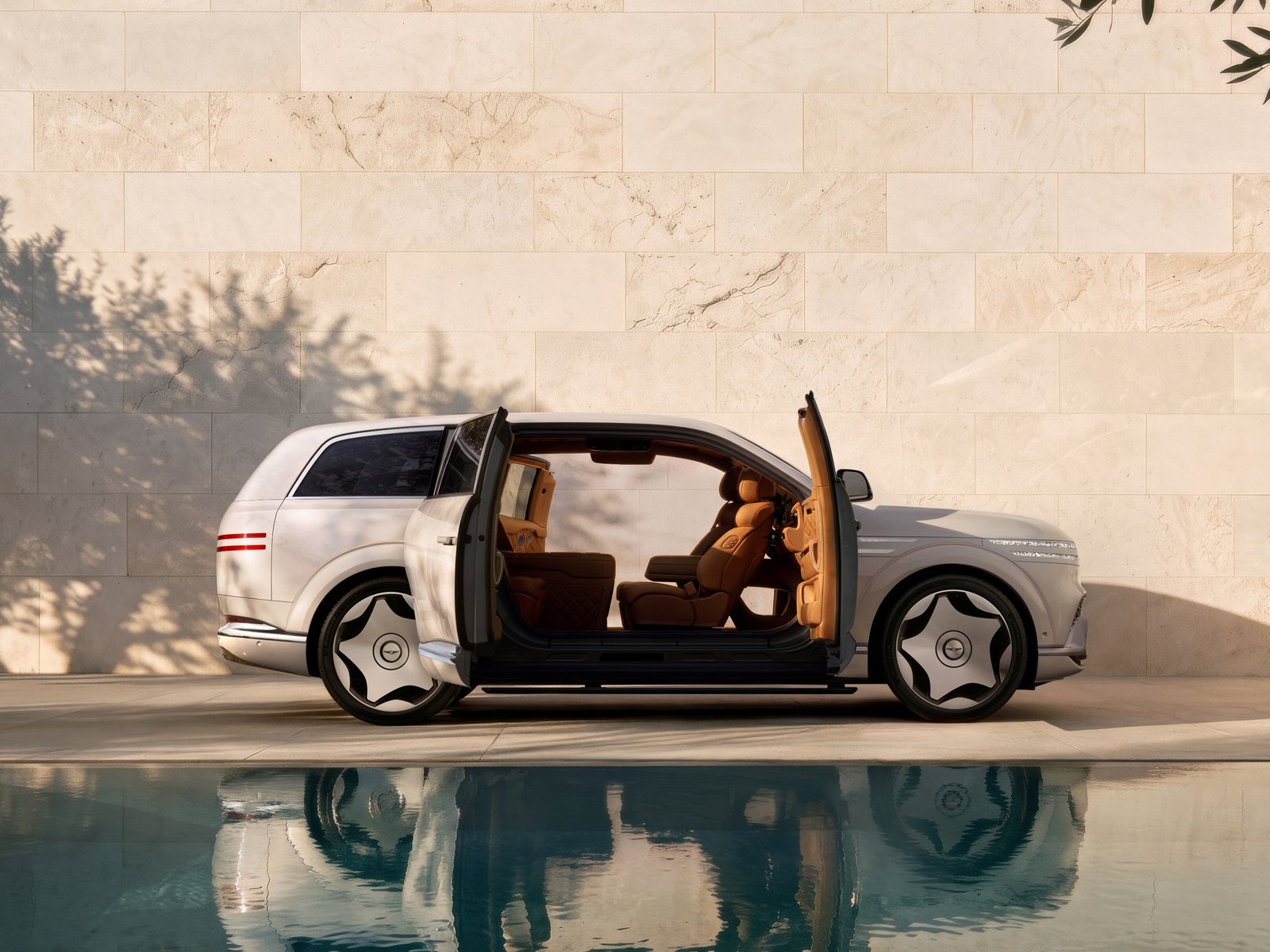
At a technical briefing in San Francisco, Hyundai Motor Group executives said the GV90 was developed from zero, with a new platform, battery architecture, body structure, and a dedicated EV plant in Ulsan, according to The Korea Herald. A Genesis body engineer said the Neolun is 12 percent stiffer than the version with conventional doors.
Engineering like that is expensive and heavy on tooling. It makes sense on a low-volume flagship. It would not make sense on a mainstream crossover, which is why E-GMP is not going away.
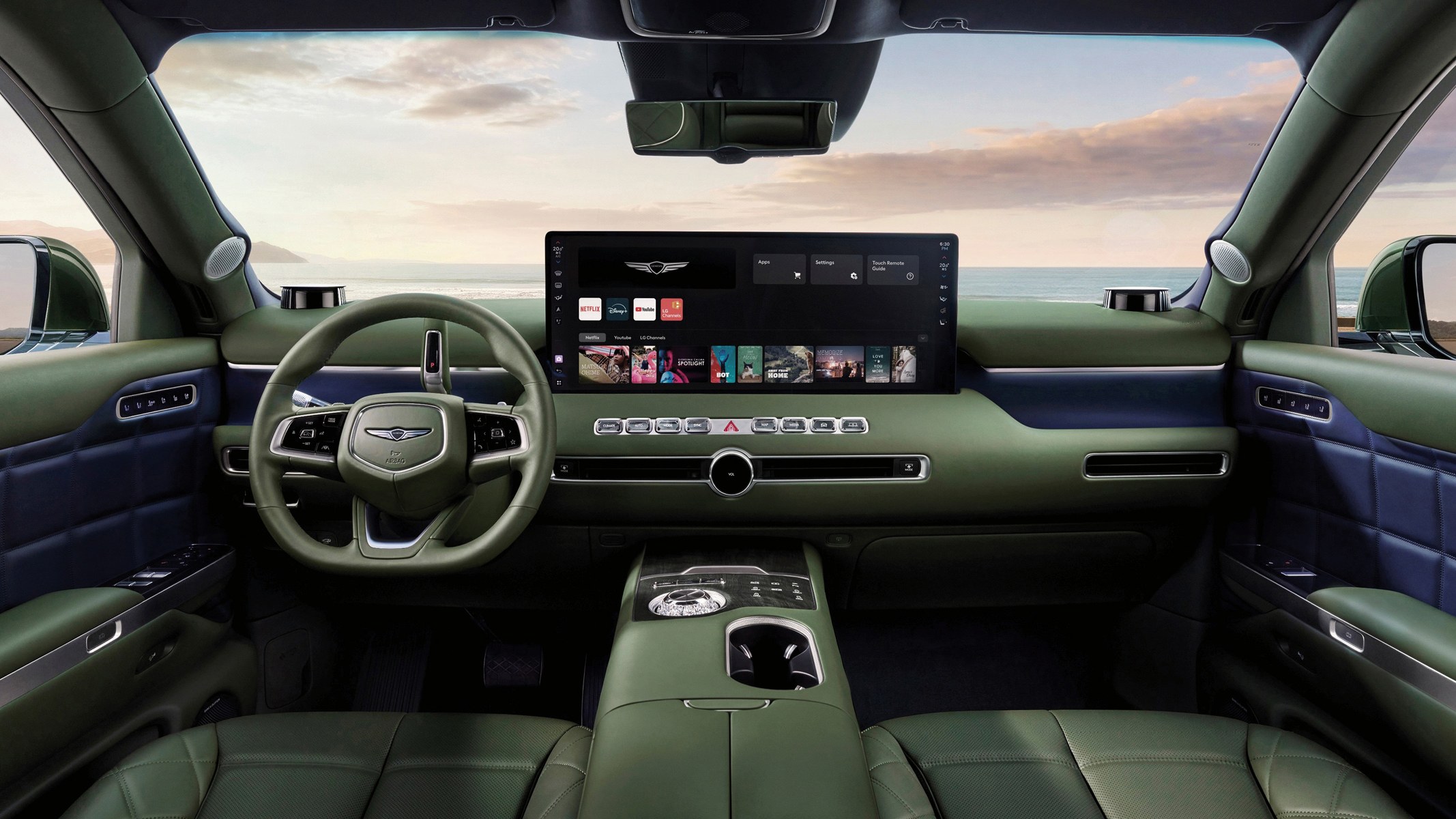
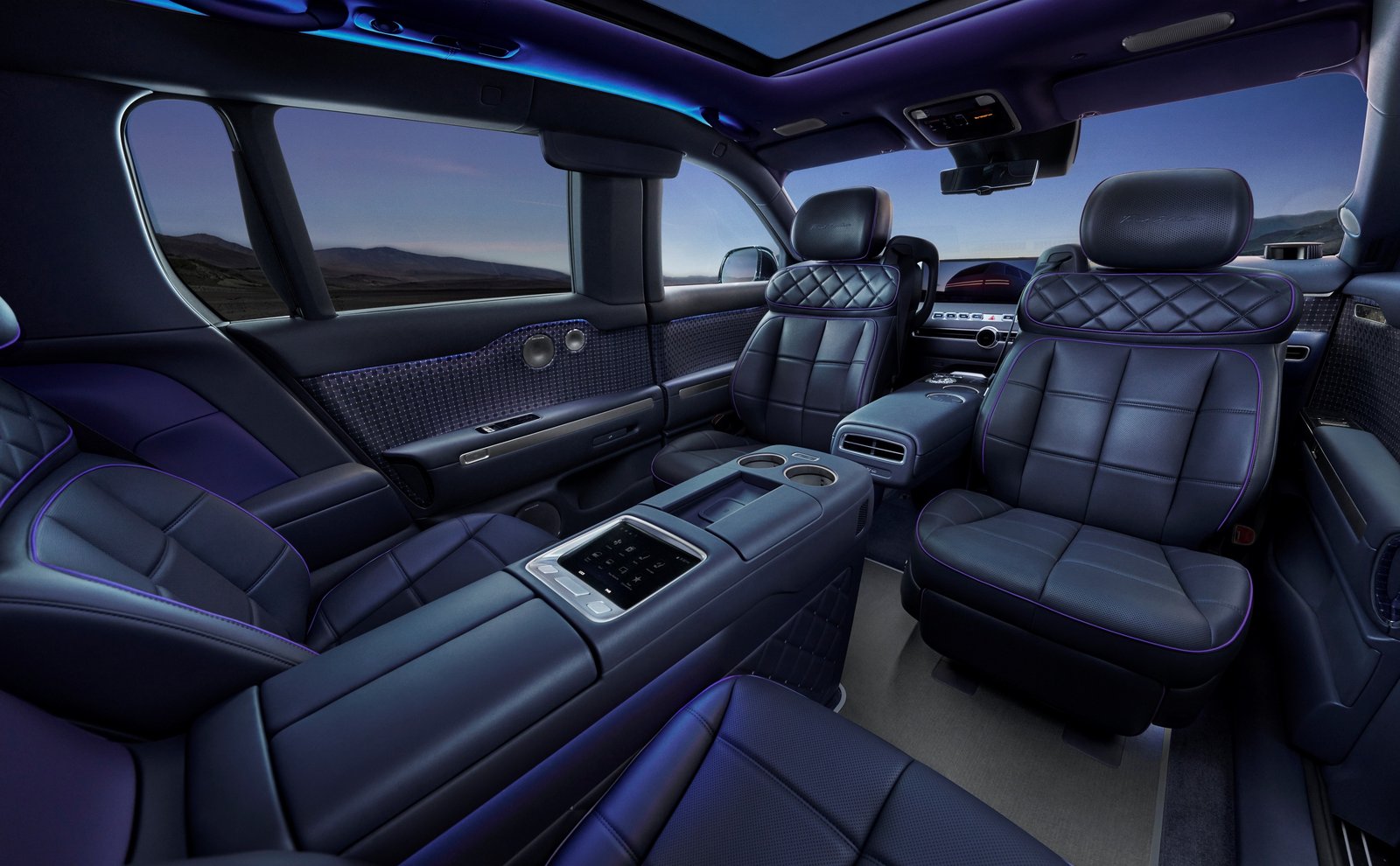
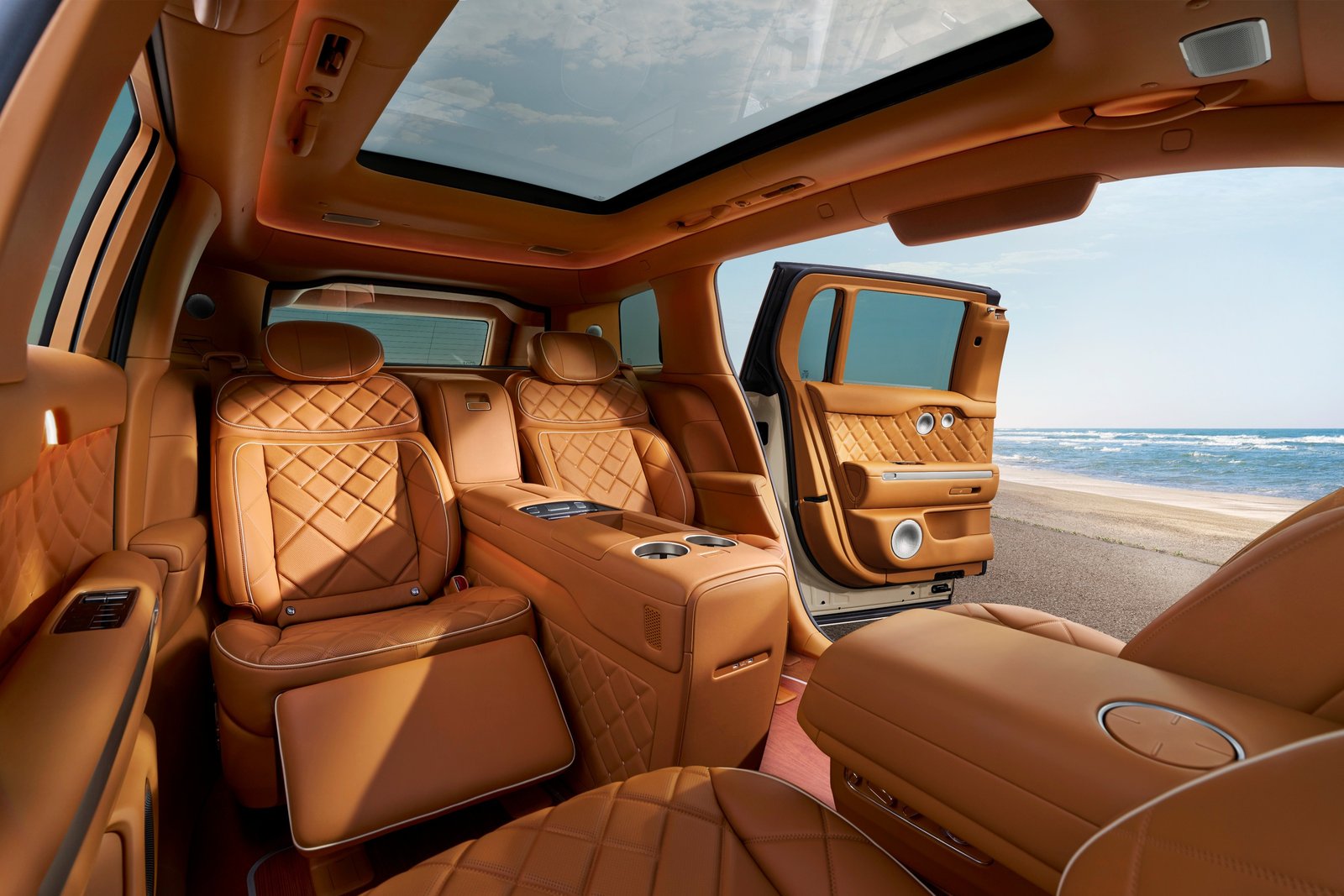
The payoff shows up inside, too. A 127.8-inch wheelbase and a flat floor give Genesis room for front seats that swivel 180 degrees in the Neolun, plus the pop-up cinematic display that rises from the dash when parked.
What this means if you're shopping
If you are looking at an Ioniq 5, Ioniq 9, or Kia three-row EV, nothing changes. E-GMP remains the group's mainstream EV foundation, and nothing Hyundai or Kia has announced points to eMP trickling down. Our Tesla Model Y vs. Hyundai Ioniq 5 comparison covers what E-GMP delivers at the price most buyers actually pay.
If you are shopping at the top of the market, eMP is the reason the GV90 can credibly aim above the Ioniq 9 rather than simply dressing it up. Whether that holds against rivals such as Cadillac's electric Escalade depends on numbers Genesis has not released yet. We lined up what is known in our GV90 vs. Escalade IQ comparison.
What we don't know yet
- How eMP relates to eM. In 2023, Hyundai announced an eM platform meant for EVs in every segment, and reports at the time pegged the GV90 as its first model. eMP, by contrast, is described as flagship-only. Genesis has not said whether eMP is a derivative of eM, a rename, or a separate program.
- Which models come next. A 2024 KED Global report, citing supplier requests for quotation, said Hyundai planned four Genesis models on the eM platform through 2033. That has not been confirmed, and the naming predates eMP.
- A second Genesis platform. Genesis Europe chief Peter Kronschnabl told Autocar earlier this year that a Genesis-specific platform for EVs and hybrids could debut as soon as 2027, according to electrive. Whether that is eMP or something else is unclear.
- EPA range and U.S. price. The roughly 310-mile figure is Genesis' internal estimate, not an EPA rating. Pricing has not been announced.
- Battery details. Genesis has not named the cell supplier, the chemistry, or the pack voltage.
- Whether Hyundai or Kia get it. Nothing announced so far suggests they will.
The GV90 is due in the U.S. in early 2027 as a 2028 model. Expect Genesis to fill in the platform picture as pricing and EPA figures arrive.