GM's New OnStar AI Will Replace Your Chevy, GMC, Buick, and Cadillac Apps
One OnStar app replaces myChevrolet, myGMC, myBuick, and myCadillac in 2027, and GM says eyes-off highway driving will reach its best-selling gas trucks and SUVs.
General Motors is retiring the apps that Chevrolet, GMC, Buick, and Cadillac owners use today to remote-start, lock, and locate their vehicles. Starting in 2027, a single OnStar app will replace myChevrolet, myGMC, myBuick, and myCadillac, along with the separate OnStar Guardian safety app, GM announced at its GM Forward event in New York on October 21.
The app is the phone-side half of a bigger shift. OnStar, now in its 30th year, is being rebuilt around an AI assistant. GM put a typed chatbot in front of business customers last month with OnStar Fleet Intelligence; the retail version starts in the car.
What changes for owners
The OnStar AI Assistant will reach the 2027 Cadillac Lyriq through an over-the-air update in the coming months, GM says, with more models to follow. The company says the assistant draws on GM's own vehicle knowledge and works alongside OnStar's human advisors, who handle more than 20 million calls a year in North America. The same assistant will sit inside the new app, so owners can ask questions about their vehicle away from it.
Beyond today's remote commands, GM says the app will add connected-camera features, including crash and safety recordings and a live view, plus new family and proactive-safety tools. Owners will choose which of those features are switched on and can change that later, according to the company.
Just as important is what GM left out. It hasn't said what the assistant or the new app will cost, whether either requires a paid OnStar plan, which models follow the Lyriq and when, or how the current brand apps will be handled before the switch.
The Lyriq is an unusual launch vehicle. Engadget reported in September that the 2027 Lyriq keeps Apple CarPlay and Android Auto, which would make it the only GM EV in North America with both. So the first GM car to get the in-house assistant is also the one where owners can most easily bypass it.
The plan has also narrowed in a year. At the same event last October, GM said a Gemini-powered assistant would reach OnStar-equipped vehicles from the 2015 model year onward in 2026. This year's announcement covered one 2027 model and didn't mention Gemini. Ford, meanwhile, said at CES in January that it is building an AI assistant into its Ford and Lincoln app this year.
Eyes-off driving is headed for gas trucks
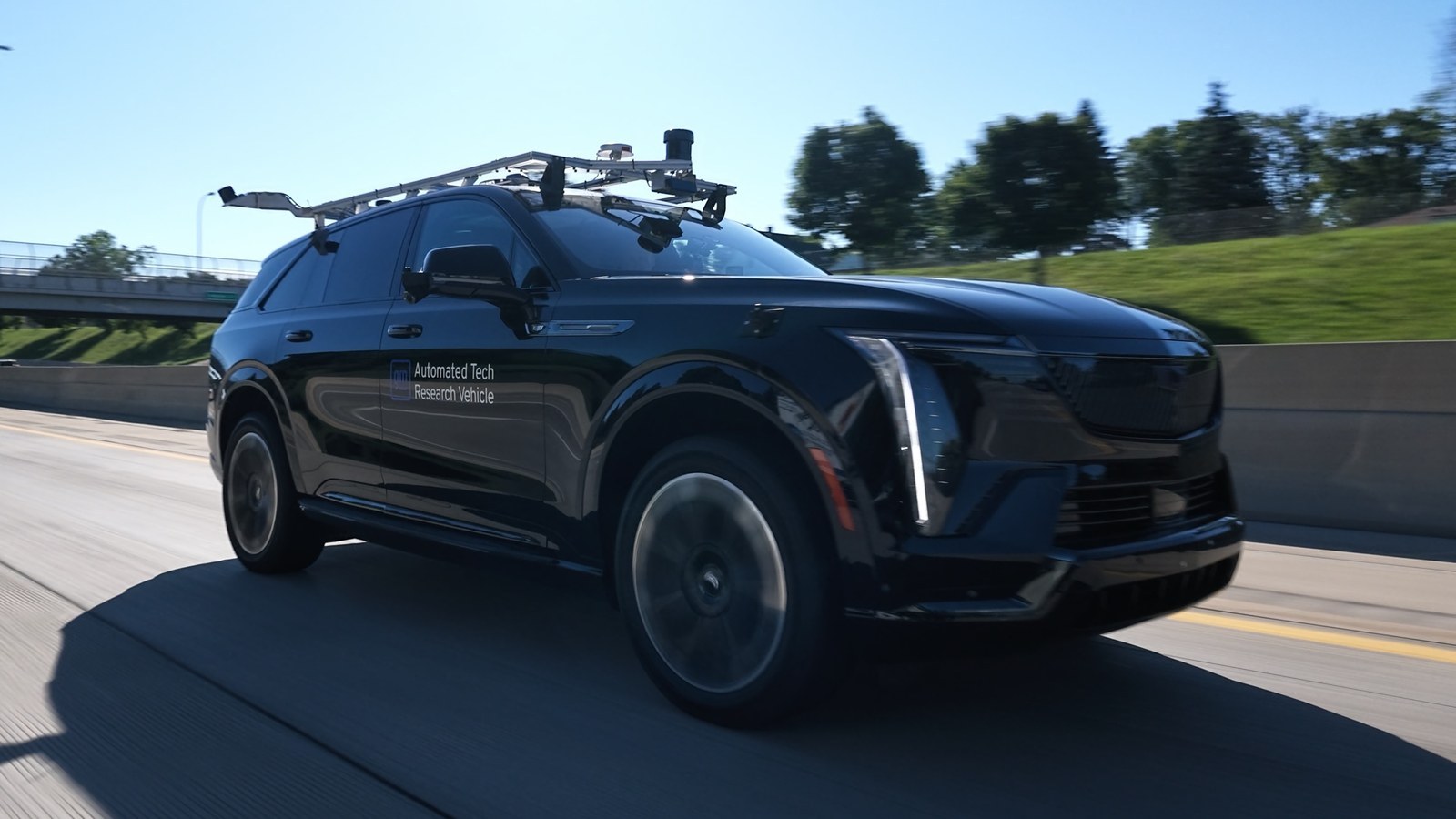
The second change involves GM's best sellers. Eyes-off highway driving still debuts on the Cadillac Escalade IQ in 2028, and GM says pre-production vehicles are now testing on closed courses. After that, GM plans to bring it to gas-powered models, including "some of our best-selling full-size SUVs and light-duty pickups." It didn't name models or model years.
That matters because no automaker currently sells an eyes-off system in the US, after Mercedes-Benz paused Drive Pilot, as we covered in GM's bid for the empty eyes-off market. Ford has also targeted 2028 for eyes-off BlueCruise, but on an electric pickup. GM's gas-truck plan has no date.
The enabler is a new Central Compute Unit that folds perception, propulsion, active safety, and chassis control into one computer. GM claims 40 times the computing power of its current systems, 30% less wiring length and mass, and up to 50% faster cellular connectivity. It debuts on the Escalade IQ in 2028, then spreads to GM's highest-volume gas full-size SUVs and trucks, its three-row crossovers, and its fourth-generation EVs. GM named the Chevrolet Silverado as one of the trucks that will get it.
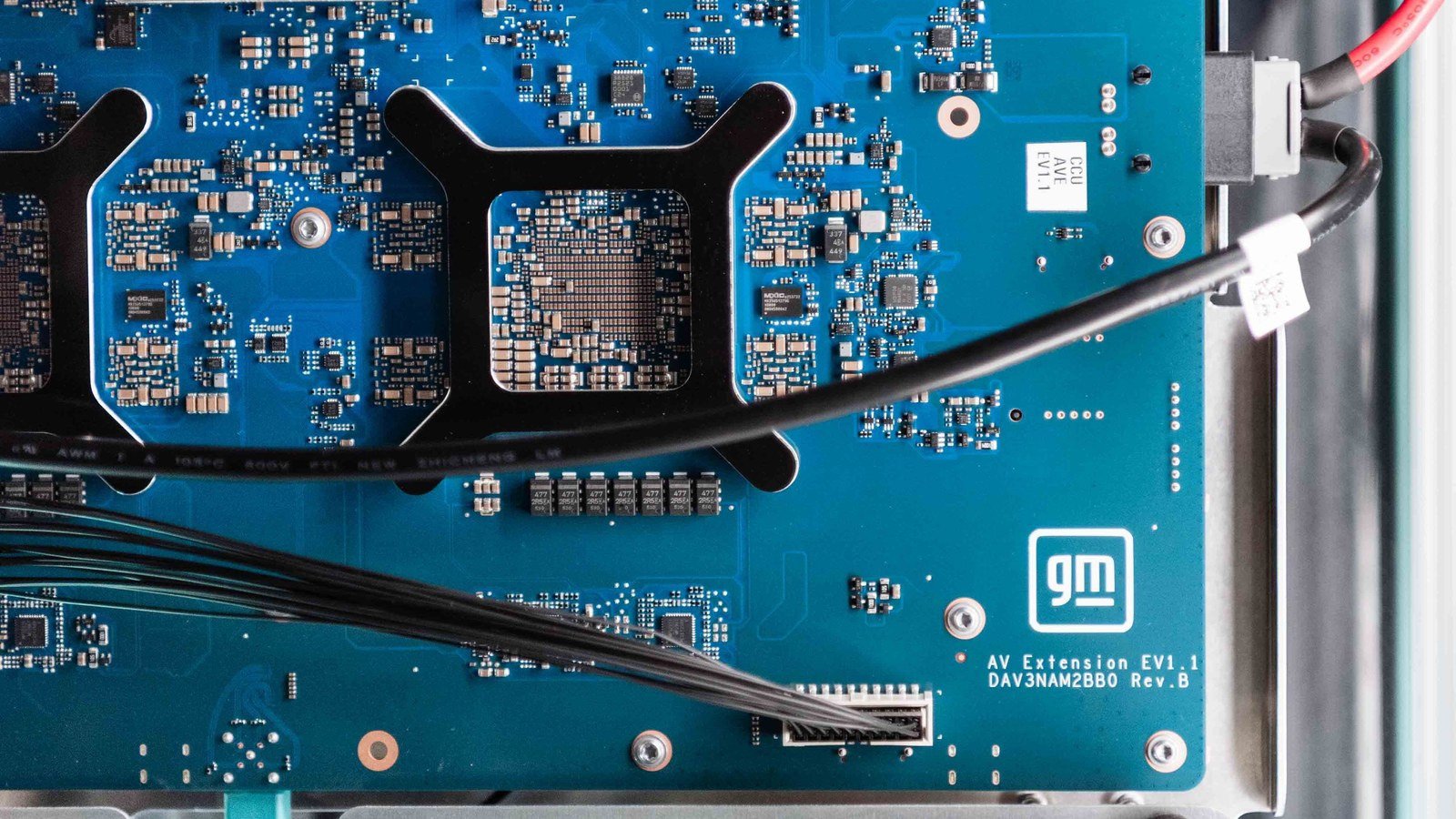
GM says its customers have now driven 1.2 billion miles with Super Cruise, and it cites the safety data from those miles as the foundation for eyes-off driving. For how that system stacks up today, see our comparison of every hands-free driving system.
A faster product cycle
Behind both announcements is a promise to cut GM's four-to-five-year development cycle in half. The company says it tested more than 300,000 virtual battery designs for its lithium manganese-rich (LMR) chemistry, going from first pack concept to program approval in a month. Those cells will anchor the fourth-generation EV platform, along with drive units that use 40% fewer parts than today's. The cells already have a factory in Tennessee, but GM hasn't named Gen 4 models or prices.
The next concrete step is the Lyriq update. After that, owners will be watching for the new app's launch date and price, and for the first gas-powered GM truck or SUV with eyes-off driving.