Three Automakers Answered the Manual Question This Week. The Answers Don't Match
Porsche left the door open, Corvette's chief engineer priced it shut, and BMW M blamed 48 volts. Add Alfa's number and you get the manual's next four years.
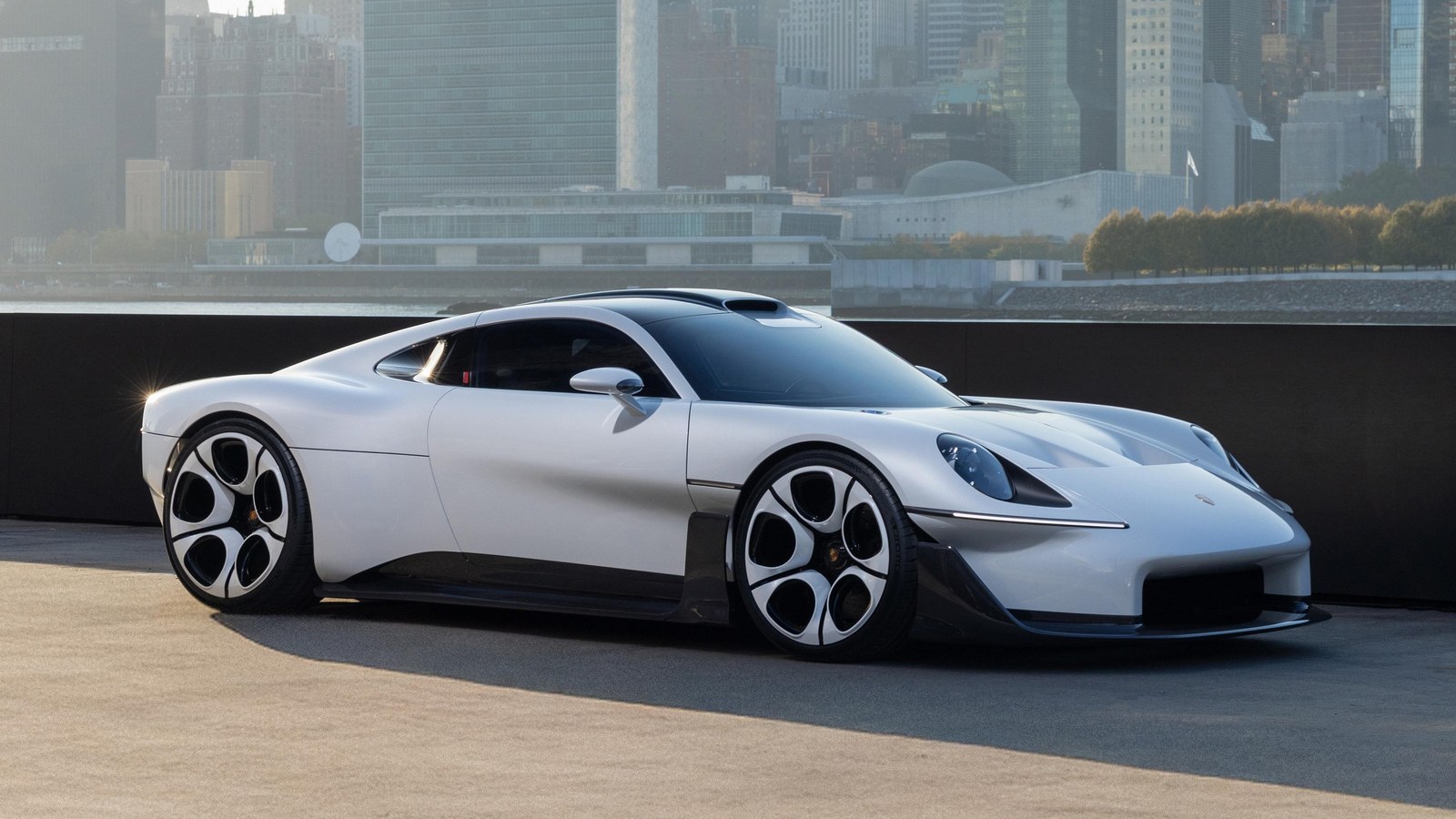
Three automakers answered the same question inside one week, and I'd argue the gap between the answers is the real story. Porsche CEO Michael Leiters, asked at the Mission S reveal in New York whether the new mid-engine platform could take a manual, said customer demand would decide what gets built on it. Two days later, Corvette chief engineer Tony Roma told The Drive's podcast that a three-pedal mid-engine Corvette is a cost problem no amount of enthusiasm solves. And BMW M boss Frank van Meel, at the M Festival in Shanghai, said the manual isn't finished at M but that keeping it has become "really difficult." For what Porsche has and hasn't said about the car itself, start with our Porsche Mission S guide; this piece is about why three engineering cultures land in three different places.
The lazy read is "the manual is dying." It isn't that simple, and it isn't that useful. The three answers come from three different balance sheets, three different electrical architectures, and three different ideas of what a buyer is paying for. Add Alfa Romeo, which quietly priced the same wish three weeks earlier, and you get a map of the next four years that no single quote provides.
Who said what, and what it means through 2030
| Automaker | What was said, and where | The actual constraint | What it means for 2027–2030 |
|---|---|---|---|
| Porsche | The Mission S platform can carry a manual; customer demand decides what gets built (Leiters, New York, Oct. 15; reported by Road & Track, Motor1, The Drive) | Demand and positioning, not engineering | No model, date, or volume named. Treat it as a door left open, not a promise. |
| GM / Corvette | Don't count on a manual in a mid-engine Corvette (Roma, The Drivecast, Oct. 17) | A clean-sheet manual transaxle costs too much for the volume; no homologated unit exists | C9 is effectively automatic-only unless a supplier delivers a certified transaxle GM doesn't have to fund. |
| BMW M | The manual isn't off the table, but 48-volt mild-hybrid systems make it "really difficult" (van Meel, Shanghai, Oct. 11) | Electrical architecture, plus a shrinking pool of gearbox suppliers | M2 and base M4 keep the clutch pedal for now; the next M3, reportedly due around 2028 with 48V, looks automatic-only. |
| Alfa Romeo | Buyers asked for a manual 33 Stradale; Alfa declined (Fiorio to Quattroruote, Sept. 28) | Cost: Fiorio said it would exceed double the car's price | A hint that a future bespoke project may answer such requests. Nothing confirmed. |
Porsche: the only "maybe," and a conditional one
Porsche's answer sounds like the most generous of the three, and in one sense it is. Leiters ruled nothing out. He said the platform could support more than one powertrain configuration and that what customers ask for would shape what Porsche builds. But read it as a Porsche executive would write it and it is a conditional sentence. No model was named. No date. No volume. Porsche has not said the production supercar will offer a manual; it has said the platform wouldn't stop one.
What makes the "maybe" credible is the data underneath it. Porsche Cars North America CEO Timo Resch has put the U.S. manual take rate on the 911 GT3 at roughly 80 percent, according to Motor1, and he has cited that number as the reason the Carrera S got its manual back for 2026. Porsche builds manuals because Americans buy them in numbers that pay for the certification. The difference from GM, in my view, isn't courage. The 911's manual is already engineered, crash-tested, and emissions-certified, and its buyers have made the business case visible. A mid-engine transaxle for the Mission S would still be a new program, which is exactly why Leiters tied it to demand rather than announcing it.
The Drive noted that the Mission S show car has a height-adjustable gear selector and read it as a tell. I'd file that as a design choice until Porsche says otherwise. What matters more is the runway: Porsche's 2035 plan positions this car as a permanent line above the 911, not a one-off, and a permanent line can add a gearbox in year three if the order book argues for it.
GM: the math problem
Roma's reasoning is the clearest of the three because it is the most specific. The front-engine C5, C6, and C7 Corvettes shared a manual architecture refined over roughly three decades and largely paid for, so keeping it cost little. The mid-engine C8 uses a transaxle with a different distance between the engine's front face and the axle centerline, so no existing manual fits. Building one means a clean-sheet program, and Roma called that prohibitively expensive for the number of cars that would carry it.
He also addressed the Tremec six-speed transaxle shown at SEMA last year, which the supplier said could slot into a C8. Roma's point was that a show-stand unit is not a homologated unit. Nearly a year on, he said, nobody has seen a running prototype. Certification for a GM product means durability, crash, emissions, and warranty exposure, and Chevrolet, not the supplier, would carry that bill.
Roma was careful not to say never. He said he loves manuals, owns several, and would build one if it made the car better and the business case closed. That last clause is the whole story. The C9 is his first clean-sheet Corvette, and he says it has to beat the C8 on performance without a price jump. A ground-up manual works against both goals. My read is that the question is settled for the C9's launch unless someone else pays for the gearbox. One caveat: reports put the C9's debut around 2028 with a combustion engine, but that timing comes from The Drive's reporting, not from GM.
BMW M: the architecture problem
BMW M's constraint is different in kind. Van Meel told BMWBLOG that the manual isn't finished, then listed three reasons it has become hard: more powerful engines, fewer gearbox suppliers, and BMW's move to 48-volt electrical systems, which he said don't work with a manual. He declined to give the full engineering explanation.
The 48-volt part deserves a sentence of context. A mild-hybrid system uses a starter-generator to restart the engine, run stop-start, and add torque at low revs, and those functions are calibrated around a transmission the car controls. A manual hands clutch engagement to the driver's left foot, which complicates every one of those handoffs. That is general engineering background, not van Meel's explanation; he didn't offer one.
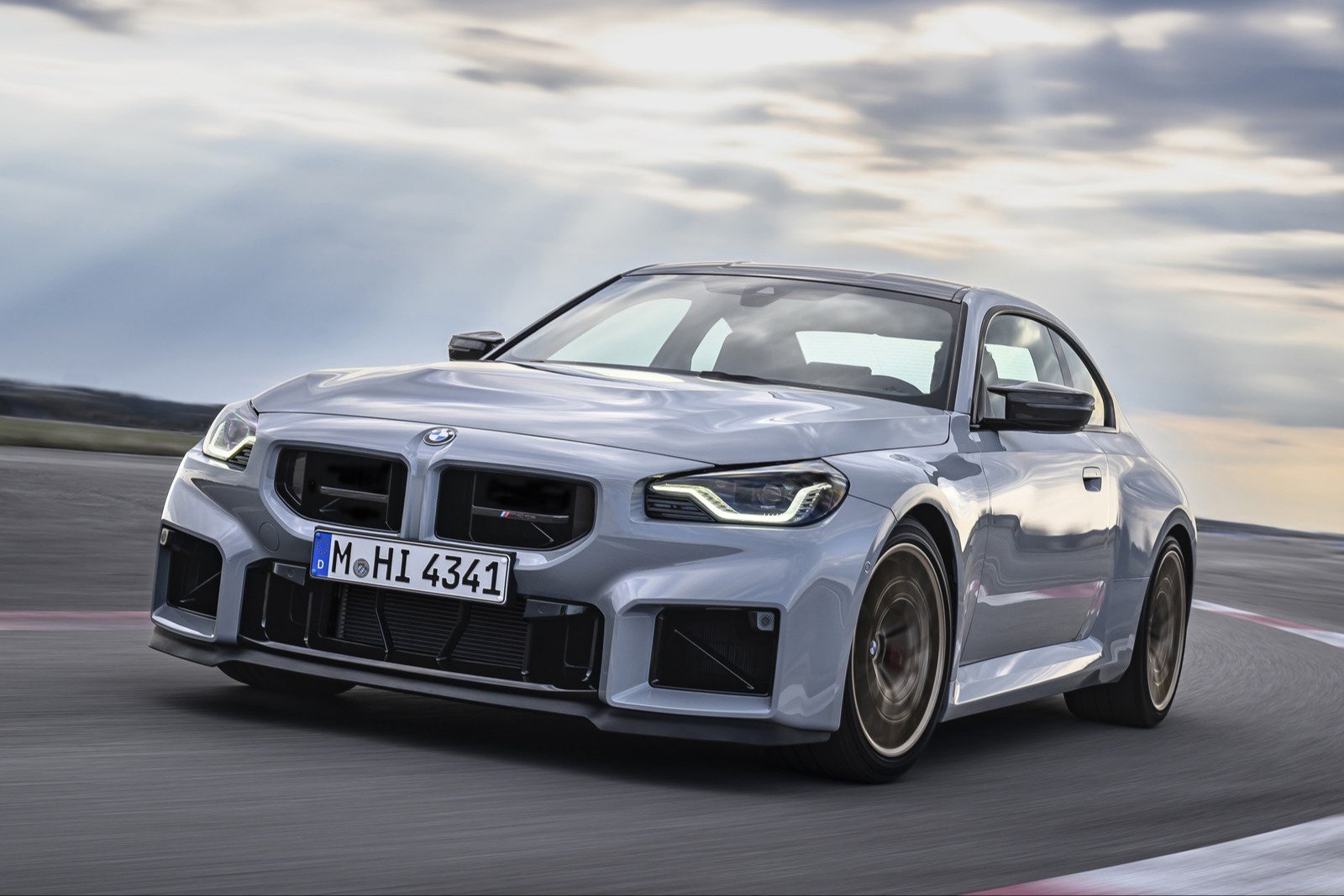
What's left at M today: the rear-drive M2 and the base M4 Coupe still offer a manual, as does the non-Competition M3 while it lasts, and the M3 CS Handschalter sold out as a manual-only limited run. The 2027 M2 with M xDrive is automatic-only. Van Meel said BMW M would look at the manual again because of the emotional attachment but added that he couldn't promise anything. BMWBLOG reports that the next M3, expected around 2028, will carry mild-hybrid assistance with xDrive and an automatic; that is the publication's reporting, not a BMW statement. Meanwhile BMW has already said where the electric M3 will be built, which tells you where M's development money is going.
Alfa Romeo: the price of a wish
Alfa's answer came three weeks earlier and sets the ceiling for everyone else. Cristiano Fiorio, who runs the Bottega Fuoriserie atelier, told Quattroruote that some 33 Stradale buyers asked for a manual. Alfa never engineered one for the car, and Fiorio said building it would cost more than double what those customers had paid. The request was declined. That is for a car built in the low dozens, like the one-off Perla Nera, and it puts a hard number on the problem: a manual for a tiny run costs more than the car.
Fiorio added that the 33 Stradale became the brief for the next project and that the atelier will try to address some of the requests it has received. He named no car and no feature. That is a hint, not a confirmation, and we'll treat it that way until Alfa says more.
Three constraints, one pattern
Line the four answers up and the pattern has nothing to do with enthusiasm. Alfa's number is the ceiling: at a few dozen cars, a manual costs more than the car. GM's problem is the same ceiling at a higher volume: a clean-sheet transaxle for a few thousand cars a year doesn't close. BMW's problem sits upstream of volume, in an electrical architecture every future M car will share. Porsche's advantage is that its manual is already paid for in the 911 and its U.S. buyers have shown, in take-rate numbers, that they will pay for the privilege.
For the shopping list, none of this week's news removes a car from every new car you can still buy with a stick in America. Twenty-seven models still had a clutch pedal when we last counted. What the week tells you is where that list won't grow: no manual mid-engine Corvette, no mild-hybrid M3 with three pedals, and a Porsche supercar whose manual depends on how many people ask for it.
What we don't know
- Porsche has named no model, date, or volume for a manual on the Mission S platform, and the production car's engine, price, and timing remain unannounced.
- GM has not said never. Roma described a cost barrier, not a policy, and a certified supplier transaxle would change the math. GM has not confirmed the C9's debut timing.
- BMW M hasn't explained the 48-volt incompatibility in technical terms, and the next M3's powertrain details come from BMWBLOG's reporting, not from BMW.
- Alfa Romeo has not confirmed a manual for any future car. Fiorio's comment is a hint at most.