Toyota's Profit Is Back on Hybrids. Why the RAV4 Is Still Hard to Find
Toyota's quarterly operating income jumped 34% on hybrid demand, and North America is back in the black. The same demand keeps RAV4 lots thin and discounts small.
Toyota's profit is growing again, and hybrids are the reason. In the July–September quarter, operating income rose 34% to ¥1.13 trillion, about $7.1 billion at today's rate of roughly ¥158 to the dollar. The company also raised its full-year operating income forecast by ¥500 billion, to ¥3.9 trillion (about $24.7 billion), according to the results Toyota published on November 5.
If you have tried to buy a RAV4 this year, those numbers explain your experience at the dealer. The same hybrid demand that is rebuilding Toyota's profit is why the RAV4 is still scarce, why discounts are thin, and why the waits we tracked in our RAV4 shortage guide haven't gone away.
What Toyota reported
For the first half of its fiscal year (April through September), Toyota earned ¥2.19 trillion in operating income, up 9.2%, on revenue of ¥26.96 trillion. The operating margin held at 8.1%. The quarter came in well above the ¥992 billion that analysts had expected in a Reuters survey published ahead of the release.
Not every line went up. Net income for the quarter fell 18.5% to ¥759.4 billion, because non-operating items swung from a ¥386 billion gain a year earlier to a ¥137 billion loss. The operating side, where cars are built and sold, is the part that improved.
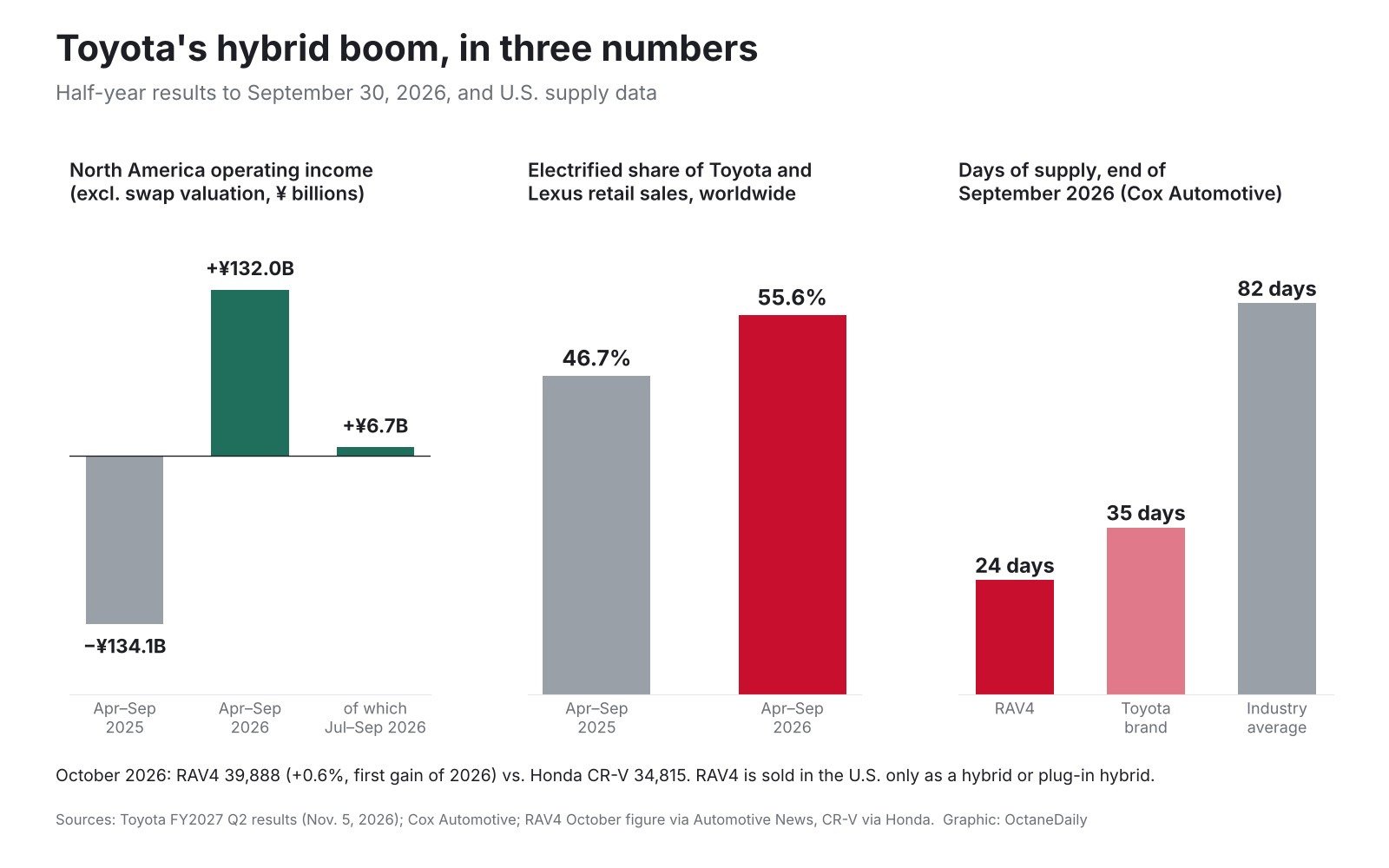
Toyota's own summary is short: vehicle sales "remained resilient, led by HEVs." Hybrids, plug-ins, and EVs made up 55.6% of Toyota and Lexus retail sales worldwide in the half, up from 46.7% a year earlier. Conventional hybrids alone rose 8.3% to 2.45 million, while total Toyota and Lexus retail volume fell 4%, mostly because of weaker demand in China and the Middle East.
North America is profitable again, barely
The figure that matters most for U.S. buyers is North America. A year ago, the region lost ¥134 billion in the first half, and it ended the fiscal year that closed in March ¥299 billion (about $1.9 billion) in the red. Toyota blames tariffs. In this half, North America earned ¥132 billion, about $840 million, on a 1.1% margin. Toyota says the region "returned to profitability largely due to price revisions and the reduced impact of U.S. tariffs."
Two details are worth noticing. North American revenue grew 13.9% while consolidated vehicle sales in the region rose 5.6%, so each car is bringing in more money. Part of that comes from the weaker yen: Toyota averaged ¥159 to the dollar in the half, versus ¥146 a year earlier. The rest comes from price and mix. And almost all of the region's profit was earned in April–June. In July–September, North America made ¥6.7 billion, a 0.1% margin.
Japan, meanwhile, earned ¥1.26 trillion at a 10.7% margin. That segment includes the factories that export to the U.S., among them Takaoka, one of the four plants now building RAV4s for American buyers. In my view, that is the clearest way to read Toyota's hybrid boom: the demand is American, but most of the profit is booked in Japan.
What tariffs still cost
Toyota did not publish a new tariff figure in its November presentation. It credits "reduced tariff-related costs" for part of the higher forecast but gives no number. The latest figure it has published came in August, when finance chief Takanori Azuma told analysts that Toyota had projected U.S. tariffs would cost ¥1.38 trillion this fiscal year, about $8.7 billion, and that it now expected that to come in ¥70 billion lower. Vehicles from Japan pay a 15% U.S. tariff under the trade deal implemented in 2025.
In the same August session, Azuma said rising material costs would hit Toyota by about ¥1.2 trillion this fiscal year and that the company aims to recover roughly half of that through price revisions. He also said Toyota does not intend to pass the costs on to customers all at once. That is a global statement about the whole company, not a specific promise about RAV4 prices, and we're treating it that way.
Why the RAV4 finally grew
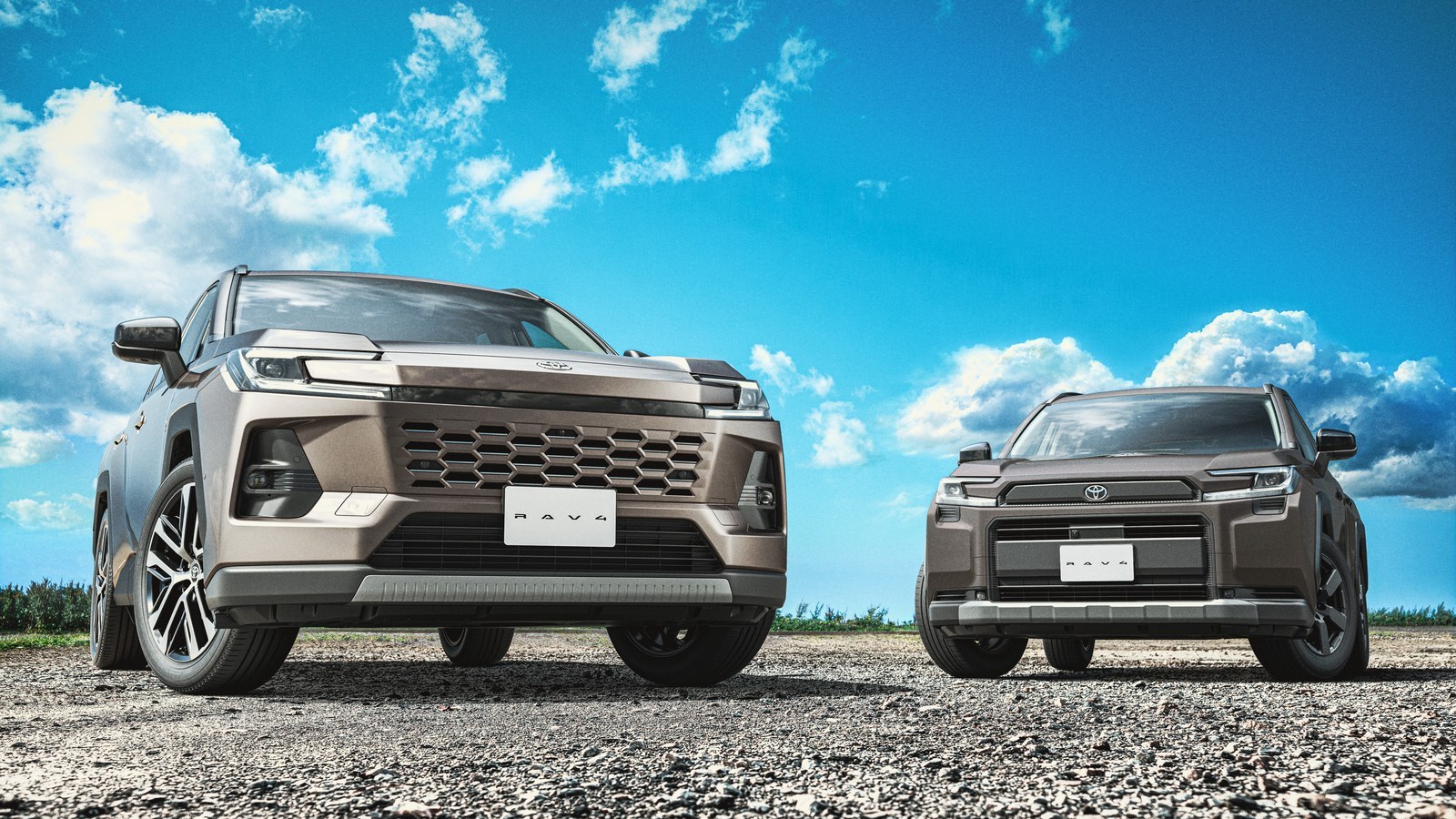
The 2026 RAV4 is sold in the U.S. only as a hybrid or plug-in hybrid. It is the biggest piece of a lineup that, as our breakdown of Toyota's hybrid-only models shows, has been moving away from gas-only versions. The redesign required retooling plants in Japan and Canada, and Kentucky didn't start building the new model until June, so supply has trailed demand all year.
October was the first month that changed. Toyota now reports U.S. sales by quarter, so October isn't covered by a Toyota release. According to Automotive News, as reported by Autoblog, the RAV4 sold 39,888 units in October, up 0.6% from a year earlier and its first gain of 2026. About 84% were regular hybrids and the rest plug-ins. The Toyota brand sold 188,392 vehicles, up 5.7%, and roughly 57% of Toyota and Lexus sales were electrified.
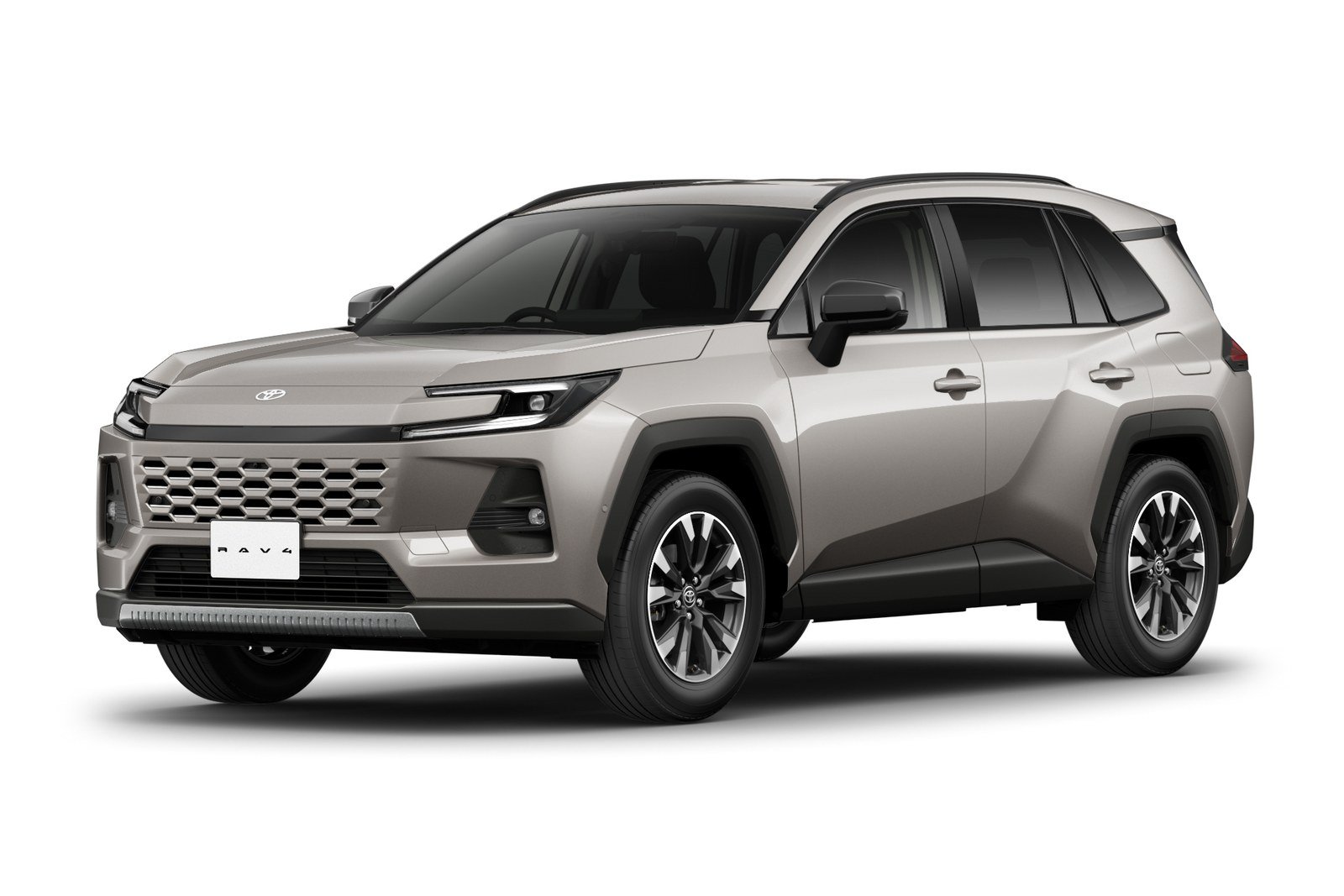
That was enough to beat the Honda CR-V for the month. Honda sold 34,815 CR-Vs in October, a record for the month, and 53% were hybrids, as we noted in our October sales roundup. For the year, though, the CR-V still leads by about 78,000 units, according to CarBuzz's tally: 371,659 to the RAV4's 293,552, which is down 26.2%.
What it means at the dealer
Inventory is still lean. Cox Automotive data shows the RAV4 at 24 days of supply at the end of September and Toyota at 35 days, the tightest of any major brand, against an industry average of 82. Toyota's own measure is tighter still: in its presentation, the company puts total days of inventory at 11 and hybrids at six at the end of September. The two companies count differently, but they point the same way. According to Autoblog's reading of Automotive News, Toyota had 29 days of supply at the end of October, and more than half of it was still in transit.
Lean inventory means small discounts. Toyota says its incentive spending per vehicle fell 60% between the fiscal years ended March 2020 and March 2026, and it again describes its incentives as among the lowest of any full-line automaker. Across the industry, Cox put the average incentive at $3,359, or 6.6% of the transaction price, in September. On a RAV4, expect to pay sticker: the 2026 RAV4 starts at $31,900 before a $1,450 destination fee.
My bet is that this pattern holds as long as Toyota's hybrid order backlog does. The company says that backlog "continues" and that it is adding hybrid capacity, including more output at its North Carolina battery plant and battery expansion in 2027 and 2028. Until that capacity arrives, a RAV4 shopper's real choice is waiting or switching. Our CR-V Hybrid vs. RAV4 Hybrid comparison covers the most direct alternative, and our five-year cost breakdown shows what each RAV4 powertrain costs to own.
What we don't know yet
Toyota doesn't report profit for the U.S. separately from Canada and Mexico, so we can't say how much it earns on a RAV4 sold in America. It also hasn't given a date for when RAV4 supply will catch up with demand. The Kentucky ramp and the battery expansion are the only official signals, and we'll report it separately if Toyota sets a timeline. Toyota's fourth-quarter U.S. sales report is due in early January.