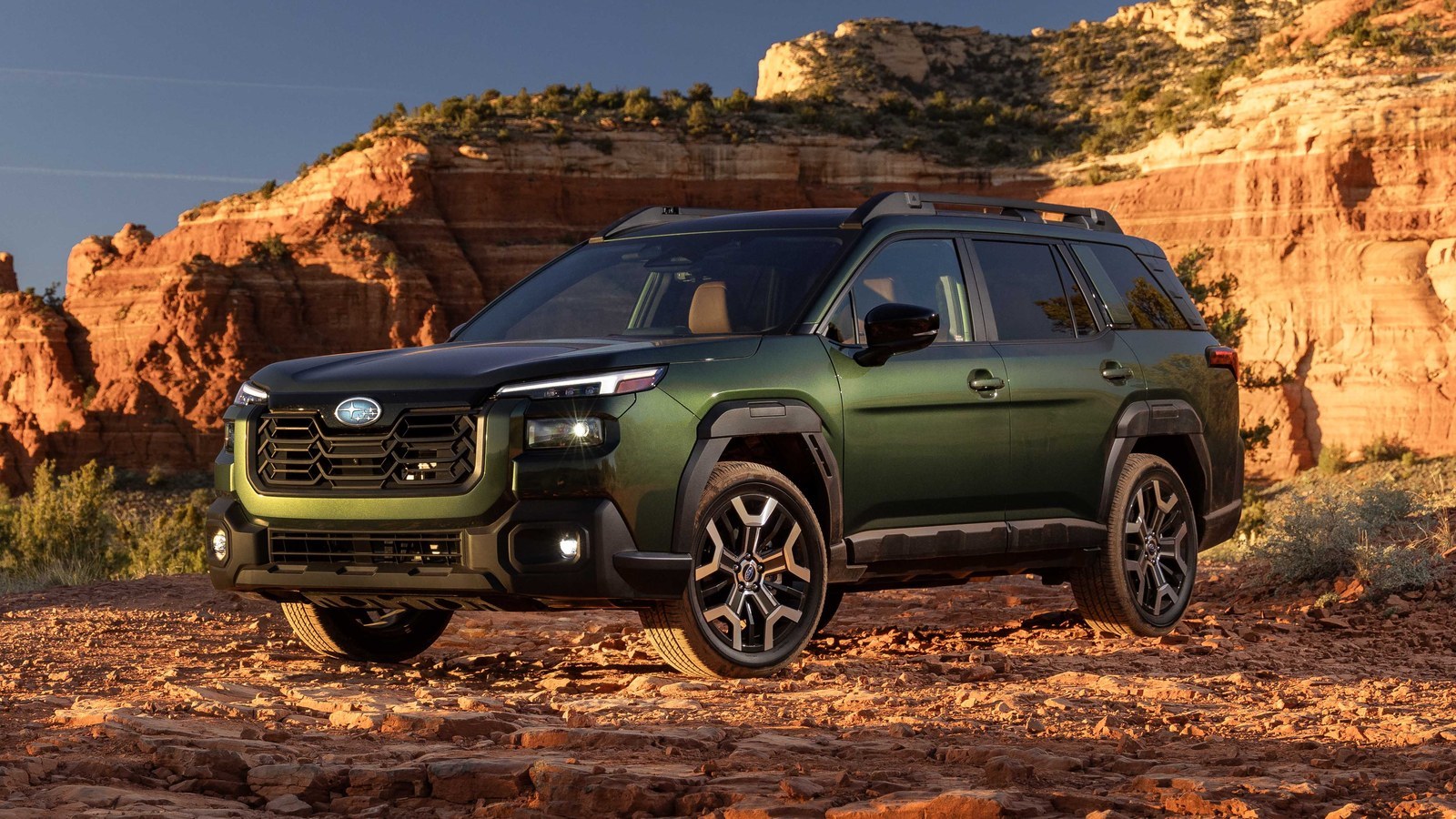
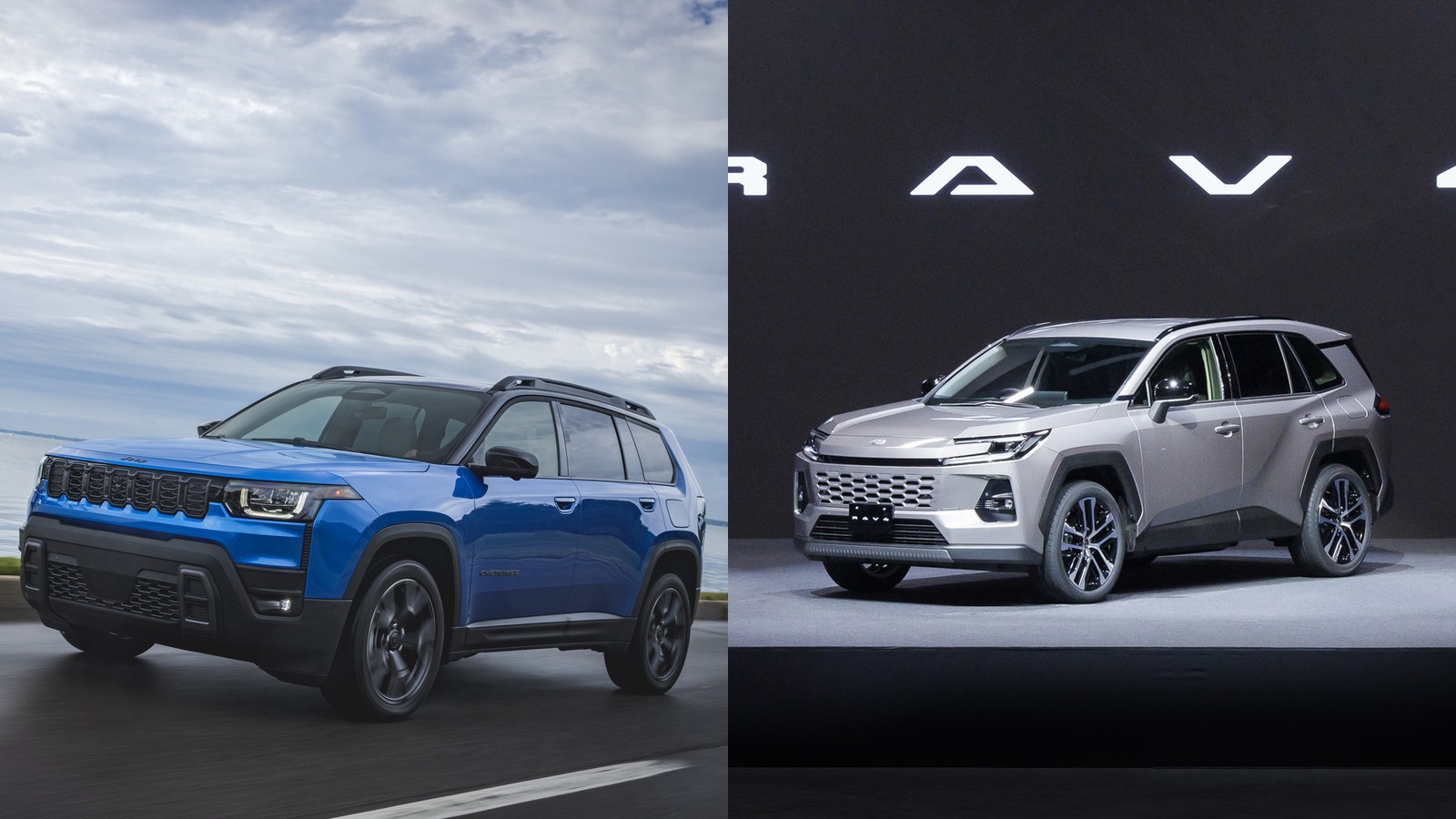
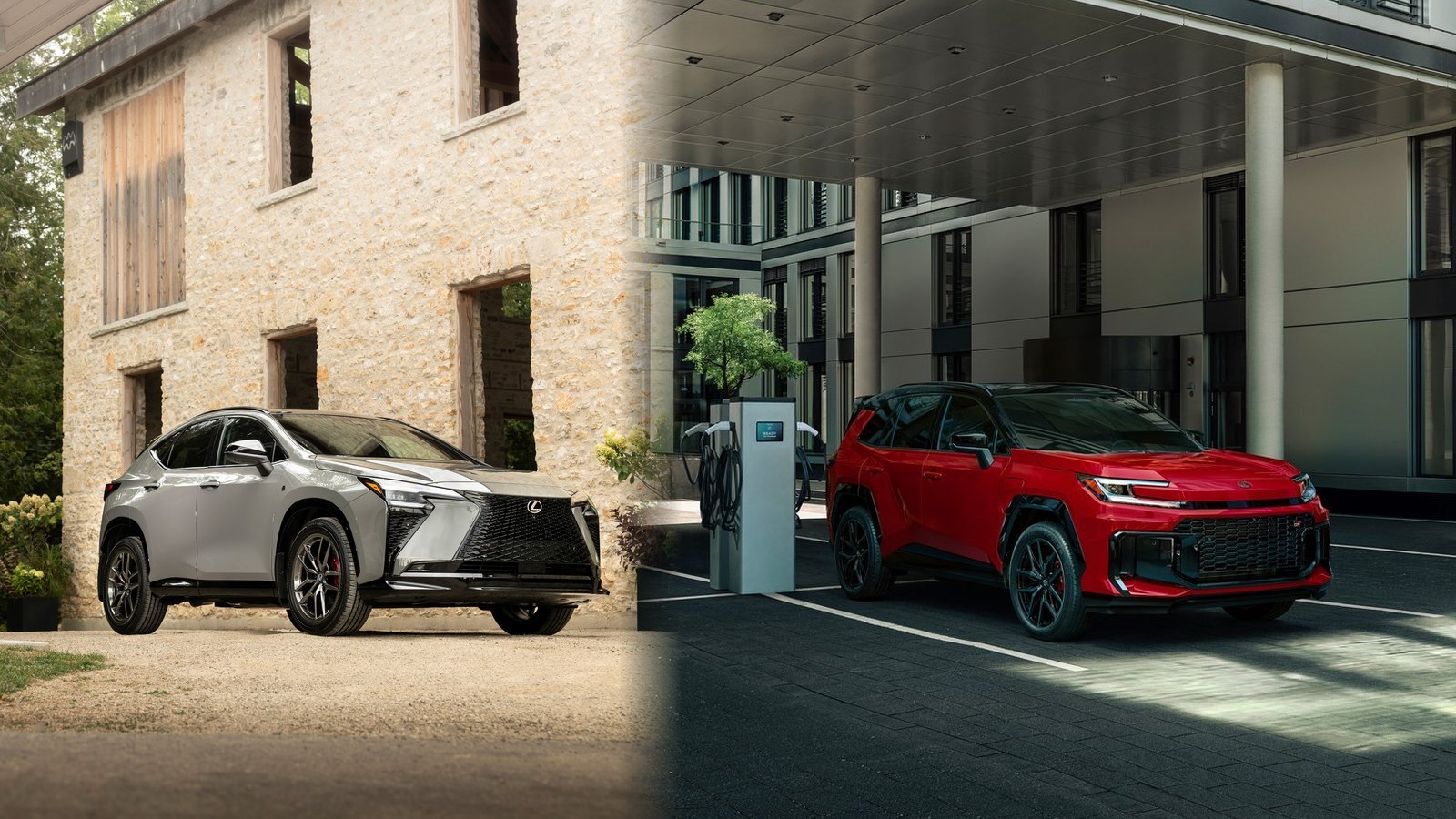
Outback vs. Forester After the Price Cut: Which 2027 Subaru Should You Actually Buy?
The new $32,995 base Outback undercuts a Forester Premium with its liftgate package by $180. The Outback wins on cargo and towing, the Forester on price and running costs.
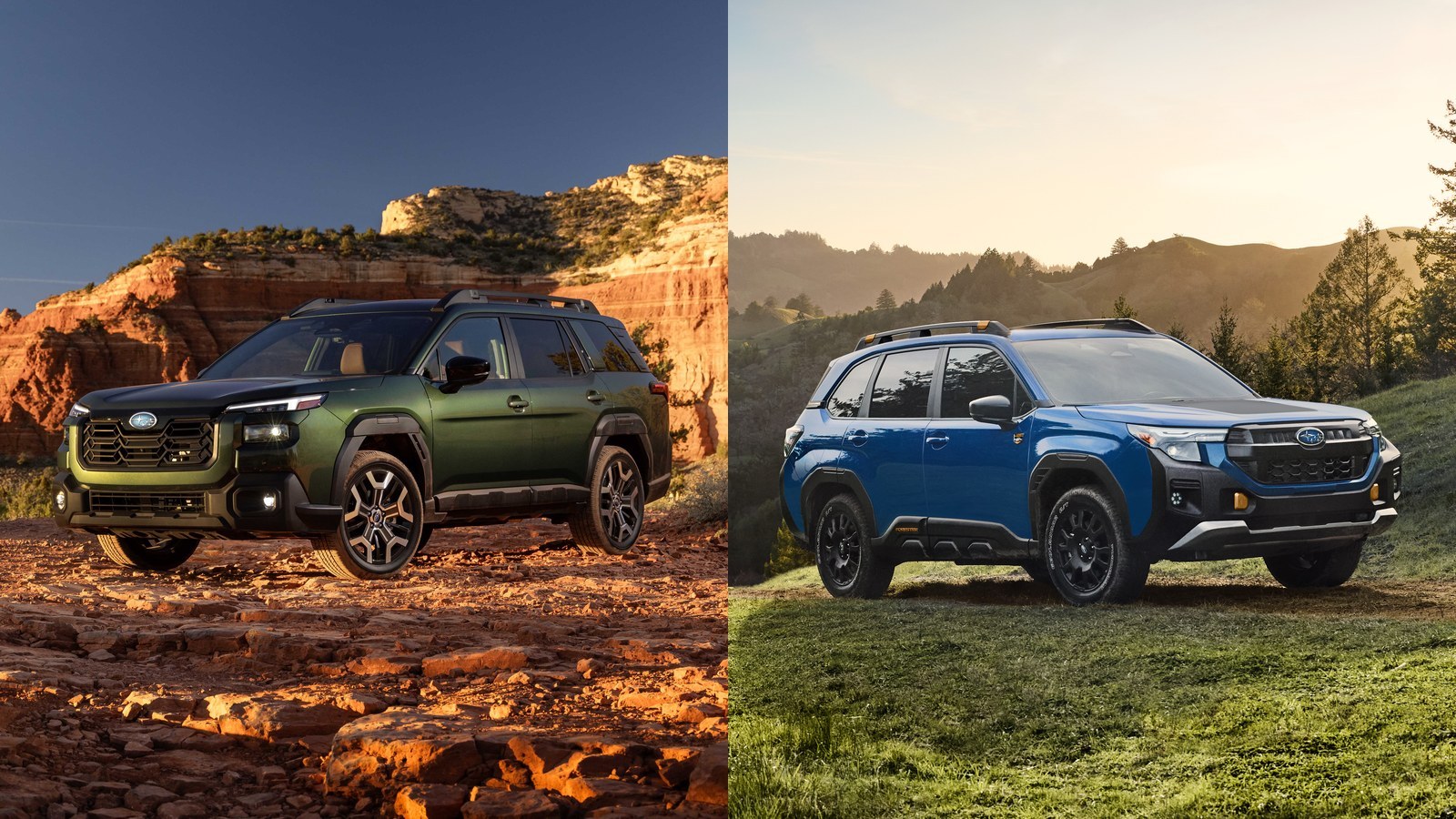
For years, the Subaru decision came with a clean price ladder: the Forester was the sensible compact, and the Outback was the bigger, pricier step up. Subaru's new $32,995 base Outback blurs that line. The cheapest 2027 Outback now sits $3,000 above the cheapest 2027 Forester, down from a $5,000 gap between the 2026 models, and once you equip the two the same way, the difference at the bottom of the range nearly vanishes.
Both cars are 2027 models in this comparison. Subaru held 2027 Forester prices flat in September, so we're working from the current price lists for both. Here's where the extra Outback money goes, and where the Forester simply wins.
The price ladders, side by side
All figures are MSRP before destination, which adds $1,545 to an Outback and $1,525 to a Forester, according to Subaru's 2027 Outback and 2027 Forester pricing announcements.
- $32,000 to $35,000: Forester Premium $31,995, base Outback $32,995, Forester Premium Hybrid $34,730, Outback Premium $34,995.
- $37,000 to $40,000: Forester Limited $37,595, Forester Sport Hybrid $37,930, Forester Limited Hybrid $38,995, Forester Wilderness $39,495, Outback Limited $39,995.
- Above $40,000: Forester Wilderness Hybrid $40,495, Forester Touring Hybrid $41,545, Outback Touring $43,495, Outback Limited XT $43,595, Outback Wilderness $43,995, Outback Touring XT $46,595.
The Forester lineup tops out roughly where the Outback's middle begins. The range-topping Forester Touring Hybrid costs $1,950 less than an Outback Touring, and the $29,995 base Forester has no Outback counterpart at all.
Base Outback vs. Forester Premium: the new close call
The $32,995 Outback isn't a stripped price leader. It gets a 12.1-inch touchscreen with wireless Apple CarPlay and Android Auto, a 12.3-inch digital gauge cluster, heated front seats, a power liftgate, and X-MODE. The base Forester makes do with dual 7.0-inch screens and wired phone mirroring, and it goes without heated seats and X-MODE.
The fair rival is the Forester Premium. Add its $1,200 package with a power liftgate and blind-spot detection, and it comes to $33,195, or $34,720 with destination. That's $180 more than a base Outback at $34,540. The Forester counters with a panoramic moonroof, a 10-way power driver's seat, a wireless charger, and an 11.6-inch screen. The Outback answers with the bigger screen, the digital cluster, and far more room once the rear seats fold.
How they compare
| Spec | 2027 Outback | 2027 Forester | Edge |
|---|---|---|---|
| MSRP range | $32,995–$46,595 | $29,995–$41,545 | Forester |
| Destination | $1,545 | $1,525 | Even |
| Base engine | 2.5L flat-four, 180 hp / 178 lb-ft, CVT, AWD | 2.5L flat-four, 180 hp / 178 lb-ft, CVT, AWD | Even |
| Other powertrain | 2.4L turbo, 260 hp / 277 lb-ft | Hybrid, 194 hp combined | Depends on priority |
| EPA combined (2026 ratings) | 27 mpg (2.5L), 24 mpg (turbo) | 29 mpg (gas), 26 mpg (Wilderness), 35 mpg (Hybrid) | Forester |
| Max towing | 2,700 lb (2.5L), 3,500 lb (turbo trims) | 1,500 lb; 3,500 lb (gas Wilderness) | Outback |
| Ground clearance | 8.7 in. (Wilderness 9.5 in.) | 8.7 in. (Wilderness 9.3 in.) | Even |
| Cargo, seats up / down | 34.6 / 80.5 cu ft | 33.1 / 64.1 cu ft with moonroof (35.4 / 68.6 without) | Outback |
| Length / wheelbase | 191.7 / 108.1 in. | 183.3 / 105.1 in. | Forester (easier to park) |
| Rear legroom | 39.5 in. | 39.4 in. | Even |
| Fuel tank | 18.0 gal | 16.6 gal | Outback |
| Highway Hands-Free Assist | Standard on Touring, Limited XT, Touring XT; $5,090 package on Wilderness | Not listed for any trim | Outback |
| IIHS (2026 models) | Top Safety Pick+ | Top Safety Pick+ | Even |
| NHTSA | TBA | TBA | — |
| Built in | Gunma, Japan | Lafayette, Indiana, and Gunma, Japan | — |
Space is the Outback's real argument
With the rear seats up, the two are close: 34.6 cubic feet in the Outback against 33.1 in a Forester with the panoramic moonroof that's standard from the Premium trim. Fold the seats and the Outback opens a 16.4-cubic-foot lead, with a 75.9-inch cargo floor. It's also 8.4 inches longer overall, though rear legroom is effectively identical. You're paying for a longer load bay, not a roomier back seat.
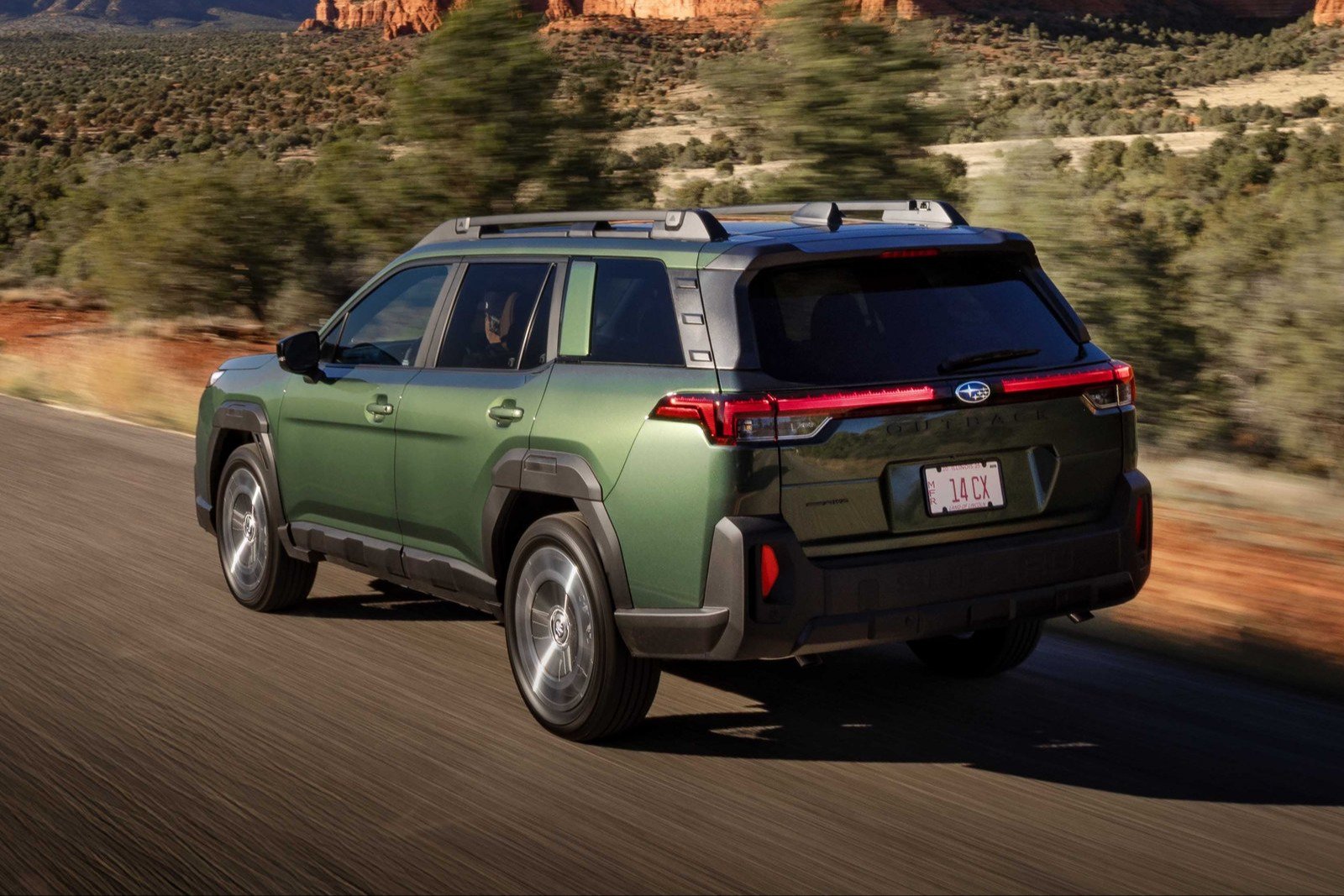
The Outback's 18-gallon tank, versus 16.6 gallons in the Forester, also matters on long highway runs, where the Outback's 31-mpg highway rating is two short of the gas Forester's 33.
Power, towing, and the Wilderness question
Both lineups start with the same 180-hp 2.5-liter boxer and CVT. From there they split. Only the Outback offers the 260-hp turbocharged 2.4-liter, on the Limited XT, Touring XT, and Wilderness. Only the Forester offers the 194-hp hybrid, which Subaru sells in five trims.
Towing follows the engines. Subaru rates the 2.5-liter Outback at 2,700 pounds and its turbo trims at 3,500. The Forester Hybrid is rated at 1,500 pounds, the same figure Kelley Blue Book reported for the regular gas Forester in 2025. The exception is the gas Forester Wilderness, which gets a transmission cooler and revised final drive to reach 3,500 pounds.
That makes the Wilderness matchup the most interesting $4,500 gap in Subaru's lineup. The $39,495 Forester Wilderness brings 9.3 inches of clearance, all-terrain tires, extra underbody protection, a full-size spare, and the same 3,500-pound tow rating. The $43,995 Outback Wilderness adds the turbo, electronically controlled adaptive dampers, and 9.5 inches of clearance.
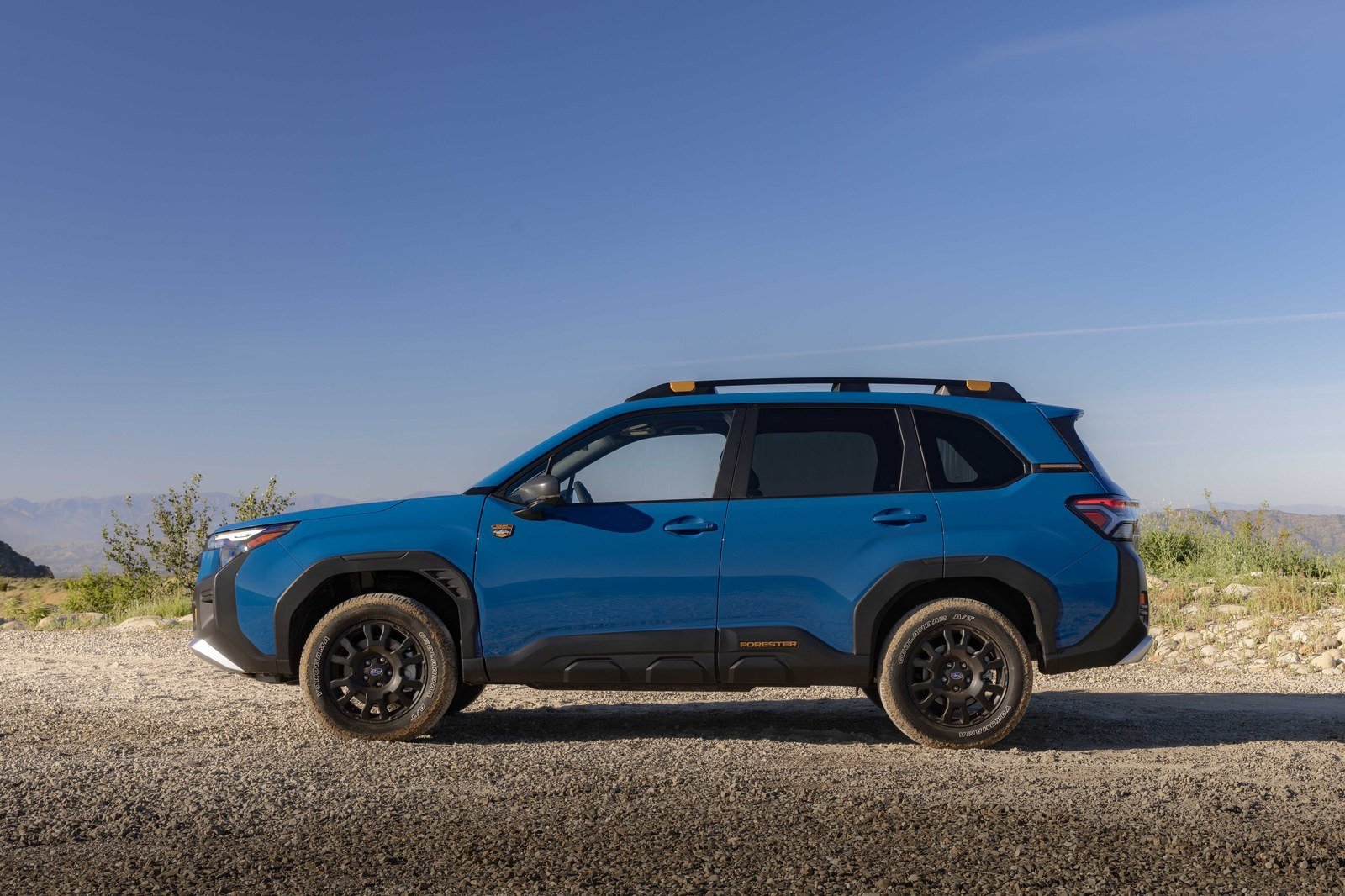
The new $40,495 Forester Wilderness Hybrid sits in between. Subaru promises better fuel economy than the gas Wilderness, but it hasn't published EPA figures or a tow rating for it in its pricing announcement.
Five years of fuel at today's prices
Neither 2027 model has EPA ratings yet, so these numbers use the 2026 ratings for the same powertrains. We assume 15,000 miles a year for five years at AAA's national average of $4.27 a gallon on October 22.
- Forester Hybrid (35 mpg): about $9,150
- Forester gas (29 mpg): about $11,040
- Outback 2.5L (27 mpg): about $11,860
- Forester Wilderness (26 mpg): about $12,320
- Outback turbo (24 mpg): about $13,340
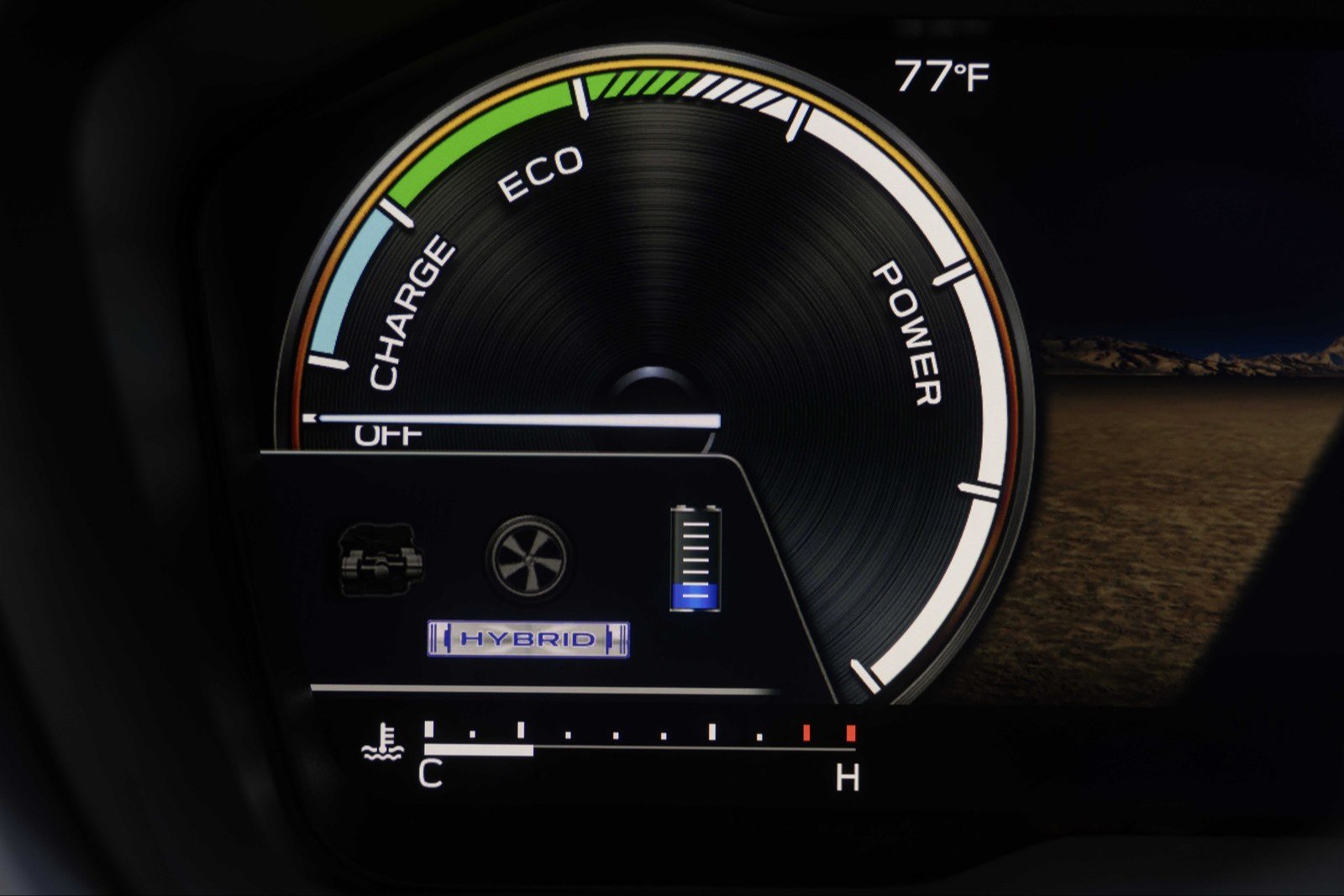
The Forester Premium Hybrid costs $1,715 more than a base Outback once destination is added. At roughly $540 a year in fuel savings, it pays that back in a little over three years and finishes about $1,000 ahead after five. Against a Forester Premium with the power-liftgate package, the hybrid costs $1,535 more and saves about $1,890 in fuel over five years, so it roughly breaks even while adding the digital cluster, 18-inch wheels, and Dual-Mode X-MODE.
Safety and driver assistance
Both 2026 models earned IIHS Top Safety Pick+ awards under the institute's tougher 2026 criteria, including the Outback Wilderness and the Forester Wilderness and Hybrid. IIHS hasn't yet listed 2027 ratings, and NHTSA scores for either car aren't in our table. Every trim of both cars has EyeSight with adaptive cruise and lane centering.
The bigger split is hands-free highway driving. For 2027, Subaru made Highway Hands-Free Assist and Emergency Stop Assist standard on the Outback Limited XT, alongside the Touring and Touring XT. Subaru's 2027 Forester pricing announcement doesn't list the hands-free system on any trim. Warranties match, with the Forester Hybrid adding 8-year, 100,000-mile coverage for its hybrid system.
What buyers are already choosing
The showroom has been leaning Forester. In September, Subaru sold 15,989 Foresters, the model's best September ever, against 12,651 Outbacks. Through the first nine months of 2026, Forester sales are up 17.6 percent to 156,476, while the Outback is down 10 percent to 104,759. Read against those numbers, the Outback's price cut looks less like generosity and more like Subaru defending a slipping model, the same lever it pulled a month earlier with the $2,000-cheaper 2027 Impreza.
Which one should you buy?
The family with a lot of gear: the Outback. The extra 16 cubic feet with the seats folded and the longer cargo floor are the main things you can't get in a Forester. The base model is the value play, and the $39,995 Limited brings leather and heated rear seats for $1,000 more than a Forester Limited Hybrid, which has StarTex upholstery instead.
Snow, dirt roads, and the occasional trailer: the Forester Wilderness. At $39,495 it matches the Outback Wilderness on tow rating, comes within 0.2 inch on clearance, and costs $4,500 less. The Outback Wilderness earns its premium mainly if you tow near the limit often or want the turbo's 277 lb-ft on long mountain grades.
Lowest running costs: the Forester Premium Hybrid. It's the most efficient Subaru SUV here by a wide margin and, at 15,000 miles a year, it closes the gap to a base Outback within about three years. If you're also shopping outside Subaru, our CR-V Hybrid vs. RAV4 Hybrid comparison covers the two biggest alternatives.
The Outback turbo trims remain the only answer if you want real passing power or hands-free highway driving in a Subaru at this price. For most shoppers in the $33,000 to $40,000 band, though, the Forester is still the better buy, unless the cargo numbers above are the ones that matter to you.
What we don't know yet
- EPA ratings for the 2027 models. Subaru's 2027 Outback spec sheet lists none, and the Forester Wilderness Hybrid has no published rating.
- Forester Hybrid range. Subaru now quotes up to 597 miles per tank, while the 2026 model was EPA-rated at 581 miles. Whether the 2027 rating changed hasn't been published.
- 2027 crash ratings. IIHS awards above apply to 2026 models; NHTSA results aren't yet in our data.
- When the 2027 Outback arrives. Subaru says only "later this year." Incentives vary by region, so check local offers before signing.