RAV4 Woodland vs. Forester Wilderness Hybrid: $670 Apart, Built for Different Roads
Toyota's trail-ready RAV4 costs $670 less and gets 38 mpg. Subaru's new Wilderness Hybrid answers with more clearance, mechanical AWD, and an EPA rating still pending.
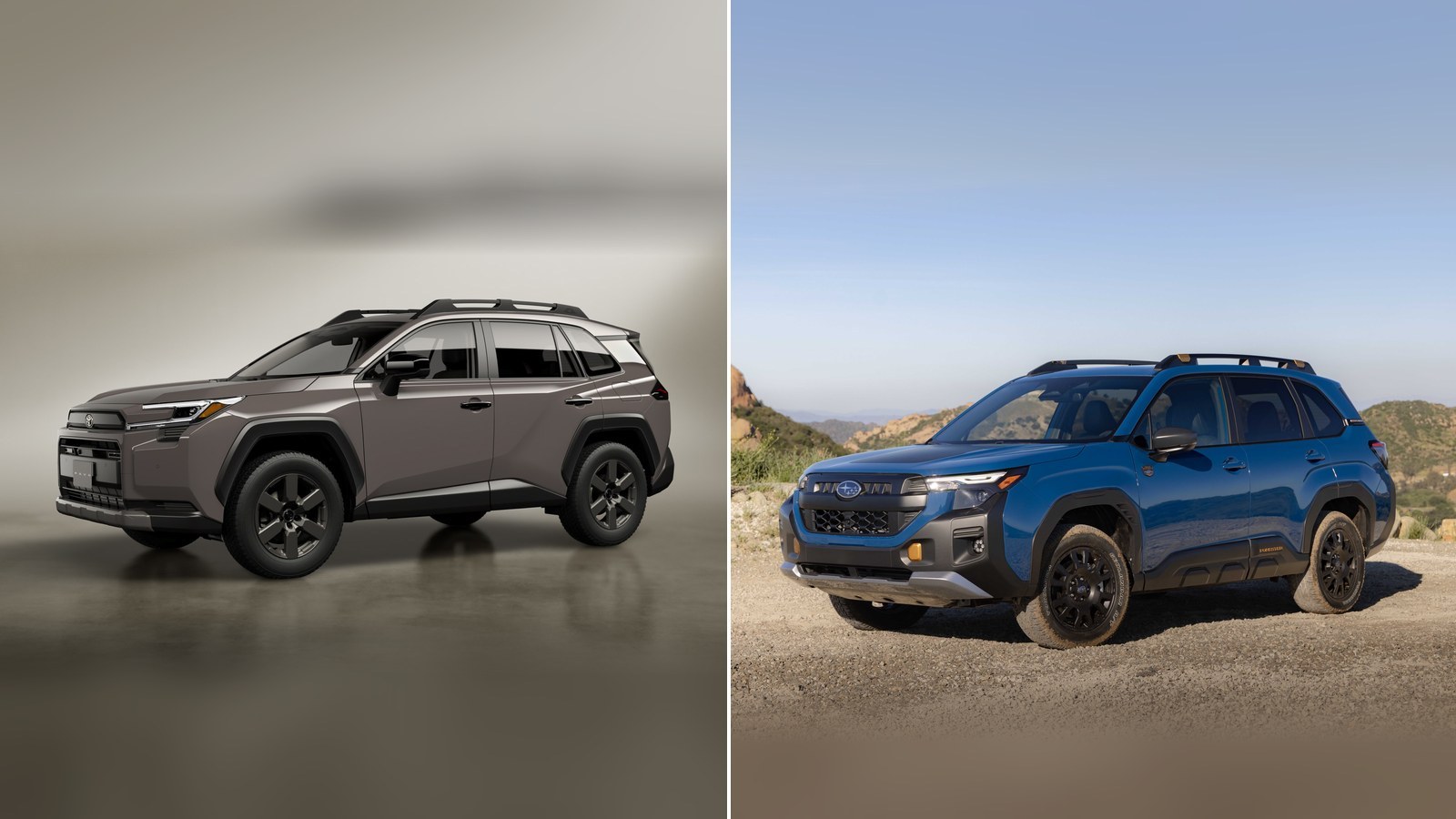
Toyota and Subaru now sell the same idea at almost the same price: a compact hybrid SUV with all-terrain tires, a little extra ride height, and standard all-wheel drive. The 2026 Toyota RAV4 Woodland costs $41,350 with destination. The new 2027 Subaru Forester Wilderness Hybrid costs $42,020. That $670 gap is the smallest difference between them.
Underneath, they make opposite bets. The RAV4 Woodland is a fuel-efficient commuter dressed for a campground. The Forester Wilderness Hybrid gives up mileage for clearance, better trail angles, and a mechanically linked all-wheel-drive system. Subaru's version arrives this fall as the first hybrid in its Wilderness line, as we covered in our 2027 Forester pricing breakdown.
The numbers side by side
All prices include destination: $1,450 for the RAV4 and $1,525 for the Forester, the figure on Subaru's current 2027 price sheet. Fuel economy for the Forester Wilderness Hybrid is the open question, so read that row carefully.
| 2026 Toyota RAV4 Woodland | 2027 Subaru Forester Wilderness Hybrid | |
|---|---|---|
| Price incl. destination | $41,350 | $42,020 |
| Premium over closest regular hybrid | $2,400 over XLE Premium AWD ($38,950) | $2,565 over Sport Hybrid ($39,455) |
| Powertrain | 2.5L hybrid, 236 hp combined | 2.5L boxer hybrid, 194 hp combined |
| All-wheel drive | Electronic on-demand, rear electric motor | Symmetrical AWD, mechanical front-rear link |
| Off-road modes | No Woodland-specific system listed | X-MODE Dual-Mode with Hill Descent Control |
| Tires and wheels | Dunlop GrandTrek all-terrain, 18-inch | Yokohama Geolandar all-terrain, 17-inch |
| Ground clearance | 8.5 in | 9.3 in |
| Approach / breakover / departure | TBA | 23.5° / 20.6° / 25.5° |
| EPA combined | 38 mpg (41 city / 35 hwy) | TBA (Subaru estimates 481 miles per tank) |
| Fuel cost per year, 15,000 mi | $1,646 | About $2,160 at an estimated 29 mpg |
| Max towing | 3,500 lb | TBA |
| Cargo, behind rear seat / max | 38 / 70 cu ft | 27.5 / 69+ cu ft |
| Hybrid battery warranty | 10 years / 150,000 miles | 8 years / 100,000 miles |
Fuel costs use AAA's national average of $4.17 a gallon for regular on November 2. The RAV4's 38 mpg comes from Toyota's EPA estimates for the Woodland grade. Cargo figures for the RAV4 are rounded from published spec data, and the two brands do not necessarily measure the same way.
What the off-road premium actually buys
Both companies charge roughly the same for the trail kit, about $2,400 to $2,600 over a comparably equipped regular hybrid. What you get for it is very different.
Toyota's Woodland package is mostly tires, wheels, styling, and roof hardware. Toyota's launch materials list 8.5 inches of ground clearance, Dunlop all-terrain rubber, raised black roof rails with crossbars, and a 3,500-pound tow rating. The cost shows up at the pump: the Woodland is rated at 38 mpg combined, about 4 mpg below the 42 mpg the EPA gives the RAV4 Hybrid SE AWD we used in our five-year RAV4 cost comparison.
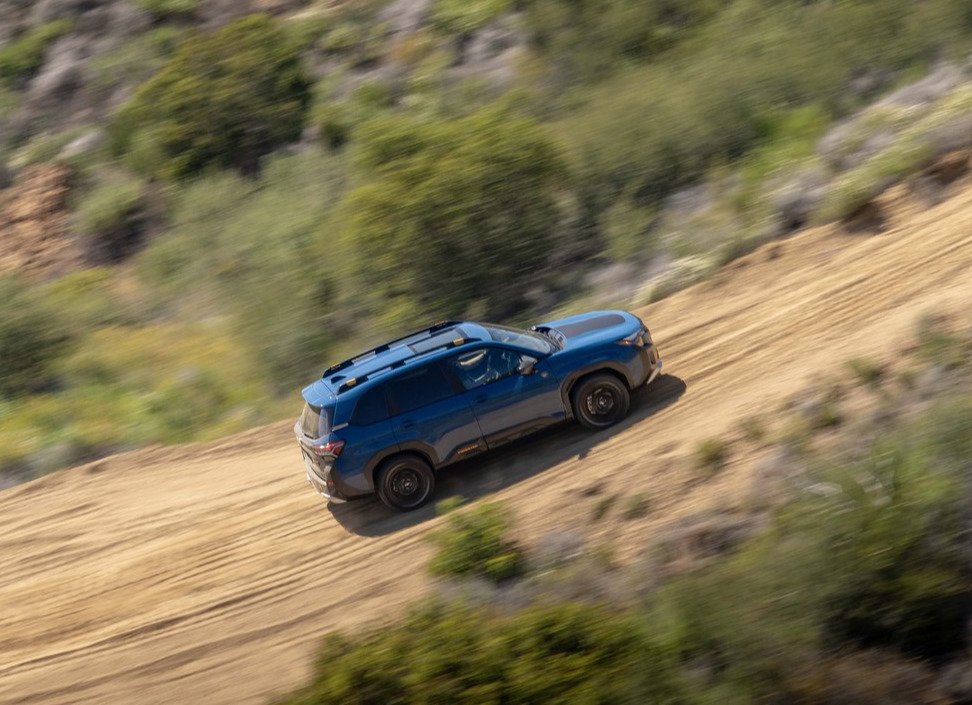
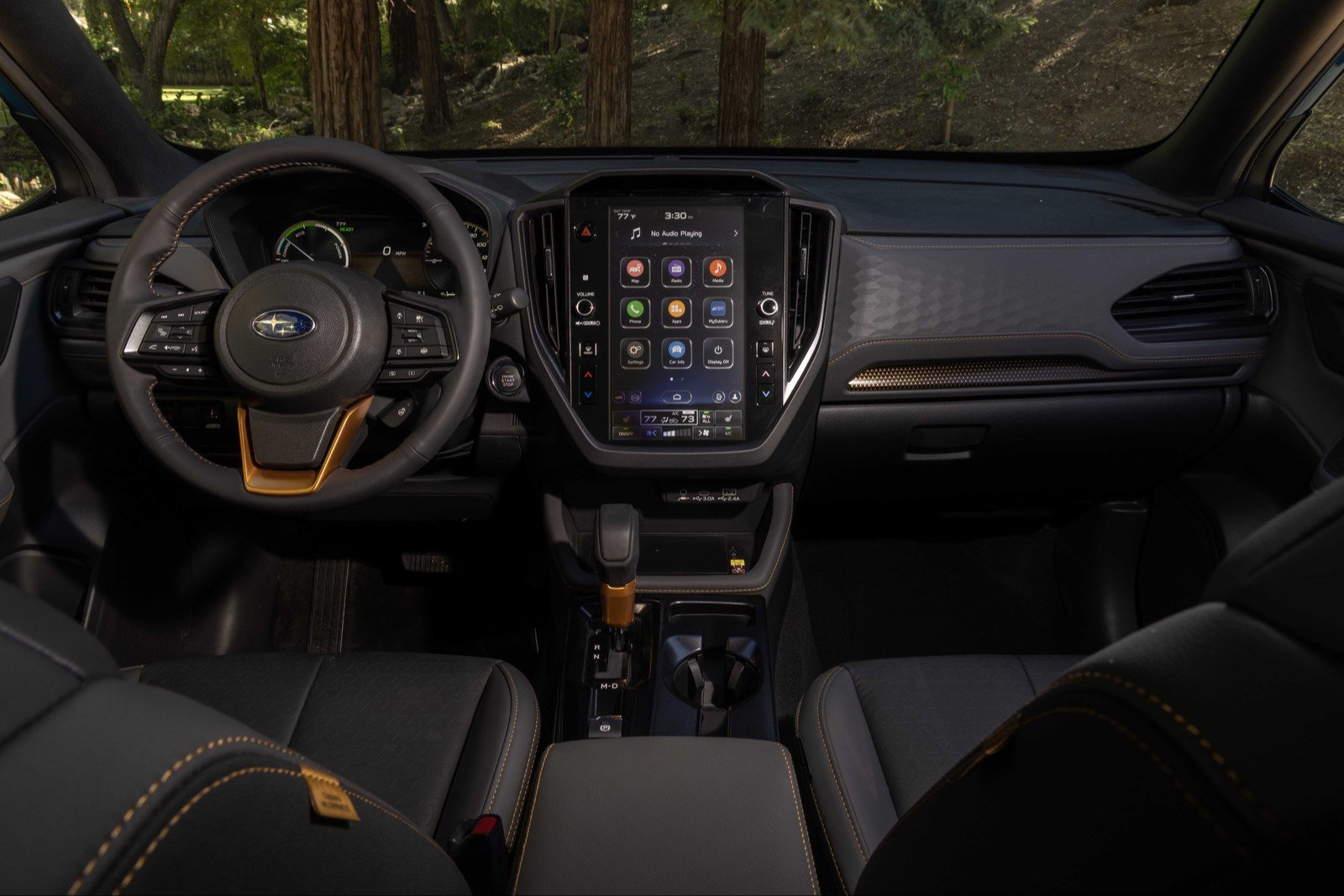
Subaru changed more of the car. According to Subaru's debut announcement, longer springs and shocks lift the Wilderness Hybrid from 8.7 to 9.3 inches of clearance, and the approach angle improves from 19 to 23.5 degrees over the regular Forester Hybrid. It also gets extra underbody protection, roof rails rated for 800 pounds static, and weather-resistant gray StarTex upholstery.
The fuel-economy gap is real, but not yet official
This is the comparison's biggest unknown. As of today, the EPA has not published a rating for the Forester Wilderness Hybrid, and Subaru's price release gives no mpg figure. Subaru only promises up to 25 percent better fuel economy than the gas Wilderness and an estimated 481 miles per tank.
On the 16.6-gallon tank the Forester Hybrid uses, that range works out to roughly 29 mpg, our calculation rather than an official number. If the label lands there, the RAV4 saves about $510 a year in fuel at 15,000 miles, or around $2,500 over five years. The regular Forester Hybrid, rated at 35 mpg combined, shows how much efficiency the lift and chunky tires cost Subaru.
Different ideas of all-wheel drive
The RAV4 Woodland drives its rear wheels with a separate electric motor rather than a driveshaft. That setup handles wet pavement and loose gravel well.
The Forester keeps a mechanical connection between the front and rear axles, the layout Subaru has used for decades, and pairs it with X-MODE settings for snow, dirt, and deep mud plus hill descent control. On a washed-out forest road or in deep snow, that combination and the extra 0.8 inch of clearance matter more than the RAV4's 42 extra horsepower.
Space, towing, and warranty
The RAV4 has the bigger cargo area behind the rear seat on paper, 38 cubic feet against the Forester's 27.5, though the gap closes with the seats folded. The RAV4 also has a confirmed 3,500-pound tow rating. Subaru lists 3,500 pounds for the gas Wilderness in its 2027 Forester pricing release but has not put a tow rating for the hybrid on that sheet, so confirm it before you hitch a trailer.
Toyota covers the hybrid battery for 10 years or 150,000 miles. Subaru's coverage is 8 years or 100,000 miles.
Where else to look
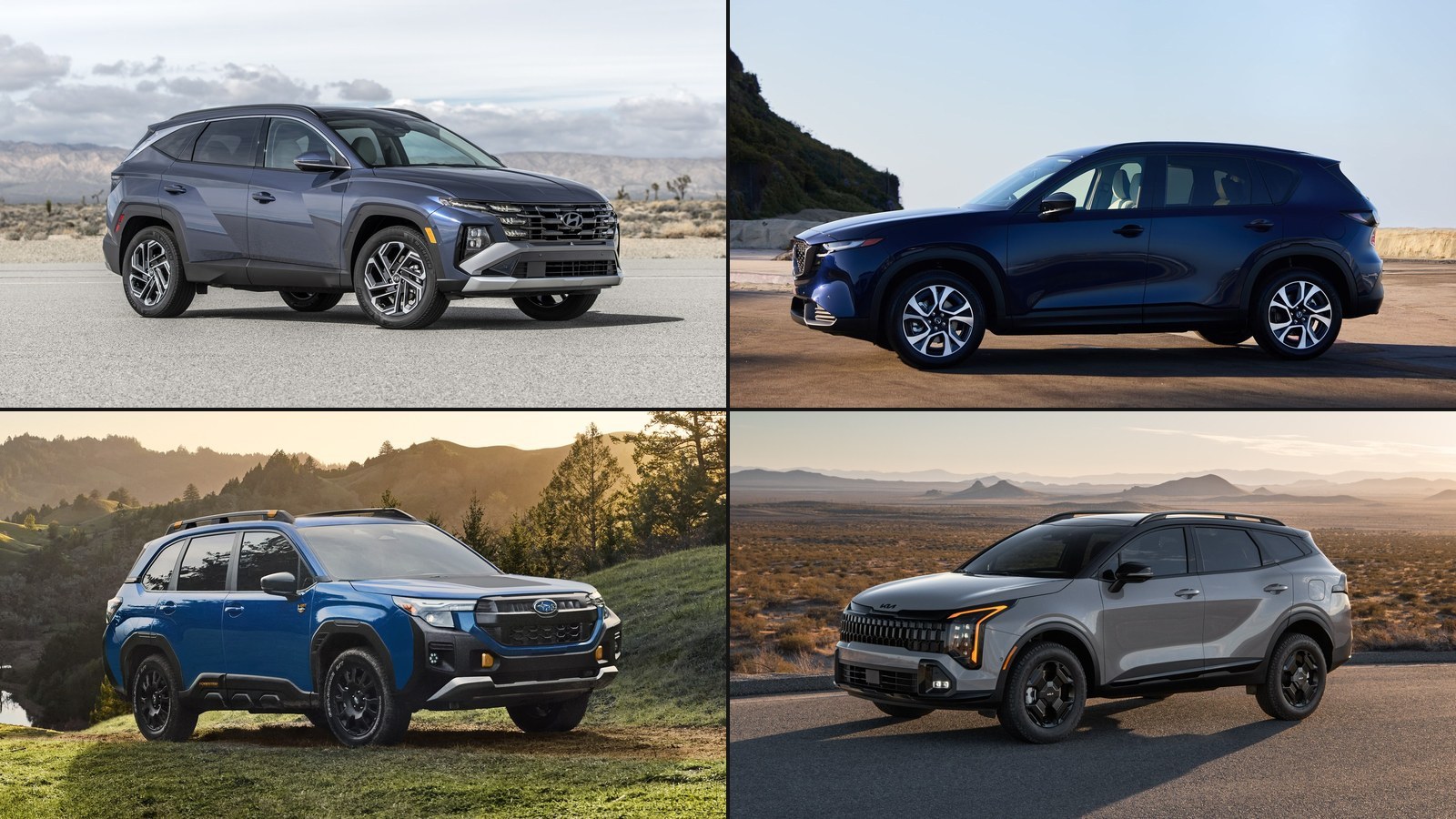
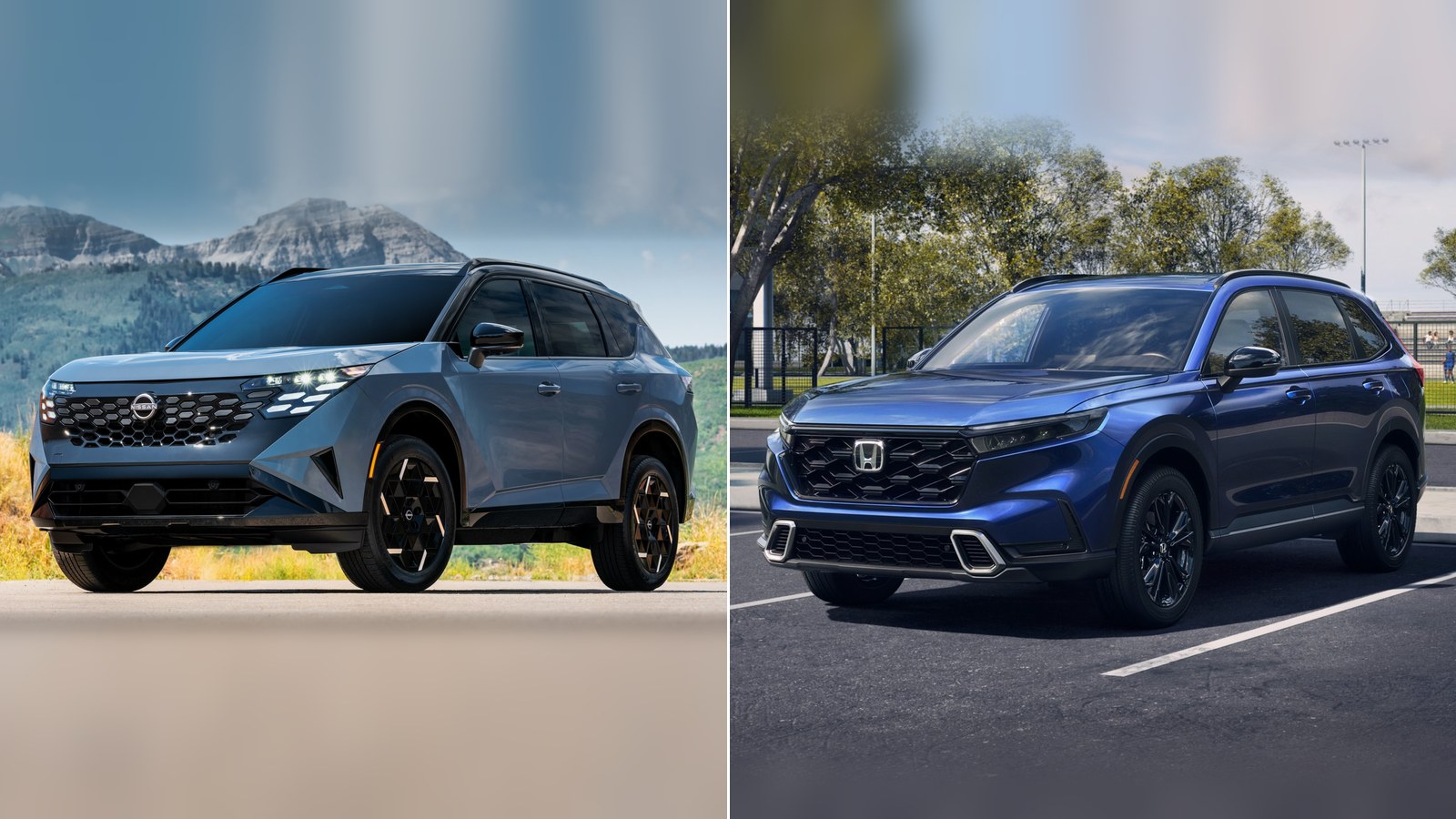
These are not the only lifted compact hybrids on sale. Honda now sells a TrailSport version of the CR-V Hybrid, which is worth a test drive if neither of these fits. If you need a larger cabin more than trail ability, our Outback vs. Forester comparison covers Subaru's other option.
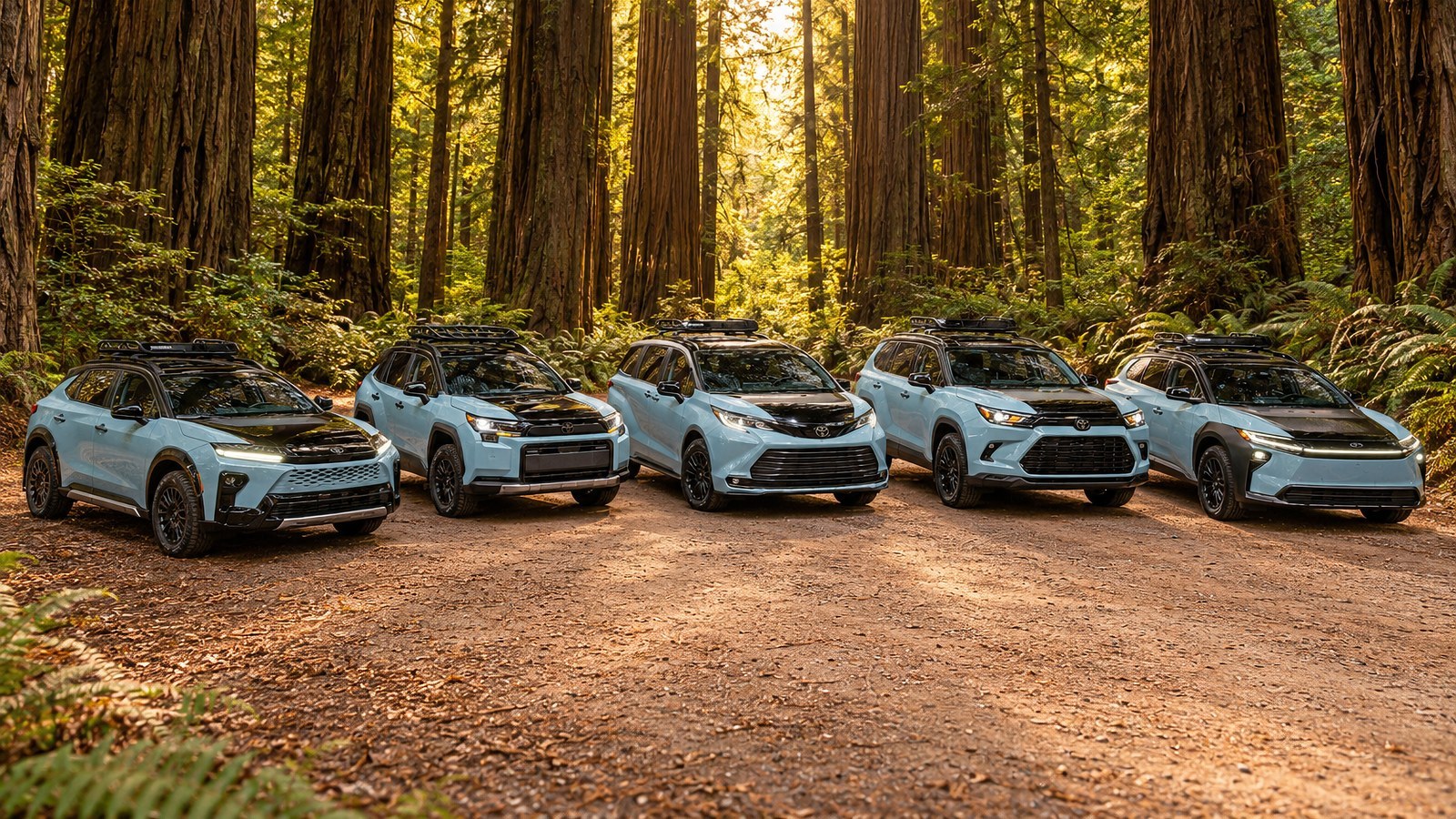
Toyota is also signaling where the Woodland name is headed. Its five Woodland concepts at SEMA, open Nov. 3–6 in Las Vegas, push the look further on a RAV4 Plug-in Hybrid, Sienna, bZ, Grand Highlander, and Crown Signia. They are show builds, not production specs. You can read more in our report on the SEMA Woodland concepts.
What we don't know yet
- The Forester Wilderness Hybrid's official EPA rating. We will update this comparison when it appears on fueleconomy.gov.
- Subaru's official tow rating for the Wilderness Hybrid.
- Actual transaction prices. RAV4 supply has been tight, as we covered in our RAV4 wait-times guide, and the Forester Wilderness Hybrid is only now reaching dealers, so discounts on either are unclear.
- Pricing for a 2027 RAV4, which Toyota has not announced for the U.S.
Which one should you buy?
If most of your miles are on pavement and the trail is a gravel road to a trailhead, buy the RAV4 Woodland. It is $670 cheaper, should save several hundred dollars a year in fuel, carries more behind the rear seat, and comes with a longer battery warranty.
If you regularly drive rutted forest roads, deep snow, or steep, loose climbs, the Forester Wilderness Hybrid is the better tool. Its clearance, approach and departure angles, mechanical all-wheel drive, and X-MODE add real capability that the RAV4's package does not match. The cost is fuel economy, and until the EPA publishes its number, buyers should treat Subaru's estimate as provisional.